
Dance Mogul Magazine · The Elephant in the Room · Installment 1
The Elephant in the Room: When Your Students Become Your Competition
Pride, fear, money and legacy. The conversation dance educators have in private, brought into the open, with the research behind it and a plan that lets both generations thrive.
October 26, 2026 · By Dance Mogul Magazine · Editorial
File // At a Glance
The question — How should a dance educator feel when the students they trained become the dancers competing for the same jobs?
Who it's for — Teachers, former students, studio owners, promoters and anyone who hires dancers
The tension — Pride in a student's rise and fear for your own income can exist at the same time
What research shows — Dance work is freelance-heavy, low-paid and slow-growing, and comparison with younger, more successful peers measurably drains motivation
What it does not show — How often teachers lose work to their own former students. This article does not establish that rate
The answer in one line — A student's success should never require a teacher's failure, and a teacher's security should never depend on holding a student back
60%
of NYC dance workers
work as freelancers
$23K
average yearly dance income,
NYC dancers & choreographers
2%
projected U.S. job growth
for dancers, 2025–35
54%
of NYC dance workers also
teach dance
Sources: Dance/NYC, State of NYC Dance 2023 (New York City figures); U.S. Bureau of Labor Statistics, Occupational Outlook Handbook (national projection).

The Conversation Nobody Has Out Loud
There is a conversation happening quietly in dance studios, rehearsal rooms and cypher circles. Some dance educators have had it privately. Far fewer have brought it into a public conversation.
Picture a teacher who has spent years with one young dancer. She introduced him to the culture. She fixed his foundation, pushed his musicality, built his confidence and took him to his first jam. She told him the history so he would know whose shoulders he stood on.
Then one week, she walks into an audition and he is in the line. Same call. Same job. Same rent due on the first of the month.
He is younger. He has more followers. His agent quoted a lower rate. And the people behind the table seem to be looking at him the way people once looked at her: as the exciting new thing.
She still has a family. She still has bills. She still has more to give the art form than she has ever been paid for. And she has no plan to disappear because the next generation has arrived.
So what is she supposed to feel? Pride? Fear? Happiness? Resentment?
For some teachers, the answer may be all four, sometimes in the same hour.
That is the elephant in the room. Dance education produces future artists, and it also produces future competitors. In a field where steady work is hard to come by, those two truths collide. This editorial does not pretend the collision away. It looks straight at it, names what people are actually afraid of, checks those fears against the evidence and then lays out what teachers, students and the people who hire them can do about it.
You can be proud of the dancer you helped create and still be worried about your own future. Those feelings are not opposites. They are the honest price of loving an art form that does not always love you back financially.
— Dance Mogul Magazine
Say It Plainly: What Teachers Are Actually Afraid Of
The polite version of this conversation says teachers worry about "the next generation." The real version is more specific, and it deserves to be said in plain words.
- Being undercut on price. A former student charges half your rate for a class, a private lesson or a choreography job, and the client takes the bargain.
- Being out-followed. A booking decision gets made on social media numbers rather than skill, teaching ability or reliability.
- Being aged out. Casting and programming quietly treat experience as a liability, so the more you know, the less you are offered.
- Losing your work without your name. Choreography, drills or a teaching method you built show up in someone else's class, video or show with no credit.
- Losing the room you built. A student leaves to teach down the street and takes the parents, the kids or the corporate client you spent years earning.
- Being forgotten. The person you poured into speaks about their journey as if it began the day they got famous.
Every one of those fears is real for someone. But confronting this subject honestly means saying the other half too.
Some teachers respond to the fear in ways that hurt students. They withhold the next level of training. They discourage a student from auditioning. They speak badly of a student who left. They expect lifelong loyalty, unpaid assisting or free performances as a kind of permanent tuition. That is not protecting a career. That is taxing a young person's future to soothe an older person's anxiety, and it damages the culture as surely as a student who steals credit.
Both behaviors come from the same place: a belief that there is only room for one of you. The rest of this editorial is about where that belief comes from, and how to stop it from running your decisions.
The distinction that matters
A former student winning an audition is competition. A former student teaching your original choreography as their own, misrepresenting what you taught them, or deliberately poaching clients under false pretenses is misconduct. The first is part of a healthy art form. The second is worth addressing directly. Mixing them up turns ordinary career growth into betrayal, and lets actual misconduct hide behind "that's just the business."

Why the Fear Is Rational
It is easy to dismiss this feeling as insecurity. The numbers say otherwise. The fear of being replaced is not only a personality flaw. In dance, it is often a reasonable reading of the economics.
The most detailed recent picture of dance labor comes from Dance/NYC's State of NYC Dance 2023, a census that drew survey responses from roughly 27 percent of the city's estimated 6,000 dance workers. It found that 60 percent of dance workers operate as freelancers, 44 percent sometimes work without contracts and 82 percent lack union protections. Dancers and choreographers earned an average of about $23,000 a year from dance, which made up roughly 60 percent of their total income. Dance workers overall averaged about $22 an hour, about 15 percent below the city's $26 living wage, and 41 percent had done dance work without pay in the previous year.
One more finding sits at the center of this editorial: more than half of the city's dance workers, 54 percent, also work as dance educators. In other words, the teacher and the performer are very often the same person, competing in the same small market. These are New York City figures, not national averages, but New York is one of the country's largest dance economies, and the pattern is familiar everywhere.
The national outlook is not looser. The U.S. Bureau of Labor Statistics, in its Occupational Outlook Handbook updated in September 2026, projects employment of dancers and choreographers to grow just 2 percent from 2025 to 2035, slower than the 3 percent average for all occupations. The bureau expects about 2,200 openings a year, and says most of them will come from replacing workers who move to other occupations or leave the labor force.
Read that last line again. In a field that is barely adding jobs, most opportunities open up because someone else steps away. Much of the projected hiring is associated with workers leaving jobs or changing careers. That helps explain the pressure dancers experience; it does not tell us how often a former student takes a teacher's job.
By the Numbers.
Years of training do not guarantee a premium. Federal wage data shows how close dance pay sits to the median for all American jobs, and how much it depends on where the work happens.
$24.80/hr
Median hourly wage for U.S. dancers, May 2025
vs. $24.51 for all occupations
Median hourly wage, May 2025 · bars drawn to scale
BLS figures are national medians from the Occupational Employment and Wage Statistics survey, May 2025, which does not include self-employed workers; BLS counts about 41 percent of dancers and 40 percent of choreographers as self-employed. The Dance/NYC figure is a 2023 New York City average, not a median, and is shown for comparison only. Dancers employed by schools and colleges had a higher median, $27.00. Part-time work is common, so hourly rates do not equal yearly income.
The gap that matters most for this editorial is the one between the top and bottom of the chart. Choreographers working in performing arts companies earned a median of $30.74 an hour. Choreographers working in educational settings earned $23.37. Teaching is often where experienced artists land, and in the data it is not where the money is. When a former student starts competing for the stage work, a teacher can feel squeezed from both ends.
Four Truths That Have to Hold at the Same Time
Most arguments about this subject collapse into one side: either teachers need to get over it, or students owe their teachers forever. Neither works. A healthy dance community has to hold four truths at once.
Truth one
A good teacher wants students to succeed.
Teaching is more than passing on steps. It is discipline, history, confidence and access. A student's rise is a real achievement for the person who helped build it.
Truth two
A teacher is still a working artist.
Rent, mortgages, children, health care and retirement do not pause because you love your students. Nobody should have to give up financial stability to prove generosity.
Truth three
Competition is not automatically betrayal.
A former student booking a job is doing what you trained them to do. Taking credit, copying original work or exploiting the relationship is a different matter.
Truth four
The industry has a responsibility, too.
Who decided there is only room for one of you? Employers who cast by follower count, ignore experience and pay too little to sustain teachers created much of this tension.
The Psychology: Why Their Rise Can Feel Like Your Fall
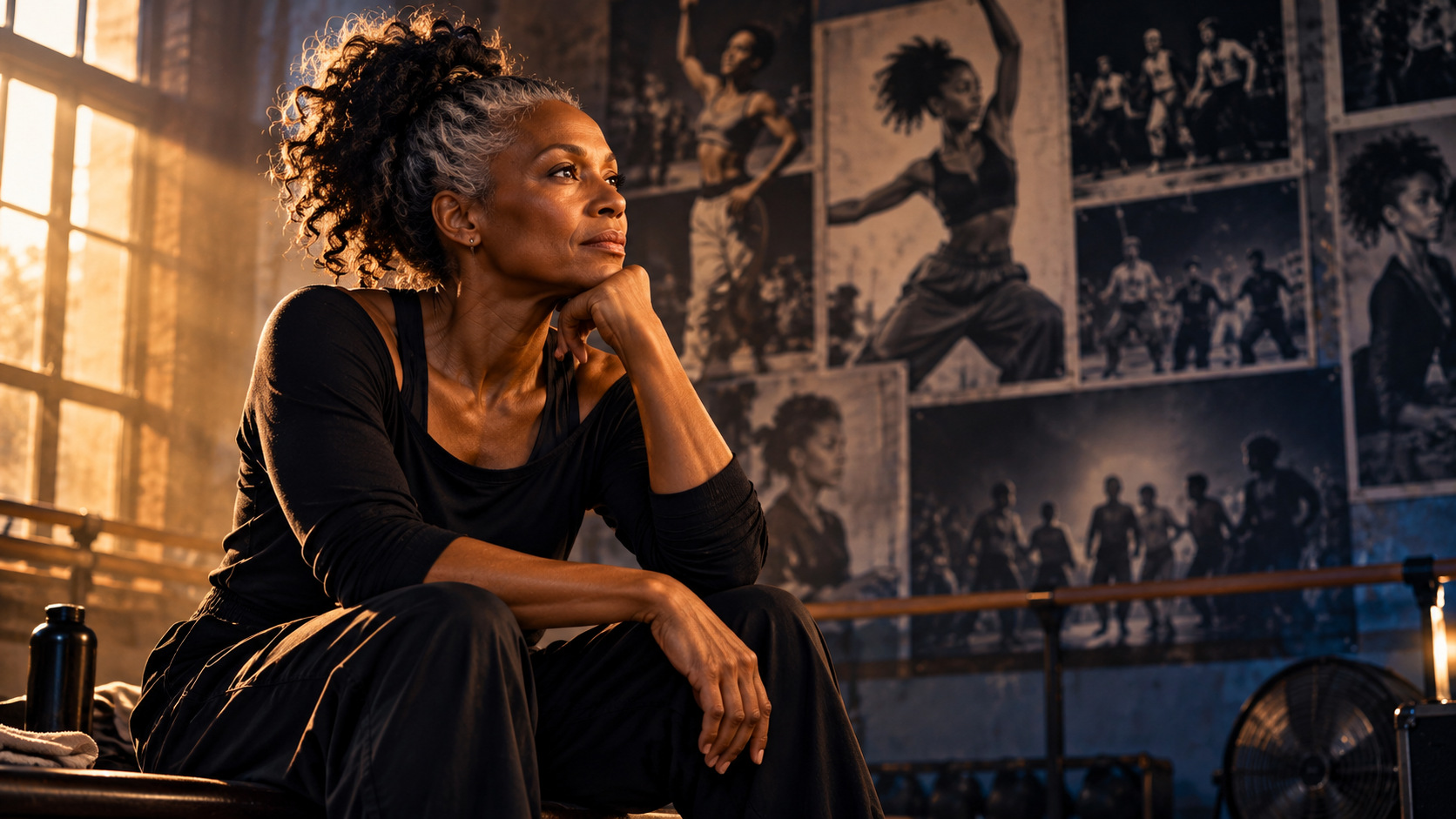
The emotional side of this has a name in workplace research. A 2021 paper listed by Harvard Kennedy School's Mossavar-Rahmani Center, by researchers including Jon M. Jachimowicz, describes precocity threat: the unfavorable comparison people make when they work around younger colleagues who have reached higher status than they have.
The researchers tested the idea in very different settings, including a long-running U.S. professional sports dataset of more than 5,000 records, a matched comparison inside a Latin American financial institution and a preregistered experiment with 1,112 full-time workers in the United Kingdom. Across them, exposure to younger, higher-status peers was linked to lower career engagement, less willingness to go beyond the job description and weaker overall performance. The mechanism they identified matters: thinking about a younger person's success left people feeling uninspired rather than motivated.
The study was not about dance. But a dance studio is almost a laboratory for this effect. Teachers are often older than the dancers they mentor, though not always, and students may gain visibility quickly. When that student passes the teacher in visibility, the comparison is constant and public.
Age adds a second layer. Dance researcher Sonia York-Pryce has spent years documenting ageism in professional dance. Her 2026 article asks how senior professional dancers forge a presence within an ageist dance culture, and her book Still Moving collects conversations with twenty senior performers, aged 41 to 109, who kept working despite expectations that they should stop. Her work makes a point every veteran recognizes: the industry often treats experience as something to retire rather than something to hire.
Put those two forces together and the fear makes sense. You are comparing yourself to someone younger who is rising, inside an industry that may already be telling you your time is up. That is not weakness. It is pressure. And naming pressure is the first step to managing it instead of letting it manage you.
Read alongside
This installment pairs with DMM's cultural-psychology feature on envy and conditional support, I Wanted to See You Win—Just Not More Than Me, which looks at what happens inside a person who struggles to celebrate someone else's success, and how to change.
The Four Seasons of a Mentor Relationship
One of the most useful ideas for this conversation is more than forty years old. In 1983, organizational researcher Kathy Kram published "Phases of the Mentor Relationship" in the Academy of Management Journal. She found that mentoring relationships move through four predictable phases. Later research has noted that the third phase, when the mentee becomes independent, can bring feelings of loss and anxiety for both people. Applied to dance, the model explains a lot of the pain in this story. The phase descriptions below are DMM's application of Kram's framework to dance.
1 · Initiation
The student arrives. The teacher sees potential. Roles are clear: one teaches, one learns.
2 · Cultivation
The best years. Training deepens, opportunities are shared, the student assists, travels and performs alongside the teacher.
3 · Separation
The student needs less from the teacher and starts building a career. This is where auditions overlap and clients cross. It is the phase where most hurt happens, because nobody planned for it.
4 · Redefinition
The relationship becomes something new: peers, collaborators, friendly rivals, or it ends. The healthiest version is two professionals who refer work to each other and speak each other's names in public.
The lesson is simple. Separation is not a betrayal. It is a stage. Teachers who expect it can plan for it. Teachers who do not expect it experience it as abandonment.
Street Dance and the Weight of Inheritance
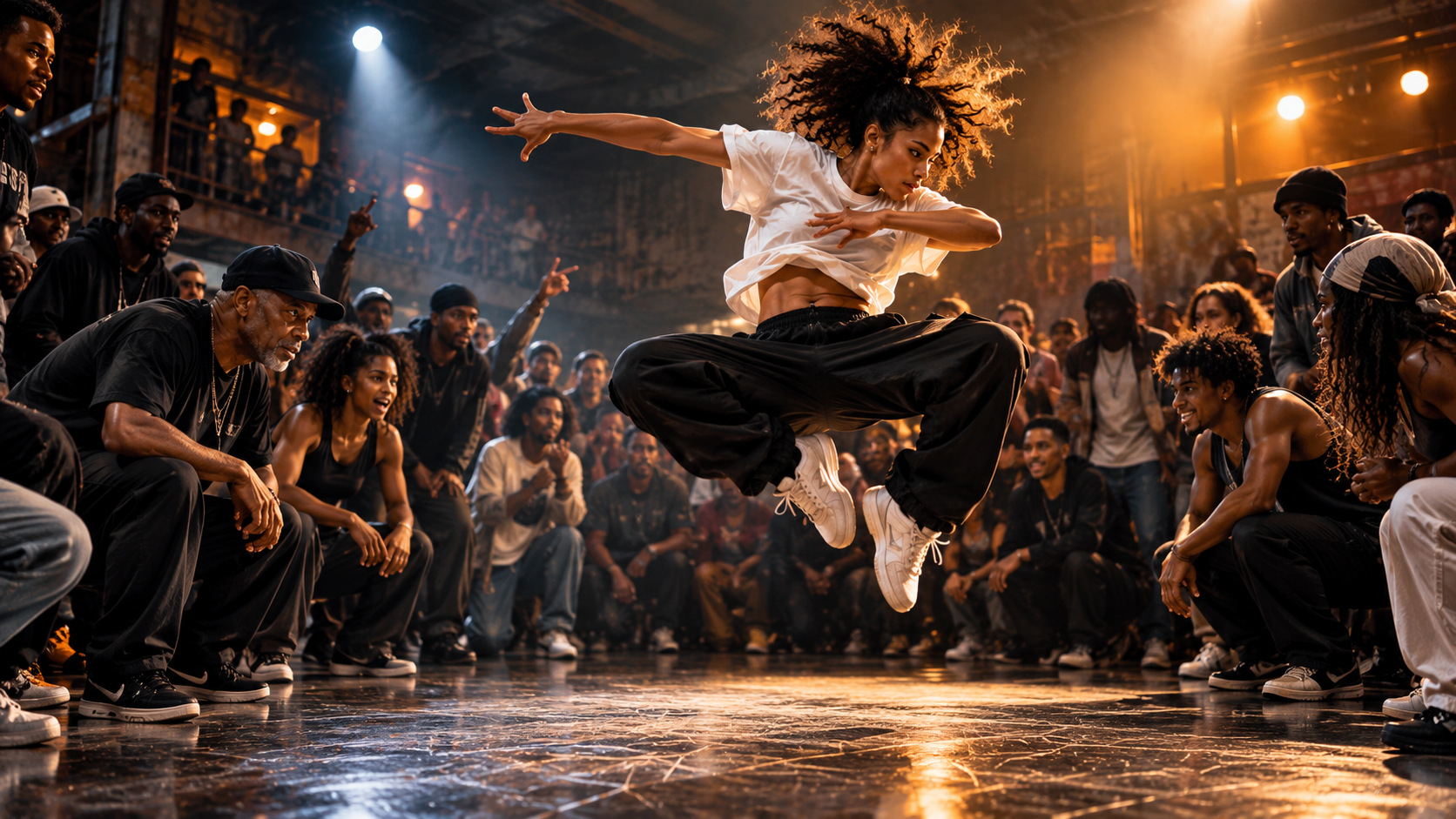
In hip-hop and street dance, this tension carries extra weight, because the knowledge was never just a curriculum. It traveled through crews, jams, battles, practice sessions, basements, parks and cyphers, from people who often received no money and little recognition for keeping it alive.
Academic institutions are starting to treat that lineage as something to protect. USC's Glorya Kaufman School of Dance hosts the Cypher Summit, a biennial gathering founded in 2018 by faculty member Tiffany Bong to honor the lineage and lived histories of street dance and to create intergenerational dialogue. Its fifth edition, held March 6 and 7, 2026, centered women in hip-hop and street dance and brought pioneers and students into the same circle.

That raises the hardest question in this whole conversation: what happens when a new generation inherits a culture without understanding what it cost the people who preserved it?
The answer cannot be that young dancers stay forever beneath their teachers. They have every right to build their own careers, styles and names. Influence is not ownership. A teacher who shaped your foundation does not own everything you create afterward.
But cultural knowledge and professional opportunity should never be cut off from acknowledgment. Saying where you learned, who you learned from and whose shoulders you stand on costs a rising dancer nothing. For the pioneer, it can mean the difference between being remembered and being erased. With many pioneers still alive and still working, credit is not nostalgia. It is an essential acknowledgment of contribution—but it is not a substitute for fair payment.
Real Cases: What Dance History Has Already Taught Us
The question of who owns what a dancer creates, and who gets credit for it, is not hypothetical. Three documented cases offer lessons every teacher and student should know.
Who owns the work you make while you are employed. Martha Graham is one of the most important choreographers in American history, yet after her death a federal court had to decide who owned her dances. In 2004, the U.S. Court of Appeals for the Second Circuit agreed that the dances she created from 1966 until her death in 1991, while she was paid as artistic director of the Martha Graham Center, were "works made for hire" belonging to the Center, not to the heir who inherited her estate. Most of the roughly 70 disputed dances went to the Center. The lesson for every teacher who builds choreography for a studio, school or company: if you are on payroll and creating as part of the job, the employer may own the work unless a written agreement says otherwise.
Choreography can be protected, even in short pieces. The U.S. Copyright Office's Circular 52 explains that original choreography can be registered, but individual steps, social dances and simple routines cannot, and the work must be fixed in a recording or notation. In Hanagami v. Epic Games, decided November 1, 2023, the Ninth Circuit revived choreographer Kyle Hanagami's lawsuit over a video game emote that he said copied part of his registered work, ruling that a short segment can still be significant. Hanagami had registered his choreography before he sued. The lesson: document your original work, date it and register what matters.
Credit is money. In 2019, Atlanta-area dancer Jalaiah Harmon, then 14, created the "Renegade" to K Camp's "Lottery." It spread across TikTok through far more famous creators without her name attached, until a February 2020 New York Times profile identified her as the originator. She later performed it at the 2020 NBA All-Star Game. Harmon told the Times she believed that, credited, she could have earned money, promotion and recognition from it. The lesson cuts both ways in this editorial: the young can be erased by the famous, and the old can be erased by the young. Credit protects everyone.
The Plan: A Five-Part Framework for Teachers
Feelings this strong need more than reassurance. They need a plan. Here is a framework a working educator can start using this week.
1. Name the feeling without turning it into an accusation
Feeling threatened, overlooked or hurt does not make you a bad teacher. Write down exactly what happened. Then ask: was this competition, or was it misconduct? If it was competition, the work is internal. If it was misconduct, such as uncredited use of your original choreography, the work is a direct, calm conversation, and if needed, professional advice.
2. Build a livelihood that no single student can take
If one former student can wipe out your income, the problem is concentration, not the student. Spread your earnings across lanes your experience makes you uniquely qualified for: choreography and creative direction, curriculum design, teacher training, consulting for schools and studios, adjudicating, archiving and lecturing on the history you lived, producing events and continuing to perform when you choose. Teaching should never be treated as the place experienced dancers are sent to retire. Set a rate floor based on what your experience delivers, publish it and stop competing on price alone.

3. Put it in writing before there is a problem
Most teacher-student conflicts start in the space where nothing was written down. Agree in writing on who owns original choreography you create, whether students and assistants may teach or post it, how you are to be credited, what assisting pays and whether recordings may be used. If you work for a studio or school, read your agreement for language about who owns what you create and any limits on teaching elsewhere. Rules on non-compete clauses vary by state, so get advice before you sign or enforce one. Freelancers can start with Dance/NYC's guide to artist contracts and agreements.
4. Plan the redefinition on purpose
Do not wait for separation to happen to you. When a student is clearly ready to go professional, have the conversation first. Turn the relationship into a professional one: co-teach a workshop, bill yourselves together, agree to refer work each other cannot take, and make it normal to name each other in bios and interviews. Respect cannot be demanded forever as a debt. Reciprocity can be built.
5. Challenge the system, not just the younger dancer
Your former student did not set the rates, choose the casting criteria or decide that experience is worth less than followers. Push the people who did. Ask employers for written terms, fair rates and roles that value experience. Support collective efforts that set standards for the whole field. The goal is not to remove competition. It is to create conditions where healthy competition does not require hostility between generations.
A student's success should never require a teacher's failure. A teacher's security should never depend on holding a student back.
— Dance Mogul Magazine
For the Students Who Became the Competition
If you are the rising dancer in this story, you did nothing wrong by succeeding. You are allowed to audition, teach, charge and grow. But a professional career built on someone else's foundation comes with a few obligations worth taking seriously.
- Credit is free. Give it. Name your teachers in bios, interviews and captions. It costs you nothing and builds your credibility.
- Ask before you teach their original work. Steps belong to the culture. Qualifying original choreography may be protected by copyright, subject to ownership agreements and other legal rules.
- Price your work responsibly. Set your own independent rates based on scope, experience and costs. Competing on price is legitimate; misleading clients, violating agreements or misrepresenting another artist's work is not.
- Refer work back. When a job calls for experience you do not yet have, send it to the person who trained you.
- Have the conversation. If you are about to open a class nearby or take a client you met through your teacher, say so first. Surprise is what turns competition into betrayal.
What you do not owe is obedience, unpaid labor or a career limited by someone else's comfort. Gratitude and independence can live together.

For Studios, Promoters and Anyone Who Hires Dancers
Much of this tension is manufactured by hiring practices. Employers can reduce it directly.
- Put terms in writing every time. Rate, hours, credit, ownership of new work and use of recordings.
- Pay for experience. Build seniority into pay instead of treating every dancer as interchangeable.
- Cast across generations. Create roles, panels and teaching slots that put veterans and rising artists in the same room on purpose.
- Stop booking on follower counts alone. Audience reach is a factor. It is not a substitute for skill, teaching ability or reliability.
- Credit lineage on your platforms. When a class, show or campaign draws on a style's pioneers, say so.
Rewarding experience is not a fantasy. In the collective bargaining agreement ratified in December 2025 between the American Guild of Musical Artists and Dance Theatre of Harlem, AGMA reports that company artists receive seniority pay of $20 a week for each year beyond six, alongside an average 29 percent wage increase effective July 1, 2026. That is what valuing the years looks like in a contract.
Freelance dancers are organizing toward the same goal. The Dance Artists' National Collective, which grew out of freelance dancer meetings hosted by AGMA in 2018 and 2019, advocates for safe, equitable and sustainable working conditions and shares letter-of-agreement templates and audition guidelines that employers can adopt.
A Script for the Hard Conversation
Many teachers and students avoid this talk because they do not know how to start it. These starting lines are suggestions, not formulas. Change the words to fit your voice.
If you are the teacher
"I'm proud of where you're going, and I want us to be colleagues for a long time. Let's talk about how we handle it when we're up for the same work, how we credit each other and what you can and can't teach from my original pieces."
If you are the former student
"Everything I'm doing started in your class, and I want people to know that. I'm starting to take jobs that might overlap with yours. Before that happens, I'd like to agree on how we refer work and how I credit you."

Resources That Actually Help
Encouragement is not enough. These organizations offer concrete support for dancers navigating money, age and career change.
Career Transition For Dancers · Entertainment Community Fund
Career counseling, educational scholarships and panels for dancers facing change because of injury, age or life events. Its Alex Dubé Scholarship awards $10,000 to dancers in graduate programs, and its companion program, The Dancers' Resource, founded by Bebe Neuwirth, helps with financial assistance and mental health support.
Creativity Doesn't Age · Entertainment Community Fund
Webinars, career support and networking for entertainment professionals building careers in their 50s, 60s, 70s and beyond.
Dance Artists' National Collective
Dancer-led advocacy for fair pay and working conditions, with letter-of-agreement templates and audition guidelines.
Guide to Artist Contracts and Agreements · Dance/NYC
Plain-language overview of common contracts, templates and where to get legal help as a freelance dancer.
Circular 52: Copyright Registration of Choreography and Pantomime · U.S. Copyright Office
What choreography can and cannot be registered, and how to fix your work so it can be protected.
Tell Us Your Story
This is the first installment of The Elephant in the Room, a recurring DMM editorial series on the difficult realities of dance culture. The next step is yours. Dance Mogul Magazine wants to hear from veteran educators, professionals who were once their students and the people who hire them. We will publish attributed responses only with your permission, and we will consider anonymous accounts for sensitive employment situations.
Five questions for the community
- Have you ever competed directly against a dancer you trained? How did it affect you?
- Have you felt that your experience made you more valuable artistically but less marketable professionally?
- If you were the student, what do you believe you owe your teacher once you become a professional?
- What does a healthy professional relationship between a former teacher and student look like?
- What should companies, studios and event organizers do differently to support artists across generations?
Share your answers through our contact page.

Why This Matters to Dance Mogul Magazine
Dance Mogul Magazine has documented dance culture since 2010 as a Black-owned, independent publication rooted in the street dance communities of Newark. We have watched pioneers teach the dancers who later became famous, and we have watched too many of those pioneers struggle to pay rent while their students' names traveled the world.
Every story DMM publishes has to answer one question: how does this help someone become a better version of themselves? This one does it by refusing the easy versions. It does not tell veterans to quietly accept being replaced. It does not tell young dancers to shrink their ambitions out of loyalty. It asks both to grow, and it asks the industry to stop forcing them into a fight over scraps.
Preserving a culture means more than recording its history. It means making sure the people who carried that history can keep living, creating and earning alongside the generation they built.
Both Generations, One Floor
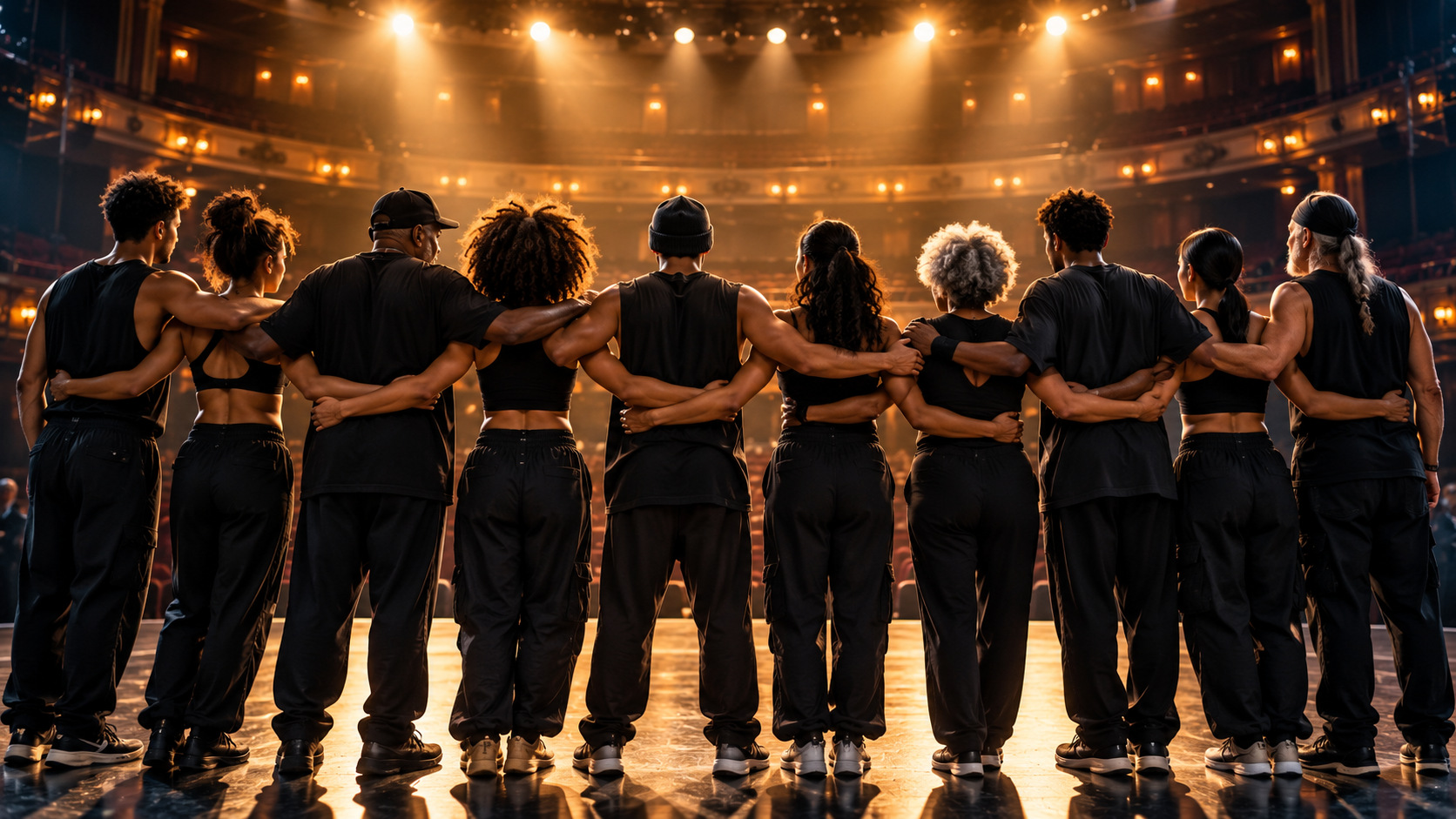
Maybe the elephant in the room was never the student who became the competition. Maybe it is an industry that has never built enough sustainable opportunity for the people who teach, preserve and advance the art form.
Until that changes, teachers and students still have choices. Teachers can protect their livelihoods without holding anyone back. Students can build their names without erasing anyone else's. Employers can pay for experience and credit lineage. And all of us can say out loud what used to be whispered.
Teaching the next generation should be an act of cultural preservation, not professional self-destruction. The true measure of a healthy dance community is not only how many new artists it develops. It is whether the artists who built the foundation can still live, create and thrive beside them.
Frequently Asked Questions
Is it normal for a dance teacher to feel threatened by a former student's success?
Yes. Workplace research on "precocity threat" found that exposure to younger, higher-status colleagues was linked to lower career engagement and performance. In dance, where work is often freelance and job growth is slow, the feeling is also a reasonable response to real economic pressure. The goal is to manage it, not to be ashamed of it.
Do former students owe their dance teachers anything?
Acknowledging teachers and respecting others' original work are important professional practices. Asking permission where original choreography is protected or restricted by an agreement can prevent disputes. Students do not owe lifelong obedience, unpaid labor or limits on their careers.
Can choreography be copyrighted?
Original choreography can be protected by copyright in the United States when it is fixed in a recording or notation, according to the U.S. Copyright Office's Circular 52. Individual steps, social dances and simple routines cannot. In 2023, a federal appeals court allowed choreographer Kyle Hanagami's lawsuit against Epic Games to proceed, ruling that even a short segment of registered choreography can matter.
Who owns choreography a teacher creates for a studio or school?
It depends on the agreement. Work created by an employee as part of the job can be a "work made for hire" owned by the employer, as a federal appeals court found for many of Martha Graham's dances in 2004. Teachers should agree in writing on ownership, credit and permitted uses before creating new work.
Can a dance studio stop a former teacher or student from teaching nearby?
There is no nationwide ban on non-compete agreements; the Federal Trade Commission's attempted rule was set aside by a court, and the agency dropped its appeal in September 2025. Whether a specific non-compete is enforceable depends on state law and the wording of the agreement. Anyone signing or enforcing one should get legal advice.
How much do dancers and dance teachers earn?
The U.S. Bureau of Labor Statistics reports a median hourly wage of $24.80 for dancers and $26.59 for choreographers in May 2025, not counting self-employed workers. Dance/NYC's 2023 census found New York City dancers and choreographers earned an average of about $23,000 a year from dance.
Where can older or transitioning dancers get career help?
The Entertainment Community Fund runs Career Transition For Dancers, which offers counseling and scholarships, and Creativity Doesn't Age, which supports performing arts professionals in their 50s and older. The Dance Artists' National Collective shares contract templates and advocacy resources.
Continue Your Journey
• I Wanted to See You Win—Just Not More Than Me — Envy, conditional support and how to change
• Mentorship — Building relationships that lift both people
• Career and Craft — Turning skill into a sustainable living
• Dance Creating Stability — How dancers build financial and creative independence
• Understanding Credit Before You Need It — Financial foundations for working artists
• The Legacy — The pioneers whose work every generation stands on
Research and sources
Dance/NYC, State of NYC Dance 2023: Findings from the Dance Industry Census (December 2023).
U.S. Bureau of Labor Statistics, Occupational Outlook Handbook: Dancers and Choreographers (last modified September 14, 2026; wages May 2025; projections 2025–35).
Harvard Kennedy School, Mossavar-Rahmani Center, "Precocity Threat: Exposure to Younger, More Successful Colleagues Undermines Job Performance and Career Engagement" (2021).
Sonia York-Pryce, "Agency and Autonomy: How Are Senior Professional Dancers Forging a Presence Within an Ageist Dance Culture?" (2026); Still Moving (Intellect).
Kathy E. Kram, "Phases of the Mentor Relationship," Academy of Management Journal 26, no. 4 (1983): 608–625.
USC Glorya Kaufman School of Dance, "Biennial Cypher Summit Creates Space for Intergenerational Dialogue" (February 25, 2026).
U.S. Copyright Office, Circular 52; Hanagami v. Epic Games, Inc., 85 F.4th 931 (9th Cir. 2023); Martha Graham School and Dance Foundation, Inc. v. Martha Graham Center of Contemporary Dance, Inc. (2d Cir. 2004).
American Guild of Musical Artists, contract highlights, AGMA and Dance Theatre of Harlem (January 9, 2026).
Entertainment Community Fund program pages; Federal Trade Commission, non-compete rule vacatur (September 2025); The New York Times, profile of Jalaiah Harmon (February 2020).
© 2026 Dance Mogul Magazine LLC | dancemogul.com | Inspiring Self-Empowerment Through Dance Culture