
DMM ARCHIVE | EXCLUSIVE INTERVIEW | BREAKING HISTORY
B-Boy Silverback: How Steve Graham Helped Build UDEF, the Pro Breaking Tour and the Silverback Open
Dance Mogul Magazine revisits its 2015 interview with Steve “B-Boy Silverback” Graham—an early conversation about breaking, philanthropy, ownership, business structure and the effort to build a sustainable competitive ecosystem around the culture.
By Dance Mogul Magazine | B-Boying / Breaking / Dance Industry
Original interview: 2015 Silverback Open | Archival feature updated: August 2026
Before breaking reached the Olympic stage, before the language of national teams and qualification systems entered the mainstream conversation, people inside the culture were already wrestling with a different question: How do you build an infrastructure around breaking without taking the culture away from the people who created and carried it?
That question sits at the center of a Dance Mogul Magazine interview recorded at the 2015 Silverback Open with Steve Graham, known throughout the breaking community as B-Boy Silverback. What makes the conversation important today is not simply that Silverback was helping finance major events. It is that he was openly describing an economic and organizational model—one intended to connect breakers, promoters, sponsors, education, philanthropy and community reinvestment.
More than a decade later, the interview reads like a snapshot of breaking at a pivotal moment: a culture with global talent and powerful independent events, but still searching for ways to coordinate resources, create professional opportunities and retain meaningful ownership of its future.
ARCHIVE SNAPSHOT
Silverback encounters breaking in New York, then trains in the South Bronx.
Silverback and Cros1 form UDEF and the Pro Breaking Tour; the tour formally launches in 2014.
Dance Mogul interviews Silverback and documents the Pro Breaking Tour and Silverback Open in a 76-page issue.
The fifth Silverback Open draws nearly 850 breakers from 50 countries.
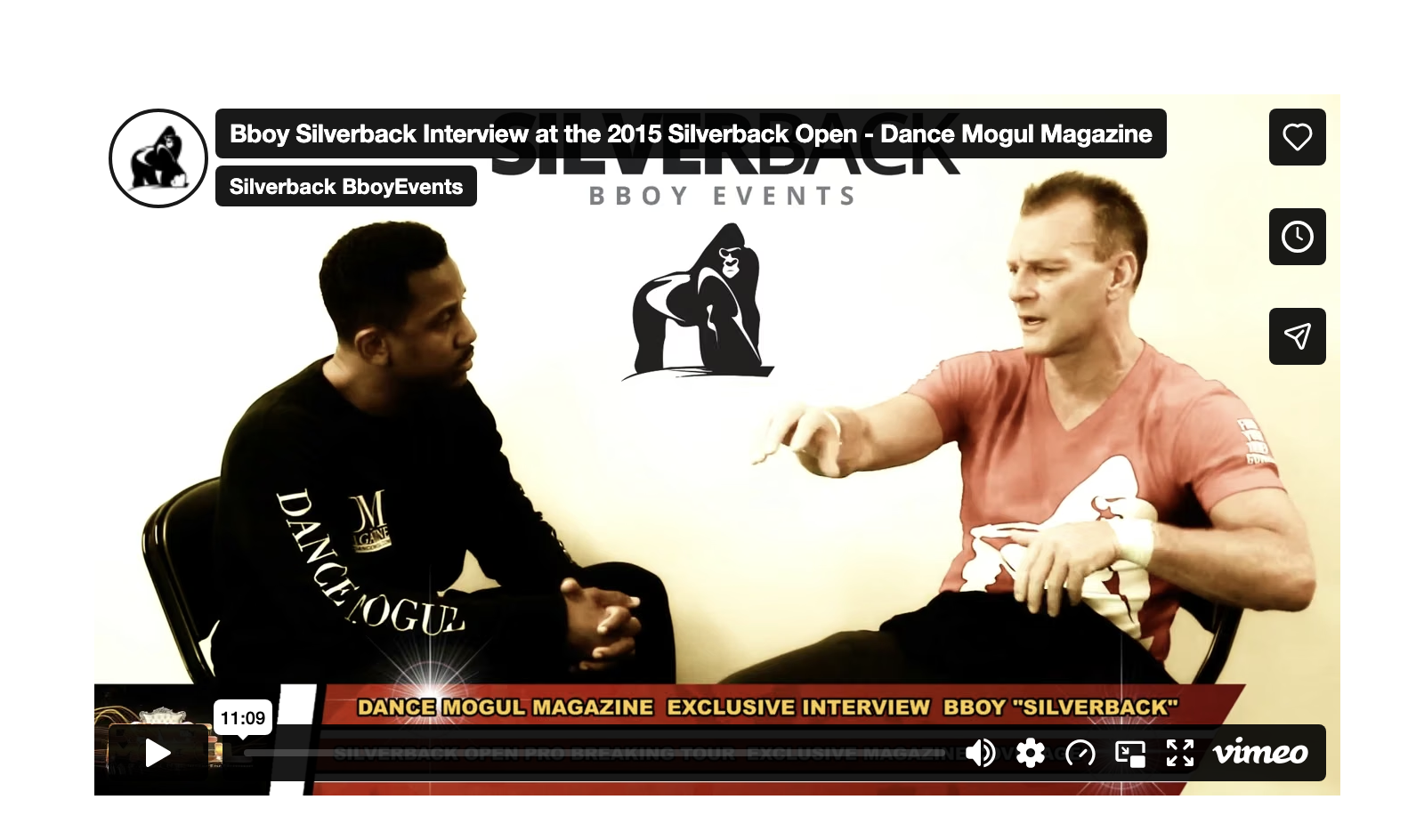
Watch the Dance Mogul Magazine Exclusive Interview
This is the archival interview at the center of this feature. Recorded at the 2015 Silverback Open, the conversation captures Silverback explaining how he found breaking, why he began directing philanthropic resources toward the scene, and why he believed the culture needed stronger coordination among breakers, promoters and outside partners.
Dance Mogul Magazine exclusive interview with B-Boy Silverback at the 2015 Silverback Open.
“There was a component of it that is not just the arts, but it’s very explosive and athletic and dynamic—and a lot of swagger to it.”
— B-Boy Silverback, Dance Mogul Magazine interview; lightly punctuated for clarity.
Who Is B-Boy Silverback?
Steve Graham’s route into breaking was unusual. His official Silverback history says he first encountered breaking in 1983 at New York’s Roxy while working as a financial analyst at Goldman Sachs. In 1984, he learned the basics of breaking from Mr. Wiggles, Fast Break and other local crew members at the former P. Lynch Community Center P.A.L. in the South Bronx. The same history says he later joined Wayne Blizz and the Float Committee.
In the Dance Mogul interview, Silverback remembers being drawn to the movement because it combined art, athleticism, explosiveness and swagger. He describes leaving late nights on Wall Street and using the ride home as a way to get to the South Bronx to train. The contrast was striking: corporate finance during the day, breaking culture at night.
His official archive also reaches back to showcase events at Dartmouth College in 1984 and 1985 featuring Mr. Wiggles, Fast Break and other dancers from the South Bronx. Those early activities matter because they place Silverback’s later sponsorship work within a much longer personal relationship to the culture than the large championships for which he became widely known.
The Bigger Idea: Build an Ecosystem Around the Breakers
The most revealing part of the interview comes when the conversation moves beyond Silverback’s personal history and into his thinking about infrastructure.
He explains that he loved the breaking scene and saw event sponsorship as a form of philanthropy with immediate community impact. Instead of simply funding an institution from a distance, he could put resources into an event and see hundreds—or sometimes thousands—of people brought together through competition, movement, education and community.
“What I’d like to do is infuse some resources, some capital, some energy and organization into the scene in a way that could potentially create almost a little ecosystem around the B-Boy events.”
— B-Boy Silverback, Dance Mogul Magazine interview; lightly edited from the supplied transcript for obvious transcription errors and punctuation.
That word—ecosystem—is the key to understanding what Silverback was describing. His idea was not simply to make one larger battle. It was to create a structure in which independent events could remain connected to their communities while gaining access to resources, sponsors, media attention and a broader competitive circuit.
In the interview, he also describes the educational side of the model: promoters learning how to coordinate, package events, approach sponsorship, attract capital and become more business-savvy. The ambition was to help a grassroots scene understand the tools commonly used in professional sports and business without pretending breaking had to become something other than itself.
UDEF and the Pro Breaking Tour
The official Pro Breaking Tour history states that in 2013 B-Boy Silverback partnered with Cros1 of Freestyle Session to form both UDEF—the Urban Dance & Educational Foundation—and the Pro Breaking Tour. The tour was formally launched in January 2014.
That detail is important because it shows the project was collaborative from its foundation. The objective was to connect existing promoters and competitions rather than erase them. In the Dance Mogul interview, Silverback speaks directly about the difficulty of getting independent promoters to trust one another and coordinate. His argument was straightforward: without coordination, the scene would continue competing against itself for spectators, media attention and sponsorship dollars.
Silverback described UDEF as a public 501(c)(3) charity and said the nonprofit structure was intended to cycle resources back into the community through activities such as teaching events and workshops. In his telling, the organizational structure was also meant to create a pathway toward greater ownership: breakers and promoters participating in the system rather than simply becoming labor for someone else’s platform.
“By putting a structure together, we can offer an exciting opportunity for the media, for the corporate sponsors and for the spectators.”
The Silverback Open Put Resources on the Battle Floor
The Silverback Open became the most visible expression of that strategy. Silverback Bboy Events describes the championship as a major prize-money event on the global breaking landscape, with five editions showcasing hundreds of elite breakers and prize pools that eventually exceeded $100,000.
The growth can be traced in the event’s own records. The first Silverback Open in 2014 paid $58,400 in cash prize money, along with additional awards and travel. At the 2015 edition—the event where Dance Mogul conducted this interview—the championship paid $90,150 in cash prize money and provided travel opportunities connected to Freestyle Session and Undisputed. In 2016 the event paid $100,000, and in 2017 it paid $106,500.
By 2018, the fifth Silverback Open had moved to Philadelphia’s 2300 Arena and drew nearly 850 breakers from 50 countries. The scale mattered, but so did the underlying message: breakers were competing in an environment where prize money, professional production, international travel pathways and global visibility were being treated as serious parts of the competitive culture.
Dance Mogul Magazine Was There in 2015
For Dance Mogul Magazine, this is not history observed from a distance. DMM documented the movement while it was happening.
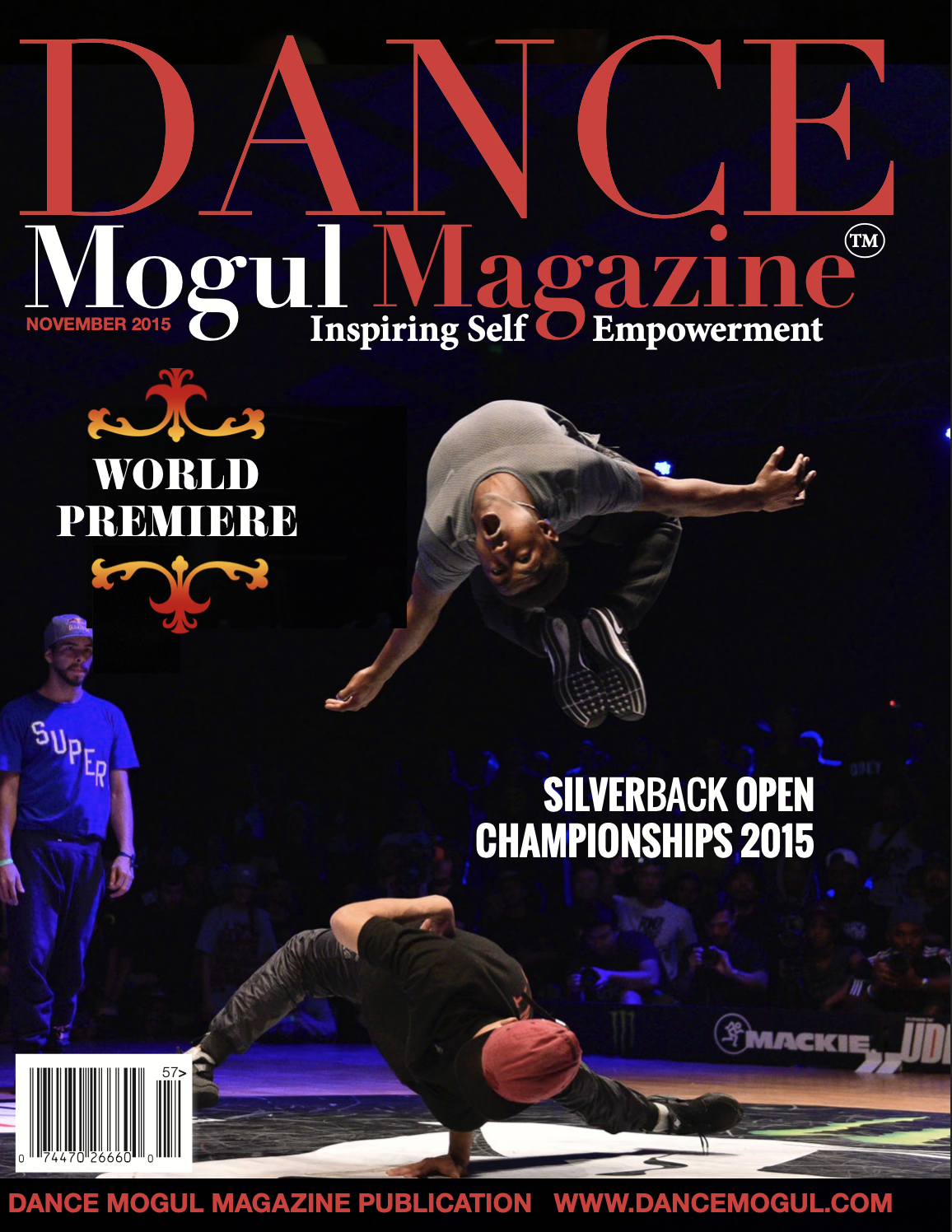
Silverback’s own official archive now identifies the “Bboy Silverback Interview at the 2015 Silverback Open – Dance Mogul Magazine” among its interview records. Its Silverback Open history goes even further, recording that Dance Mogul Magazine featured UDEF’s Pro Breaking Tour and the 2015 Silverback Open and dedicated an entire 76-page issue to the competitive breaking scene.
Why this matters to the DMM archive
An independent organization preserving a Dance Mogul interview and magazine issue inside its own historical record creates an external receipt for DMM’s role as a documentarian of the culture. The value is not that DMM can simply say it was there. The value is that the people and organizations being documented preserved the coverage too.
That is exactly why archival publishing matters. A magazine story may begin as event coverage, but over time it can become evidence: who was building, what they believed, how the scene described itself and which ideas were already in motion before the wider public arrived.
DMM’s existing Silverback / UDEF magazine archive page and the original video interview now belong together as part of that record.
A “Win-Win-Win” Model for Breaking
Silverback repeatedly returned to the idea that growth did not have to be a zero-sum game. He described a system where breakers could win as the talent, promoters could win as the risk-takers organizing events, and sponsors could win by supporting a young, culturally influential audience.
The most important part of the model was the belief that the people already inside breaking should become more capable of controlling the business around their own culture.
“Ultimately, you guys can take control of your own destiny.”
That line gives the interview its lasting value. Money and sponsorship were tools. Organization was a tool. The tour was a tool. The larger question was whether those tools could help the community gain leverage rather than simply create a more marketable product for outsiders.
From Independent Battles to the Olympic Era
By the time breaking made its Olympic debut in Paris in 2024, the conversation about infrastructure had become impossible to ignore. NBC Olympics described Graham as a key player in breaking’s modern competitive growth and noted his long-running support of events, showcases and dancers through Silverback Bboy Events and UDEF.
But the same Olympic-era coverage also captured an important tension. Silverback emphasized that breaking is a culture, not merely a competitive sport, and warned about the risk of exploitation when outside attention grows faster than community control. That concern connects directly back to the 2015 Dance Mogul conversation.
The interview was never only about making breaking bigger. It was about asking who benefits when it gets bigger, who owns the structure, who develops the business knowledge, and whether resources circulate back toward the people who built the scene.
Why This Interview Belongs in Dance History
Dance history is often told through champions, signature moves and famous battles. Those records matter. But cultures also change because someone builds a stage, funds a prize, creates a tour, connects promoters, brings in a sponsor, pays for documentation or asks a community to think differently about ownership.
B-Boy Silverback’s contribution sits in that second category: infrastructure.
His story connects Wall Street and the South Bronx, philanthropy and street culture, corporate strategy and grassroots competition. It is not a simple story, and it should not be reduced to one. The historical importance is in the attempt to transfer resources and organizational thinking into a community-driven competitive system while remaining in conversation with breakers and promoters themselves.
For Dance Mogul Magazine, revisiting this interview is also a reminder of why long-form cultural documentation matters. DMM was interviewing builders inside breaking years before the Olympic spotlight made the culture a mainstream sports story. The archive allows those voices to be heard in the context in which they originally spoke.
That is the work: not waiting until history is finished, but documenting the people shaping it while they are still building.
Explore More Breaking History at Dance Mogul Magazine
Continue through the DMM archive:
- B-Boying coverage and interviews
- Breaking archive
- Dance Mogul Magazine Exclusive Interviews
- Search the complete Dance Mogul Magazine Article Library
Frequently Asked Questions
Who is B-Boy Silverback?
B-Boy Silverback is Steve Graham, a businessman, former breaker and philanthropist whose involvement in breaking reaches back to New York in the early 1980s. He later supported competitive breakers and events through Silverback Bboy Events and helped form UDEF and the Pro Breaking Tour.
Did Silverback found UDEF?
According to the official Pro Breaking Tour history, B-Boy Silverback partnered with Cros1 of Freestyle Session in 2013 to form UDEF, the Urban Dance & Educational Foundation, and the Pro Breaking Tour. For historical accuracy, DMM describes him here as a co-founder rather than the sole founder.
What was the Pro Breaking Tour?
The Pro Breaking Tour was a coordinated competitive breaking circuit formally launched in 2014. Its model connected existing promoters and events while creating a larger structure intended to attract sponsorship, media attention and professional opportunities for breakers.
What was the Silverback Open?
The Silverback Open Championships were major international prize-money breaking competitions organized by Silverback Bboy Events. Five editions were held from 2014 through 2018, with prize pools reaching more than $100,000 and the 2018 event drawing nearly 850 breakers from 50 countries.
When did Dance Mogul Magazine interview B-Boy Silverback?
Dance Mogul Magazine interviewed B-Boy Silverback at the 2015 Silverback Open. Silverback’s official website preserves the DMM interview in its interview archive.
Did Dance Mogul Magazine publish a Silverback Open issue?
Yes. Silverback Bboy Events’ own event history states that Dance Mogul Magazine dedicated a 76-page issue to UDEF’s Pro Breaking Tour and the 2015 Silverback Open.
Sources & Historical Record
- Silverback Bboy Events — Silverback History
- Silverback Bboy Events — Interview & News Archive
- Silverback Bboy Events — Prior Silverback Open Championships
- Pro Breaking Tour — About / UDEF History
- NBC Olympics — Breaking Rises to the Olympic Stage With Its Culture in Mind
- Williams Today — Steve Graham ’82 / Purple in Paris
Editorial note: The 2015 interview transcript used for this archival feature was machine-generated. Direct quotations have been conservatively punctuated and corrected only for obvious transcription errors where the intended wording is clear. Historical names and organizational claims were cross-checked against official Silverback and Pro Breaking Tour sources.
© 2026 Dance Mogul Magazine LLC | dancemogul.com | Inspiring Self-Empowerment Through Dance Culture