
IDL 2026 Coverage · Media & Business
Dance Enters the Arena: The International Dance League Lands a Global ESPN Deal
The world's first professional dance league is on mainstream sports television. Here is what the ESPN partnership means, how the first season ended, where to watch and how dancers can get in.
Dance Mogul Magazine is an independent publication covering IDL. League names, results and official data remain attributed to the International Dance League.
- IDL and ESPN announced a global rights agreement on July 27, 2026 — the league's first media-rights deal.
- U.S. viewers get IDL on ESPN2; the LA Series airs Oct. 14 and the Championship Oct. 21, both 7 p.m. ET.
- Internationally, IDL streams on Disney+ and airs on ESPN in select markets.
- The season ended with GRV as Season Champion and Brotherhood undefeated in the regular season.
The Announcement
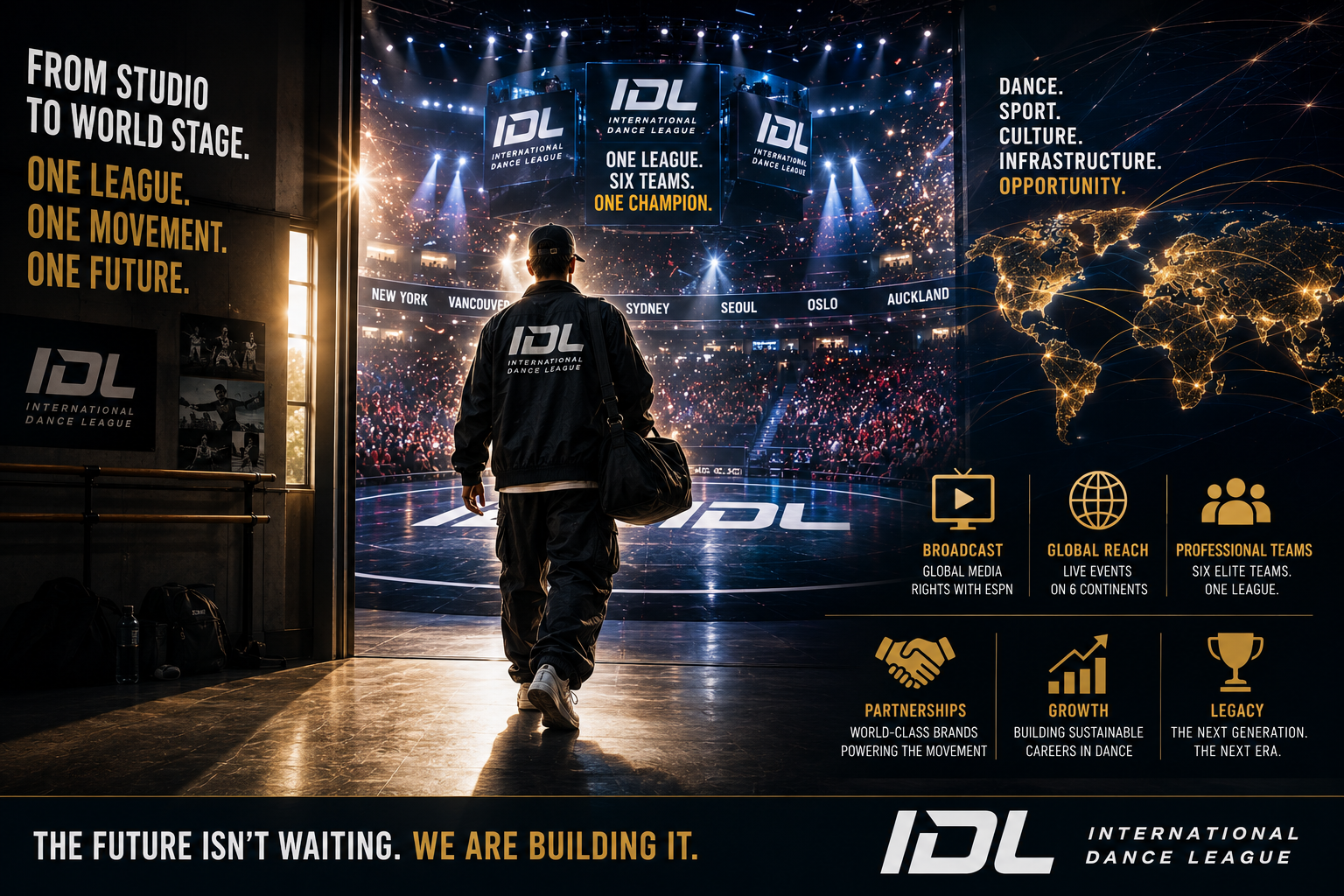
On July 27, 2026, the International Dance League (IDL) and ESPN announced a global rights agreement for the 2026 season — the league's first-ever media-rights deal. IDL events air on ESPN2 in the United States, with international coverage on ESPN and Disney+ across select markets. Six professional teams. A regular season. A championship. And, for the first time, a professional dance league treated like a professional sport on one of the world's biggest media platforms.
There are moments when an industry changes not because the art suddenly becomes more valuable, but because the infrastructure around that art finally catches up to a value that was already there. Professional dance is living through one of those moments right now.
As a father-and-son, Black-owned dance publication, Dance Mogul Magazine has spent years documenting the same quiet contradiction: dancers create enormous cultural and economic value, yet rarely share in the business built on top of it. The IDL–ESPN agreement is a real crack of daylight in that story — and it deserves to be understood clearly, not just celebrated loudly.
Dance Already Had the Audience
Let us be clear about the order of events. Dance did not become culturally relevant because ESPN arrived. Dance has driven popular culture for generations — shaping music, fashion, advertising and the social-media trends that move faster than almost anything else online. The audience was never in question.
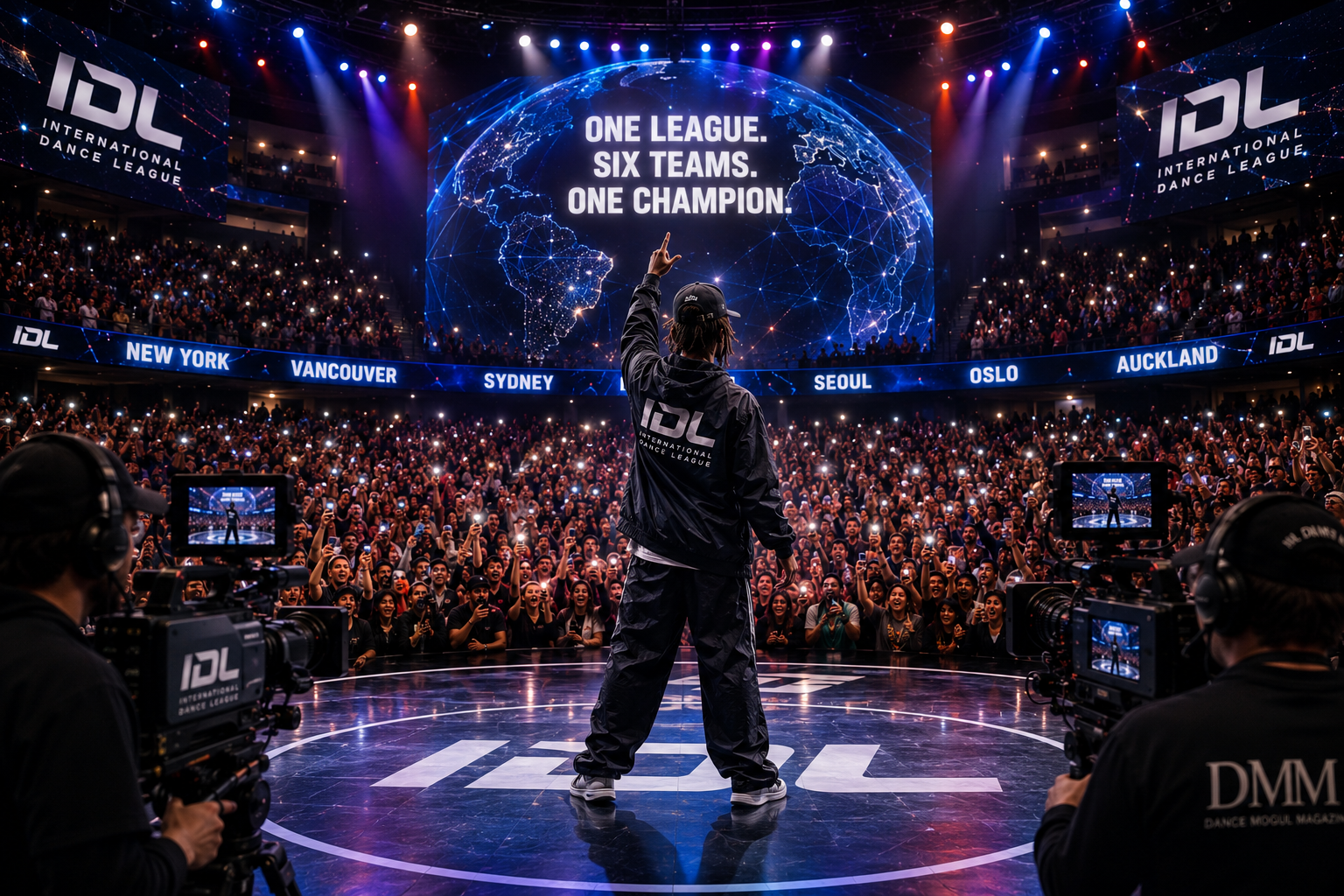
The numbers make it plain. By the time the deal was announced, IDL reported more than 650 million views and impressions since its May 2026 season opener, and its events in New York, Vancouver and Sydney had all sold out. By the end of the season, the league said it had passed 1 billion views worldwide. In the words of IDL CEO and co-founder Connor Lim, “Dance already has one of the most passionate fanbases in the world.” The audience existed first. The media-rights agreement followed.
What Exactly Is the International Dance League?
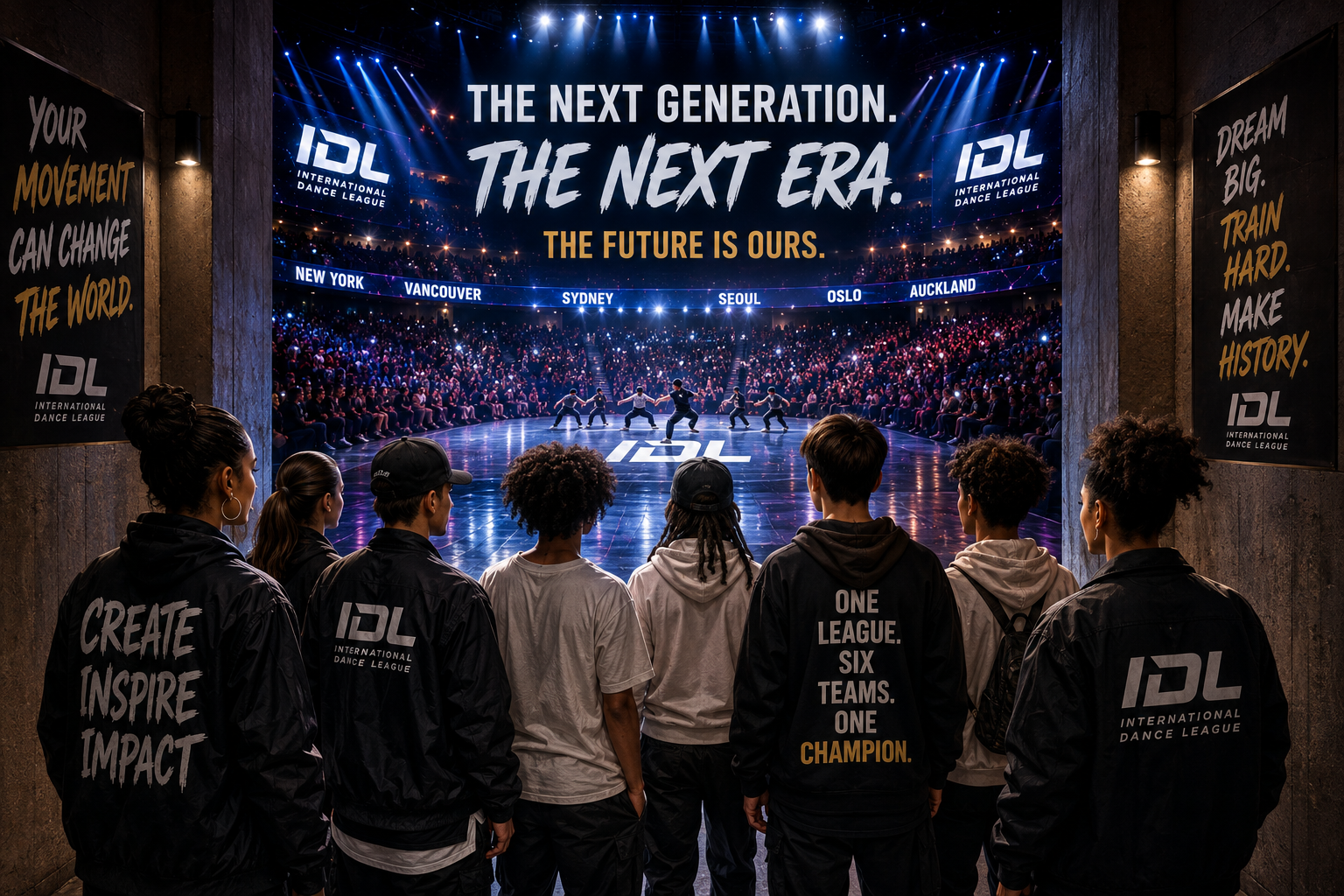
The IDL describes itself as the world's first global professional dance league. It grew out of STEEZY, the digital dance-training platform, with a simple thesis: dancers deserve the same respect, resources and structure that athletes in traditional sports already have. Instead of organizing dance around one-off competitions, IDL borrows the architecture of professional sports — contracted teams, a regular season, standings, multi-city events and a championship.
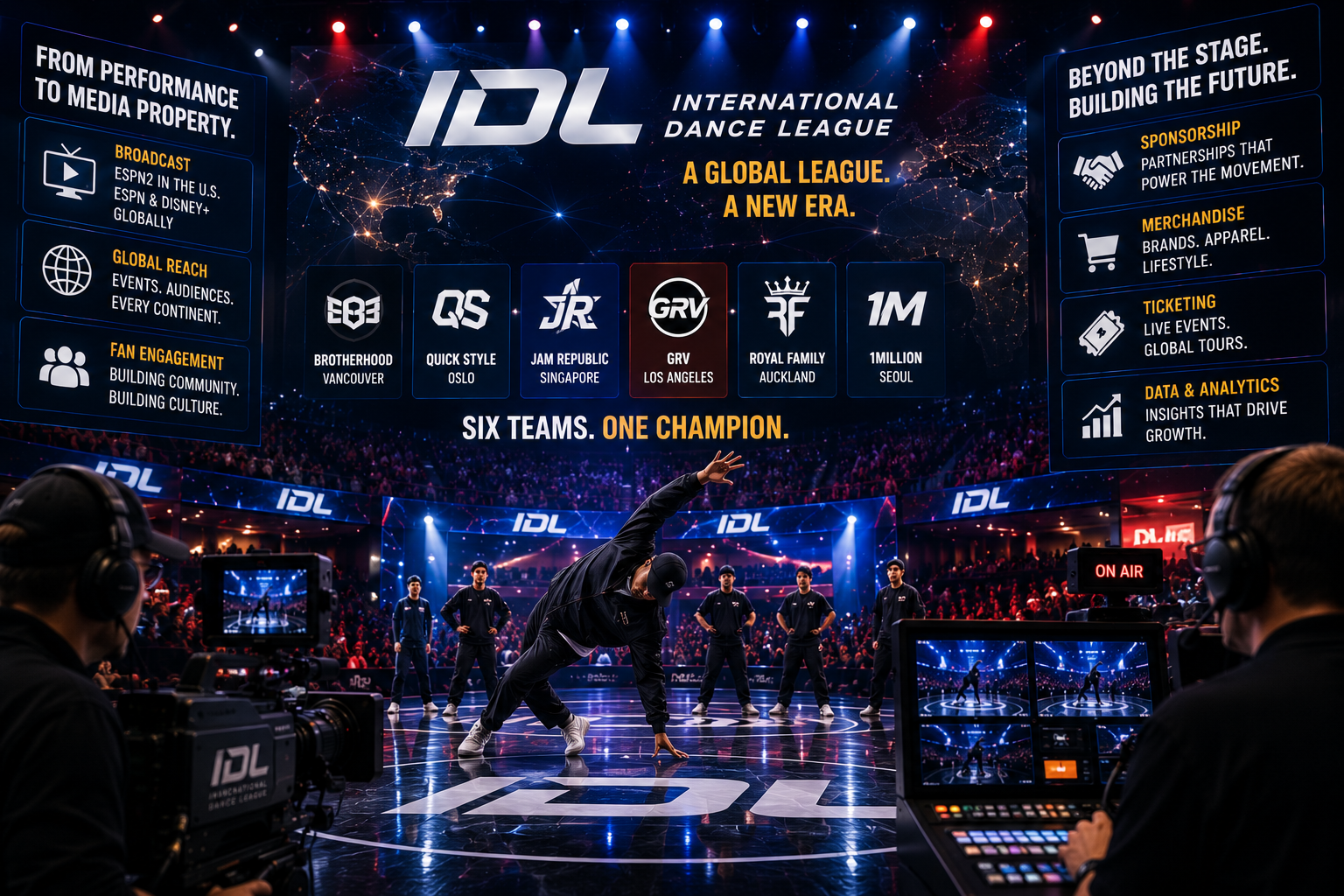
Six professional teams competed in the inaugural season: Brotherhood (Vancouver, Canada), Quick Style (Oslo, Norway), Jam Republic (Southeast Asia, based in Singapore), GRV (Los Angeles, USA), Royal Family (Auckland, New Zealand) and 1MILLION (Seoul, South Korea). These are not anonymous crews — their members carry credits with artists and stages the whole world knows. What changes is the container. The dancer becomes part of a team. The team becomes part of a league. The league produces a season. And a season produces the continuing storylines that turn casual viewers into returning fans. That is precisely how sports properties become valuable.
Why ESPN Changes the Scale of the Conversation
Dance on television is not new; it has been successful TV entertainment for decades. A media-rights agreement is a different animal. A television appearance provides exposure. A media-rights relationship treats the competition itself as a media property — and this is IDL's first such deal.
That distinction matters because it opens the door to the full ecosystem that surrounds established sports: broadcasting, sponsorship, advertising, merchandising, licensing, digital content, athlete storytelling, ticket sales and international distribution. None of that is guaranteed simply because ESPN is involved. But the infrastructure makes each of those pathways far more possible than it was a year ago.
How and Where to Watch
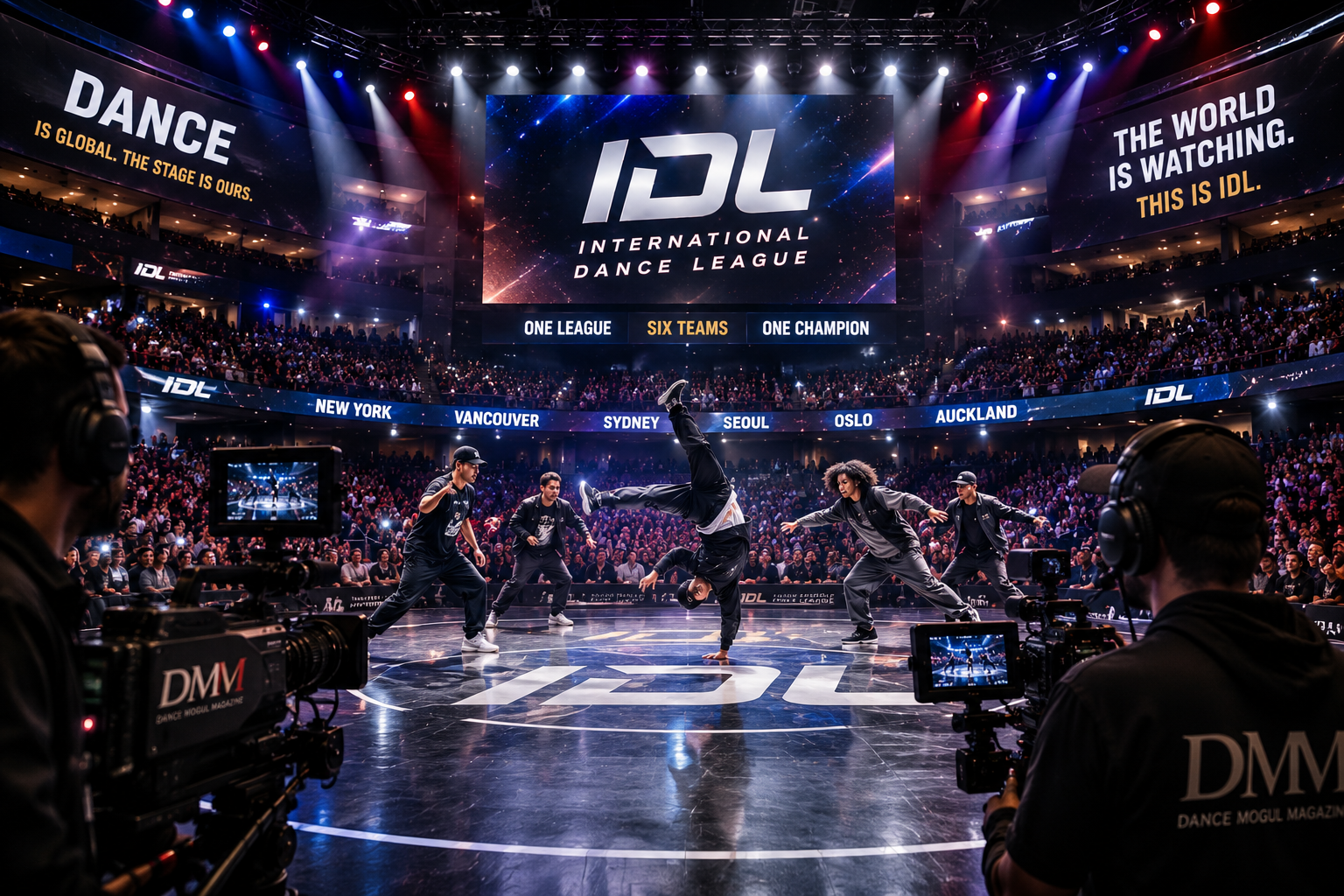
Here is the practical part. In the United States, the 2026 season airs on ESPN2 as special TV cuts of each event rather than fully live, so treat these as appointment viewing. Two broadcasts are still ahead:
| Event | ESPN2 air date | Status |
|---|---|---|
| New York Series | Tue., July 28 · 7 p.m. | Aired |
| Vancouver Series | Mon., Aug. 10 · 7 p.m. | Aired |
| Sydney Series | Mon., Aug. 17 · 7 p.m. | Aired |
| Seoul Series | Wed., Aug. 26 · 9 p.m. | Aired |
| Los Angeles Series | Wed., Oct. 14 · 7 p.m. | Upcoming |
| Championship | Wed., Oct. 21 · 7 p.m. | Upcoming |
Internationally, IDL lists ESPN coverage in Australia, New Zealand, the Caribbean and Mexico, with Disney+ streaming on premiere day in Brazil and across South America, the Philippines, South Korea, Japan, Singapore, Taiwan and Hong Kong. Beyond the broadcast, the league's own channels are the richest place to follow along: every routine and full-event replays live on IDL's YouTube channel, with day-to-day content on Instagram and TikTok at @idl.global. For schedules, standings and official announcements, idl.pro is home base, and its free “Never Miss a Beat” newsletter delivers event updates, early ticket access and merch drops.
The Money Behind the Movement
The ESPN deal did not appear out of nowhere. In November 2025, IDL announced a $7 million seed round led by Elysian Park Ventures — the private-investment arm connected to the ownership group of Major League Baseball's Los Angeles Dodgers — with additional backing from KB Partners, APEX and individual investors across sports, entertainment and technology. That capital was aimed squarely at infrastructure: technology, event production, team operations and logistics.
The commercial ecosystem was already forming, too. Honda came aboard as a founding partner and presenting partner of the Honda Stage; Shopify signed on as commerce partner; and e.l.f. Cosmetics, CÎROC and Red Bull joined the season's partner roster. No single sponsor is the story. The pattern is the story: investment, sponsorship, ticket sales, media rights, merchandise and global distribution, assembled in one place. Put those pieces together and you begin to see the outline of a professional dance economy.
Auditions, Showcases and How Dancers Actually Get In
This is the question every dancer and dance parent should be asking, so let us answer it honestly. The six headline teams are professional franchises — you do not simply audition into Brotherhood or 1MILLION. But IDL has built a real on-ramp called the Community Division, and this is where the pathway opens.
The Community Division selects top community teams to perform live at each season event. It is open to Juniors (17 and under) and Adults (18+), and both established and up-and-coming teams with real competition experience are encouraged to apply. Each event features 20 selected teams — 10 adult and 10 junior — and there is prize money: in the adult division, $10,000 for first, $5,000 for second and $1,000 for third; in the junior division, $5,000, $2,500 and $1,000. Teams apply by region and cover their own travel, and selection weighs performance quality, team cohesion, competition history and readiness for a live IDL stage.
One honest note on timing: the 2026 Community Division windows are closed. If your team is aiming at this, follow IDL directly, join the newsletter and watch for the next cycle. IDL has also signaled that affiliate competitions are coming — a wider pipeline into league slots as it expands its cities. The door is not fully open yet, but it is being built in public, and the dancers who study the process early will be first through it. For proof of what that stage can mean, San Diego's Choreo Cookies won the Community Division at the 2026 Championship, ahead of Los Angeles-based V MO and Dallas' Team Athena.
How the First Season Ended
When this story first published, Brotherhood had won every stop through Seoul and the finale was still ahead. Here is how it finished. Brotherhood completed an undefeated regular season by winning the Los Angeles Series on Sept. 19 — five cities, five wins, 70 points. One night later at the Shrine Expo Hall, No. 4 seed GRV won the Championship with a 94.00, edging Brotherhood (93.57) and Jam Republic (90.86) to become the league's first Season Champion in front of a sold-out hometown crowd.
That split — one team owning the season, another owning the title — is exactly the kind of continuing narrative that keeps audiences coming back (here is how both titles work). DMM is tracking it all on the IDL 2026 Season Dashboard.
What is changing now is the infrastructure surrounding that value. Media recognition can amplify dance. It does not create dance's importance. That distinction should never be forgotten.
Why This Matters to Dance Mogul Magazine
Dance Mogul Magazine was founded on the belief that dance culture deserves documentation, ownership, visibility and a platform that honors the people behind the movement. The IDL–ESPN agreement belongs in that larger conversation. For years, the central question across the dance industry has been how dancers move from being treated as background performers to participating fully in the business their creativity generates.
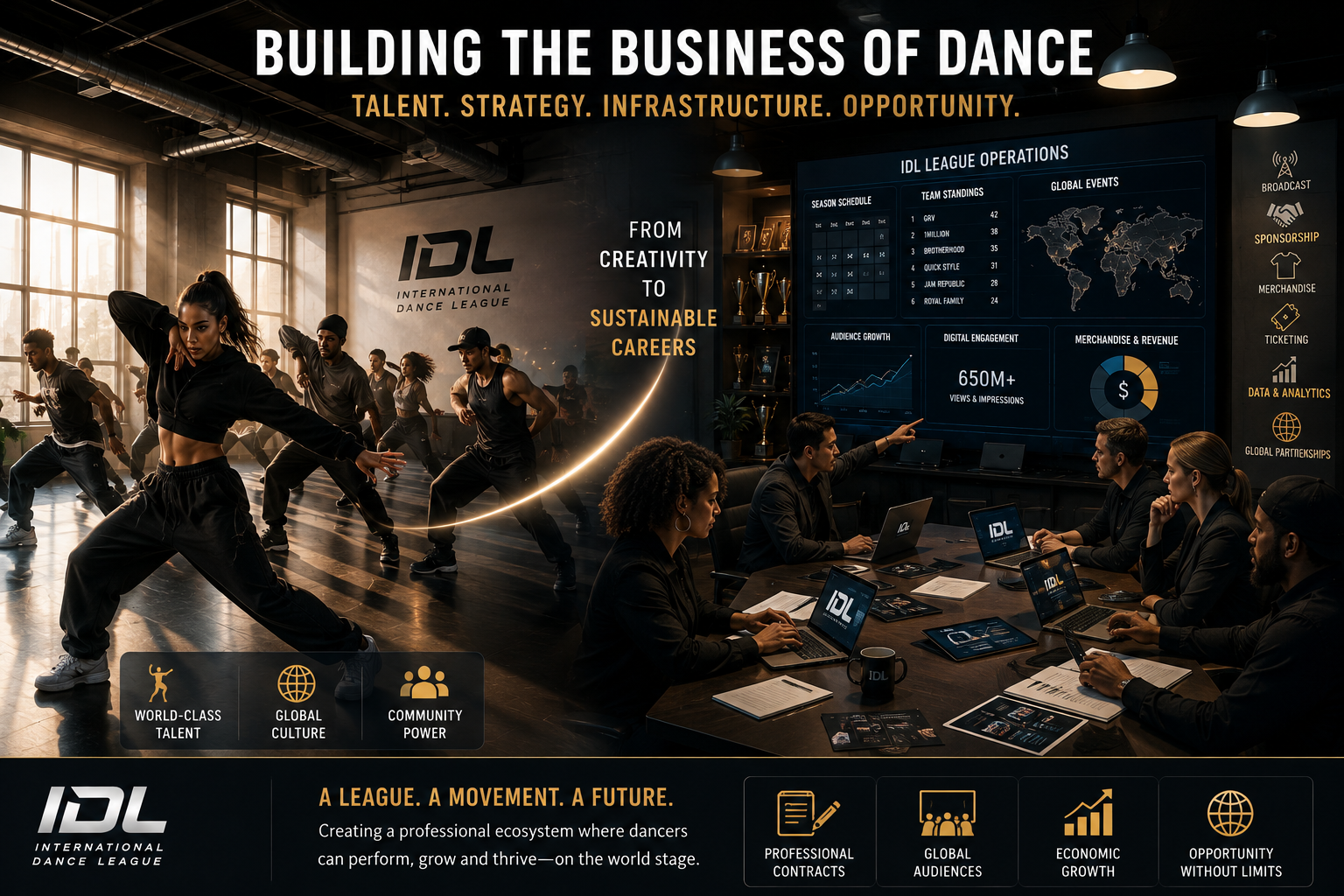
A professional league introduces another possibility. A dancer can become an athlete with a team identity. A team can build intellectual property. A season can generate storylines. Sponsors can invest in athletes, media companies can distribute those stories, and young dancers can finally see a career pathway that reaches past a single audition, music video or tour. That is not a guarantee — leagues require enormous capital, audience retention and operational discipline, and IDL has completed only one season. But the conversation has changed, and that alone is worth marking. Explore more of that world in our Dance Styles Hub and our ongoing Exclusive Interviews with the artists building it.
What the Next Generation Should Learn
Young dancers should watch more than the choreography. Study how teams are constructed. Study sponsorship, contracts, intellectual property, branding, broadcasting and audience development. Study how a dance organization turns attention into a sustainable business. Being extraordinary at your craft will always matter — but understanding the industry around your craft can decide whether someone else builds a business from your talent, or whether you help build that business yourself.
The ESPN agreement is not the finish line for professional dance. It is another beginning. Dance already has the creativity, the athletes, the personalities, the international communities and the audiences. What the industry has historically lacked is enough lasting infrastructure to connect them. IDL is attempting to build part of it, and ESPN is putting that experiment in front of a mainstream sports audience. Whether it transforms professional dance will be decided over years, not six broadcasts — but July 2026 may still be remembered as the moment the conversation changed. The question is no longer whether millions will watch dance. We already know they will. The more interesting question is what kind of industry dancers can build around that attention.
Keep Following the Culture and Business of Movement
Browse every style in our Dance Styles Hub, read Exclusive Interviews with the artists shaping the industry, and see partnership opportunities in our Media Kit. More in dance industry coverage.