
DMM DANCE WATCH · SCREEN MEMORY · DWTS SEASON 35
Julia Stiles Returns to Dance — and DWTS Is Testing a Memory the Audience Has Carried for 25 Years
The audience remembers Julia Stiles dancing in a movie. The ballroom is testing what belongs to the actor now, live, with no edit and no double to complete the image.
By Dance Mogul Magazine | DMM Dance Watch | September 17, 2026
Premiere score
18/30
Dance
Quickstep
Professional partner
Ezra Sosa
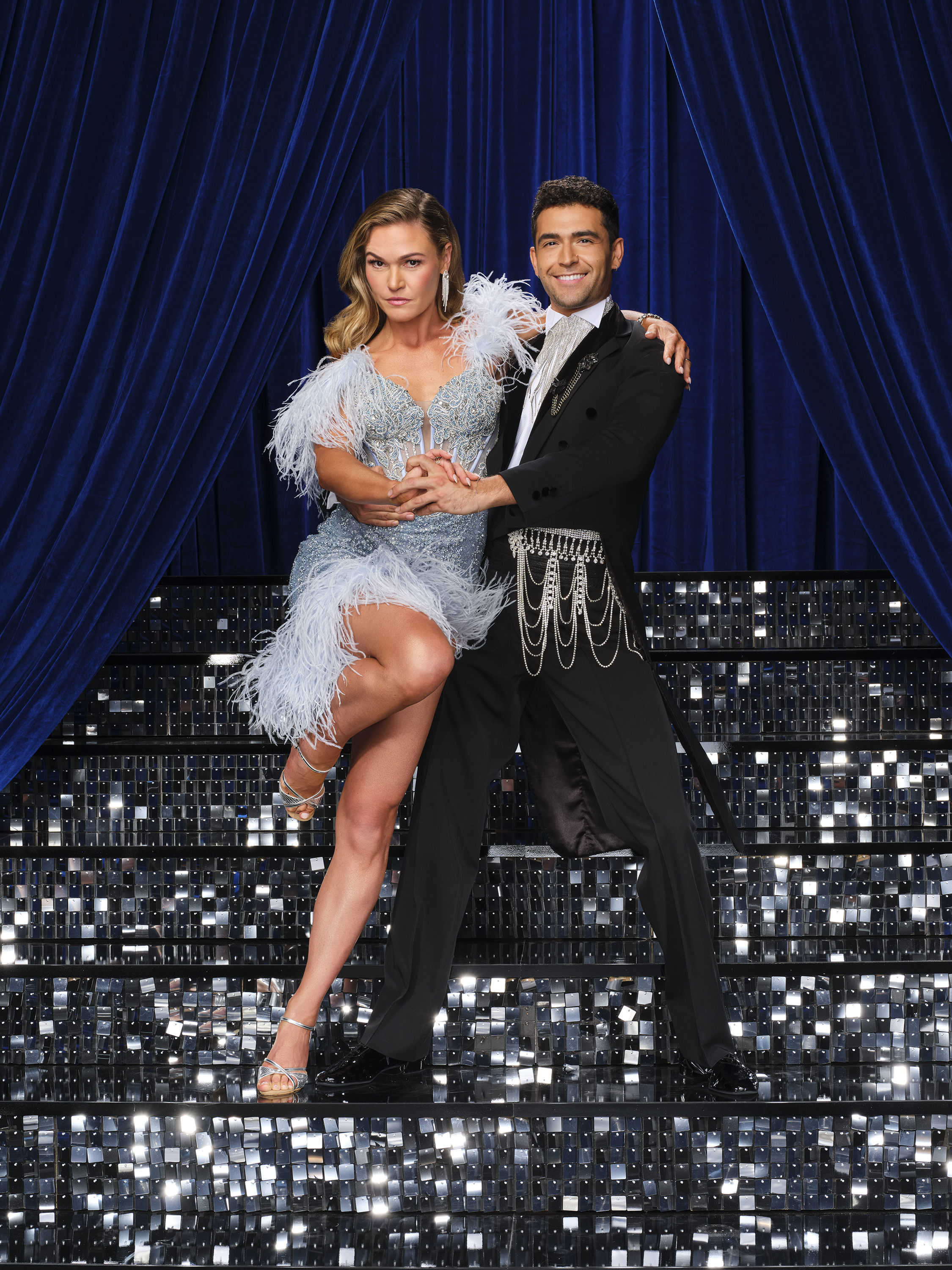
When Julia Stiles stepped onto the Dancing with the Stars floor with Ezra Sosa, she was not arriving alone.
A 25-year-old movie came with her.
Save the Last Dance made Stiles part of dance culture’s popular memory in 2001. The image endured: Sara Johnson, ballet ambition, hip-hop discovery, a Juilliard audition, a film whose emotional resolution depended on whether movement could carry the character into a new life. The association became so durable that Stiles’ real relationship to dance and her fictional character’s training were often allowed to blur together.
Season 35 has put that blur under live television lights.
The DMM question
What happens when an audience remembers an actor as a dancer longer than the actor has actually been dancing? Julia Stiles is not trying to recreate Save the Last Dance. The ballroom is asking her to establish a present-tense movement identity in front of viewers who already think they know one.
The actor, the character and the dancer were never the same person
ABC’s official Season 35 biography identifies Stiles as an actor, director, writer and producer. It does not present her as a professional dancer. Stiles herself has been direct about the distinction: in a September interview ahead of the premiere, she said she stopped taking dance classes after Save the Last Dance because the experience left her self-conscious.
That matters beyond celebrity trivia. Film can make a single body appear to contain several kinds of expertise. Rehearsal, choreography, camera placement, editing and professional doubles can be assembled into one continuous character. If the collaboration works, the audience remembers Sara dancing—not the production system that created Sara.
DMM has a particular reason to resist that simplification. Earlier this month, our archive identified Chryssie Whitehead as one of the professional dancers who doubled Stiles in the film. Whitehead’s own account connects her to portions of the ending and final audition sequence. She later built a career that included the Radio City Rockettes, Broadway and choreography.
That history does not diminish Stiles’ performance. It makes the performance legible. Screen dance is collaborative authorship.
Continue the Season 35 story
A quickstep offers nowhere for memory to hide
On Premiere Night Two, Stiles and Sosa danced a quickstep to Dolly Parton’s “9 to 5” and earned 18/30. The judges’ feedback was unusually useful because it separated what already worked from what still had to be built.
Derek Hough praised the grace and brightness, then asked for more attack and travel. Bruno Tonioli recognized her ability to stay in character but wanted the movement pushed further. Carrie Ann Inaba called the dance clean and expansive, while identifying a technical distinction dancers understand immediately: leaning is not the same as extending.
That distinction could become the story of Stiles’ season.
An actor can understand intention before the body has the mechanics to complete the intention. She can know where a phrase is going emotionally while the frame, feet and travel still need repetition. Character can create confidence. It cannot manufacture momentum across the floor.
Ezra Sosa has an unusual teaching problem
Sosa is not working with a blank slate. He is working with a performer whose greatest advantage may be interpretive rather than technical—and whose biggest public burden is a dance image made when she was young enough for audiences to mistake one role for a permanent credential.
The temptation would be to lean into nostalgia, to make every routine a referendum on whether Sara Johnson was secretly real. That would be easy television and limiting choreography.
A more interesting job is to use what Stiles actually owns now: dramatic intelligence, rehearsal discipline, timing as an actor, the ability to commit to a character and comfort communicating an idea to an audience. Sosa can build from those assets while the ballroom mechanics catch up underneath.
What DMM saw in the 18/30
The quickstep did not need more acting. It needed greater physical scale. The next gain is not to become more expressive; it is to let the expression travel farther through the body—cleaner extension, stronger drive, more sustained frame and enough energy to move the partnership across space without losing the clarity that already reads.
The ballroom changes the question of authorship
The difference between Stiles’ 2001 film and her 2026 competition is not simply age, genre or technique. It is authorship.
A film character can be constructed from many contributions and preserved forever in a final cut. A live ballroom routine gives the audience one attempt. The celebrity, the professional, the choreography, the mistakes and the recovery occupy the same two minutes. There is no dance double who can enter the frame after the fact and no edit that can tighten a line.
For a performer whose most famous dance association was built inside cinema, that makes DWTS more than a nostalgic casting choice. It is a chance to see where character ends and embodied skill begins—and, more importantly, where the two can begin to grow together.
A different way to read the comeback
The entertainment story writes itself: Julia Stiles dances again, confronts an old criticism, and returns to the cultural territory of Save the Last Dance.
The dance story is better.
A performer who stepped away from classes after becoming internationally associated with a dance film is now standing in a format where movement cannot be outsourced, edited or remembered for her. Every week produces a new physical record.
That record began at 18/30—not with the illusion of mastery, but with something more useful: a clean performance and a specific set of corrections.
What DMM is tracking next
Whether Stiles can turn theatrical presence into ballroom propulsion. Watch the travel, the extension through the ends of the limbs, the consistency of the frame and the willingness to attack a phrase without tensing against it. The goal is not to look more like the woman audiences remember from 2001. It is to make that memory less relevant every week.
Save the Last Dance gave Julia Stiles a permanent place in dance-film memory.
The ballroom is giving her the chance to author what comes after it.
Continue the Season 35 story
Reader questions
What score did Julia Stiles receive on the DWTS Season 35 premiere?
Julia Stiles and Ezra Sosa earned 18/30 for a quickstep to Dolly Parton’s “9 to 5.”
Was Julia Stiles a professional dancer before DWTS?
No professional dance career is identified in ABC’s official Season 35 biography. Stiles trained for Save the Last Dance, but professional dancers—including Chryssie Whitehead—performed some of the film’s more demanding material.
What is DMM watching in Julia Stiles’ development?
Whether her acting strengths—character, timing and communication—can be converted into more travel, attack, sustained frame and physical extension in ballroom.
Sources & reporting
DMM separated documented biography and reported facts from its own dance analysis. Primary sources are prioritized below; outside reporting is used where it contains direct comments or judges’ feedback not available in the press release.
- ABC/Disney Television Press — Julia Stiles official Season 35 biography
- ABC/Disney Television Press — Season 35 two-night premiere release
- TV Insider — Premiere Night 2 recap and judges’ comments
- Us Weekly — Stiles on why Save the Last Dance did not prepare her for DWTS
- Dance Mogul Magazine — Chryssie Whitehead and Julia Stiles’ Save the Last Dance double
© 2026 Dance Mogul Magazine LLC | dancemogul.com | Inspiring Self-Empowerment Through Dance Culture