
DMM DANCE WATCH · BUILDING THE DANCER · DWTS SEASON 35
Maura Higgins Didn’t Arrive as a Ballroom Dancer. Mark Ballas Built a Foxtrot Around What She Could Already Command.
A true beginner led Night Two. The compelling question is not whether Maura Higgins surprised the judges—it is how Mark Ballas built a dance around what she could already command.
By Dance Mogul Magazine | DMM Dance Watch | September 17, 2026
Premiere score
21/30
Dance
Foxtrot
Professional partner
Mark Ballas
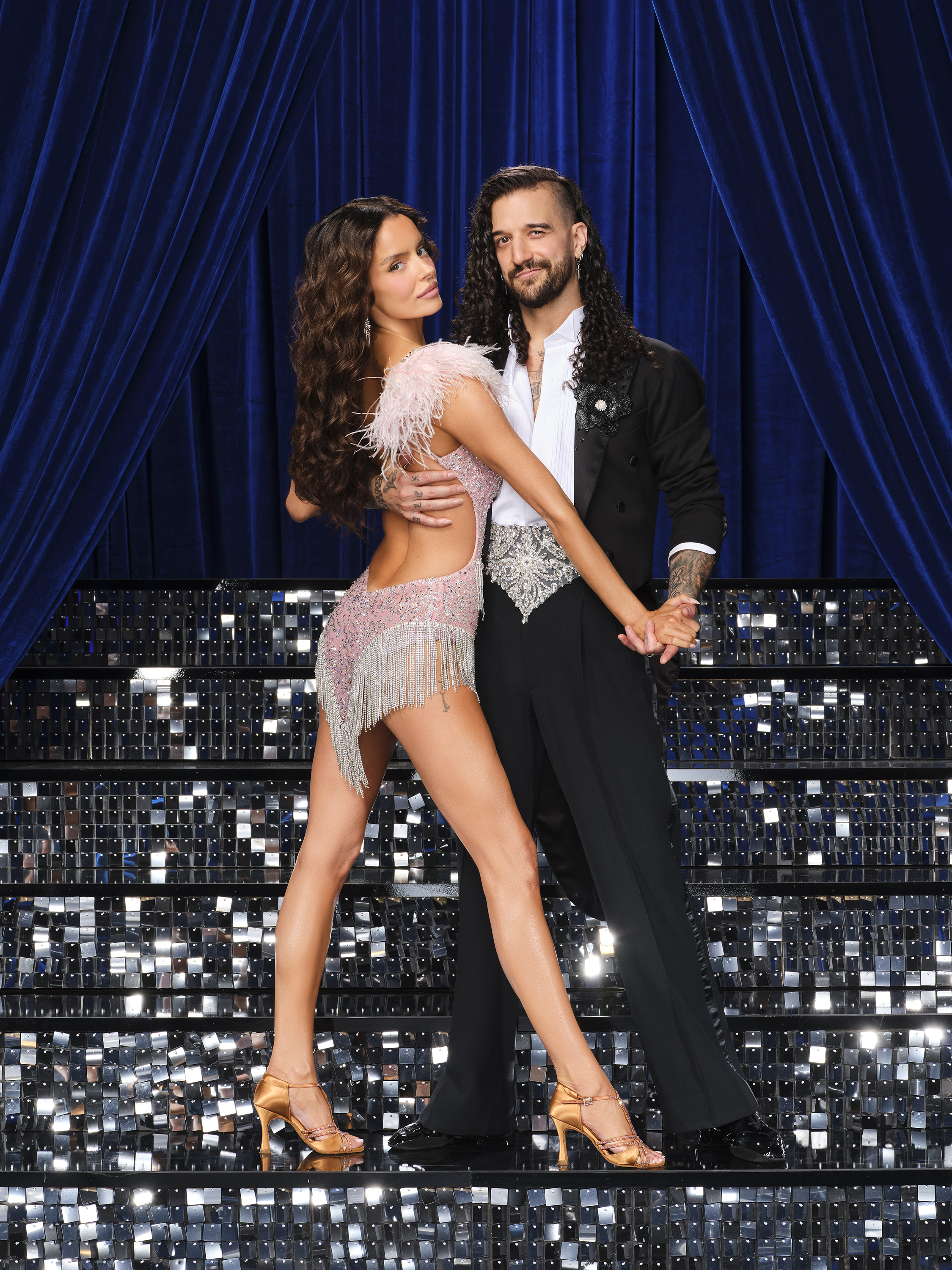
Before Maura Higgins took a foxtrot step on Premiere Night Two, the routine had already built a world around her.
The staging referenced The Traitors. The visual language was dark and theatrical. A coffin, firelight and a Birkin bag gave television viewers recognizable pieces of the public persona they already knew. It would have been easy for the concept to become the story.
Then Higgins started moving.
She and Mark Ballas earned 21/30 for their foxtrot to Alannah Myles’ “Black Velvet,” the highest score of Night Two and a tie with Harry Shum Jr. and Jenna Johnson for the premiere-week lead. Bruno Tonioli praised the quality and smoothness. Carrie Ann Inaba called the performance mesmerizing. Derek Hough responded to its controlled, sultry character.
The surprise was not that a reality-television personality could sell a concept. The surprise was that the concept did not have to carry the dance for her.
The DMM question
What does a great professional dancer build first when the celebrity is a true beginner? Not every novice needs more personality. Sometimes the choreographic job is to give existing presence a structure—then quietly begin installing technique underneath it.
A beginner can arrive with performance instincts
ABC’s official biography presents Higgins as a television personality, host and creator, not a trained dancer. Ahead of the premiere, Ballas described her publicly as a true beginner. Higgins has also described the rehearsal process as difficult enough that she wondered what the finished result could possibly look like.
That distinction matters. Lack of formal dance training does not mean lack of usable material.
Higgins has spent years understanding cameras, live attention, entrances, stillness, reaction and the performance of self. Reality television does not teach heel leads or foxtrot continuity, but it does teach what happens when an audience is looking for a decision in your face before the body moves.
Ballas’ choreography did not need to invent charisma. It needed to organize it.
Mark Ballas understands that choreography is translation
Ballas’ résumé makes him unusually interesting in this pairing. He is an 11-time DWTS finalist, a three-time champion and an Emmy-nominated choreographer. His training at the Italia Conti Academy and his work across ballroom, Broadway, music and television give him a vocabulary larger than a single competitive style.
The best celebrity choreography does not ask a beginner to impersonate an advanced dancer. It identifies what the person can truthfully do under pressure and builds a route from that strength toward the technique the form demands.
For Higgins, that route began with character and control.
Foxtrot can punish a performer who treats every count as an event. Its beauty depends on continuity: movement through the feet, sustained frame, rise and fall, the ability to travel without looking hurried, and the sensation that one idea is already becoming the next. A celebrity with strong camera instincts may be tempted to punctuate. The dance asks her to connect.
Official Season 35 performance video embedded from the Dancing with the Stars YouTube channel (ABC/Disney Television).
The 21/30 was not a miracle. It was evidence of construction.
Higgins called Ballas a “miracle worker” after the performance. The phrase is charming. From a dance perspective, it risks hiding the more interesting labor.
Professionals do not create movement ability by magic. They diagnose. They sequence material. They decide how much information a beginner can absorb without freezing the performance. They choose when to simplify, when to expose a weakness and when a theatrical device will give the celebrity enough confidence to move through a technically unfamiliar task.
What worked in Higgins’ premiere was not that Ballas disguised a beginner. It was that he gave the beginner a coherent place to stand.
The score suggests that the first construction held. It does not tell us how durable it is.
What DMM saw in the foxtrot
Higgins’ strongest quality was not difficulty; it was commitment without visible panic. The movement read smoother and more continuous than her beginner résumé predicted. The next layer is technical: preserve that softness while improving the mechanics underneath—foot action, sustained frame, rise and fall, and the ability to keep the body traveling after the character beat has already landed.
The next dance will tell us more than the first
A well-designed premiere routine can be a perfect introduction because the professional controls the conditions. The more revealing stage arrives when the style changes.
Latin rhythm may ask Higgins to organize the body differently. Faster assignments will reduce the time available to settle into character. Week-to-week themes will force Ballas to decide whether the visual storytelling remains a bridge into technique or becomes a dependency.
That is why DMM is not treating 21/30 as a verdict. It is a baseline.
If Higgins continues to improve, the interesting progression will not be from “non-dancer” to “dancer” in the vague television sense. It will be visible in smaller things: how much of the frame she can sustain without gripping, whether foot pressure starts generating the body action, whether transitions remain alive when no dramatic pose is available, and whether performance choices become consequences of the technique instead of replacements for it.
What a professional can reveal about a beginner
Celebrity dance shows often make transformation look personal: the star works hard, confidence appears, the scores rise.
The professional partner is the architecture underneath that story.
Ballas’ first routine with Higgins is compelling because it makes that architecture visible. He began with what the celebrity already understood—presentation, character, atmosphere—and used it to create a dance that could support technical learning rather than waiting for technique to become perfect first.
That is not lowering the standard. It is teaching.
What DMM is tracking next
Whether Ballas can keep widening Higgins’ movement vocabulary without losing the composure that made the premiere work. The viral staging brought people to the routine. The season will be decided by what remains when the props, references and surprise are gone.
Maura Higgins did not need a dance résumé to lead Night Two.
Now the harder work begins: turning a strong first construction into a body that can keep solving new forms.
Continue the Season 35 story
Reader questions
What score did Maura Higgins receive on her DWTS debut?
Maura Higgins and Mark Ballas earned 21/30 for their foxtrot to “Black Velvet,” the highest score of Premiere Night Two.
Did Maura Higgins have professional dance training before DWTS?
ABC’s Season 35 biography does not identify a professional dance background. Ballas described her before the premiere as a true beginner.
Why is DMM tracking Maura Higgins?
Her first routine is a useful case study in how an elite professional choreographer can translate a beginner’s performance instincts into a ballroom framework while technique develops underneath.
Sources & reporting
DMM separated documented biography and reported facts from its own dance analysis. Primary sources are prioritized below; outside reporting is used where it contains direct comments or judges’ feedback not available in the press release.
- ABC/Disney Television Press — Maura Higgins official Season 35 biography
- ABC/Disney Television Press — Mark Ballas official biography
- ABC/Disney Television Press — Season 35 two-night premiere release
- Entertainment Weekly — Higgins and Ballas on the rehearsal process after the premiere
- TV Insider — Premiere Night 2 recap and judges’ comments
© 2026 Dance Mogul Magazine LLC | dancemogul.com | Inspiring Self-Empowerment Through Dance Culture