Dance Mogul Magazine · Culture & Character
I Wanted to See You Win—Just Not More Than Me
A choreographer’s confession about envy, conditional support and the quiet ways we hold one another back—and what the research says about how people change.
October 25, 2026 · Dance Mogul Magazine

Illustration: Dance Mogul Magazine. Illustrations depict fictional people.
A note on this feature. The first-person narrative that follows is a fictional composite created to examine recognizable professional and emotional situations. It does not depict an identifiable individual. Passages labeled “The Research” summarize published studies and records, listed in full at the end.
I praised her in the comments. When the producer asked for a recommendation, I stayed quiet.
It was late on a weeknight, after the last class had gone home and the studio lights were down to the one lamp on my desk. Her video had crossed my feed four times before I finally opened it: a younger choreographer, working in a style close to mine, teaching a packed room that moved like one body. The work was clean. The musical choices were smart. The kids in the front row were glowing. I typed three fire emojis and “Proud of you,” and I meant at least half of it.
Two days later, a producer I have known for fifteen years called with a brand campaign. A real budget. Forty dancers. One week to stage it. “Who’s good right now?” he asked. Her name was the first one in my head. It never left my mouth. I gave him two other names, both talented, both safely behind me.
Nobody saw it. That was the point. There is no record of a name you didn’t say. No receipt for an opportunity that quietly went somewhere else. Online, I was one of her supporters. In the room where it counted, I was the reason she wasn’t in the room.
I’m telling this story because I suspect I’m not the only one who has done some version of it. Not because I’ve become better than anyone reading this. I’m writing it precisely because I wasn’t. The moment I stopped defending myself was the moment I started to understand myself, and understanding is where the change began.
The Feature at a Glance
THE FORM — A first-person fictional composite, paired with published research and real history
THE QUESTION — Why do we applaud people in public and hold them back in private?
THE DISTINCTION — Envy is a feeling. Zero-sum thinking is a belief. Withholding is a behavior. A lost opportunity is the impact. None of them is a diagnosis.
WHAT CHANGES IT — Naming the feeling, questioning the story, making fair decisions and repairing what we can
FOR — Anyone who has felt the sting of a peer’s success, and anyone who has paid its price
Part Two
I Wasn’t a Villain. I Was Threatened.
If you had asked me then, I would have called it jealousy, or I would have called it nothing at all. I had reasons. She was young. She’d had help. The algorithm loved her. None of those reasons were the truth. The truth was simpler and harder to say: watching her rise made me feel smaller, and I didn’t want to feel small.
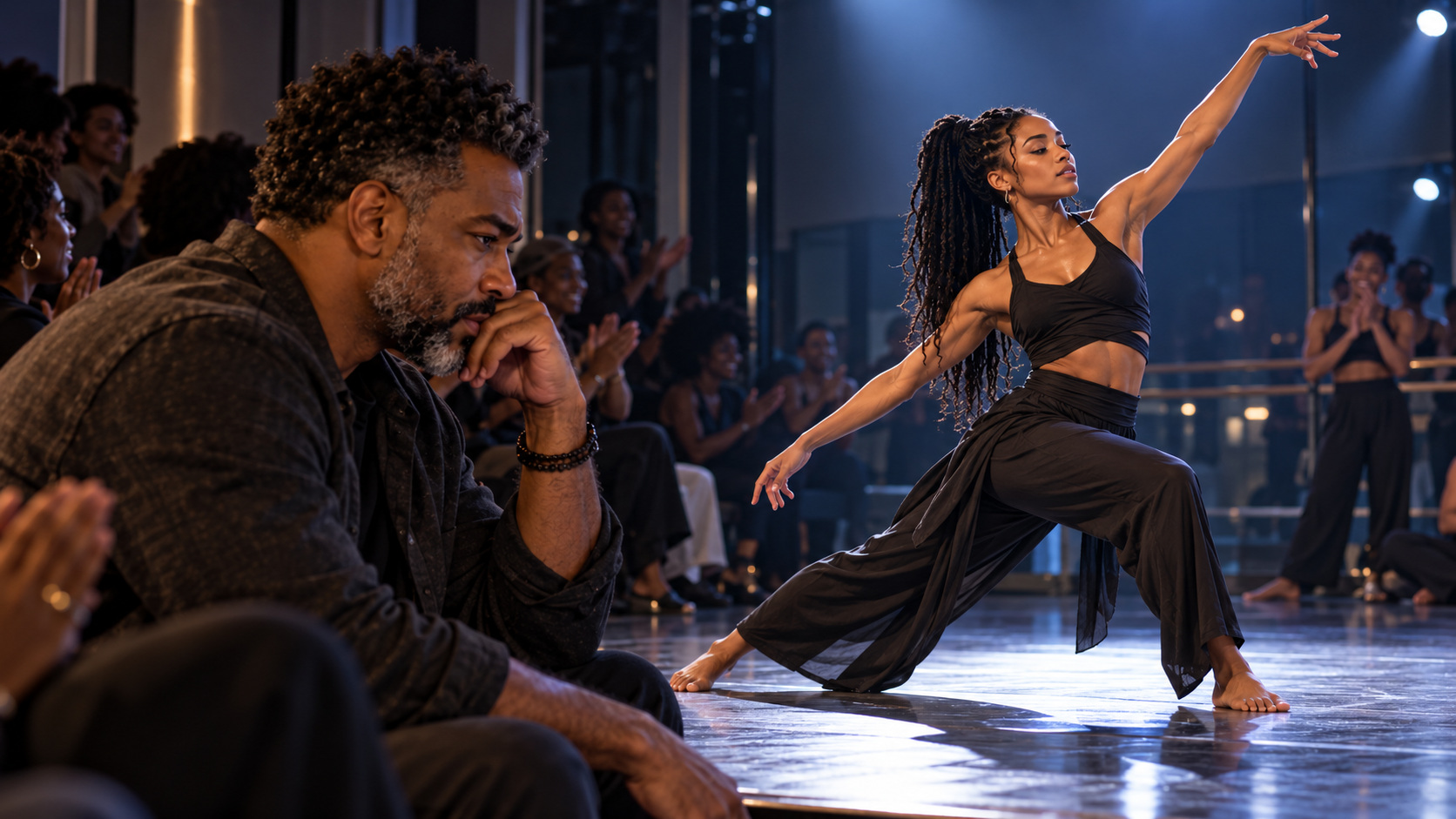
Illustration: Dance Mogul Magazine.
The Research
Psychologists have spent decades separating feelings we tend to lump together. In experiments published in 1993, W. Gerrod Parrott and Richard H. Smith found that people describe envy with feelings of inferiority, longing and resentment, often along with disapproval of the feeling itself. Jealousy looked different: fear of loss, distrust, anxiety and anger. Envy is about wanting what someone else has. Jealousy is about fearing that someone will take what is yours.
Envy also comes in two directions. Studying people in the Netherlands, where the language has separate words for each, and then samples in the United States and Spain, Niels van de Ven, Marcel Zeelenberg and Rik Pieters (2009) found that benign envy pushes people to improve their own position, while malicious envy pushes them to pull the other person down. Same sting, opposite motion.
What decides the direction? In follow-up research published in 2012, the same team found that when a rival’s advantage felt undeserved, people leaned toward malicious envy. When it felt deserved, and people believed they could improve their own situation, benign envy was more likely. Changing those judgments changed the type of envy, not how strongly it was felt.
Closeness matters too. Psychologist Abraham Tesser’s self-evaluation maintenance model (1988) describes a pattern most of us recognize: a close person’s success can make us proud when it happens in a field we don’t care about, and can sting when it happens in the field we have built our identity around. The peer in your own lane can feel more threatening than a stranger at the top.
She wasn’t my enemy. She was a mirror standing too close: in my lane, doing my work, doing it well. Somewhere inside me, without asking the rest of me, I had decided that her rise was evidence against me.
Part Three
What It Does Inside Us
For months I watched her career through my phone. Late at night, the same pattern: open the app, find her page, look at the numbers, feel worse, keep scrolling. I never commented again. I just watched. And when a showcase she had been promoting was canceled, I felt something I am not proud of: a small, warm flicker of relief.
The Research
That flicker has a name. Schadenfreude is pleasure at someone else’s misfortune, a different emotion from envy but often one that follows it. In a 2009 brain-imaging study of 19 volunteers, Hidehiko Takahashi and colleagues found that envy toward a superior, self-relevant person was linked to activity in the anterior cingulate cortex, a region involved in processing the distress of pain. When misfortune later struck the envied person, a reward-related region, the ventral striatum, became more active, and people who felt more envy showed a stronger response. It is a small study, and it shows association, not that envy literally is pain. But it matches what many of us know: envy hurts, and the other person’s fall can feel like relief.
How we use our phones matters as well. In laboratory and daily-life studies, Philippe Verduyn, Ethan Kross and colleagues (2015) found that passive scrolling through other people’s posts lowered how good people felt over time, mainly by increasing envy. Actively engaging, by posting, commenting and talking, did not have the same effect.
I didn’t need a lab to tell me any of this. I needed one honest look at what I was doing at midnight, and who I was turning into while I did it.
Part Four
The Stories I Told Myself
Here is what nobody tells you about envy: from the inside, it doesn’t feel like envy. It feels like reasons. Every choice I made came with a story that made it sound fair. Looking back, I can name four.
“We go way back.”
When my own studio needed choreography for our spring show, I asked her. She quoted her rate. I smiled, reminded her how long we’d known each other, and offered a fraction of it. I would have paid a stranger the full amount without a second thought.

Illustration: Dance Mogul Magazine.
The Research
Not every request for a friendship discount is envy. In a classic set of experiments, James Heyman and Dan Ariely (2004) described two kinds of exchange: social favors, where effort is given freely, and money deals, where effort tracks pay. Mixing the two tends to make an exchange feel like a money deal, so a low offer can land worse than an honest request for a favor. A later replication found mixed results, so treat this as a useful lens rather than a law. The practical point holds: when friendship is used to push a professional rate down, the artist’s rent doesn’t care how long you’ve known each other.
“She doesn’t need my help.”
If her success meant less room for me, then helping her was helping my own replacement. That is the logic of a zero-sum world, where one person’s gain must be another’s loss.
The Research
Researchers have measured this outlook directly as “belief in a zero-sum game.” Across studies spanning dozens of countries, Joanna Różycka-Tran and colleagues found that people who hold the belief more strongly tend to report lower life satisfaction. The finding is correlational, but it points somewhere uncomfortable: the person keeping score usually pays a price too.

Illustration: Dance Mogul Magazine.
“She’d do the same to me.”
This was the story that let me sleep. If everyone plays the game this way, then I wasn’t doing anything wrong; I was just playing.
The Research
That kind of reasoning has a name in psychology: moral disengagement. In two studies, of hospital employees and of student teams, Michelle Duffy and colleagues (2012) found that envy was associated with social undermining largely through moral disengagement, the justifications people use to make harmful acts feel acceptable. The link was strongest when people felt little connection to their coworkers and when the group’s norms tolerated undermining. The pattern was strongest where a justifying story and a tolerant culture made room for it.
“She loves it. She’ll do it for less.”
I knew how hard she worked. I also knew how much she loved the work, and I used that love as a discount code.
The Research
Across seven studies and a meta-analysis, Jae Yun Kim, Troy Campbell, Steven Shepherd and Aaron Kay (2020) found that people judged it more acceptable to give passionate workers extra unpaid or demeaning tasks, with artists among the jobs studied. People also assumed that workers who were being exploited must love what they do. Passion, in other words, was quietly treated as part of the paycheck.
Is It Envy—or Just a Budget?
No one owes anyone a booking, a purchase or a referral. Most “no” answers in this business have nothing to do with envy.
USUALLY ORDINARY
- A limited budget, or a project that doesn’t fit the artist’s style
- Respectful negotiation over scope, timing or fee
- Choosing another qualified person, or keeping a prior commitment
- Wanting the same job, and putting yourself forward when you are the right fit. That is competition, not undermining.
WORTH A CLOSER LOOK IN YOURSELF
- Praising someone publicly but never once recommending them when it counts
- Using friendship as pressure to pay less than you would pay a stranger
- Feeling relief when their plans fall through
- Explaining every decision with reasons that only seem to apply to them
A single decision proves nothing about anyone’s motives. Patterns deserve attention, and the only pattern you can honestly examine is your own.
Part Five
What It Cost
It cost her the chance to be considered for a job she was qualified to pursue, and she never knew why. That’s the part I think about most. Withholding leaves no evidence, so the person on the other end can’t even name what happened. They just work harder and wonder what they’re doing wrong.
It cost me, too. Hours of my life went into watching someone else’s life. I became someone I wouldn’t have respected at twenty. And it cost the people around us: the producer got a smaller roster than he deserved, and my students watched me talk about community while practicing something else.
The Research
In a profession with thin margins, one job matters. The U.S. Bureau of Labor Statistics reports a median hourly wage of $24.80 for dancers and $26.59 for choreographers as of May 2025. A single campaign can be the difference between a good month and a hard one.
Envy is not the only thing that keeps artists underpaid, and it would be dishonest to pretend otherwise. Late payment and nonpayment are common enough that New York City passed the Freelance Isn’t Free Act, which took effect in 2017. In its first year, the city received 264 complaints from freelancers and helped them recover $254,866. In a 2012 survey by Visual Artists Ireland, roughly 80 percent of 580 exhibition opportunities paid the artist no fee at all. Budgets, gatekeeping, funding and access all shape creative careers. Envy is simply the part that lives inside us, and the part we can begin to change tonight.
By the Numbers
Each figure comes from a different study, sector or place. They are not one dataset.
2
kinds of envy researchers distinguish: one that lifts you, one that pulls others down
van de Ven et al., 2009
~80%
of 580 exhibition opportunities in a 2012 Irish survey paid the visual artist no fee
Visual Artists Ireland
$24.80
median hourly wage for U.S. dancers, May 2025
Bureau of Labor Statistics
$254,866
recovered for New York City freelancers in the first year of the Freelance Isn’t Free Act
NYC Dept. of Consumer Affairs
Part Six
The Day It Was Me
The memory came back without warning, in the middle of teaching a class. I was seventeen, sitting on the floor of a studio with my bag next to me, while a teacher picked the dancers for a showcase. He picked his favorites. He picked his friends’ kids. He didn’t pick me, and he didn’t pick me in a way that had nothing to do with how I danced. I remember the floor. I remember the light. I remember deciding that day that I would never make a young dancer feel that way.
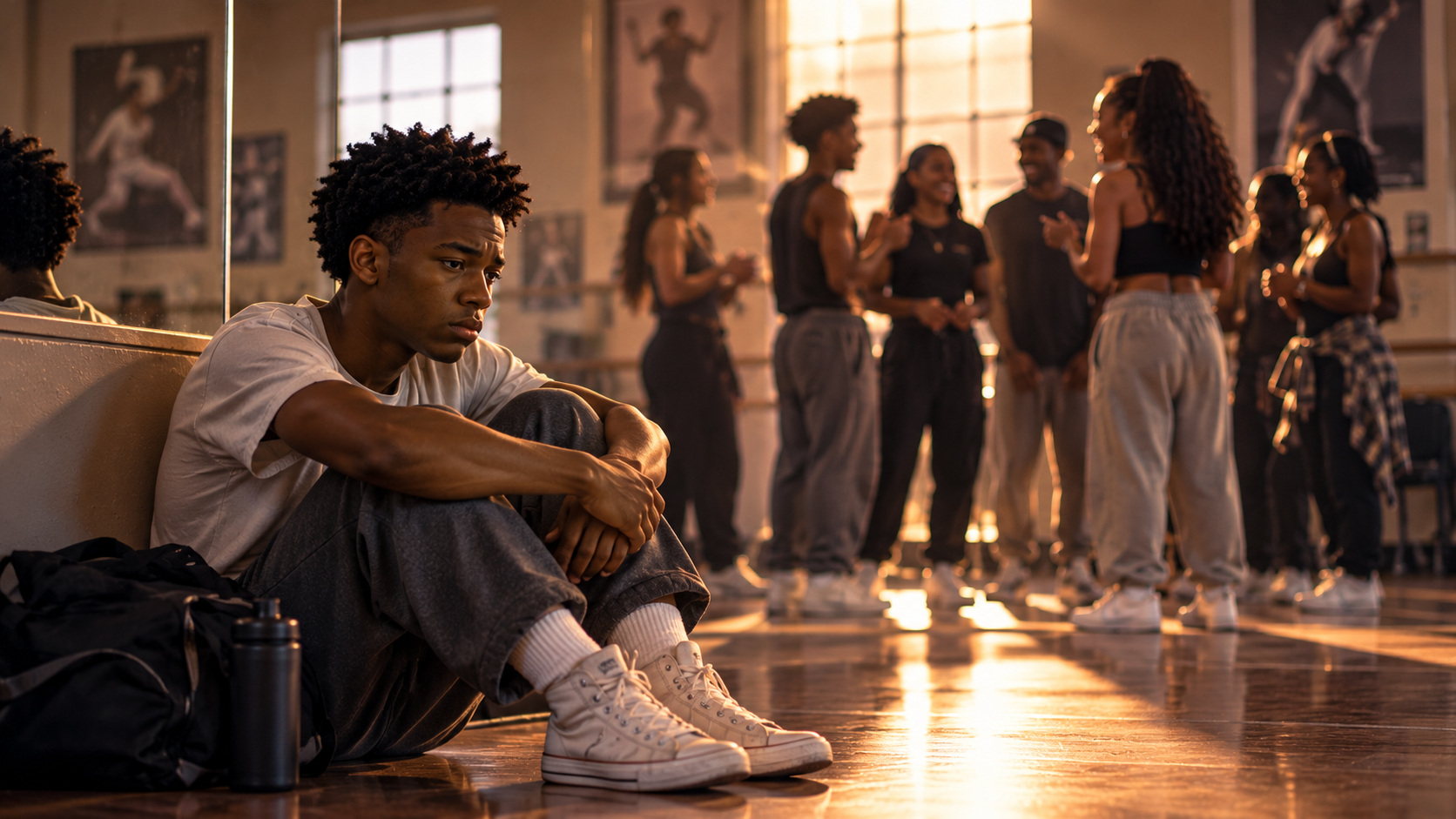
Illustration: Dance Mogul Magazine.
And there I was, thirty years later, making a grown dancer feel exactly that way, only more quietly. I had become, in a small and deniable way, the man who sat me on that floor.
So I asked myself the questions I now ask anyone who will listen. If someone did to one of my students what I did to her, praising her in public and keeping her name out of the room, what would I call it? If it happened to someone I love, would I call it business? Or would I call it what it was?
What if the person being quietly kept out of the room were you?
Part Seven
What I Practice Now
I didn’t fix this alone. I called the man who gave me my first paid job when I was nineteen, a teacher now well into his sixties, and I told him everything. It was the hardest conversation I’ve had in years. He didn’t flinch. He told me envy is information: it tells you what you want. It just doesn’t get a vote on what you do.
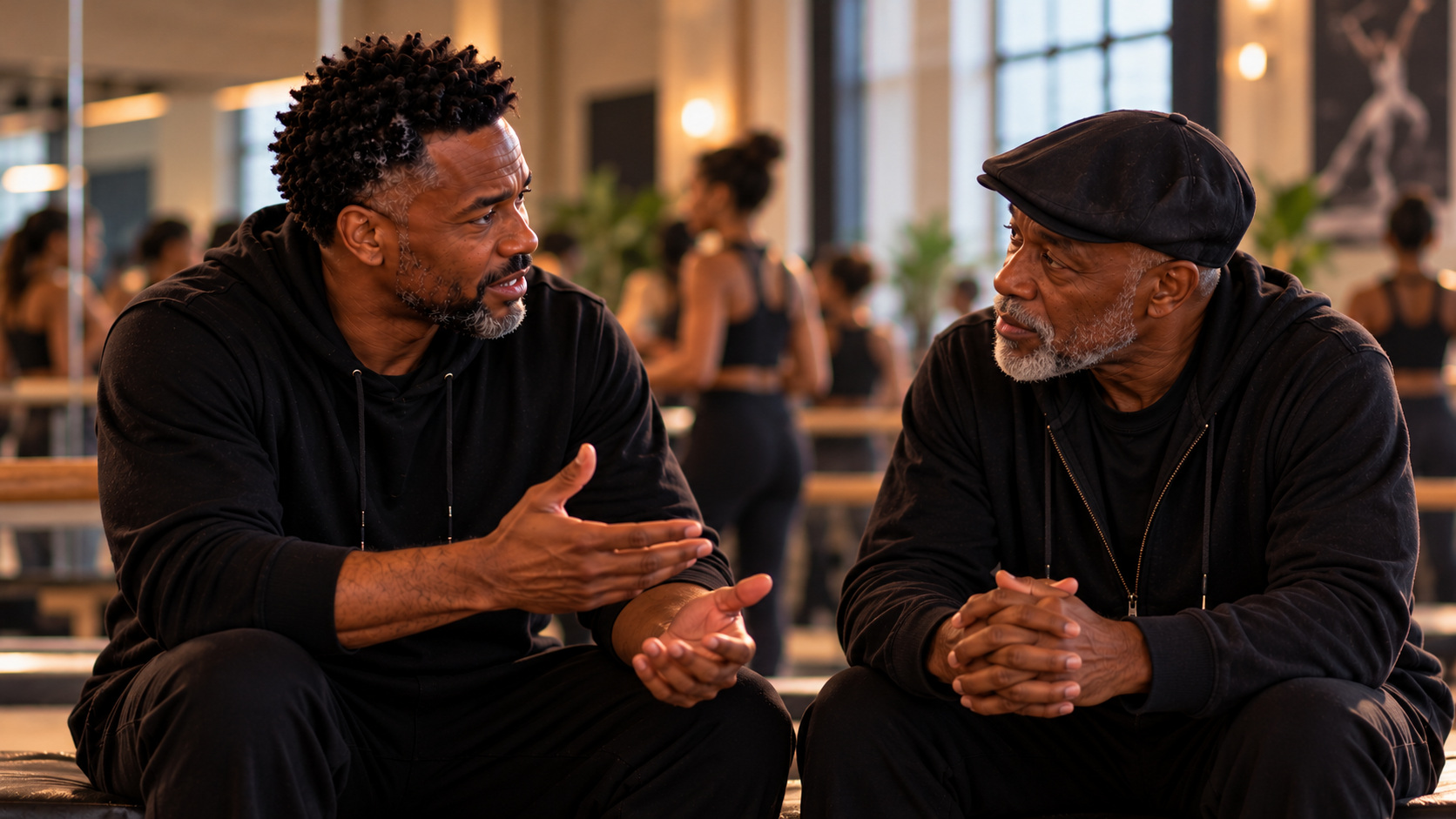
Illustration: Dance Mogul Magazine.
Learning how to deal with envy has not been one decision. It has been a set of practices, some backed by research and some simply honest. Here is what I do now.
- Name it, then name which kind. When the sting comes, I ask whether it is pulling me to get better or pulling me to bring someone down. The feeling is allowed. The direction is my responsibility.
- Re-see the win as earned, then find my move. I write down what she did to earn it, then one thing within my control this week. Research on envy’s appraisals suggests that seeing success as deserved, and believing you can act, steers envy toward its constructive form.
- Test the story. Before a decision, I listen for my justifications and ask: would I accept that reasoning if someone used it about me?
- Change how I scroll. Less silent watching, more real engagement, and no checking anyone’s numbers at midnight.
- Celebrate with my whole chest, in private too. Shelly Gable and colleagues (2004) found that enthusiastic, engaged responses to other people’s good news were linked with stronger relationships. Now I ask a real question, name the effort behind the win, and mean it, in a phone call and not just a comment.
- Decide before I know who benefits. For referrals and hiring, I write my criteria first, then look at names.
- Separate favors from work. If I’m asking a favor, I call it a favor. If it’s work, I ask the rate and then pay it, negotiate respectfully or decline.
- Repair what I can. A referral now, credit in public, and, where it’s welcome, an honest word.
- Practice gratitude as a habit, not a cure. In a 2018 study of 426 university students, gratitude was associated with more benign and less malicious envy, partly through feeling supported by others. It is a correlation, not a guarantee, but the practice has made me harder to poison.
- Get help when it’s constant. If envy is daily, consuming or tied to shame, that is a reason to talk to a professional, not a reason to hide. Compassion-focused therapy, developed by psychologist Paul Gilbert, was designed for people caught in high levels of shame and self-criticism.
Then I did the thing I had been avoiding. I went back to her, apologized for the lowball offer, and asked if she would still choreograph our spring show. At her full rate. In writing.

Illustration: Dance Mogul Magazine.
Look Within
A private reflection, not a test. There are no scores, and no one has to see your answers.
- Whose success has stung me most this year, and what does that sting tell me I want?
- When was the last time I recommended someone who works in my own lane?
- Have I ever asked a friend to work for less than I would pay a stranger?
- What story do I tell myself when I don’t want to help someone?
- If my student were treated the way I treat my peers, would I call it fair?
If You’re the One Being Undercut
Set the terms of your yes.
- Keep a rate card and share it early, before friendship enters the conversation.
- Put scope in writing: what you will deliver, by when and at what cost. In New York City, freelancers hired for $800 or more are entitled to a written contract under the Freelance Isn’t Free Act.
- Say no kindly. A respectful decline protects your work and the relationship.
- Use your collective protections. Union contracts and freelancer laws exist because individual negotiation has limits.
- Document referrals you give and receive. Generosity is easier to sustain when it is visible.
- Remember the limits: no one can be made to hire you. What you control is the value you name and the terms you accept.
Part Eight
The Culture We Choose
A few weeks later, the same producer called about another project. This time her name was the first word out of my mouth. I told him she was the best person I knew for the job, and I told him I should have said so the first time. Then I introduced them myself.
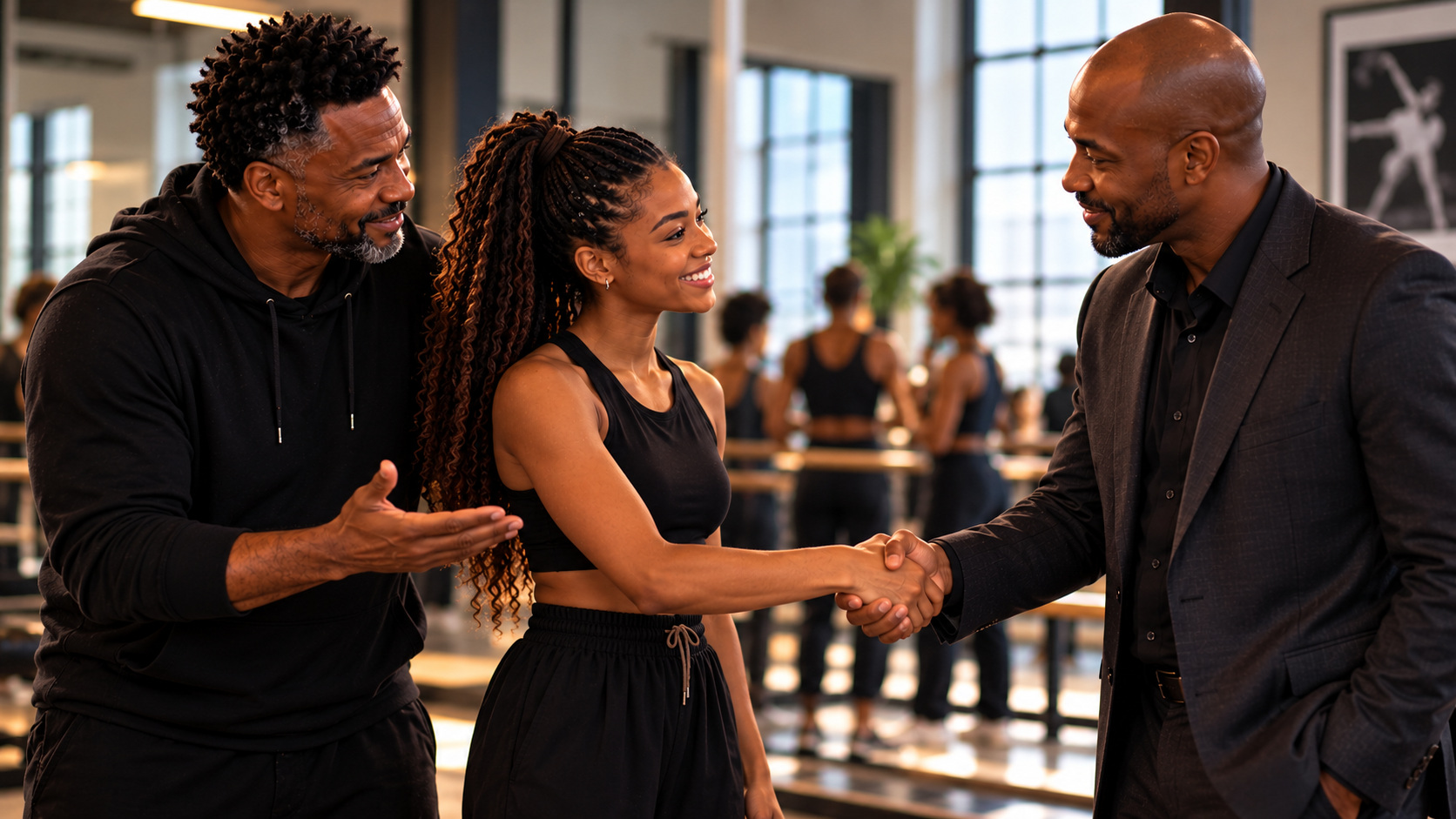
Illustration: Dance Mogul Magazine.
Nothing about that introduction made me smaller. If anything, it gave me back something I had been losing for a long time: the ability to look at another artist’s work and simply be glad it exists.
The Research
Dancers have proven that lifting each other is not just personal virtue; it is power. In 2012, after a campaign that teamed Dancers’ Alliance, a grassroots group dedicated to educating dancers and building solidarity, with the union then known as AFTRA, SAG-AFTRA reached the first industrywide contract covering dancers and other performers in music videos with the major record labels: Universal Music Group, Sony Music Entertainment, Warner Music Group, EMI Music and The Walt Disney Co. The effort was led in large part by dancers and choreographers, including Bobbie Bates, Sharon Ferguson and Galen Hooks, and included a flash-mob protest at Sony Music. Those dancers never stopped competing for jobs. They stopped competing for the floor.
Other artists have built similar tools. W.A.G.E. Certification, introduced in 2014, publicly recognizes nonprofit arts organizations that pay artists according to a minimum fee standard. Fair pay, it turns out, is easier to practice when it is written down and shared.
Why It Matters to DMM
A living archive of how we treat one another.
Dance Mogul Magazine exists to preserve the experiences, struggles, wisdom and creative contributions of Black artists and the broader artistic community, so that the lessons remain useful to the generations who come after us.
This story belongs in that archive because the deeper subject was never only envy. It is the relationship between personal insecurity and professional responsibility, between self-respect and respect for others, between one person’s choices and a community’s future. The values are old ones: self-love and accountability, respect for artistic labor, responsibility to family and community, and mentorship that passes knowledge forward. Unity is not something we declare. It is something we do, one referral, one fair fee and one honest conversation at a time.

Illustration: Dance Mogul Magazine.
This summer she and I co-taught a youth intensive. My old teacher sat in the corner with his arms folded and that half-smile I remember from when I was nineteen. The kids didn’t know any of this history. They just saw two choreographers who clearly respected each other, trading the floor back and forth, making each other better. That is what they will remember, and what they will repeat.
I used to think support was something you gave away, and that every bit you gave left less for you. I was wrong. Genuine support for others begins with the ability to examine ourselves: to feel the sting, name it and refuse to let it make our decisions. When we do that work, we don’t just become better colleagues. We protect the dignity of the profession, we strengthen the families and studios that depend on it, and we leave the next generation a culture where talent is met with opportunity instead of silence.
Your success does not require someone else’s limitation.
Dance Mogul Magazine
Questions
Frequently Asked Questions
What is the difference between envy and jealousy?
Envy is the pain of wanting what someone else has, and it often carries feelings of inferiority, longing and resentment. Jealousy is the fear of losing something you already have to a rival, and it tends to involve distrust and anxiety. Research by W. Gerrod Parrott and Richard H. Smith found the two are experienced differently, even though people often use the words interchangeably.
Is envy always bad?
No. Researchers distinguish benign envy, which pushes people to improve their own position, from malicious envy, which pushes them to pull the other person down. The feeling itself is common and human. What matters is the direction it takes and whether we let it drive unfair decisions.
Is asking a friend for a discount a sign of envy?
Not by itself. Budgets are real, and respectful negotiation is part of professional life. The problem begins when friendship is used as pressure to pay less than you would pay a stranger for the same work. Ask for the rate, discuss scope honestly, and then pay it, negotiate respectfully or decline.
If someone didn't book me or recommend me, does that mean they envy me?
No. People decline for many legitimate reasons, including budget, fit, timing and prior commitments. A single decision proves nothing about anyone's motives. This feature is an invitation to examine our own patterns, not a tool for diagnosing other people.
How can I deal with envy before it shapes my decisions?
Name the feeling and ask which direction it is pulling you. Remind yourself what the other person did to earn their success, and pick one step within your control. Question the justifications you hear yourself using, decide on clear criteria before you know who benefits, and celebrate other people's good news sincerely. If envy is constant or distressing, a licensed therapist can help.
Is the narrator in this feature a real person?
No. The first-person narrator is a fictional composite created to explore recognizable situations in the dance profession. The research, statistics and historical examples in the feature are drawn from published sources listed at the end.
Resources
- Therapy for Black Men: a directory of therapists and coaches for Black men
- Therapy for Black Girls: a directory of culturally responsive therapists for Black women and girls
- Psychology Today therapist directory: searchable by location, specialty and insurance
- SAG-AFTRA: the union that covers dancers in music videos and other screen work
- NYC Freelance Isn’t Free Act, year-one report: how written contracts and enforcement helped freelancers get paid
- For DMM’s ongoing record of the artists who opened doors for others, visit The Legacy.
Sources & Notes
The narrator, the peer, the producer and the mentor are fictional composites. Research findings are summarized in plain language; consult the original publications for methods and limitations. Workplace, student, music-industry and visual-arts findings were not measured in dancers and are offered as context.
- Parrott, W. G., & Smith, R. H. (1993). Distinguishing the experiences of envy and jealousy. Journal of Personality and Social Psychology.
- van de Ven, N., Zeelenberg, M., & Pieters, R. (2009). Leveling up and down: The experiences of benign and malicious envy. Emotion, 9(3), 419–429.
- van de Ven, N., Zeelenberg, M., & Pieters, R. (2012). Appraisal patterns of envy and related emotions. Motivation and Emotion, 36(2), 195–204.
- Tesser, A. (1988). Toward a self-evaluation maintenance model of social behavior. Advances in Experimental Social Psychology, 21.
- Takahashi, H., et al. (2009). When your gain is my pain and your pain is my gain: Neural correlates of envy and schadenfreude. Science, 323, 937–939.
- Verduyn, P., et al. (2015). Passive Facebook usage undermines affective well-being. Journal of Experimental Psychology: General, 144, 480–488.
- Różycka-Tran, J., et al. Belief in a zero-sum game and subjective well-being across 35 countries. Current Psychology.
- Duffy, M. K., Scott, K. L., Shaw, J. D., Tepper, B. J., & Aquino, K. (2012). A social context model of envy and social undermining. Academy of Management Journal, 55(3), 643–666.
- Kim, J. Y., Campbell, T. H., Shepherd, S., & Kay, A. C. (2020). Understanding contemporary forms of exploitation. Journal of Personality and Social Psychology, 118(1), 121–148.
- Heyman, J., & Ariely, D. (2004). Effort for payment: A tale of two markets. Psychological Science, 15(11), 787–793.
- Gable, S. L., Reis, H. T., Impett, E. A., & Asher, E. R. (2004). What do you do when things go right? Journal of Personality and Social Psychology.
- Xiang, Y., Chao, X., & Ye, Y. (2018). Effect of gratitude on benign and malicious envy. Frontiers in Psychiatry, 9.
- Gilbert, P. (2017). A brief outline of the evolutionary approach for compassion focused therapy.
- U.S. Bureau of Labor Statistics. Occupational Outlook Handbook: Dancers and Choreographers (May 2025 wages).
- NYC Department of Consumer Affairs. Key Findings from Year One of NYC’s Freelance Isn’t Free Act.
- Visual Artists Ireland. Visual Artists Payment Guidelines (2012 survey).
- SAG-AFTRA. Landmark Deal Is the First Industrywide Agreement Covering Music Video Performers (June 1, 2012).
- The Hollywood Reporter. SAG-AFTRA music video agreement coverage (2012).
- e-flux. Announcing W.A.G.E. Certification (2014).
© 2026 Dance Mogul Magazine. Inspiring self-empowerment. Preserving history. Celebrating legacy. Illustrations depict fictional people.
Part One
The Comment and the Silence