
Missy Elliott’s Dance Legacy: How a Hip-Hop Visionary Changed Movement, Music Videos and the Stage
Missy Elliott did not simply place dancers behind her. She built entire visual worlds in which movement, rhythm, fashion, camera work and imagination carried the story together.
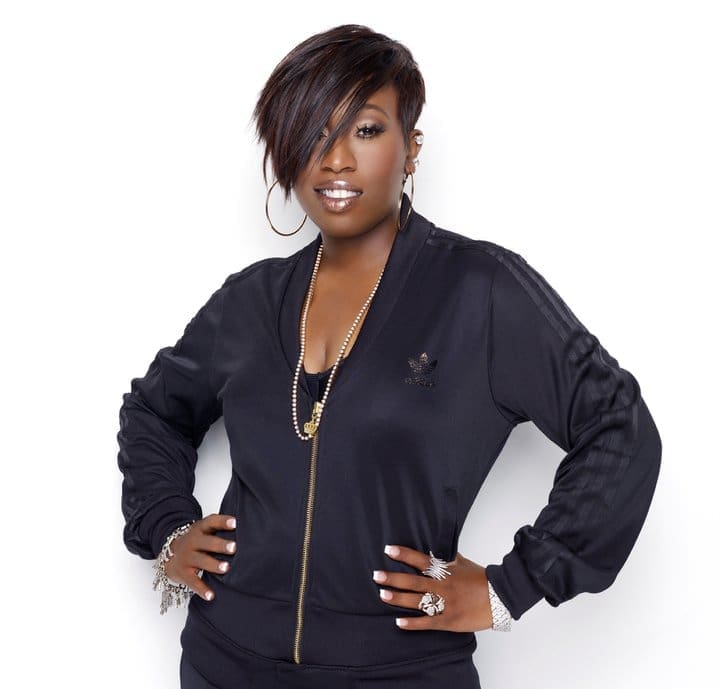
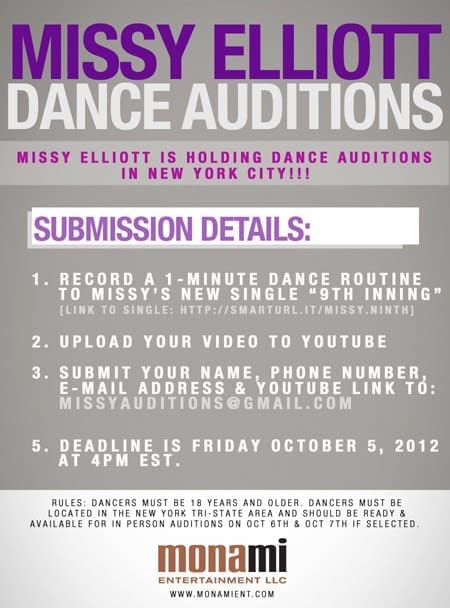
In October 2012, Dance Mogul Magazine published a brief notice announcing the return of Missy Elliott and a New York dance audition connected to her music. The post captured the excitement of the moment, but it did not yet explain why dancers have responded to Elliott with that level of energy for decades.
The fuller story is not simply that Missy Elliott made hit records. It is that she treated movement as a major part of authorship. Her videos made choreography feel architectural. Her performers occupied futuristic rooms, playful landscapes, streets, stages and impossible digital spaces. The body was not an accessory to the track; it was one of the instruments.
Movement was never decoration
In much of popular music, dancers are asked to support an artist’s performance. Elliott repeatedly reversed that relationship. The movement helped define the record’s personality. A shoulder hit, a low groove, a sudden freeze, a comic facial expression or a sharp change in level could become as memorable as a lyric.
Her visual language also made room for different kinds of performance power. The dancing could be technically precise without losing looseness. It could be humorous without becoming a joke. It could be sensual, strange, aggressive, playful and futuristic within the same world. That range helped commercial dance audiences see hip-hop movement as both entertainment and high-concept visual art.
The music video became a world dancers could inhabit
Elliott’s official biography describes her as an artist who spent decades visually reinventing herself and redefining pop music. It points to “The Rain (Supa Dupa Fly)” as a landmark collaboration with director Hype Williams and costume designer June Ambrose. The inflatable suit, wide-angle camera perspective and surreal environment became instantly recognizable, but the image worked because Elliott’s physical presence completed it.
Her videography repeatedly asked a useful question: what happens when sound is allowed to reshape the physical world? Rooms stretch. Bodies appear larger than life. Editing changes the speed of human motion. Costumes alter the silhouette. Choreography is framed from unexpected angles. The dancers are not merely completing counts; they are helping the audience believe in the world.
For dancers, the Missy Elliott lesson is clear: performance is not only about executing choreography. It is about making the concept believable.
A different image of power
The Rock & Roll Hall of Fame describes Elliott as a groundbreaking producer, songwriter, label executive and video trendsetter who created new space for women by openly owning her body, her Blackness and her creative authority. That authority matters to dance history because the body shown on screen influences which bodies young performers believe are allowed to command attention.
Elliott’s work challenged the idea that a female performer had to fit one narrow visual template. She could be covered in oversized sportswear, transformed into a science-fiction figure, leading a room full of dancers or standing almost still while the world moved around her. Power came from control of the frame and confidence in the idea.
Her movement vocabulary valued personality
Many dancers can perform the same steps, but Elliott’s strongest visual moments depend on individuality. The groove must have character. The face must communicate. The timing may sit slightly behind the beat and then attack without warning. The performer must understand humor, texture and intention—not only shape.
That approach helped create a space where street and club-informed movement could retain its attitude inside major commercial productions. The camera did not erase personality; it magnified it. For generations of dancers studying music videos, that was an education in how to remain recognizable inside a large production.
The “return” became another era
The 2012 DMM post framed Elliott’s activity as a return. What followed proved that her legacy was still expanding. In 2019, she became the first female rapper inducted into the Songwriters Hall of Fame and received MTV’s Michael Jackson Video Vanguard Award. In 2023, she became the first female hip-hop artist inducted into the Rock & Roll Hall of Fame.
In 2024, Elliott launched her first headlining arena tour, Out of This World—The Missy Elliott Experience, with Busta Rhymes, Ciara and Timbaland. The production was designed as an immersive trip through the visual memories of her career rather than a simple recital of hits. Elliott told the Associated Press that she wanted audiences to travel back into the worlds of the videos and relive them onstage.
That idea connects directly to dance. A music video may last only a few minutes, but its movement can live in collective memory for decades. When those images are rebuilt for an arena, the dancers become the bridge between the original visual culture and a new live audience.
What dancers can learn from Missy Elliott
- Build a point of view. Technique opens doors, but a recognizable point of view makes people remember the performance.
- Understand the entire frame. Wardrobe, lighting, editing, camera distance and facial expression all affect how movement reads.
- Protect personality. Precision does not require becoming anonymous. The strongest ensemble performers remain specific.
- Use history as a foundation. Innovation becomes more powerful when artists understand the movement, music and visual traditions they are transforming.
- Treat dancers as storytellers. A dancer can communicate setting, tension, humor, power and character before a single word is spoken.
Why this story belongs in the Dance Mogul archive
Dance history is not limited to named choreographers, formal companies or stage institutions. It also lives in the music videos that sent young people into bedrooms, studios, school hallways and neighborhood dance circles trying to understand what they had just seen.
Missy Elliott’s work belongs in that history because it expanded what movement could do inside popular culture. Her videos did not ask dancers to disappear behind celebrity. They asked dancers to help invent the future.
Frequently asked questions
Why is Missy Elliott important to dance culture?
Her music videos and live productions placed movement at the center of visual storytelling. They helped popularize performance styles built on groove, character, precision, humor and bold camera-aware presentation.
Was the 2024 tour Missy Elliott’s first headlining tour?
Yes. The Associated Press reported that Out of This World—The Missy Elliott Experience was her first headlining arena tour.
What made her music videos different?
They combined choreography with unusual camera perspectives, futuristic production design, fashion, editing and Elliott’s own highly specific movement personality.
Should the original 2012 Dance Mogul post remain online?
The original post is historically useful, but its title misspells Elliott’s name and the content is too thin to stand as the main article. The recommended approach is to redirect that URL to this expanded feature while preserving the old images as archive artifacts.
Sources and further reading
- Dance Mogul Magazine — original 2012 archive post
- Missy Elliott — official biography
- Rock & Roll Hall of Fame — Missy Elliott
- Associated Press — first headlining arena tour
- Vanity Fair — Elliott and June Ambrose on the tour’s visual language