
Dance Mogul Magazine · Dancing with the Stars · Season 35
Alfonso Ribeiro Defends DWTS: When Dance Excellence Meets a Popularity Contest
With the Season 35 finale hours away, the host answers the criticism head-on. Dance Mogul Magazine looks at what the argument really asks: how should we measure the value of a dancer?
By Dance Mogul Magazine · November 24, 2026 · Sources verified November 24, 2026
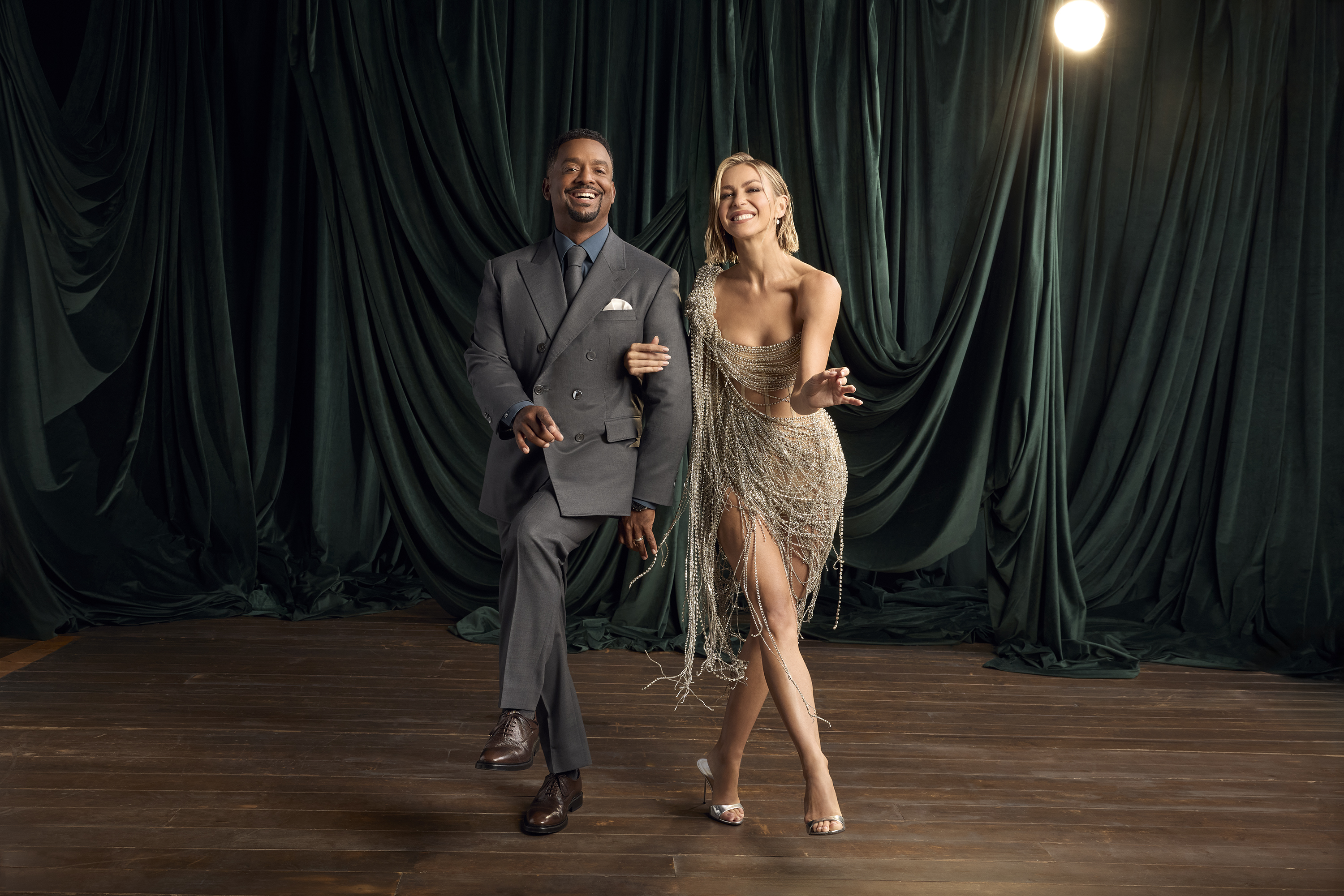
Alfonso Ribeiro and co-host Julianne Hough. Ribeiro has co-hosted Dancing with the Stars since 2022, eight years after winning the Mirrorball Trophy himself. Image: ABC/Disney.
Alfonso Ribeiro has entered the debate surrounding Dancing with the Stars at a particularly revealing moment. With the Season 35 finale approaching, the host is defending a competition in which technical excellence and public support do not necessarily produce the same result. His comments about previous dance experience, popularity and voting raise a question that extends far beyond television: how should we measure the value of a dancer?
For Dance Mogul Magazine, the discussion is not about discrediting the finalists. It is about understanding the difference between artistic achievement and the outcome of a televised competition, and recognizing the work of the professional dancers who make that competition possible.
The Debate at a Glance
Who: Alfonso Ribeiro, 55, co-host of Dancing with the Stars since 2022 and the Season 19 champion
What he says: Popularity has always been part of the show, and the idea that contestants must have no dance experience is wrong
The counterpoint: Professional Sharna Burgess says the current system lets viewers vote people off rather than vote for a favorite
The trigger: Harry Shum Jr. and Jenna Johnson scored 60/60 on November 17 and were eliminated
What is next: The Season 35 finale, Tuesday, November 24, 8–11 p.m. ET, ABC and Disney+
What Alfonso Ribeiro said about DWTS voting
In an exclusive interview published November 23 by USA TODAY, Ribeiro rejected the premise behind much of the criticism. He said the belief that Dancing with the Stars is a show about celebrities with no dance experience and their growth is categorically incorrect. In his description, it is a dance competition about learning these styles and becoming a better dancer.
He went further on the question of popularity, and he did not treat it as an embarrassment to be explained away.
“It’s always been part of a popularity contest.”
Alfonso Ribeiro to USA TODAY, November 23, 2026
He pointed to past champions who were widely popular during their seasons, naming Robert Irwin and Charlie D’Amelio, and argued that the pattern only becomes a grievance when the popular contestant is not also the one leading the judges’ leaderboard. Historically, he said, the most popular contestant was usually also one of the strongest dancers. What has changed, in his account, is not the format but the volume of social media opinion shaping how people vote.
In a separate exclusive the same day, TV Insider asked him directly about theories that the results are manipulated. Ribeiro said standards and practices personnel observe the votes as they come in, and that the production does not control who stays or goes. He also acknowledged something more uncomfortable: viewers vote for different reasons, and some vote to remove a contestant rather than to support one.
Those assurances are his account of the process. They are not an independently published audit of the results, and Dance Mogul Magazine does not present them as one. A surprising elimination does not establish manipulation. Equally, viewers can reasonably ask how a competition balances its different measures of success.
When perfect scores are not enough
On November 17, Harry Shum Jr. and professional partner Jenna Johnson earned 30 out of 30 for both their paso doble and their quickstep. Their combined 60/60 was not enough to secure a place in the finale. Jenna Dewan and Val Chmerkovskiy had already been eliminated the previous week, on Grammy Night.
The semifinal leaderboard illustrates the difference between the judges’ assessments and the competition’s final outcome.
| Couple | Judges’ total | Outcome |
|---|---|---|
| Amber Glenn & Pasha Pashkov | 60/60 | Finalist |
| Harry Shum Jr. & Jenna Johnson | 60/60 | Eliminated |
| Maura Higgins & Mark Ballas | 59/60 | Finalist |
| Ezra Frech & Daniella Karagach | 57/60 | Finalist |
| Tatyana Ali & Jan Ravnik | 55/60 | Finalist |
| Connor Wood & Rylee Arnold | 48/60 | Finalist |
These are judges’ scores, not public vote rankings. Without published vote totals, it would be irresponsible to assign a specific motive to the audience or to claim that any remaining couple deserved elimination. Our full semifinal results report has every score and song from the night.
Ribeiro told TV Insider that the five finalists earned their places by connecting with viewers, and he named Connor Wood and Tatyana Ali in particular as couples whose judges’ scores sat below the rest of the field and who advanced on votes.
“This is a show about displaying your heart and your personality.”
Alfonso Ribeiro to TV Insider, November 23, 2026
Sharna Burgess raises a different concern
Dancing with the Stars professional Sharna Burgess added another dimension to the debate. Speaking on her Instagram Stories after the semifinal elimination, and reported by Cosmopolitan on November 23, Burgess said the online discourse had made it clear which contestants fans were voting off, and how they felt about competitors who arrived with dance experience.
Her objection was to the direction of the voting. She called it disappointing that the system was being used to remove people rather than to support a favorite, and said it had given fans the chance to “manipulate the show.” Her proposed remedy was a return to a fixed allowance: ten votes in total, which each viewer would have to decide how to distribute.
That is a proposal, not an announced rule change. Cosmopolitan reported that producers have not addressed the voting concerns or indicated that anything is changing. Jenna Dewan, eliminated the week before, told Extra that she would never know whether the online noise played a part in her exit, and said only that she and her partner went out and had the best time of their lives. Burgess’s comments also do not establish how individual viewers actually voted. Vulture has examined the same question in more depth.
Ribeiro and Burgess approach the discussion from different directions. One emphasizes the established role of popularity; the other questions how the voting structure may shape audience behavior. Both perspectives deserve consideration without turning the finalists into targets.
Does previous dance experience make a contestant unfairly advantaged?
Dance experience can provide real advantages. A trained performer may arrive with musical awareness, coordination, movement memory and familiarity with the rehearsal process. It would be misleading to pretend those skills have no value.
But dance is not one interchangeable discipline. A performer trained in hip-hop, contemporary or jazz may still need to develop ballroom frame, partner connection, precise foot placement and the conventions of an unfamiliar style. Even an accomplished solo performer must learn how to share weight, timing and intention with another person. Dance Mogul Magazine examined this at the start of the season in Does Dance Experience Give DWTS Contestants an Advantage?
The meaningful question is what the contestant brings into the room, what the assignment demands and what the contestant develops during the process. A beginner’s breakthrough and an experienced dancer’s refinement can both represent achievement. They are simply different kinds of growth.
Treating training itself as a reason to dismiss a performer sends an unfortunate message to young artists. Years of classes, rehearsals and sacrifice should not be treated as something to apologize for. At the same time, recognizing the accomplishments of beginners need not diminish the achievements of experienced artists.
Why Alfonso Ribeiro’s perspective matters
Ribeiro is not speaking only as a television presenter. He won Season 19 of Dancing with the Stars in 2014 with professional partner Witney Carson, and Dance Mogul Magazine covered that win at the time. He began co-hosting in 2022. His experience as a competitor gives him a perspective on the demands of preparing routines under public scrutiny.
The host’s defense also illustrates a larger distinction: Dancing with the Stars is a television entertainment format as well as a dance competition. Its audience may value qualities that are not captured by a technical score. The ability to communicate emotion, establish a recognizable identity and invite people into a personal journey can have considerable influence.
That does not make technical excellence irrelevant. It means that artists must understand which measures of success apply in which environment. An audition, a judged dance event and a public-vote television program can reward very different things.
The professional dancers behind the celebrity journey
Every celebrity performance is also a collaboration. Professional partners must assess their students’ strengths, adapt choreography, teach movement safely and translate music into an accessible performance. They must find the balance between challenging a student and allowing that student to perform with confidence.
A routine that looks effortless may reflect hundreds of small instructional decisions. Where should a movement be simplified? How can a transition become clearer? Which musical accents should be emphasized? How can the choreography reveal a personality without sacrificing the essential characteristics of the dance?
The professional partner’s contribution should remain visible even after an elimination. A trophy is one outcome; the knowledge transferred during the process is another. Dance culture benefits when audiences learn to recognize both.
Watch with a dancer’s eye
The semifinal performances provide an opportunity to compare movement qualities rather than personalities. In the paso doble, watch for deliberate shaping, purposeful direction and dramatic musical accents. In the quickstep, pay attention to rhythmic clarity, traveling movement, partnership and the ability to maintain composure at speed.
Shum and Johnson’s quickstep also offers a reason to consider how musical choices carry personal meaning. The routine used “Valerie” in tribute to his late Glee colleague Naya Rivera, as documented in DMM’s DWTS newsroom.
When watching the finale, consider how a performance makes you feel, then ask what choices created that feeling. Was it the timing, the relationship between the partners, the contrast between stillness and motion, or the way the choreography responded to the music? These questions make viewing an opportunity to learn, even for people who have never taken a dance class.
Why this matters to dance culture
Dance Mogul Magazine believes that visibility and achievement are related but not identical. Artists can be exceptionally skilled without having a large following. Others may build powerful connections with audiences while still developing their technique. Neither circumstance should be confused with a person’s intrinsic worth.
The entertainment industry often requires artists to cultivate both their craft and a public identity. That reality makes education, self-advocacy and audience development important. But it should never lead dancers to believe that popularity is the only evidence of talent.
The most constructive response to an unexpected elimination is not to attack the artists who advance. It is to celebrate the work that was accomplished, encourage meaningful discussion and continue supporting performers beyond the competition.
What audiences and aspiring dancers can take away
- Build a foundation that survives changes in public attention. Study technique, listen deeply to music and develop versatility.
- Learn to communicate with collaborators. Partnership is a skill of its own, separate from solo ability.
- Document your work. A record of what you have done outlives any single vote count.
- Cultivate an audience without surrendering to it. Connection is valuable; it is not a verdict on your worth.
- Watch with curiosity rather than hostility. A preference for one artist does not require an attack on another.
For viewers, there is room to appreciate an underdog’s progress and a trained performer’s excellence at the same time. The central question is not whether technique or popularity should disappear from the show. It is whether we can recognize the difference between them while appreciating what both contribute.
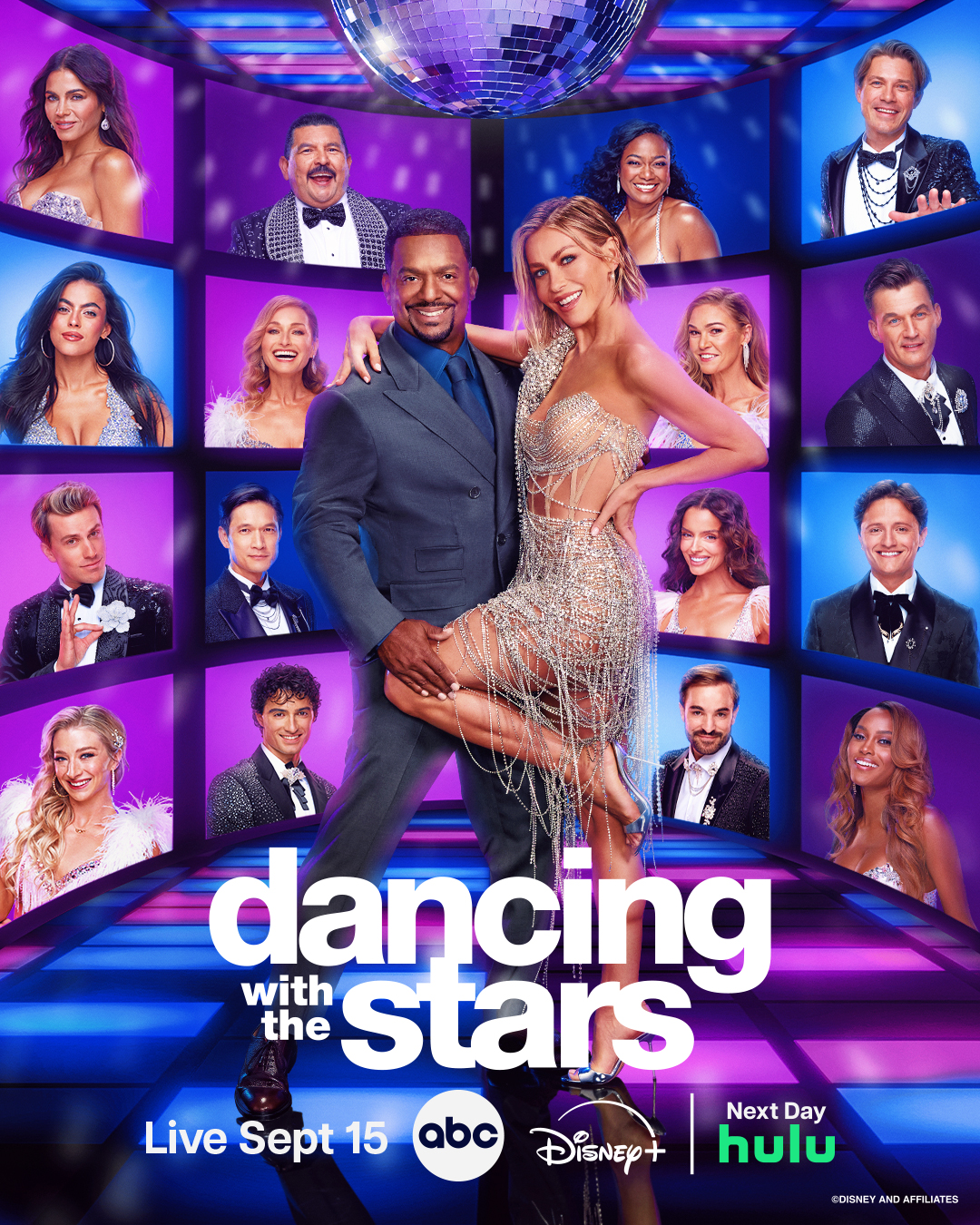
Season 35 key art. Five couples dance for the Len Goodman Mirrorball Trophy on November 24. Image: ABC/Disney.
What comes next: the Season 35 finale
The three-hour finale airs live on Tuesday, November 24, from 8 to 11 p.m. Eastern and 5 to 8 p.m. Pacific on ABC and Disney+. The nationwide live broadcast lets Mountain and Pacific viewers watch and vote inside the same live window as Eastern viewers.
Five couples remain: Amber Glenn and Pasha Pashkov, Ezra Frech and Daniella Karagach, Maura Higgins and Mark Ballas, Tatyana Ali and Jan Ravnik, and Connor Wood and Rylee Arnold. Each will dance three times, performing a Judges’ Choice routine, an Instant Dance Challenge and a freestyle.
For every song, style and the full voting rules, see DMM’s finale guide and the official voting site. Live scores and results are on the Season 35 live dashboard.
One couple will earn the Len Goodman Mirrorball Trophy. The larger story of the season, however, belongs to every artist who contributed to it.
Frequently asked questions
What did Alfonso Ribeiro say about DWTS criticism?
Ribeiro told USA TODAY on November 23, 2026 that popularity has always been part of the competition, and that the belief the show is about celebrities with no dance experience is incorrect. He told TV Insider that standards and practices staff observe the voting and that the production does not control the outcome.
Can DWTS contestants have previous dance experience?
Yes. Previous training is not a disqualification. Ribeiro has said the show is a competition about learning ballroom styles and improving, and that few people in entertainment have never danced.
Why was Harry Shum Jr. eliminated despite perfect scores?
The November 17 result combined the judges’ scores with audience voting. His 60/60 judges’ total did not guarantee advancement, and public vote totals are not published, so no specific voting motive can be established.
Did Sharna Burgess propose changing DWTS voting?
Yes. On Instagram Stories she suggested returning to a total of ten votes per viewer, to be distributed as the viewer chooses, instead of the current per-couple allowance. It is her proposal, not a confirmed change.
When is the DWTS Season 35 finale?
Tuesday, November 24, 2026, from 8 to 11 p.m. Eastern and 5 to 8 p.m. Pacific, live on ABC and Disney+.
Related DMM Coverage
DWTS Finale 2026: Every Song, Dance, Freestyle and How to Vote
DWTS Semifinals 2026 Results: Harry Shum Jr. Eliminated
Does Dance Experience Give DWTS Contestants an Advantage?
Tatyana Ali on Healing Through Dance
DWTS Newsroom · Season 35 Live Dashboard
Sources
USA TODAY exclusive, November 23, 2026 · TV Insider exclusive, November 23, 2026 · Cosmopolitan, November 23, 2026 · Vulture · Entertainment Weekly finale viewing guide · Official DWTS voting site
© Dance Mogul Magazine. Inspiring self-empowerment since 2010.