
Dance Mogul Magazine · The Legacy · Before Hollywood · Breaking
Cuba Gooding Jr. Before Hollywood: From the 1984 Olympic Floor to the Oscar Stage
Before Rod Tidwell, before Tre Styles, before the speech that outlasted the orchestra, there was a 16-year-old breaker in the Los Angeles Coliseum. This is the story of how Cuba Gooding Jr. carried the floor from a Boys & Girls Club gym to the Olympics, into an end-zone dance the world still imitates, and back onto a Broadway stage.
October 13, 2026 · Dance Mogul Magazine · Legacy Feature
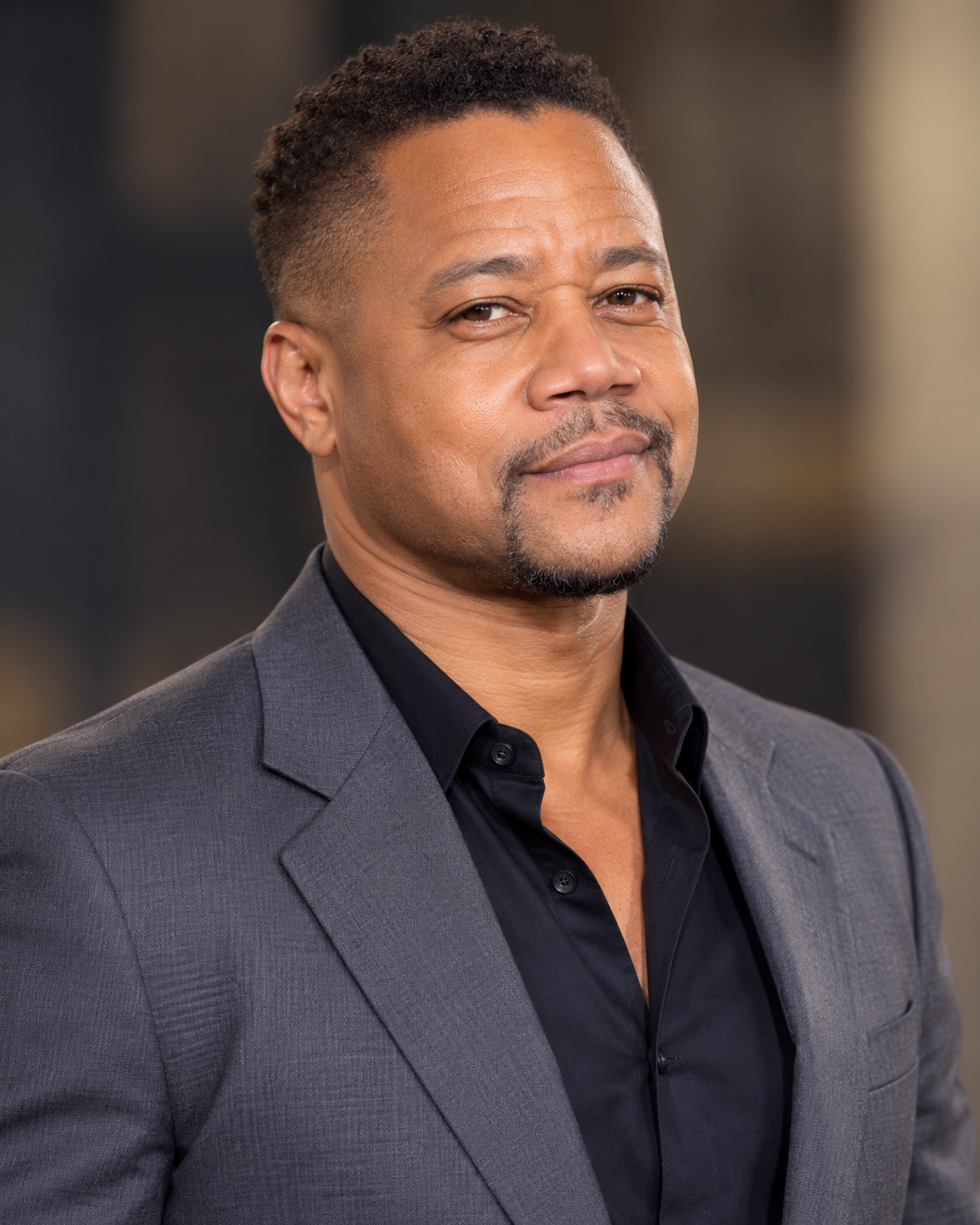
Editorial illustration representing Cuba Gooding Jr., who performed as a 16-year-old breaker at the 1984 Los Angeles Olympics closing ceremony.
Editorial illustration Dance Mogul Magazine · Not an actual photograph of Cuba Gooding Jr.
All Night Long, Under an Aluminum Taco
On the night of August 12, 1984, the Los Angeles Coliseum held roughly 92,000 people with tickets, and an Associated Press estimate put another 2.6 billion in front of televisions around the world. A spaceship prop that producers nicknamed “the Aluminum Taco” hovered over the stadium. Then Lionel Richie took the stage for a version of “All Night Long” that ran about nine minutes, and he was surrounded by several hundred break dancers.
One of them was 16 years old. His name was Cuba Gooding Jr.
Thirteen years later, he would win an Academy Award. Most retellings treat the Olympics as trivia: the Oscar winner used to breakdance. Dance Mogul Magazine reads the record differently. That night in the Coliseum was not a footnote to an acting career. It was a globally visible chapter in a foundation built in a Boys & Girls Club gym, developed with a crew of young dancers, and brought to the Olympic stage through dance sequences choreographed by Damita Jo Freeman. Years later, Gooding carried that physical training into one of American film's most memorable touchdown celebrations.
This feature puts that journey in order, with sources, so readers do not have to assemble it from viral clips and trivia lists. It also answers the question at the center of our Before Hollywood series: where can a dancer go after the floor? Cuba Gooding Jr.’s answer runs from a gym in Orange County to the Coliseum, to the end zone, to the Oscar stage and back to the boards of Broadway.
“Boys & Girls Club of America is an organization that has been very close to my heart for many years.”
Cuba Gooding Jr., Boys & Girls Clubs of America release, August 2016
Cuba Gooding Jr. at a Glance
File // At a Glance
Name — Cuba Mark Gooding Jr.
Born — January 2, 1968, the Bronx, New York
Raised — Los Angeles area, from 1972; attended four high schools, including Tustin High School
Family — Son of Cuba Gooding Sr., lead singer of The Main Ingredient; brother of actor Omar Gooding
Dance roots — Breaking; Boys & Girls Club in Tustin, Calif.; Majestic Visual Break Dancers (Gooding interview, ABC News, 2016; variant spelling noted below)
Early global stage — Breaker at the 1984 Los Angeles Olympics closing ceremony, age 16
Signature dance moment — Rod Tidwell’s end-zone celebration in Jerry Maguire (1996), choreographed by Paula Abdul
Top honor — Academy Award, Best Supporting Actor, March 24, 1997
Stage — The Trip to Bountiful (Broadway, 2013); Billy Flynn in Chicago (West End and Broadway, 2018–19)
Also — Director, Bayou Caviar (2018); star on the Hollywood Walk of Fame (2002)
DMM connection — Before Hollywood series; links to DMM’s Paula Abdul and Boogaloo Shrimp features
A Singer’s Son on the Move
Cuba Mark Gooding Jr. was born on January 2, 1968, in the Bronx. Music was the family business. His father, Cuba Gooding Sr., was the lead singer of the soul group The Main Ingredient, and his mother, Shirley, was also a singer. In 1972, after The Main Ingredient’s hit “Everybody Plays the Fool,” the family moved to Los Angeles. Published biographies say his father left the household about two years later, and that his mother raised the children.
The family moved often. Cuba attended four different high schools across Southern California: North Hollywood, Tustin, Apple Valley and John F. Kennedy in Granada Hills. For a young person changing schools that often, dance offered something portable: a skill that went wherever he went, and a way into whatever room he walked into next.
The Gym, the Music and the Homework Rule
Every dance story needs a place to practice, and for Gooding’s generation of breakers, that was a real problem. Retellings of his youth say the young dancers were run off by store owners when they practiced outside. The door that opened belonged to a Boys & Girls Club.
In his own words, Gooding was “an active youth at the Boys & Girls Club in Tustin, California.” Boys & Girls Clubs of America tells the rest. The Club’s director let Cuba and his friends practice break-dancing in the gym, with music as loud as they wanted, on one condition: they did their homework first. The organization credits that arrangement with keeping him off the streets and on track in school.
It is a small rule with a large meaning. An adult gave young dancers space, sound and respect, and asked for discipline in return. Gooding is honored in the organization’s Alumni Hall of Fame and appeared in its “Great Futures Start Here” campaign. In August 2016, he returned to a Club, the Boys & Girls Club of Metro Los Angeles in Watts-Willowbrook, to visit with young members. (Some retellings place his own practice years at Watts-Willowbrook. By his own account, his Club was in Tustin; Watts-Willowbrook is where he went back to give.)
In a 2016 interview with ABC News, Gooding identified his early crew as the Majestic Visual Break Dancers. BET uses the same name. An older theater reference uses the variant Majestic Vision Breakdancers. DMM follows the wording in Gooding’s firsthand account while preserving the historical variation for researchers. If you danced with the crew or have a period flyer or program, we welcome documentation.
August 12, 1984: Breaking Takes the World Stage
The closing ceremony of the 1984 Summer Games was built as a party. Breaking, which had traveled from the Bronx to the West Coast in a few short years, was at the center of it. Several hundred breakers worked the stage and the field around Lionel Richie. The AP’s 2020 look back names one of them directly: a 16-year-old Cuba Gooding Jr.
Gooding told ABC News that he and his crew became official break dancers for the Games; an original selection roster remains to be located. The documented outcome is clear: a teenage street dancer from Southern California performed for one of the largest television audiences of the decade, as breaking took a world stage forty years before it became an Olympic event in Paris.
The Choreographer Too Often Missing From the Story
A closing number with several hundred dancers does not stage itself. Among the artists responsible for its dance sequences was choreographer Damita Jo Freeman, the Los Angeles dancer who became one of the breakout stars of Soul Train in the early 1970s and who danced in the clubs of that era with Don “Campbellock” Campbell, the originator of locking. Her later credits include the American Music Awards, the Grammy Awards and the Daytime Emmy Awards.
In a 2023 interview with the Los Angeles Sentinel, Freeman recalled choreographing 500 street dancers, 100 trained dancers and 25 children for the ceremony. Those numbers are her recollection; DMM has not yet located an official production credit list to compare against. In KCRW's 2024 oral-history reporting, Freeman recalled wanting the world to see breaking, popping and locking together on an Olympic stage. Her account makes the choreographer's perspective part of the record, not just the celebrity performance.
“They’re breaking. They’re popping. They’re locking. Let’s show the world that.”
Damita Jo Freeman, recalling the 1984 Olympics for KCRW, 2024
That is why she belongs in this story. A celebrity biography usually reads, “he performed at the Olympics.” A dance history asks who built the performance, who trained beside him and whose name fell out of the record. DMM’s own American Social Dance Movement archive already lists Freeman among the people who made the Soul Train era. The 1984 closing ceremony is another chapter of her legacy, and Gooding’s presence in it is one more reason to tell it.
Backup Dancer, Martial Artist, Working Actor
The Olympics were his first job as an entertainer, but not his last as a dancer. A long-standing theater reference describes his early working years as including time as a backup dancer and appearances in commercials. After high school he studied Japanese martial arts for about three years, another physical discipline built on timing, control and repetition, before turning his focus to acting.
The early credits came steadily: guest roles on Hill Street Blues (1987), Amen and MacGyver, and a small part in Eddie Murphy’s Coming to America (1988), a film whose dance sequences were choreographed by Paula Abdul. In 1989 he played Stanley in Sing, a musical drama about a Brooklyn high school whose students stage a song-and-dance competition to hold their neighborhood together. Before the dramatic roles arrived, his screen work kept returning to music and movement.
Tre Styles and the Turn to Drama
In 1991, John Singleton cast him as the lead, Tre Styles, in Boyz n the Hood. The film made Gooding a serious dramatic actor almost overnight. A year later he was a Marine corporal in Rob Reiner’s A Few Good Men. Neither role called for dancing, but both called for the thing dance had trained: an actor who understands that the body tells the story before the words do.
Rod Tidwell’s End Zone: The Breaker Comes Back
Then came Jerry Maguire (1996). Gooding played Rod Tidwell, the Arizona Cardinals receiver who demands that his agent “show me the money.” The film needed a touchdown celebration that would feel spontaneous, joyful and a little bit too much, and it got one, in a dance that football fans and movie fans have been imitating ever since.
The movement had professional help. CBS News, Moviefone and the Brooklyn Rail all credit Paula Abdul with choreographing Rod’s end-zone dance. Moviefone’s 2016 retrospective adds that Gooding’s breakdancing background made him the right actor to perform it. Abdul, the former Laker Girl who became one of the most influential choreographers of the 1980s, met a former Olympic breaker in the end zone. Two dancers, both trained in Los Angeles, turned a sports scene into a dance scene.
DMM’s feature on Paula Abdul covers the other side of that collaboration.
March 24, 1997: The Speech That Outlasted the Music
At the 69th Academy Awards, Cuba Gooding Jr. won the Oscar for Best Supporting Actor, ahead of William H. Macy, Armin Mueller-Stahl, Edward Norton and James Woods. His acceptance is remembered for its energy. The orchestra started playing after about thirty seconds, and he kept going for nearly another minute, naming everyone he had not yet thanked, until the room rose in a standing ovation. A performer who learned his first audience in a stadium knew how to hold a room.
Range on the Résumé
The years that followed were wide-ranging. He received a star on the Hollywood Walk of Fame on January 17, 2002. He played the title role in Radio (2003), appeared in The Fighting Temptations (2003), and took roles in Ridley Scott’s American Gangster (2007), the Tuskegee Airmen story Red Tails (2012), The Butler (2013) and Ava DuVernay’s Selma (2014), in which he played civil rights attorney Fred Gray.
In 2016 his portrayal of O.J. Simpson in The People v. O.J. Simpson: American Crime Story earned him a Primetime Emmy nomination. Two years later he made his directing debut with Bayou Caviar.
Back to the Boards: Billy Flynn and the Razzle Dazzle
The stage came back into his career in 2013, when he made his Broadway debut opposite Cicely Tyson and Vanessa Williams in Horton Foote’s The Trip to Bountiful. Five years later, he chose a musical.
On March 26, 2018, Gooding opened as the lawyer Billy Flynn in the West End revival of Chicago at London’s Phoenix Theatre, his first time on a British stage. That October he brought the role to Broadway’s Ambassador Theatre, in the production billed as the longest-running American musical in Broadway history, with choreography credited to Ann Reinking. The engagement ran into November 2018, and he returned for a second run from January 7 to February 10, 2019.
For a dancer, the arc is complete in a way few careers allow. The 16-year-old who broke in the Coliseum ended up singing and dancing a lead role in one of musical theater’s most dance-driven shows.
The Movement Never Left
In November 2023, a clip from an event honoring Flavor Flav went viral: Gooding, in a suit, dropping into a freestyle as Rob Base performed “It Takes Two.” Flavor Flav posted it with the caption “Y’all didn’t know he could get down like that,” and reminded his followers that Gooding had broken at the 1984 Olympics. BET’s coverage notes that he has shown his moves before, including a windmill on The Graham Norton Show and dancing in the end credits of The Fighting Temptations.
Thirty-nine years after the closing ceremony, he was still drawing on his dance vocabulary. The performance offered a glimpse of how long a dancer’s foundational training can remain part of an artist’s expressive range.
Watch and Read: The Record in Their Own Words
The closing ceremony, the end-zone celebration and the Oscar speech have been documented extensively. Below are reported accounts used to place the moments in context. Start with the AP’s retelling of the night in the Coliseum, then explore Gooding’s firsthand account of the Club that gave his crew a place to practice and Damita Jo Freeman’s recollections of developing the ceremony’s dance sequences.
Career Journey: From the Coliseum Floor to the Oscar Stage
■ Dance ■ Stage ■ Screen & life
1968 · LIFE
Born January 2 in the Bronx, New York, to singers Cuba Gooding Sr. and Shirley Gooding.
1972 · LIFE
Family moves to Los Angeles after The Main Ingredient’s hit “Everybody Plays the Fool.”
Early 1980s · DANCE
Breaks with his crew in the gym of the Boys & Girls Club in Tustin, Calif., under a homework-first rule.
Aug 12, 1984 · DANCE
Age 16: one of several hundred breakers in Lionel Richie’s “All Night Long” at the Los Angeles Olympics closing ceremony, choreographed by Damita Jo Freeman.
Mid-1980s · DANCE
Works as a backup dancer; studies Japanese martial arts for about three years after high school.
1987–1990 · SCREEN
Guest roles on Hill Street Blues, Amen and MacGyver.
1988 · SCREEN
Small role in Coming to America.
1989 · SCREEN
Plays Stanley in the musical drama Sing.
1991 · SCREEN
Lead role of Tre Styles in Boyz n the Hood.
1992 · SCREEN
A Few Good Men.
1996 · DANCE
Rod Tidwell’s end-zone dance in Jerry Maguire, choreographed by Paula Abdul.
Mar 24, 1997 · SCREEN
Wins the Academy Award for Best Supporting Actor.
2002 · SCREEN
Star on the Hollywood Walk of Fame, January 17.
2003 · SCREEN
Title role in Radio; appears in The Fighting Temptations.
2012–2014 · SCREEN
Red Tails, The Butler, Selma.
2013 · STAGE
Broadway debut in The Trip to Bountiful.
2016 · SCREEN
Emmy nomination for The People v. O.J. Simpson; visits the Boys & Girls Club in Watts-Willowbrook.
2018 · STAGE
Billy Flynn in Chicago: West End from March 26, Broadway from October; directs Bayou Caviar.
2019 · STAGE
Returns to Chicago on Broadway, January 7 to February 10.
2023 · DANCE
Viral freestyle to “It Takes Two” at an event honoring Flavor Flav.
2024 · SCREEN
The Firing Squad opens in U.S. theaters, August 2.
2025 · SCREEN
Appears in A Line of Fire, distributed digitally by Sony Pictures.
By the Numbers: How Big Was the Floor?
Numbers do not measure a person’s worth, and none of the figures below are Cuba Gooding Jr.’s earnings. They show the size of the stages he reached: first as one dancer among hundreds, then as an actor in films seen around the world.
for the 1984 Olympics closing ceremony (AP estimate)
Sources: Associated Press (Tim Dahlberg), August 10, 2020, for the audience, ticket and dancer figures; Damita Jo Freeman to the Los Angeles Sentinel, October 2023, for her count of street dancers. The 2.6 billion figure is an estimate, not a measured audience.
Three Films, Three Turning Points
Worldwide box office, nominal dollars · bars drawn to scale
Source: Box Office Mojo, worldwide theatrical gross, not adjusted for inflation, checked October 13, 2026. Combined: $574,444,842 (approximately $574.4 million). These figures describe the films, not the actor’s share.
The Career Ladder in Real Numbers
Most dancers never reach a stadium, let alone an Oscar stage. The federal figures below show what the profession pays at its middle, and why dancers who learn to act, choreograph, direct and produce give themselves more doors.
Source: U.S. Bureau of Labor Statistics, Occupational Outlook Handbook, Dancers and Choreographers, checked October 13, 2026.
What DMM will not do is guess at Gooding’s personal earnings from any of these numbers. The point is the range: from a gym that cost nothing but homework to stages measured in billions of viewers.
Where Can a Dancer Go After the Floor? The Cuba Gooding Jr. Answer
Every dancer reaches the question sooner or later. Gooding’s path shows that the floor is not a dead end; it is a training ground whose lessons travel.
How the floor became a career
1. The gym. A Club director trades practice space for homework; discipline starts there.
2. The crew. Young dancers rehearse together until they are ready for a public stage.
3. The stadium. At 16, he performs for 92,000 in the Coliseum and a global TV audience.
4. The working years. Backup dancing, commercials, martial arts and guest roles build a professional.
5. The screen. Sing, Boyz n the Hood, then the end zone of Jerry Maguire and an Oscar.
6. The stage. Broadway drama in 2013, then a song-and-dance lead in Chicago in 2018.
Discipline
The homework rule came before the music. Dance rewarded the habit; acting needed it.
Community
A Club gym gave a crew somewhere to grow. He went back in 2016 to give to the next one.
Transfer
Timing, presence and body control moved straight from breaking into acting.
Return
Decades later he chose a dance-driven musical. The floor was still part of him.
He is not alone. DMM’s Vin Diesel feature traces another 1980s breaker who carried the floor into film, and our After the Stage features on Paula Abdul, Rosie Perez and Jennifer Lopez show dancers who became choreographers, actors and producers.
What Belongs to the Culture, and What Belongs to Him
It would be easy to tell this story as if Hollywood discovered a dancer. The truth is larger. Breaking was created by young people in the Bronx in the 1970s and spread west through crews, parties, films and television. Los Angeles had its own scene, from the funk styles of locking and popping to the West Coast breakers whose story DMM told in its Boogaloo Shrimp feature. The 1984 closing ceremony drew on hundreds of dancers, with Damita Jo Freeman responsible for key dance sequences and other production contributors deserving accurate recognition.
What belongs to Gooding is the use he made of it: the discipline he brought to a Club gym, the nerve to perform at 16 for the world, and the instinct to bring that movement back when a film or a stage called for it.
Where Is Cuba Gooding Jr. Now?
Gooding has continued appearing in films. He was among the cast of The Firing Squad, directed by Tim Chey and released theatrically in the United States on August 2, 2024. Sony Pictures also lists the 2025 action film A Line of Fire, starring David A. R. White and Gooding, as available on digital platforms. These are confirmed examples, not a complete filmography.
His dance background also resurfaced publicly in the widely circulated 2023 freestyle clip. DMM will update this section as new projects are confirmed.
Why Cuba Gooding Jr.’s Story Matters to Dance Mogul Magazine
Dance Mogul Magazine exists to document lived stories that help someone become a better version of themselves. Gooding’s early life fits that mission at its root. A young person moving between schools found a place to belong through dance, and an adult at a Boys & Girls Club made that place available on the condition that he keep up with his education. That is community investment in its most practical form.
His story also lets DMM do what entertainment coverage rarely does: recover the people around the star. The 1984 closing ceremony was supported by dance sequences choreographed by Damita Jo Freeman, a Black woman from the Soul Train generation, and performed by hundreds of young breakers who rarely receive individual mention in later accounts. Telling Gooding’s story correctly means telling theirs, too.
And it carries a message we want every young dancer to hear: the skills you build on the floor are not wasted when the career changes. They become presence, timing, discipline and joy, in whatever room you walk into next.
What the story would be missing without his dance years
- The first audience. A 16-year-old breaker in front of 92,000 people and a worldwide broadcast.
- The homework rule. A Club gym that tied practice time to schoolwork.
- The end zone. A celebration choreographed by Paula Abdul and performed by a trained dancer.
- The return. A song-and-dance lead in Chicago, three decades after the Coliseum.
- The forgotten credit. A path back to Damita Jo Freeman and the dancers of 1984.
What Future Generations Can Learn From Cuba Gooding Jr.
- Find the room that says yes. When the sidewalk pushed his crew away, a Boys & Girls Club opened its gym.
- Do the homework first. The deal that gave him practice time is still the best deal a young dancer can take.
- Your first stage can be the biggest one. Treat every performance as if the world is watching. In 1984, it was.
- Keep training, even in new forms. Backup dancing, martial arts and acting classes all built the same body awareness.
- Bring your whole self to the role. A breaker’s instincts made a scripted touchdown feel real.
- Go back for the next kid. He returned to a Club in 2016 to spend time with young members.
- Credit the people who built the moment. Every big stage has a choreographer, a crew and dancers whose names deserve to be known.
Still All Night Long
Somewhere in the 1984 footage, among several hundred breakers in the Coliseum, is a 16-year-old who learned his moves in a Club gym after finishing his homework. thirteen years later he would hold an Oscar; thirty-four years later he would sing and dance on Broadway; thirty-nine years later he would dance at an event in a suit, reminding an audience of his roots.
Hollywood knows him as Rod Tidwell. Dance knows him as one of the breakers who carried the culture onto the world’s stage, and as proof that the floor never really leaves you.
Cuba Gooding Jr.: Frequently Asked Questions
Did Cuba Gooding Jr. breakdance?
Yes. Cuba Gooding Jr. was a breaker in Southern California in the early 1980s. He practiced with his crew in the gym of the Boys & Girls Club in Tustin, California, and at age 16 he danced at the closing ceremony of the 1984 Los Angeles Olympics.
Did Cuba Gooding Jr. dance at the opening or closing ceremony of the 1984 Olympics?
The closing ceremony, on August 12, 1984, at the Los Angeles Coliseum. He was one of several hundred break dancers who performed around Lionel Richie during “All Night Long,” according to the Associated Press.
What was Cuba Gooding Jr.’s breakdancing crew called?
In a 2016 ABC News interview, Gooding identified the group as the Majestic Visual Break Dancers. BET uses the same wording; an older reference book prints the variant Majestic Vision Breakdancers. DMM follows Gooding’s firsthand account.
Who choreographed the 1984 Olympics closing ceremony?
Damita Jo Freeman choreographed dance sequences for the 1984 Los Angeles Olympics closing ceremony, including the mass dance staging accompanying Lionel Richie. In a 2023 interview, she recalled working with 500 street dancers, 100 other dancers and 25 children; those counts are her recollection, not an independently verified official roster.
Who choreographed the Jerry Maguire end-zone dance?
Paula Abdul is credited by CBS News, Moviefone and the Brooklyn Rail with choreographing Rod Tidwell’s end-zone dance, performed by Cuba Gooding Jr. in Jerry Maguire (1996).
Which Boys & Girls Club did Cuba Gooding Jr. attend?
By his own account, the Boys & Girls Club in Tustin, California, where the director let his crew practice in the gym if they did their homework first. In August 2016 he visited the Boys & Girls Club of Metro Los Angeles in Watts-Willowbrook, which is sometimes confused with his childhood Club.
When did Cuba Gooding Jr. win his Oscar?
He won the Academy Award for Best Supporting Actor for Jerry Maguire at the 69th Academy Awards on March 24, 1997.
Has Cuba Gooding Jr. performed in a Broadway musical?
Yes. He played Billy Flynn in Chicago, first in London’s West End from March 2018 and then on Broadway at the Ambassador Theatre from October 2018, returning from January 7 to February 10, 2019. His Broadway debut was the play The Trip to Bountiful in 2013.
The Legacy // Before Hollywood Collection
Vin Diesel The breakdancer who turned the floor into a franchise
Cuba Gooding Jr. You are here
Donnie Yen Coming soon
Mario Lopez Coming soon
Michael DeLorenzo Coming soon
Also from the archive
Paula Abdul She choreographed the end zone
Boogaloo Shrimp Los Angeles, 1984, on screen
Rosie Perez After the Stage
Jennifer Lopez After the Stage
The American Social Dance Movement Damita Jo Freeman and the Soul Train era
Sources & Further Reading
- ABC News (Ricki Harris), firsthand Cuba Gooding Jr. interview on his breakdancing crew and 1984 Olympics, August 19, 2016
- KCRW, first-person oral history with Damita Jo Freeman on the 1984 Olympic closing ceremony, 2024
- Sony Pictures Entertainment, A Line of Fire (2025), film credits and digital availability
- Associated Press (Tim Dahlberg), “All Night Long: Lionel Richie recalls closing 1984 Olympics,” August 10, 2020
- Boys & Girls Clubs of America, Alumni Hall of Fame: Cuba Gooding Jr.
- Whirlpool / Maytag, Cuba Gooding Jr. visits Boys & Girls Club youth, August 17, 2016
- BET, “Cuba Gooding Jr Still Has His Breakdancing Moves,” November 2023
- Atlanta Black Star, Flavor Flav and Cuba Gooding Jr.’s viral breakdance, November 14, 2023
- Contemporary Theatre, Film and Television via Encyclopedia.com, “Gooding, Cuba, Jr.”
- Los Angeles Sentinel, Damita Jo Freeman profile, October 2023
- EURweb, Damita Jo Freeman with Lee Bailey, January 2019
- USC Visions & Voices, Cypher Summit panel bio of Damita Jo Freeman, 2026
- CBS News, Paula Abdul profile (“Paul Abdul: Straight Up” as titled on CBS), January 2011
- Moviefone (Gary Susman), “21 Things You Never Knew About Jerry Maguire,” December 12, 2016
- Brooklyn Rail, “Dancing Paula Abdul in my Living Room,” May 2020
- Academy of Motion Picture Arts and Sciences, 69th Academy Awards (1997)
- ET Online, Oscars flashback: Cuba Gooding Jr., February 18, 2013
- Hollywood Walk of Fame, Cuba Gooding Jr.
- Official London Theatre, Cuba Gooding Jr. to star in Chicago, January 12, 2018
- The Shubert Organization, Cuba Gooding Jr. to star as Billy Flynn in Chicago, August 23, 2018
- Playbill, Cuba Gooding Jr. returns to Broadway’s Chicago, January 7, 2019
- Box Office Mojo, Jerry Maguire
- Box Office Mojo, A Few Good Men
- Box Office Mojo, Boyz n the Hood
- Religion News Service, The Firing Squad sets wide U.S. release, May 2, 2024
- U.S. Bureau of Labor Statistics, Dancers and Choreographers
© 2026 Dance Mogul Magazine LLC | dancemogul.com | Black-owned since 2010