 Dance Mogul Magazine
The Spirit of Gratitude Series
Part 2 · The Stranger at the Station
Dance Mogul Magazine · Lifestyle & Perspective · Part 2 of 3
Real-World Gratitude Example: When Help Comes From Someone Society Overlooks
Why receiving kindness from someone with less status, money, or visibility still deserves deep appreciation.
October 26, 2026 · By Dance Mogul Magazine
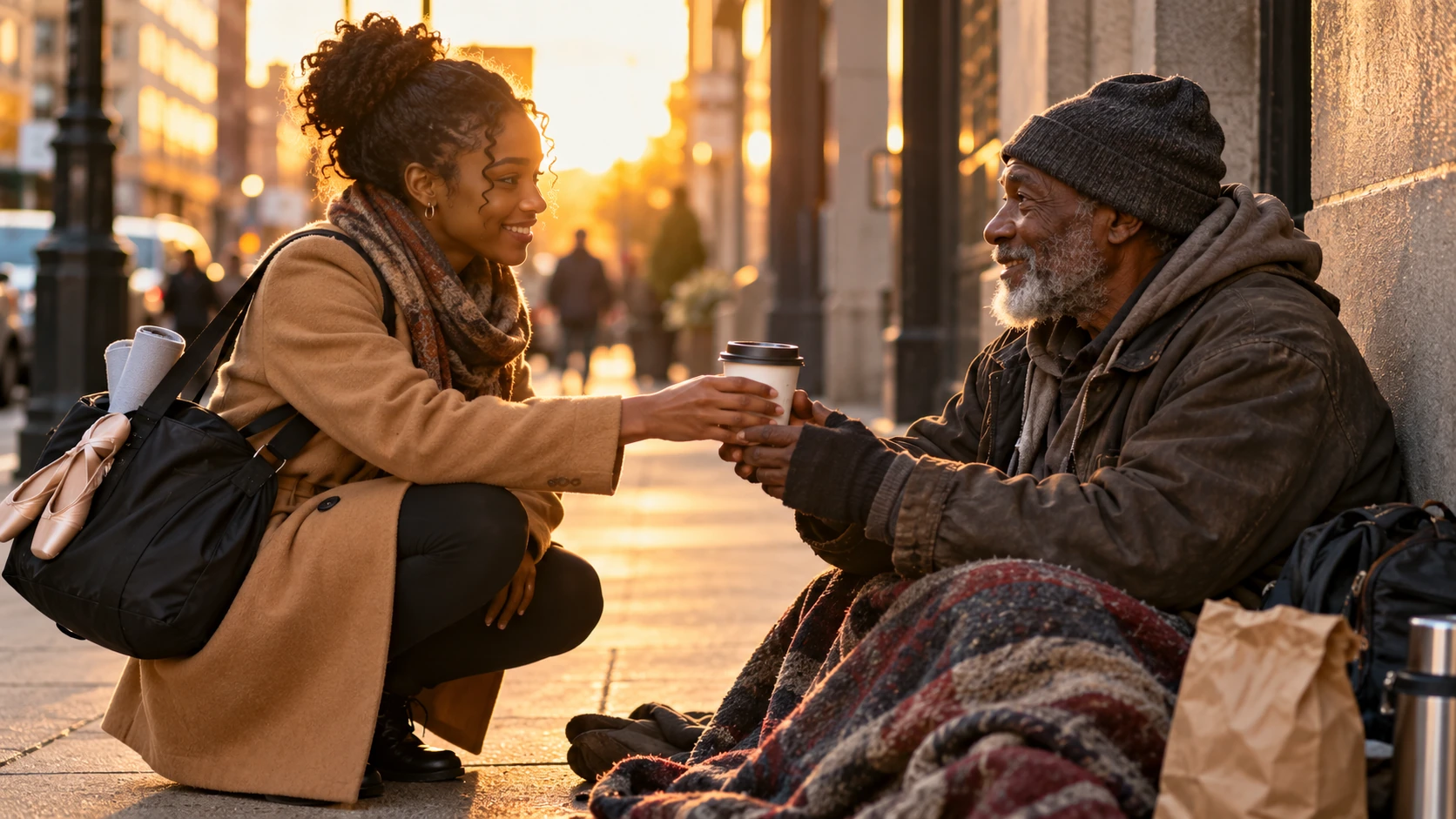
Maya came back the next morning with two coffees and a question she had never asked: “What’s your name?” Illustration: Dance Mogul Magazine
A Kind ActCan change someone’s entire day.
An Open HeartBuilds stronger communities.
Countless LivesAre touched by one act of gratitude.
A More United WorldStarts with everyday respect.
Maya was twenty-two and on her way to the biggest audition of her life. Her train was delayed. Her phone was at three percent, then dead. She came up from the station into a neighborhood she did not know, with a dance bag over one shoulder, twenty minutes until check-in and no idea which direction to walk.
Dozens of people moved past her. None of them slowed down. Then a man sitting near the station entrance—a man with a rolling cart of belongings and a coat that had seen many winters, a man she had walked past without seeing—said, “You look lost.”
About This Story
The people and scenes in this real-world example are illustrative composites drawn from everyday experiences, not reporting on specific individuals. The research cited is real and linked below.
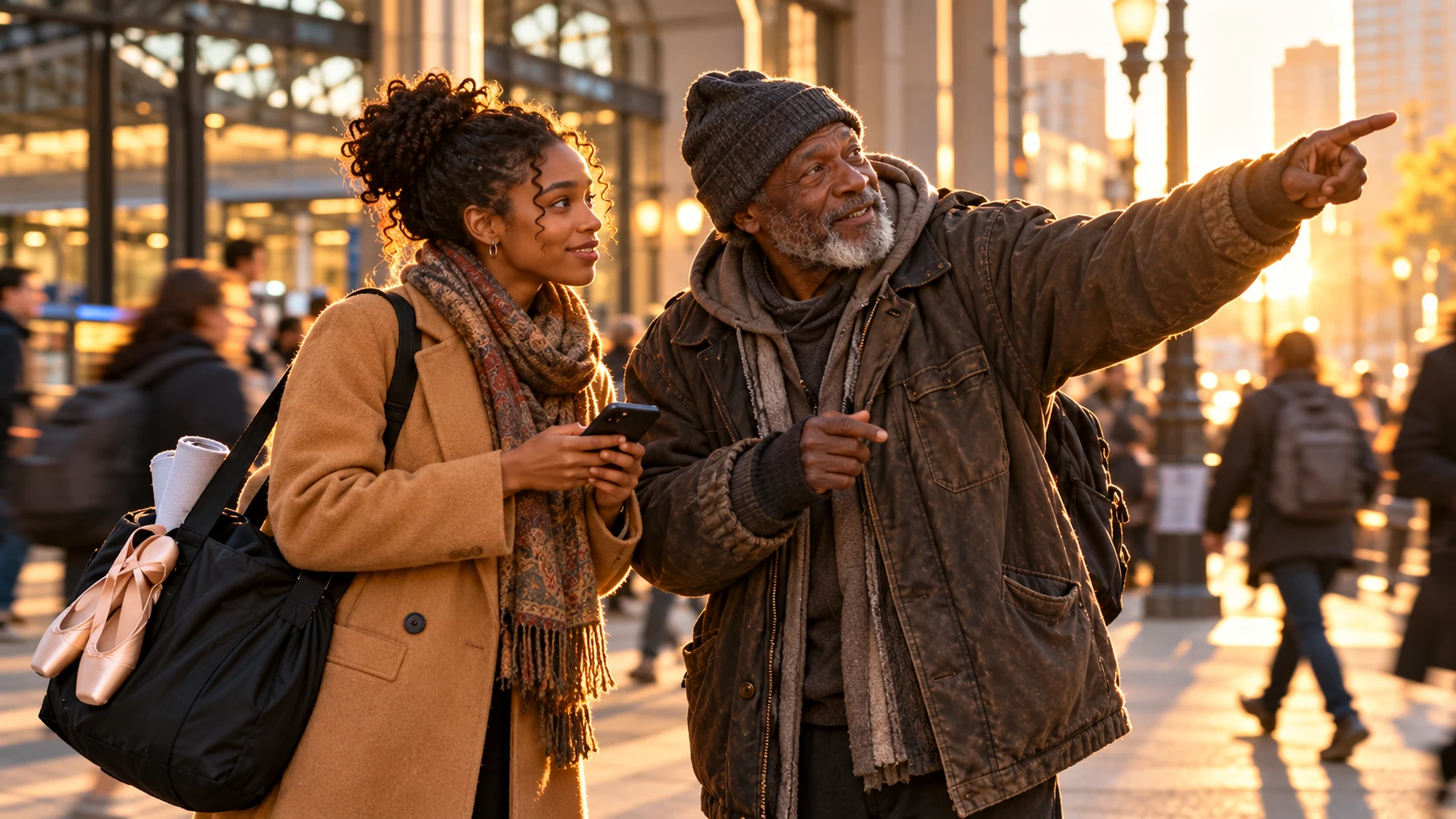
Everyone else was in a hurry. He was the one who noticed she was lost. Illustration: Dance Mogul Magazine
A Simple Question, A Big Lesson
Why Should I Be Grateful If They Are “Lower” Than Me?
Maya will tell you honestly that she hesitated. She had been taught to keep walking. For a second, the old ranking ran through her head: he was the one who needed help, not her.
But he knew exactly where the studio was. He had walked these blocks for years. He stood up, pointed out the shortcut past the church, and when she still looked unsure, walked the two blocks with her to the door. She reached for her wallet. He waved it off. “Just go get it,” he said.
She checked in with four minutes to spare. That afternoon she got a callback.
The Thought We Do Not Like to Admit
In a world that often measures success by money, status, education, or position, it can be easy to look down on someone we think has less. Many people have quietly wondered: Why should I be grateful if someone does something for me and they are lower than me in life?
The question deserves an honest answer. When someone helps us, no matter their circumstances, they are offering their time, attention, energy and care. That man by the station had every reason to stay seated and anonymous. He chose to notice a stranger who was struggling and to spend his afternoon fixing her problem. Gratitude is not about rank. It is about recognizing the value of another human being and the goodness in their action.
There is also research on why this can feel hard. A study by Eric M. Anicich, Alice J. Lee and Shi Liu in Personality and Social Psychology Bulletin found that people who hold more power tend to feel and express less gratitude after receiving help, largely because they feel more entitled to it. When we believe we are above someone, their kindness can register as something we were owed rather than something they gave. Naming that tendency is the first step to resisting it.
Coming Back
Gratitude With Dignity
The next morning, Maya went back to the station with two coffees and a breakfast sandwich. She did not drop them and hurry off. She crouched down to his eye level, handed him a cup, and asked the question she had never asked anyone in that spot: “What’s your name?”
His name was Walter. He had worked deliveries in that neighborhood for nearly twenty years, which is why he knew every shortcut. They talked for half an hour—about the callback, about the city, about his daughter in another state. Maya thanked him for the specific thing he did: “You got me there. I wouldn’t have made it without you.”
She did not take a photo for social media. The thank-you was for him, not for an audience.
“
Gratitude is not about who gives, but about the love and humanity behind the giving.
DMM Editorial Reflection
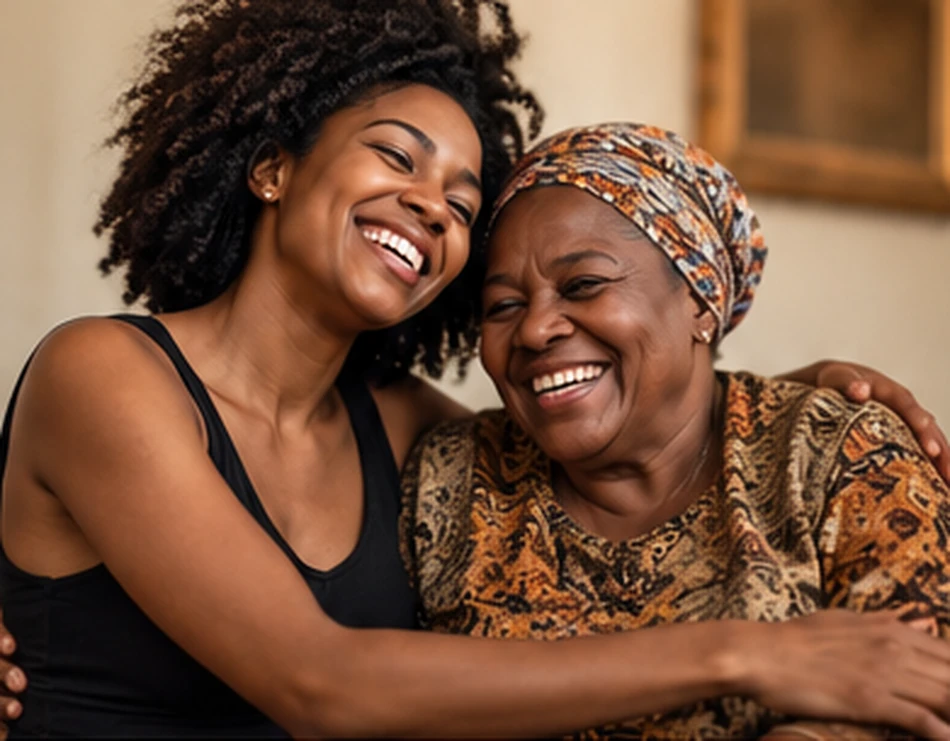
That night, Maya told her grandmother the whole story. Illustration: Dance Mogul Magazine
We Are All Equal in Humanity
A Person’s Dignity Always Matters
That night Maya told her grandmother everything. Her grandmother listened, then reminded her of the year their family had almost nothing, and of the neighbors who brought food without being asked. Kindness, she said, does not check your bank account before it shows up.
Every person, no matter their circumstances, has dignity, value, and something to offer. When someone helps us—whether with a kind word, a warm meal, a ride, or a simple act of support—they are giving us their time, energy, and care. That is a gift.
A person’s worth is not defined by their job, income, housing situation, or social status. Being grateful means we see the humanity in them, recognize the good they have done, and understand that kindness has no rank.
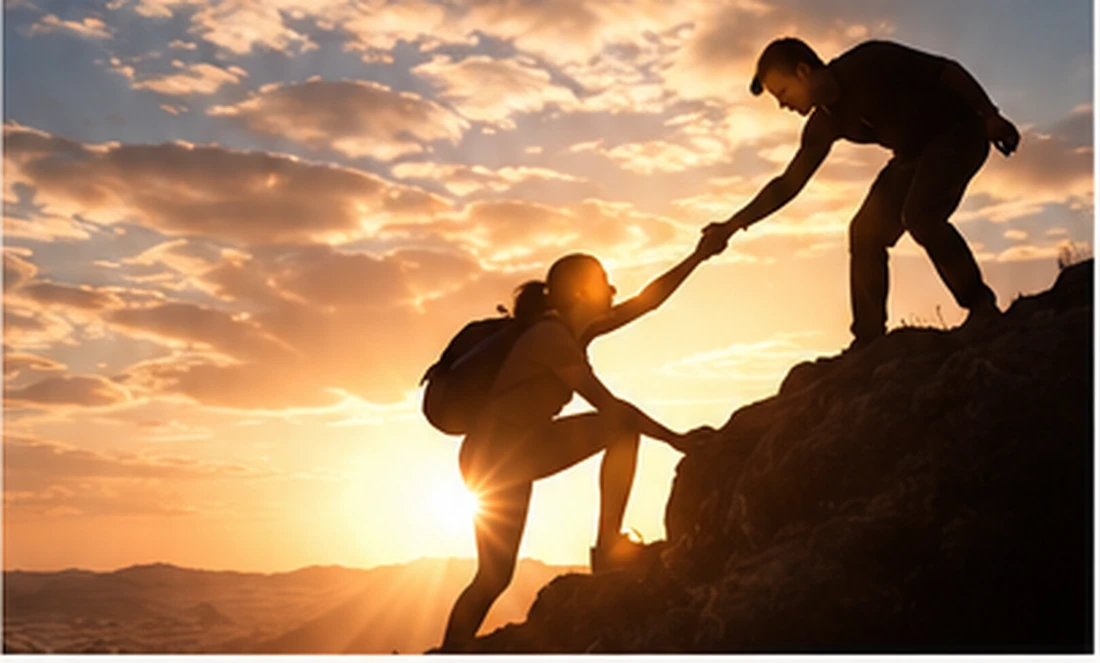
Gratitude reaches back. Illustration: Dance Mogul Magazine
The Many Forms of Gratitude
Gratitude Shows Up in Many Ways
The spirit of gratitude can show up in simple, everyday ways—especially toward people the world tends to overlook:
- A simple thank you — a few sincere words go a long way.
- Acknowledgment — let someone know their effort mattered, and use their name.
- Respect — treat everyone with kindness, regardless of their situation.
- Reciprocation — find ways to give back, even in small ways, without making it a transaction.
- Paying it forward — take the kindness you receive and share it with others.
Respectful Ways to Return Kindness
- Ask, don’t assume. Ask what would help instead of deciding for someone what they need.
- Give your time, not only your money. A respectful conversation, when welcome, can be more personal than a hurried gesture.
- Keep it private. Gratitude toward someone in a vulnerable situation should honor them, not become content.
- Use good judgment. Trust your instincts and stay in public spaces; safety and kindness are not opposites.
- Support the people who serve your neighbors. Learn which local shelters, food programs and outreach groups work in your area and help them.
Gratitude creates a ripple effect. When we appreciate the people in our lives at every level, we build stronger, more connected and more compassionate communities.
Why This Matters to DMM
Dance culture itself was built by people society overlooked—on street corners, in parks, in basements and community centers that mainstream institutions ignored. Many of the forms DMM celebrates today began with young people the world did not expect to matter.
That history is why this story belongs in a dance magazine. DMM’s mission is to inspire self-empowerment through lived human stories, and empowerment starts with refusing to measure anyone’s worth by where they stand. A dancer who learns to see Walter will also learn to see the next generation of artists the world is walking past.
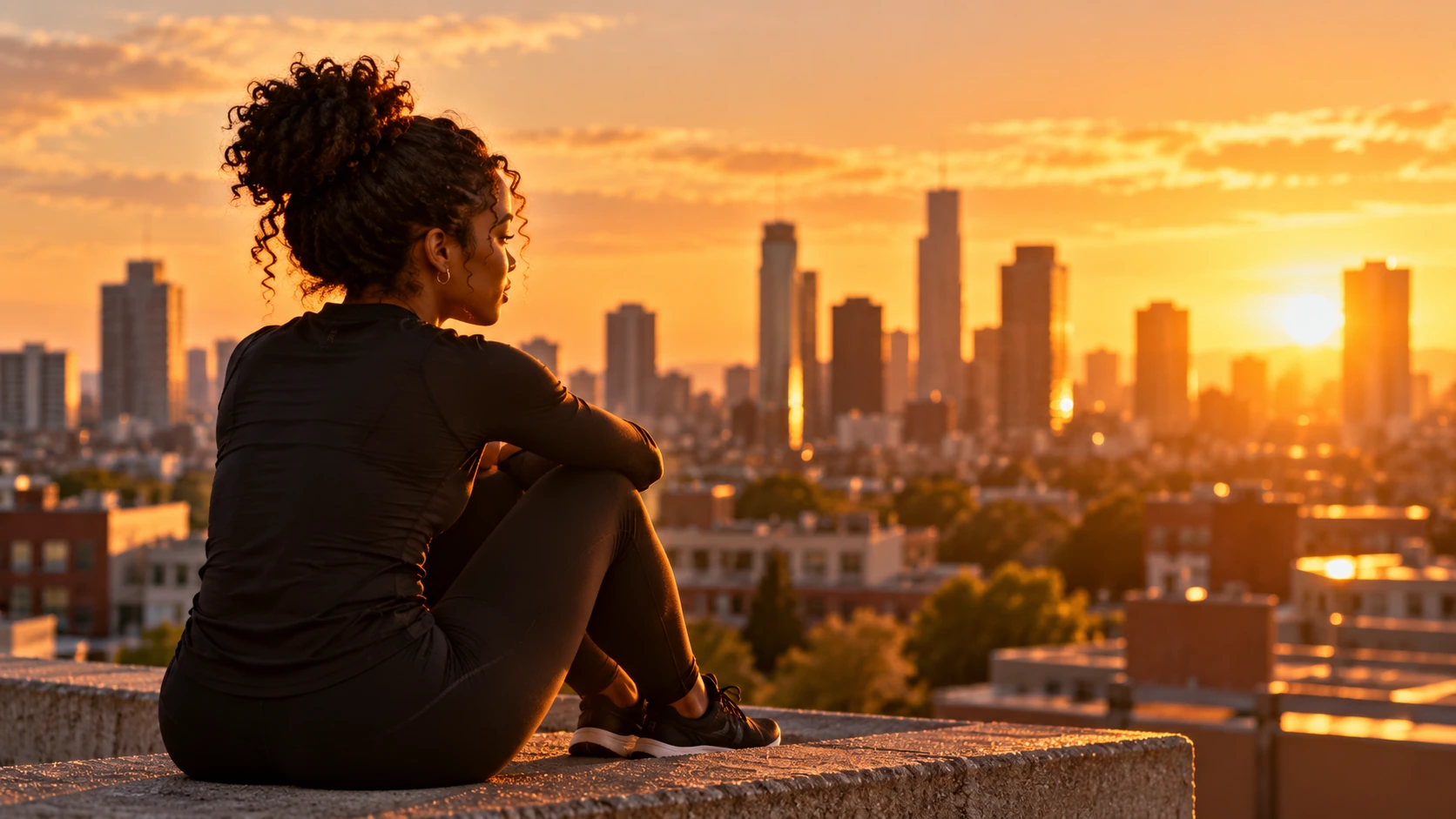
A Kinder, Stronger Tomorrow
Choose Gratitude Today
When we choose gratitude, we begin to see the good in people, no matter where they are in life.
Read the Full Series →Illustration: Dance Mogul Magazine
Continue The Spirit of Gratitude Series
- Series Opener
Why Should I Be Grateful to Someone I Consider “Below” Me? - Part 1
The True Spirit of Gratitude: Everyone Has Something to Give - Part 2 · You are reading
Real-World Gratitude Example: When Help Comes From Someone Society Overlooks - Part 3
Real-World Gratitude Example: Gratitude Changes You
Frequently Asked Questions
Why should I be grateful if someone “lower” than me helps me?
Because the value of kindness comes from the person’s choice to help, not from their income, job, or housing situation. Their circumstances do not reduce their humanity or the difference their help made.
How can I show gratitude to someone experiencing homelessness?
Treat them as you would anyone who helped you: learn their name, make eye contact, thank them specifically, and ask what would actually help rather than assuming. Offer respect, and ask what support would actually be welcome.
Is it okay to feel uncomfortable accepting help from a stranger?
Yes. Discomfort is normal, and using good judgment about your safety is wise. You can stay alert and still recognize kindness when it is real—and thank the person for it.
Research & Further Reading
This real-world example is an illustrative composite. The research it references is listed here.
- Anicich, Lee & Liu — “Thanks, But No Thanks: Unpacking the Relationship Between Relative Power and Gratitude,” Personality and Social Psychology Bulletin (Cornell University summary)
- Greater Good Science Center (UC Berkeley) — Gratitude Defined
- Read the series opener: Why Should I Be Grateful to Someone I Consider “Below” Me?
Related DMM reading: Cultural Succession: A Message to the Next Generation · Why Community Is Real Wealth
Dance Mogul Magazine
Inspiring Self-Empowerment Through Dance Culture
© 2026 Dance Mogul Magazine LLC