
DMM DANCE WATCH · THE TRANSFER TEST · DWTS SEASON 35
Harry Shum Jr. Already Knows How to Dance. DWTS Is Asking Him to Learn a Different Language.
A professional dancer can arrive with a head start and still have to surrender familiar movement habits. DMM follows what Harry Shum Jr. brings into ballroom—and what Jenna Johnson has to rebuild.
By Dance Mogul Magazine | DMM Dance Watch | September 17, 2026
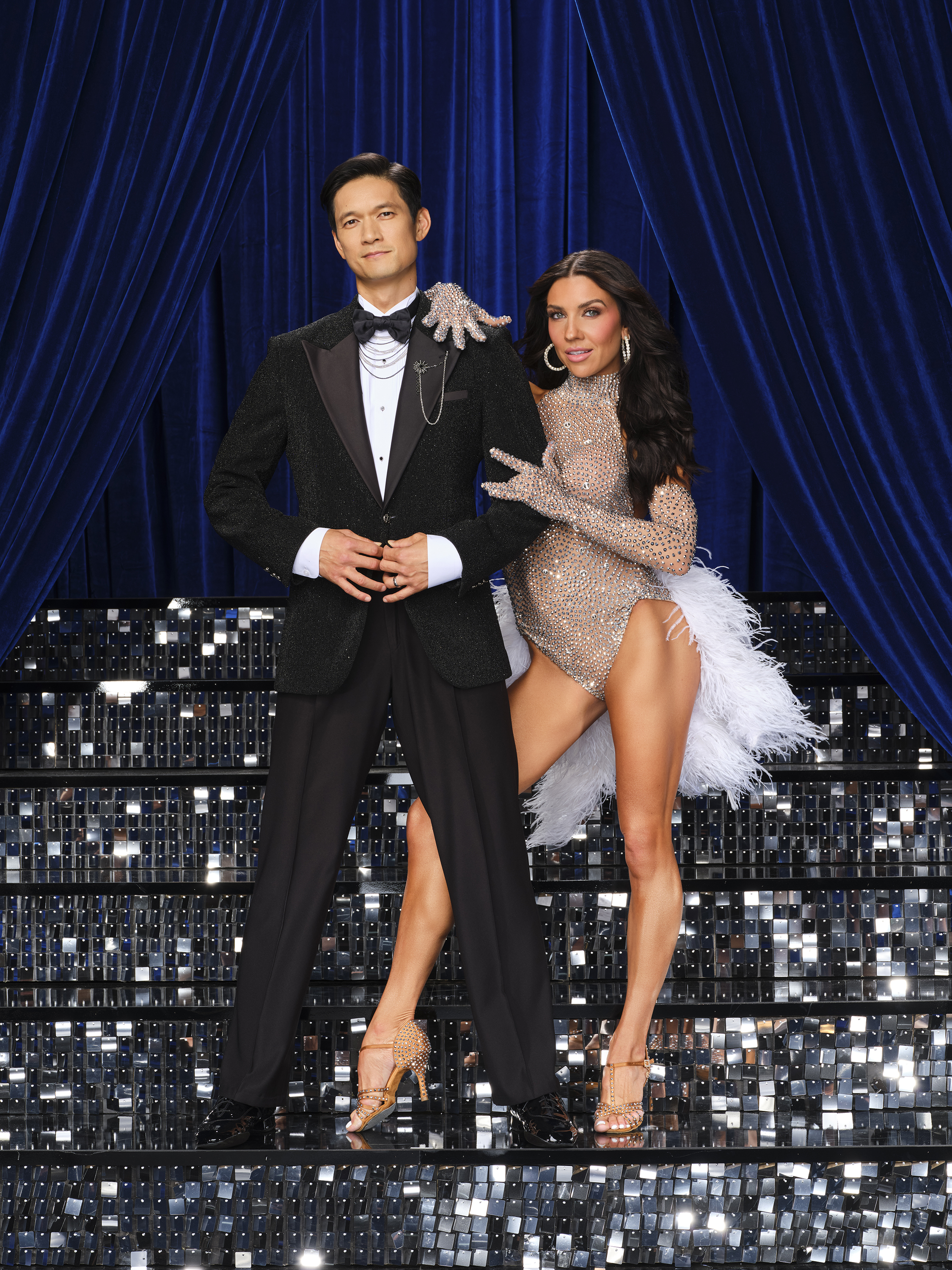
Premiere score
21/30
Dance
Cha-cha
Professional partner
Jenna Johnson
The most revealing critique Harry Shum Jr. received after his Dancing with the Stars premiere did not come from Carrie Ann Inaba, Bruno Tonioli or Derek Hough. It came from his daughter.
Shum had just closed the first night of Season 35 with a cha-cha to Earth, Wind & Fire’s “Let’s Groove.” He and Jenna Johnson earned 21 out of 30, the highest score of the night. His family watched from the audience. Afterward, Shum told ABC News that his daughter noticed something different from the dancing she associated with him.
“You danced soft and I liked it.”Harry Shum Jr.’s daughter, as recounted by Shum to ABC News after the Season 35 premiere
Seven words. A child’s observation. And, unintentionally, a useful description of the entire problem Shum has signed up to solve.
The question surrounding an experienced dancer on DWTS is usually framed as advantage: how much of a head start does someone have when rhythm, choreography, performance pressure and camera awareness are already familiar? That question is real. It is also incomplete. Shum’s premiere suggested a harder one.
The DMM question
Can an accomplished commercial dancer become more specific by doing less? Ballroom is not asking Shum to prove that he can perform. It is asking him to reorganize where movement begins, where weight settles, how a partner receives information, and when an accent should be released instead of amplified.
The résumé is the advantage. The habits are the assignment.
ABC’s official Season 35 biography does not have to manufacture a dance credential for Shum. Before his acting career, he worked professionally as a dancer and choreographer. His screen history includes Step Up 2: The Streets, Glee and The LXD: The Legion of Extraordinary Dancers, which he also produced and co-choreographed. He began dancing in high school and built a career in which movement was not a side note to performance; it was part of the profession.
That history gives him things a first-time mover cannot acquire in a rehearsal package: fast choreography retention, highly developed musicality, the ability to change texture on command, spatial awareness, confidence under lights and an instinct for making movement read to a camera. Those are real competitive assets.
But a dancer does not carry technique from one form into another like a passport. Every form organizes the body differently. Commercial hip-hop and screen choreography can reward attack, isolation, projection and exaggerated accents. Cha-cha asks for its own timing, leg and foot action, hip mechanics, weight placement, relationship to the floor and connection to a partner. A body trained to make an idea bigger may have to learn when precision makes the same idea smaller.
The judges were not arguing with the performance. They were locating the interference.
Shum’s 21/30 matters because the performance layer was already functioning. Tonioli praised the chemistry and sharpness, then warned about old habits and losing fluidity. Inaba praised his electricity but called attention to his axis, weight placement and a tendency to over-exaggerate. Those comments are not contradictions. They describe what cross-training looks like when a strong dancer enters a codified form.
An experienced dancer can know exactly how to hit a musical accent and still place too much body around it. He can understand the shape of a movement while the weight beneath that shape is not yet organized according to Latin technique. He can look decisive because his performance instinct is advanced while the ballroom mechanics are still being negotiated underneath.
That is why the premiere score does not settle the transfer debate. It starts it.
Official Season 35 performance video embedded from the Dancing with the Stars YouTube channel (ABC/Disney Television).
Jenna Johnson’s job is not to teach him how to perform
For Johnson, an inexperienced celebrity and an experienced dancer are different teaching problems. A beginner may need permission to project, to hear phrasing, to commit to movement and to survive being watched. Shum arrives with those systems already online.
The work can therefore move more quickly toward editing: what should remain, what must be redirected, and which familiar reflexes become noise inside a different technique. In dance training, subtraction is not the absence of progress. Sometimes it is the most advanced form of it.
Johnson has to preserve the qualities that make Shum compelling—clarity, musical instinct, range, attack—without allowing those strengths to blur the technical demands of the assigned style. If she simply suppresses his movement identity, the partnership loses the reason people want to watch him. If she leaves every familiar habit intact, the ballroom never becomes specific enough.
That negotiation is where this story becomes more interesting than a score.
What the score cannot tell you
A 21/30 tells us Shum arrived competitive. It does not tell us whether the body is changing.
That evidence will appear over several weeks: whether his weight becomes quieter and more consistent; whether Latin action is produced by the dance rather than added as an effect; whether his feet and center organize the upper body instead of the other way around; whether partnering becomes less like two high-level performers sharing choreography and more like information moving continuously between two bodies.
The season may eventually reward his experience. It may also expose it. Both outcomes would be useful evidence.
A dancer becoming a student again
The familiar debate asks whether Shum has too much experience for a celebrity dance competition. DMM is more interested in what that experience looks like when it stops being the final authority.
A professional dancer knows how to solve movement problems. Ballroom gives Shum a set of problems his previous career did not require him to solve in quite this way. That makes the television competition unexpectedly useful: viewers can watch a mature movement vocabulary encounter rules it cannot simply overpower.
What DMM is tracking next
Not whether Harry Shum Jr. can dance. That has been established for years. Watch whether the dancing becomes more economical without becoming less alive: cleaner axis, clearer weight, more specific foot pressure, less decorative force, and a partnership that makes the form—not the résumé—the visible thing.
His daughter may have named the first clue before anyone else did. The next version of Harry Shum Jr. on this floor may not need to dance harder.
It may need to get softer.
Continue the Season 35 story
Reader questions
What score did Harry Shum Jr. receive on the DWTS Season 35 premiere?
Harry Shum Jr. and Jenna Johnson earned 21/30 for their cha-cha to “Let’s Groove,” the highest score on Premiere Night One.
Was Harry Shum Jr. a professional dancer before DWTS?
Yes. ABC’s official biography documents a professional dance and choreography career before and alongside his acting work, including Step Up 2, Glee and The LXD.
What is DMM watching in Harry Shum Jr.’s ballroom development?
The transfer from commercial-dance strengths into ballroom-specific mechanics: axis, weight placement, foot pressure, Latin action, economy and partner connection.
Sources & reporting
DMM separated documented biography and reported facts from its own dance analysis. Primary sources are prioritized below; outside reporting is used where it contains direct comments or judges’ feedback not available in the press release.
- ABC/Disney Television Press — Harry Shum Jr. official Season 35 biography
- ABC/Disney Television Press — Season 35 two-night premiere release
- ABC News / GMA — What to know about Season 35 star Harry Shum Jr.
- TV Insider — Season 35 Premiere Night 1 recap and judges’ comments
© 2026 Dance Mogul Magazine LLC | dancemogul.com | Inspiring Self-Empowerment Through Dance Culture