Passing On More Than Money
The most valuable inheritance is rarely financial. It is character, stories, and the objects that carry love.

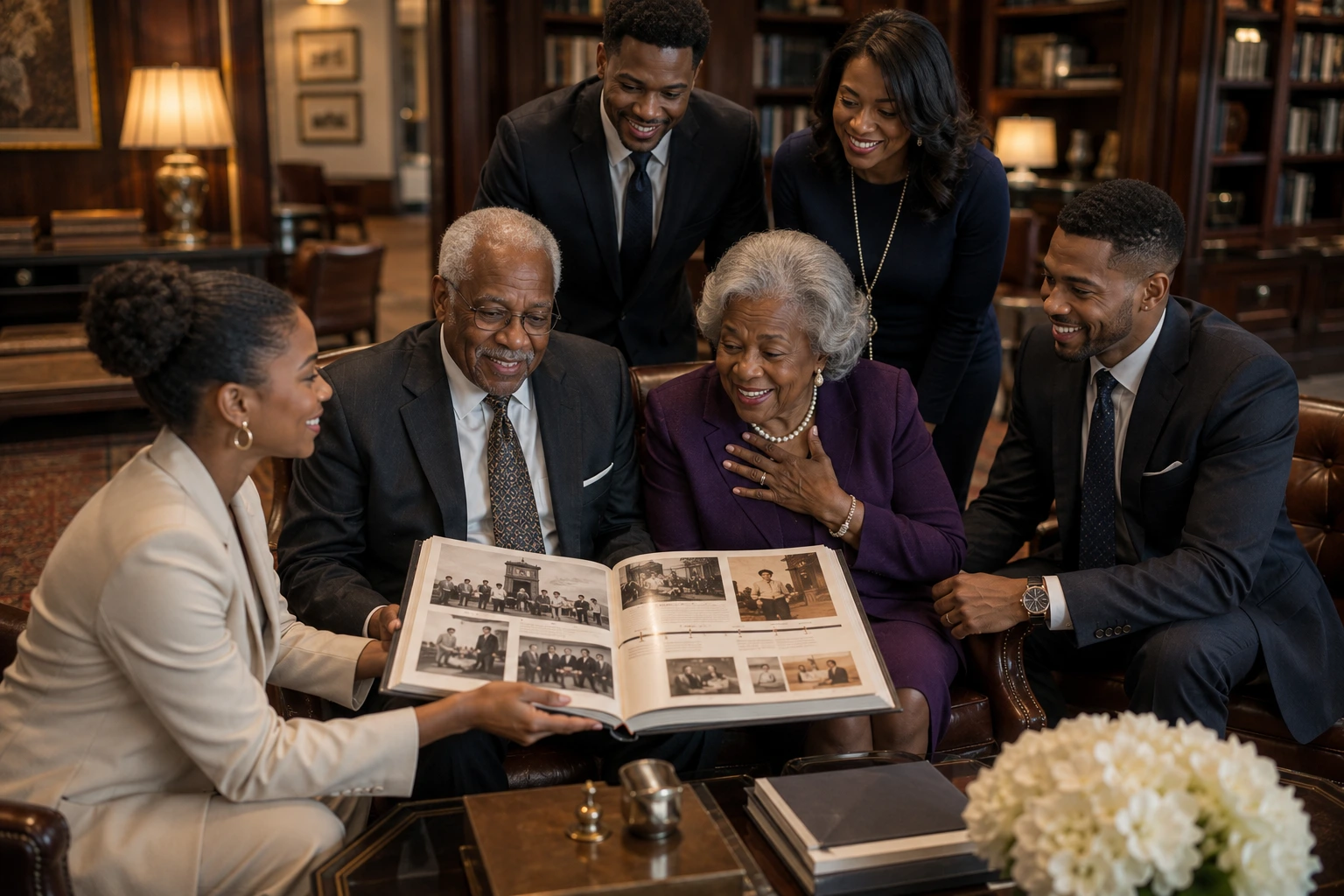
This is a story about passing on more than money, and it starts with an elder pressing something into a grandchild's hands, and it is not a check.
It is a worn object, a watch, a tool, a ring, something that has been held for fifty years. And with it comes a story, of where it came from, what it meant, who carried it before. The grandchild will remember that object, and that story, long after any amount of cash would have been spent and forgotten.
This is the quiet truth about inheritance. The money passes and is gone. What lasts is the meaning, the character, and the love that money cannot carry. And yet most people, when they think about what they will leave, think almost entirely about the money.
This article is about the larger inheritance, the one that actually shapes the people who receive it, and how to pass it on well.
Why This Matters Right Now
There is a hard, well-worn pattern in families, that inherited money often does not last. It is spent, mismanaged, or fought over, frequently within a single generation. The wealth that took a lifetime to build can evaporate remarkably fast in hands that were given the money but not the values behind it.
What does last is different. The character you modeled, the faith you lived, the work ethic you demonstrated, the stories you told, these get absorbed into the people you love and carried forward into lives you will never see. A family can lose all its money and still be rich, if what was passed down was strong enough. And a family can inherit a fortune and still be poor, if that is all they were given.
This does not mean money is unimportant, it matters, and providing for your family is a real good. It means money is the least durable thing you will pass on, and it should never be the only thing. The inheritance that shapes a life is mostly invisible, and it has to be given on purpose.
A family can lose all its money and still be rich, if what was passed down was strong enough.

From Bequest to Transmission
Most people think of inheritance as a bequest, the assets that transfer at the end, handled by documents and lawyers. That framing puts the whole thing off until death and reduces it to money and property.
Trade it for a richer idea, transmission. Inheritance is everything you transmit to the next generation, and most of it is passed while you are alive, through example, conversation, and the meaning you attach to what you give. You do not wait to transmit values, you live them where your family can absorb them.
Defined that way, the most important inheritance work happens now, not in a will. Every story told, every value modeled, every heirloom explained is a transmission in progress. The money can wait for the lawyers. The rest is your job, today.
Five Ways to Pass On More Than Money
The non-financial inheritance does not transmit by accident. Here are five ways to hand it on deliberately.
- Write a letter of values and blessing. Put into words what you hope your family carries forward, the values you live by, the things you are proud of, the blessing you want to give them. Such a letter is often treasured far more than any financial gift, and read for a lifetime.
- Attach stories to your objects. An heirloom without its story is just an old thing. Tell the people who will inherit your meaningful objects where they came from and why they matter, so the object carries memory, not just material.
- Model the character you hope to pass. Values are caught more than taught. The honesty, generosity, and resilience you want your family to inherit have to be visible in how you live, because that is how they are actually transmitted.
- Talk openly about what matters. Do not assume your family knows what you believe and why. Have the real conversations, about money, faith, character, and meaning, so your wisdom is passed on in words and not left to be guessed at.
- Give some of it now, while you can explain it. Whether it is an heirloom, a lesson, or a value, there is power in passing things on while you are here to give them context and see them received. Some of the best inheritance is handed over in person, not left behind.
Three Beliefs That Impoverish an Inheritance
“The best thing I can leave my family is money.”
Money helps, but on its own it is the least durable and sometimes the most divisive thing you can leave. Money without values behind it is frequently squandered or fought over. The families that thrive across generations are the ones that passed down character, wisdom, and unity alongside, or instead of, wealth. The money is a tool; the real inheritance is what tells them how to use it.
“Values and character transmit automatically.”
It is a comfortable assumption that your kids will simply absorb your values, but transmission takes intention. Values are passed through modeling, conversation, and storytelling, and where those are absent, the transmission often fails, no matter how good the values were. What you believe has to be lived visibly and spoken plainly, or it may not make it to the next generation at all.
“Heirlooms are just sentimental stuff.”
A meaningful object carries what an account balance cannot, memory, identity, and belonging. The watch that connects a grandchild to a grandfather they can now feel they know is doing something money cannot do. Dismissing heirlooms as clutter misses that objects, paired with their stories, are one of the most powerful ways a family keeps its history alive.
Three People, Three Inheritances
The following are composites created for illustration — not real individuals — but the situations will feel familiar.
Grace wrote a letter instead of only a will. Alongside the practical documents, she wrote each of her children a letter about what she believed, what she was proud of in them, and the blessing she wanted to leave. Years later, the money has been used and the letters are still read and reread. She gave them something that did not run out.
The Ortega family lost the business but not the values. A downturn wiped out the wealth they expected to inherit, but what their parents had truly passed down, resilience, work ethic, and a fierce family loyalty, could not be lost in a market. Within a decade they had rebuilt, because the real inheritance was never the money. It was who they had been taught to be.
Sam gives heirlooms in person now. Rather than leaving his meaningful objects to be distributed after his death, Sam started giving them while he is alive, each with its story, handed over in a real moment. His grandchildren will remember not just the object but the day, the words, and the man. He is transmitting, not just bequeathing.

What the Dance Community Already Knows About This
At Dance Mogul Magazine, we see this truth in every generation of dancers we cover. What a master passes to a student is almost never money, it is standards, spirit, history, and belief. The most valuable inheritance in the dance world has always been the intangible one, handed down body to body and heart to heart.
The exclusive interviews we publish are full of artists crediting a mentor who gave them something no money could buy. That belief in the intangible inheritance shapes our family and goal-setting workbooks too.
You do not need to be an artist for this to hold. Whatever your family, the deepest things you pass on will not be financial. Dancers simply learned early that the treasures worth handing down are the ones money cannot carry, character, story, and love.
Money is a tool. The real inheritance is what tells the next generation how to use it, and who to be.
Reflection
Take a few quiet minutes with these.
- What non-financial things do I most want my family to inherit?
- Have I ever put my values into words for the people I love?
- Which of my meaningful objects still need their stories told?
- Am I modeling the character I hope to pass on?
- What conversations about what matters have I been putting off?
- What could I pass on now, in person, instead of leaving behind?
Talk About It With Your Family
- What values do we most want to pass down through our family?
- Which family heirlooms carry stories we should make sure are told?
- What has been handed down to us that we are grateful for?
- How do we talk, or avoid talking, about money and meaning together?
- What could each of us pass on now, while we are here to explain it?

Your Small Action Step: A Values and Heirlooms Inventory
Take one page. On one side, list two or three values you most want to pass on, and next to each, one way you will actually transmit it, a conversation, a letter, a modeled habit.
On the other side, list two or three meaningful objects and the story each one needs to carry. Then pick one value and one object to pass on, with its story, this month.
Key Takeaways
- The most valuable inheritance is rarely financial; it's character, stories, and love.
- Inherited money often doesn't last a generation; passed-down values can last many.
- Inheritance is transmission, and most of it happens while you're alive.
- Write a letter of values, attach stories to heirlooms, and model what you hope to pass.
- Values don't transmit automatically; they require modeling, conversation, and storytelling.
- Some of the best inheritance is handed over in person, with its story attached.
Frequently Asked Questions
Isn't leaving money the most practical way to help my family?
Providing financially is a real good, but money is the least durable thing you'll leave and often the most divisive. Money without values behind it is frequently squandered or fought over. The families that thrive pass down character and wisdom alongside, or instead of, wealth.
Won't my children just naturally absorb my values?
Not automatically. Values are transmitted through modeling, conversation, and storytelling, and where those are missing, transmission often fails no matter how good the values were. What you believe has to be lived visibly and spoken plainly to reach the next generation.
What's a letter of values, and why does it matter?
It's a letter putting into words what you hope your family carries forward, your values, what you're proud of, the blessing you want to give. Such letters are often treasured far more than financial gifts and read for a lifetime, because they give something that doesn't run out.
Aren't heirlooms just sentimental clutter?
An heirloom paired with its story carries memory, identity, and belonging, things an account balance cannot. The object that connects a grandchild to a grandparent they can now feel they know is doing something money can't. Told well, heirlooms keep a family's history alive.
Why give things away now instead of leaving them in a will?
Because passing something on in person lets you attach its story, explain its meaning, and see it received. Some of the best inheritance is handed over while you're alive to give it context. The will can handle the assets; the meaning is better delivered by you.
Does this mean money doesn't matter at all?
No. Providing for your family is genuinely important, and this isn't an argument against it. The point is that money should never be the only thing you pass on, because on its own it's the least durable. Pair it with the values that tell the next generation how to use it well.
Next in This Collection: Getting Your Affairs in Order
The Legacy & Estate path continues, and each piece builds on the last.
The next article, “Getting Your Affairs in Order,” carries the thread forward.
- What Legacy Really Means
- Passing On More Than Money — you are here
- Getting Your Affairs in Order
- Telling Your Family Story
- The Legacy You Live Now

Dance Mogul Magazine publishes the Beyond Wealth collection for educational and inspirational purposes. It is not financial, legal, tax, medical, or mental-health advice, and it is not a substitute for guidance from a licensed professional who knows your situation. The people described in the examples are composites created for illustration and do not represent real individuals.
© Dance Mogul Magazine. All rights reserved.