
Legacy Feature | In Memoriam 1972–2025
Dave Scott: The Choreographer Behind a Generation of Movement
From cardboard in Compton to the biggest dance films of the 2000s, Dave Scott taught himself to move, then taught the world how hip-hop could look on screen. This is his story — the early years, the climb, and the legacy still teaching in studios today.
By Dance Mogul Magazine | Legacy Feature | Featuring DMM's Exclusive Interview
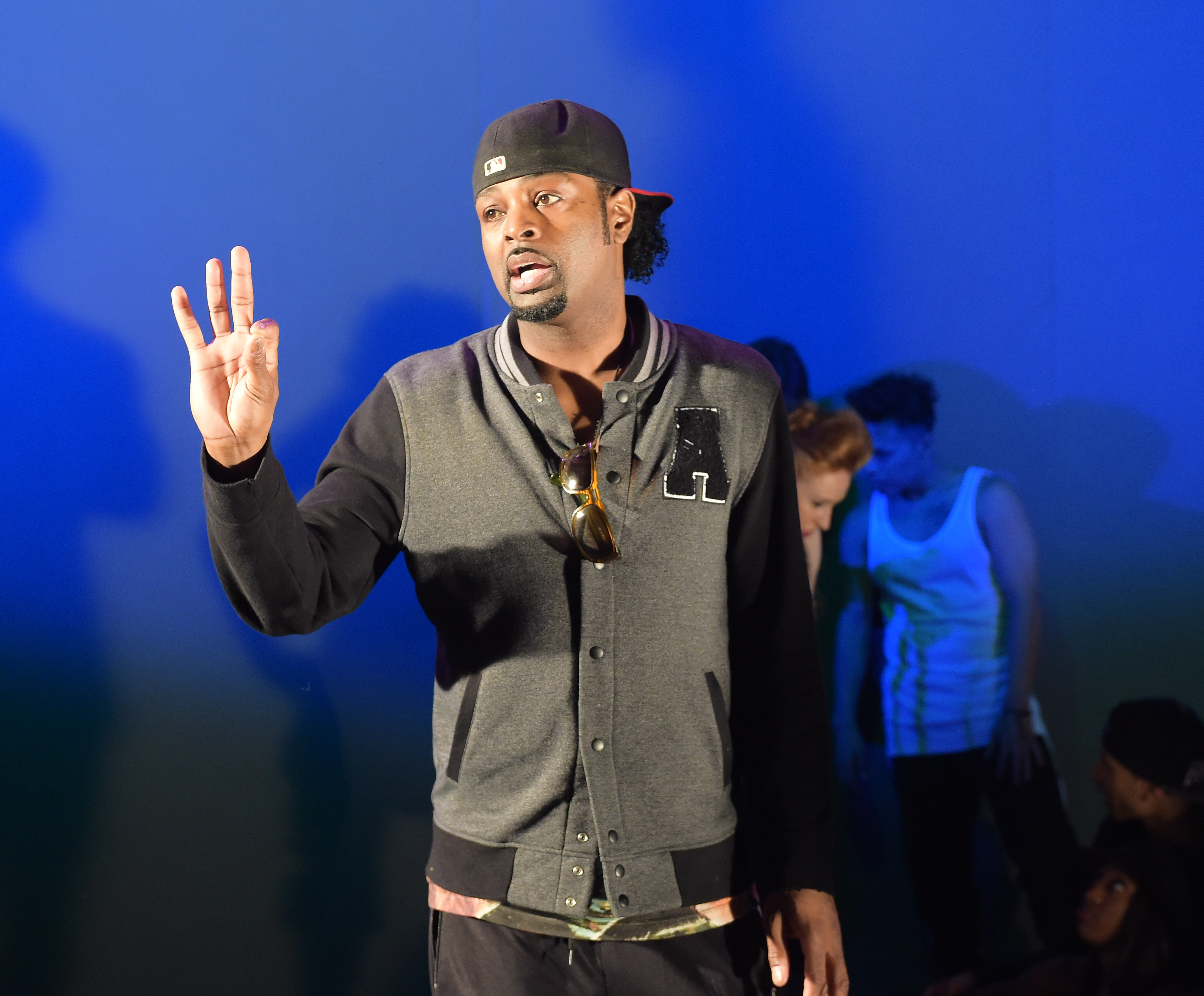
You Already Know Dave Scott's Work
A theater goes dark. A crew steps into the circle. Four young men from B2K hit a combination so tight it looks like one body. A step team stomps a rhythm into a college yard, and the floor answers back. Rain falls on a Baltimore street while a crew dances like the city depends on it. On a Wednesday night in 2007, Comfort Fedoke and Stephen "tWitch" Boss attack a hip-hop routine on national television, and millions of viewers lean forward.
You Got Served. Stomp the Yard. Step Up 2: The Streets. So You Think You Can Dance. An entire generation grew up inside that movement. Kids rewound the DVDs, learned the battle routines in their living rooms, and walked into their first dance class because of what they saw.
Many of them never knew the name of the man who built it.
His name was Dave Scott — a self-taught dancer from Compton, California, who became one of the most influential hip-hop choreographers of his era, a developer of artists, a mentor to dancers who became stars, and for fifteen years, a teacher of young people at the Debbie Allen Dance Academy. He passed away on June 16, 2025, at 52. Dance Mogul Magazine had the privilege of sitting down with him while he was here. This feature places his own words inside the full record of what he built — so the people who knew him can say, yes, that's Dave, and that's his story.
Dave Scott — At a Glance
Full name: David Lee Scott Jr.
Born: August 15, 1972 — Los Angeles, California; raised in Compton
Died: June 16, 2025 — Las Vegas, Nevada (age 52)
Training: Self-taught — battles, b-boy films, music videos
Known for: You Got Served, Stomp the Yard, Step Up 2: The Streets, Battle of the Year, High Strung, So You Think You Can Dance
Artists: B2K, Ginuwine, Tyrese, Brian McKnight, Jon B, IMx, Bow Wow, Mindless Behavior
Honors: American Choreography Award (2004); Fred & Adele Astaire Awards (2008, 2016)
Teaching: Director, Los Angeles Hip-Hop Intensive at Debbie Allen Dance Academy (15 years); faculty at Millennium Dance Complex and Broadway Dance Center
David Lee Scott Jr. — Before Hollywood
David Lee Scott Jr. was born in Los Angeles on August 15, 1972, the eldest of four children of David Lee Scott Sr., a plumber, and Evelyn Rader Scott. He grew up in Compton and graduated from Compton High School in 1990.
He never pretended the neighborhood was easy. Scott spoke openly about growing up around gangs and violence, and about having family members caught up in that life. But he also refused to let the environment write his ending. What kept him steady was family — especially his grandmother, whom he credited as his first and most constant source of support, even though she was not a dancer herself — and a hobby that slowly became a calling.
That hobby was dance. He started around fifteen, with friends, for fun. As he later put it in an interview, he was just breakdancing off some cardboard.
Learning Without a Dance School
Dave Scott never took formal dance training. His classroom was the television and the movie screen. He studied Michael Jackson videos frame by frame. He absorbed Breakin' (1984) and the wave of b-boy films that carried street dance from Los Angeles and New York into living rooms everywhere. He watched, imitated, took the moves apart, and rebuilt them as his own.
The dancers who shaped him are names Dance Mogul readers know well. He counted Stefan "Mr. Wiggles" Clemente and Timothy "Popin' Pete" Solomon of the Electric Boogaloos among his influences. Years later, sitting with DMM, he admitted he would have loved, as a kid, to see Mr. Wiggles walking down the street — the kind of access that simply did not exist for a teenager in Compton in the 1980s.
So he and his friends made their own. They formed a b-boy crew and entered neighborhood battles. That informal system — observation, imitation, community, competition, and endless repetition — is how generations of street dancers have been educated outside institutions. Dave Scott is proof of how powerful that system can be.
And dance became something more than fun. In our interview, he described it as the place where he took whatever life threw at him.
"I use all of the negative that I go through as my stepping stones... everything from life I'll put into my movement. When it's a problem over here, I danced it out. It was a hobby for me at first. I didn't think it was gonna be something that I would make a career."
— Dave Scott, Dance Mogul Magazine Exclusive Interview
Basketball Was the Plan — Until One Night in Utah
At six-foot-four, Dave Scott's ticket out was supposed to be basketball. He earned a scholarship to Weber State University in Ogden, Utah, and went on to earn an associate's degree in business.
Then came the night that changed everything. Scott was out dancing at a club when a manager for rapper Rob Base noticed him. The tour had just lost a dancer and needed a replacement — fast. Scott said yes. He learned the choreography in two days, left school, and finished the tour.
One room. One person watching. One invitation. The college athlete became a professional dancer almost overnight — and he never looked back.
The Road Became His University
Back in California, Scott built his career the way most working dancers did in the 1990s: on tour buses, in rehearsal halls, and on music-video sets. He danced for and later choreographed for a wide circle of R&B and hip-hop artists, including Ginuwine, Tyrese, Brian McKnight, Jon B, IMx (formerly Immature), and Bow Wow.
Here is a part of dance history that rarely gets documented properly: tours were never just jobs. Every headliner traveled with dancers, and every package tour put those dancers in the same rooms every night. That is where reputations were made, where assistants became choreographers, and where choreographers became the people artists trusted to build their image. Scott understood that world from the inside. He learned how a show is built, how an artist's movement becomes their identity, and how to lead a room of dancers night after night.
He also never forgot that his success sat on relationships. When DMM asked him about his circle of peers — friends like Chuck Maldonado and Rhapsody James — he spoke about how their drive pushed him forward.
"They're my friends... their drive and their successes help push you to keep going. If I see something that Chuck or Rhapsody has done, I'm inspired. It's inspiring to see other people's movement in the game."
— Dave Scott, Dance Mogul Magazine Exclusive Interview
B2K: When Choreography Became Identity
If you grew up in the early 2000s, you remember B2K — Omarion, J-Boog, Lil' Fizz, and Raz-B moving in perfect unison. Dave Scott was at the center of that. He served as the group's choreographer and stylist and was deeply involved in shaping its look, its sound on stage, and its dance identity, helping develop four teenagers into a performance act that could hold its own on the biggest stages in R&B. Some biographies describe him as the group's creator; the full history of B2K involves several people and stages, but there is no question that Scott was central to how the world saw them move.
Commercially, Scott’s artist-development years also overlapped with B2K’s rapid rise: the group’s self-titled debut reached No. 2 on the Billboard 200 and No. 1 on the R&B/Hip-Hop Albums chart, while Pandemonium! earned a U.S. Platinum certification. Those record sales cannot be assigned to one choreographer, but they show the scale of the entertainment ecosystem in which Scott was shaping performance identity.
That relationship would carry straight into the movie that made his name.
You Got Served (2004): Battle Culture Goes to the Multiplex
In 2004, You Got Served arrived in theaters starring all four members of B2K alongside Marques Houston, with Dave Scott as choreographer. Made on a modest budget of roughly $8 million, the film earned about $50 million worldwide — and its cultural reach went far beyond the box office.
For the first time, a major studio film put the street-dance battle at the center of the story. Crews were characters. Rehearsals were plot. The battle itself was the climax. Scott described what made it different: it was the first time audiences saw B-boys and choreographed dancing mixed together in a battle on film.
The work earned Scott the 2004 American Choreography Award for Outstanding Achievement in a Feature Film. He also released an instructional DVD, You Got Served: Take It to the Streets, so kids could learn the movement themselves. Young dancers everywhere did exactly that. As DMM's own American Social Dance Movement archive records, the film helped send battle imagery and commercial hip-hop choreography into theaters around the world.
When DMM asked how he cast and choreographed crews on film, his answer revealed his method: he wasn't just teaching steps — he was building characters.
"I'm looking for people with good spirit, because I have to be around these people every day... I really want to bring the personality of those artists into the film. When there's two different crews, I need the characters from that crew to be those people."
— Dave Scott, Dance Mogul Magazine Exclusive Interview
Watch the Work // You Got Served
Licensed clip presented by Movieclips. The opening battle shows the screen language that made You Got Served a defining commercial hip-hop dance film.
Stomp the Yard (2007): Learning a Tradition Before Moving It
Stepping was not Dave Scott's background. It belongs to Black Greek-letter organizations and to a lineage that runs through HBCU campuses and generations of fraternity and sorority members. So before he put it on screen, he learned it.
Working alongside his friend, stepper and choreographer Chuck Maldonado, Scott spent months in Atlanta making the film and immersed himself in the culture. He later called the production life-changing and said it taught him about Black Greek stepping culture and its rich history. The result blended stepping with hip-hop in a way that respected where the tradition came from.
Stomp the Yard opened at No. 1 at the U.S. box office in January 2007 and earned roughly $75 million worldwide. Its cast included Columbus Short, Meagan Good, Ne-Yo, and Chris Brown — and it introduced stepping to millions of young people who had never seen a step show.
There is a lesson here that matters as much as the box office: when you work with a tradition you did not create, you study it, you bring in the people who carry it, and you honor it. That is the difference between borrowing a culture and learning from it.
Watch the Work // Stomp the Yard
Official Sony Pictures trailer. Scott's choreography helped translate stepping and hip-hop movement into a studio film that reached a mass audience.
Step Up 2: The Streets (2008): Dance Cinema Goes Global
In 2008, Scott joined Jamal Sims and Nadine "Hi-Hat" Ruffin as the choreographic team for Step Up 2: The Streets. The film earned around $150 million worldwide, most of it outside the United States — clear proof that the movement language Scott helped build had become global popular culture.
The film earned Scott the Fred and Adele Astaire Award for Best Choreography in Film. It also became a launching pad for a generation of performers. Harry Shum Jr., who danced in the Step Up universe before Glee, later credited Scott with giving him confidence as a performer and welcoming him into the dance world with open arms.
The rain-soaked final battle remains one of the most rewatched dance sequences of its decade.
Watch the Work // Step Up 2: The Streets
Official trailer from the verified Step Up Movie channel. The production credits Dave Scott alongside Jamal Sims and Nadine “Hi-Hat” Ruffin.
By the Numbers: The Commercial Footprint
Box office does not tell us what choreography is worth, and these grosses are not money attributable to Dave Scott personally. But they do show the scale of the commercial projects that trusted his movement, staging, artist development, and screen instincts. Across twelve theatrically released films listed on Scott’s professional MSA resume for which comparable worldwide grosses are publicly available, those films generated approximately $789.1 million in worldwide theatrical box office.
of 12 films carrying a verified Dave Scott professional credit
Worldwide theatrical gross · bars drawn to scale
What this total means — and what it does not. The $789.1 million is the combined theatrical gross of films on Scott’s professional résumé, not an estimate of his personal earnings and not a claim that choreography alone produced those grosses. It also excludes television, commercials, touring, album sales, home video, direct-to-video titles, video games such as The Hip Hop Dance Experience, and projects without comparable public theatrical data. In other words, it is a conservative picture of only one measurable part of his commercial footprint.
Financial research sources: Dave Scott’s professional credits are cross-checked against his MSA Agency résumé; worldwide theatrical grosses are from Box Office Mojo title records. Figures are lifetime worldwide theatrical grosses available as of October 7, 2026 and are not adjusted for inflation.
Television: Teaching America How Hip-Hop Could Look
Beginning with Season 3 in 2007, Scott became a recurring hip-hop choreographer on So You Think You Can Dance, contributing routines across 17 episodes. That season alone, DMM's Season 3 archive records his work for Lauren Gottlieb and Neil Haskell to "The Way I Are," Shauna Noland and Jimmy Arguello, and Lacey Schwimmer and Pasha Kovalev. His routine for Comfort Fedoke and Stephen "tWitch" Boss became one of the show's signature hip-hop moments. Comfort, who called Scott one of her early dance inspirations, remembered that routine as something deeply meaningful to her.
He also served as a guest choreographer on Dancing with the Stars (Season 7), on Step It Up and Dance, and on The Wade Robson Project (2003). Television did something important for Scott and for the choreographers of his generation: it put the choreographer's name in front of millions of viewers. Hip-hop choreography was no longer background movement behind a singer. It was authorship.
Beyond Choreography: Developer, Producer, Teacher
Scott's career never stayed in one lane. He was the choreographer and a co-creator of the teen group Mindless Behavior. He choreographed for Olympic gold-medal figure skater Tara Lipinski. In 2012 he co-choreographed Ubisoft's video game The Hip Hop Dance Experience with Laurieann Gibson and David "Kid David" Shreibman, putting his movement into the hands of gamers. In 2013 he choreographed — and danced in — the 3D b-boy film Battle of the Year. His published credits also include Coach Carter, Dance Flick, and House Party 4.
Then he moved behind the camera in a new way. Scott served as choreographer and executive producer on High Strung, and in 2016 he won his second Fred and Adele Astaire Award — Outstanding Choreography in Film — for that picture. He went on to serve as an executive producer on High Strung Free Dance. The path is clear: dancer, then choreographer, then artist developer, then producer.
But the title that may matter most is teacher. For fifteen years, Scott directed the Los Angeles Hip-Hop Intensive at the Debbie Allen Dance Academy. Debbie Allen, he said, made him feel like family from the day he met her — and pushed him to step in front of the camera himself. He was also faculty at Millennium Dance Complex, Broadway Dance Center, and the PULSE convention, and he taught at conventions like Elementz, where industry choreographers bring Hollywood-level training directly to young dancers in their own cities.
How Dave Scott Thought About Dance
When Dance Mogul Magazine sat down with Scott at the Elementz Dance Convention in Charlotte, North Carolina — a convention run by our friends Tom Hill and Chuck Maldonado — he spoke less about his credits and more about what young dancers need. Three ideas came through clearly.
1. Respect the foundation. He loved how much dance was growing, but he worried that people were calling themselves dancers without learning the roots. Elsewhere he put it plainly: if you don't know the basics and where it came from, you're stuck.
"It takes a lot of discipline and a lot of training, and there's foundation to all the genres of dance. Just because you have the rhythm and you can move doesn't mean you don't need to practice. You need to go back to the root of things so you know how to actually move and create, put it in the pocket. That's why I teach."
— Dave Scott, Dance Mogul Magazine Exclusive Interview
2. Let social media inspire you — then go find a real teacher. Scott didn't dismiss YouTube. He just knew its limits. Use it to get fired up, he said, then take that energy into a class and learn from the people who actually did the work.
"I don't think YouTube is bad. I think social media is good for inspiration, but I don't think it's good for people to learn from. It should make you want to go take a class... and learn from these actual educators instead of trying to mimic someone on your phone."
— Dave Scott, Dance Mogul Magazine Exclusive Interview
3. Be clean — and be yourself. Scott demanded precision, but he never wanted dancers to disappear inside his choreography. He wanted their personality on full display.
"Everybody can be standing right next to each other doing it exactly clean, precise — but your fingerprint in this game is your personality. That's gonna come through regardless. I want you to be you. Be clean, but put your personality into my choreography. That's what I want."
— Dave Scott, Dance Mogul Magazine Exclusive Interview
He described himself as a hard-working choreographer who was also fun — and he believed the more fun he was, the more open his dancers became. Anyone who took his class will recognize that combination: high standards, big energy, and a room that felt like family.
Dave Scott — Career Timeline
1972 — Born August 15 in Los Angeles; raised in Compton
Mid-1980s — Teaches himself to dance from Breakin', b-boy films and Michael Jackson videos; forms a b-boy crew
1990 — Graduates Compton High School
Early 1990s — Weber State University basketball scholarship; spotted in a club and hired for Rob Base's tour
1990s — Tours and videos with Ginuwine, Tyrese, Brian McKnight, Jon B, IMx, Bow Wow
Early 2000s — Choreographer and stylist at the center of B2K's development
2003 — Guest choreographer, The Wade Robson Project
2004 — You Got Served — American Choreography Award
2007 — Stomp the Yard (opens No. 1); joins So You Think You Can Dance (Season 3)
2008 — Step Up 2: The Streets — Fred & Adele Astaire Award; guest choreographer, Dancing with the Stars
2010s — Co-creates and choreographs Mindless Behavior
2012 — The Hip Hop Dance Experience (Ubisoft)
2013 — Battle of the Year (choreographer and performer)
2016 — High Strung (choreographer and executive producer) — Fred & Adele Astaire Award
15 years — Director, Los Angeles Hip-Hop Intensive, Debbie Allen Dance Academy
2025 — Passes away June 16 in Las Vegas, age 52
2026 — Inaugural BLAZE Hip-Hop Experience at Debbie Allen Dance Academy dedicated to his memory (July 24–26)
June 16, 2025
Dave Scott died in a Las Vegas hospital on June 16, 2025, at age 52. His son Neko said the cause was organ failure following a long illness. His family announced his passing with heavy hearts, remembering a man who touched so many lives with his warmth, kindness, and spirit.
He is survived by his sons, Neko and Cy; his daughter, Jasmine Scott; his fiancée, Natalie Casanova; his parents; his sisters, Antoinette Scott-Mays and Tamesha Scott; and a granddaughter.
The People Who Said Goodbye
The tributes that poured in said something credits never could: people didn't just feel choreographed by Dave Scott. They felt developed by him.
Debbie Allen called him one of the most gifted and influential choreographers, adding that his light, laughter, and legacy will forever live in our hearts. Harry Shum Jr. remembered the confidence Scott gave him as a performer. Kevin McHale recalled how Scott made him feel comfortable and confident around other dancers. Comfort Fedoke remembered him as one of her earliest dance inspirations and the creator of a routine that changed things for her. And at the Debbie Allen Dance Academy, BLAZE director Kountry Vaculik summed up what many in the industry felt: Scott gave so many people their first starts.
Why Dave Scott's Legacy Matters to Dance Mogul Magazine
Dance Mogul Magazine exists to document lived stories that help people become better versions of themselves. Dave Scott's life is one of those stories.
He came from a neighborhood where the odds were real. He had no dance school, no conservatory, no connections. He had cardboard, music videos, a crew of friends, and a willingness to turn every hard moment into movement. He said yes when a stranger in a Utah club offered him a chance. He learned a culture before he put it on screen. He built careers for other people. And when he reached the top of his industry, he didn't stay there — he came back to the studio and taught.
That is the blueprint DMM wants every young reader to see: discipline, respect for the roots, humility, and giving back. In his final words to DMM, he made a point of thanking the people who helped him along the way — and of saying that even as a teacher, he was still learning from his students.
"It's gonna be hard times. If it was all easy, everybody would be doing it. Never stop with your dreams, never stop with your goals, and never stop the movement... I'll never stop learning — even when I'm out there teaching the kids, I'm learning from you guys. Never stop learning, and never stop moving."
— Dave Scott, Dance Mogul Magazine Exclusive Interview
The Legacy Is Still Teaching
In July 2026, just over a year after his passing, the Debbie Allen Dance Academy held its inaugural BLAZE Hip-Hop Experience and dedicated it to Dave Scott's memory. The faculty included Comfort Fedoke, Columbus Short, Kida the Great, Natalie Casanova, and a lineup of teachers carrying the work forward in the same building where Scott spent fifteen years building the Los Angeles Hip-Hop Intensive.
Picture it: a studio full of young dancers, many of them born after You Got Served came out. Some of them may never have heard his name. But they are learning foundation, precision, and personality — exactly what he taught — from people he taught.
That is how a legacy works. It doesn't end with the person. It moves through the people.
Dance Mogul Magazine is honored to have recorded Dave Scott's voice while he was here, and proud to place it alongside the full record of what he built. Rest well, Dave. The movement never stopped.
Watch: Dave Scott in His Own Words — DMM Exclusive
Dave Scott: Frequently Asked Questions
Who was Dave Scott?
Dave Scott (David Lee Scott Jr., 1972–2025) was a self-taught hip-hop choreographer from Compton, California, best known for You Got Served, Stomp the Yard, Step Up 2: The Streets, and So You Think You Can Dance.
Did Dave Scott have formal dance training?
No. He taught himself through b-boy films like Breakin', Michael Jackson videos, and neighborhood battles with his crew.
How did Dave Scott get started professionally?
While attending Weber State University on a basketball scholarship, he was spotted dancing in a club and hired to replace a dancer on Rob Base's tour. He learned the choreography in two days.
What awards did Dave Scott win?
The 2004 American Choreography Award for You Got Served, and Fred and Adele Astaire Awards for Step Up 2: The Streets (2008) and High Strung (2016).
When did Dave Scott die?
June 16, 2025, in Las Vegas, at age 52, of organ failure following a long illness.
How is Dave Scott's legacy being honored?
The inaugural BLAZE Hip-Hop Experience at the Debbie Allen Dance Academy (July 24–26, 2026) was dedicated to his memory, at the academy where he directed the Los Angeles Hip-Hop Intensive for 15 years.
Continue Your Journey
Dave Scott now stands in The Legacy — Dance Mogul Magazine's archive of the artists who built dance culture.
• The American Social Dance Movement — Where You Got Served fits in dance history
• Debbie Allen — The mentor who called Dave family
• Timothy "Popin' Pete" Solomon — One of the dancers who inspired him
• Michael "Boogaloo Shrimp" Chambers — The Breakin' star of the era that taught Dave to dance
• Celebrating Black Creative Directors & Choreographers
• Toni Basil and Savion Glover — More DMM Legacy Features
• Elementz Dance Convention — Where DMM interviewed Dave Scott
• Empowerment Workbooks & Guides — Tools for young people ready to grow
• Join the Dance Mogul Community
© 2026 Dance Mogul Magazine LLC | dancemogul.com | Inspiring Self-Empowerment Through Dance Culture