
Dance Mogul Magazine · The Legacy · Before Hollywood · Breaking
Vin Diesel Before Hollywood: The Breakdancer Who Turned the Floor Into a Franchise
Before Dominic Toretto, there was a New York kid spinning on the pavement at Columbus Circle. This is the story of how Vin Diesel carried the floor into a nightclub, a theater, a $3,000 short film and one of the biggest franchises in movie history, and what his path tells every dancer asking, “Where do I go after this?”
October 13, 2026 · Dance Mogul Magazine · Legacy Feature
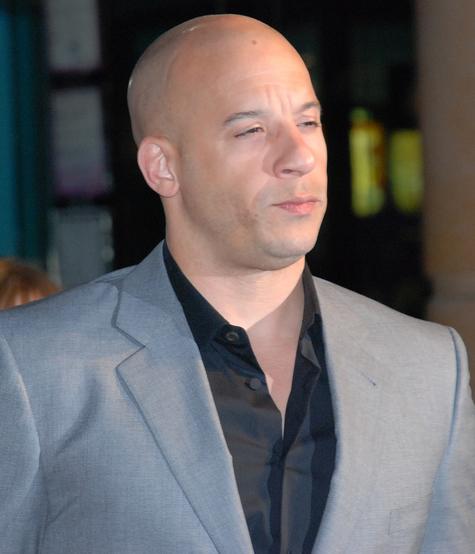
Vin Diesel at the London premiere of Fast & Furious, the 2009 film that reunited the original leads and renewed the saga. Twenty-five years before that red carpet, Diesel appeared as a breaking instructor in an instructional video.
Photo Andre Luis · Taken March 19, 2009, Leicester Square, London · License CC BY-SA 3.0 · Source Wikimedia Commons · Commons file cropped in 2021
Before the Cars, There Was the Cardboard
The surviving instructional-video footage has the soft edges of analog tape. A teenager with a full head of hair faces the camera and slows a breaking move so a beginner can follow it, step by step. Then the lesson becomes a performance: he and a friend move through a practiced routine. The music heard in circulating online excerpts has not been established as the original 1984 soundtrack.
The tape is called Breakin’ in the USA: Break Dancing and Electric Boogie Taught by the Pros. The young performer, credited as Mark Vincent, would become Vin Diesel: Dominic Toretto, Riddick, Xander Cage and the voice of Groot. As archival footage circulated online years later, new audiences encountered a chapter of his career they had not known.
Most people treat that clip as a punchline: look, the action star used to breakdance. Dance Mogul Magazine sees something else. We see the first chapter of a career that answers one of the hardest questions in dance: where can a dancer go after the floor?
Vin Diesel’s answer, read straight from the record, is everywhere. The floor became a club he worked in so he could keep dancing. The club bought him daylight hours for auditions. His auditions drew on stage experience that began when he was seven. Writing helped him create a $3,000 short film; the film brought him to Steven Spielberg and opened the door to a career associated with a franchise whose released films have grossed more than $7.3 billion worldwide. This feature places that journey in order, with sources, so readers never have to piece it together from a dozen viral posts.
“It was my first gig.”
Vin Diesel, describing his New York breakdancing on Live with Kelly and Michael, August 2014 (quoted by ET)
Vin Diesel at a Glance
File // At a Glance
Name — Vin Diesel (born Mark Sinclair; grew up as Mark Vincent)
Born — July 18, 1967
Raised — New York City, in a theater family; adoptive father Irving H. Vincent was an acting instructor and theater manager
Dance roots — 1980s New York breaking; street shows at Columbus Circle and Washington Square Park
On tape — Breakin’ in the USA instructional video (1984)
First stage — Theater for the New City, age 7
Night job — Bouncer at the Tunnel and Mars, New York, about nine years
Breakthrough — Multi-Facial (1995): wrote, directed, starred; $3,000; screened at Cannes
Signature roles — Dominic Toretto, Riddick, Xander Cage, Groot
Company — One Race Films (founded 1995) and Tigon Studios (games)
Next — Fast Forever, scheduled for March 17, 2028
DMM series — Before Hollywood: dancers whose movement roots opened other doors
A Theater Kid Who Broke In, Then Was Invited In
Vin Diesel was born Mark Sinclair on July 18, 1967, and grew up in New York City with his twin brother, Paul. His mother, Delora, raised the boys with Irving H. Vincent, an acting instructor and theater manager whose surname became the family’s and, years later, the “Vin” in Vin Diesel.
His first stage did not come through an audition. At age seven, Mark, Paul and a group of friends slipped into the Theater for the New City in Manhattan. The theater’s artistic director, Crystal Field, caught them. Instead of calling the police, she offered them a deal: if they wanted to play there, they could come every day at four o’clock and learn their lines. He made his stage debut there in the children’s play Dinosaur Door.
“I thought she was going to call the cops.”
Vin Diesel to CNN, 2002, on the day he was caught in the theater
Hold on to that scene, because it explains the rest of the story. A grown-up looked at a group of restless kids and saw performers, not trouble. Dance Mogul Magazine has documented that same turn in dozens of lives, including our own founders’ roots in Newark street dance: the moment someone hands a young person structure instead of punishment.
Columbus Circle, Washington Square and “The Ultimate Two”
By the early 1980s, the culture that Bronx b-boys and b-girls had built in the 1970s was pouring out of New York and onto every flat surface in the city. Breaking was in the parks, on cardboard laid over concrete, and on the sidewalks where a good crowd meant a full hat. Mark Vincent was one of the teenagers on those sidewalks.
In August 2014, he told Kelly Ripa and Michael Strahan that he breakdanced in the ’80s at Columbus Circle and in Washington Square Park, and called it his first gig. A few weeks earlier, on The Tonight Show, he told Jimmy Fallon that he used to breakdance on the street for extra money as one half of a duo called The Ultimate Two.
That detail matters. Street dancing for money is not a hobby; it is a business with a tiny storefront. A street performer has to read a crowd, hold attention, build a routine that lands in under a minute, and do it again for the next crowd. Every one of those skills is a performing skill. Diesel sharpened those skills on pavement alongside the theater experience that had begun in childhood.
Keeping the history straight
Diesel was a participant in the breaking boom, not one of its founders. Breaking was created and developed by Black and Latino youth in the Bronx in the 1970s and spread through crews such as the Rock Steady Crew, whose members DMM has documented in features like our profile of Steffan “Mr. Wiggles” Clemente. The tape’s title also uses the term “electric boogie,” a historically variable label that should not be treated as another name for breaking. Diesel’s story is valuable because he is one of thousands of kids that culture shaped, which is exactly the point.
1984: The Lesson That Ended Up on Tape
Nineteen eighty-four was the year breaking hit the box office. Breakin’ and Beat Street both reached theaters that year, and stars like Michael “Boogaloo Shrimp” Chambers became household faces. A wave of how-to products followed, promising to teach the moves at home.
One of them was Breakin’ in the USA: Break Dancing and Electric Boogie Taught by the Pros. In the clip that later circled the internet, a young Diesel walks the viewer through the basic steps slowly, then performs a routine with a friend. In 2014, he said he is still friends with the other dancer on the tape, a man he identified as David.
The clip attracted published coverage by 2011 and resurfaced again in May 2021, when The Masked Singer host Nick Cannon urged viewers to look it up after judge Ken Jeong guessed that Diesel might be a costumed contestant. Each wave introduced a new audience to the same surprise. For dancers, there was nothing surprising about it. They could see the training in how he carries his weight to this day.
The Tunnel: Working the Door So He Could Keep Dancing
At about seventeen, around 1984, Diesel went to work as a bouncer at the Tunnel, the giant Chelsea nightclub that became one of New York’s most important dance rooms. He also worked the door at Mars in the Meatpacking District. He kept the job for roughly nine years.
In interviews he has described two benefits of the job, and both are connected to his craft. In 2014 he said he took the job so he could dance at the clubs for free. In 2013 he said the night hours kept his days open for auditions.
“At 17 years old, I was working at the clubs to keep my days free to go on auditions.”
Vin Diesel to Industria, 2013 (as reported by The Washington Post)
The dancing did not stop when he put on the security jacket. Ricky Marcado, a former Tunnel manager, told CNN in 2002 that Diesel would come in on his nights off and dance by himself, and that people gathered around to watch him. His stage name came from those nightclub years: fellow bouncers began calling him Vin Diesel, drawing on his adoptive father’s surname and the energy his friends associated with him. The name stuck.
DMM readers will know the Tunnel from another legacy story. It is where Rosie Perez spotted Henry “Link” McMillan in 1989 and changed his life. The same building that launched one of hip-hop dance’s great teachers also paid the rent for a future movie star. That is what a dance room does for a city: it creates far more careers than the ones you can see on the floor.
Hunter College and the Writer’s Turn
Diesel spent about three years at Hunter College in New York studying creative writing. He left before graduating to chase acting, but the classes changed the direction of his career. He had learned to tell stories with his body. Now he learned to tell them on the page.
That is the step most dancers never get told about. The industry trains dancers to execute someone else’s vision. Writing is how you start producing your own.
Multi-Facial: $3,000, Three Days, Cannes
By the early 1990s, Diesel had a problem that many mixed-race performers will recognize. Casting directors did not know what box to put him in. He wrote a feature script about his life called Strays, but nobody would finance an unknown. So he shrank the idea down to something he could afford.
The result was Multi-Facial (1995), a 21-minute short about an actor who is typecast because of his ethnically ambiguous looks. Diesel wrote it, directed it, starred in it and paid for it: about $3,000, shot over three days. The film was accepted at the 1995 Cannes Film Festival. He later made Strays as a feature, released in 1997.
“Everyone just thought I was the bouncer who did theater on Off-Off Broadway.”
Vin Diesel to The New York Times, 2017, on how people saw him before Multi-Facial
Steven Spielberg saw Diesel in Multi-Facial, then watched Strays, and wrote a part for him in Saving Private Ryan (1998). It was his first major film role. The doorman had become a filmmaker, and the filmmaker got hired by the most famous director in the world.
1998–2002: From the Beach at Normandy to the Starting Line
The run that followed was fast, even by Hollywood standards. Diesel voiced the title character in The Iron Giant (1999), led Pitch Black as Riddick and played a supporting role in Boiler Room (both 2000), and then took the role that would define his career: Dominic Toretto in The Fast and the Furious (2001). A year later he headlined xXx (2002) as Xander Cage.
Action stardom looks like a long way from breaking. The two disciplines can share useful skills. Fight scenes, chases and stunts are choreographed and rehearsed, and rhythm, spacing and camera awareness can help a performer translate movement to the screen. That is DMM’s analysis, not a claim Diesel has made, but it is a pattern the industry knows well. Several of the world’s best-known screen fighters, including Donnie Yen, whom DMM is profiling in this same series, built their screen style on that exact overlap.
Building the Machine: One Race Films and Tigon Studios
Diesel did not wait for the industry to offer him ownership. He founded his production company, One Race Films, in 1995, the same year he made Multi-Facial. The company has worked on films starring Diesel, including The Chronicles of Riddick, Find Me Guilty, The Last Witch Hunter, xXx: Return of Xander Cage and Bloodshot, and it has been involved with Fast & Furious installments including the 2009 Fast & Furious, Fast Five and subsequent films through Fast X. He also created Tigon Studios to make video games.
This is the part of the story young dancers should study most closely. The performer who started out executing moves on someone else’s tape ended up controlling the stories, the companies and the franchises. The name of the company says what he believed about his own identity and about audiences: one race.
The Movement Never Left
Even at the top, the dancer kept showing up. In 2014, the same year he talked breaking with Fallon and Ripa, he voiced Groot in Guardians of the Galaxy, a character who speaks three words and communicates almost everything else through timing and body language. He later reprised the role across the Marvel films. In 2020 he released the single “Feel Like I Do,” produced by Kygo. In 2013 he received a star on the Hollywood Walk of Fame.
He also kept faith with the people who were there at the start. He told viewers in 2014 that he was still friends with David, his partner on the 1984 tape. In a business that rewards forgetting where you came from, that is a quiet kind of legacy too.
Watch: The 1984 Breaking Lesson
Here is the clip that started the conversation: a teenage Vin Diesel teaching breaking fundamentals, then performing a routine with his friend on Breakin’ in the USA (1984).
Archival footage: Breakin’ in the USA: Break Dancing and Electric Boogie Taught by the Pros (1984). Embedded via YouTube; online upload and audio provenance not independently verified.
Career Journey: From the Floor to the Franchise
■ Dance = the floor · ■ Stage = training and craft · ■ Screen = film, ownership and life
1967 · LIFE
Born Mark Sinclair on July 18; raised in New York City in a theater family.
Age 7 · STAGE
Caught inside the Theater for the New City; artistic director Crystal Field invites the kids to act instead. Stage debut in Dinosaur Door.
Early 1980s · DANCE
Breaks at Columbus Circle and Washington Square Park; performs on the street for money as half of The Ultimate Two.
1984 · DANCE
Appears on the instructional video Breakin’ in the USA, teaching basics and dancing a routine with his friend David.
c. 1984 · DANCE
Starts about nine years as a bouncer at the Tunnel and Mars; dances on his nights off; gets the name Vin Diesel.
Late 1980s · STAGE
Studies creative writing at Hunter College for about three years.
1995 · SCREEN
Multi-Facial ($3,000, three days) screens at Cannes. Founds One Race Films.
1997 · SCREEN
Releases his feature Strays.
1998 · SCREEN
Saving Private Ryan: Spielberg writes a role for him.
1999–2000 · SCREEN
Voices The Iron Giant; stars as Riddick in Pitch Black; Boiler Room.
2001 · SCREEN
The Fast and the Furious: Dominic Toretto is born.
2002 · SCREEN
Headlines xXx.
2009 · SCREEN
Returns as Dom in Fast & Furious, relaunching the saga.
2013 · SCREEN
Receives a star on the Hollywood Walk of Fame (August).
2014 · DANCE
Voices Groot; talks about his breaking years with Jimmy Fallon and Kelly Ripa.
2015 · SCREEN
Furious 7 passes $1.5 billion worldwide.
2020 · STAGE
Releases the single “Feel Like I Do,” produced by Kygo.
2021 · DANCE
The Masked Singer sends a new generation searching for his 1984 clip.
2023 · SCREEN
Fast X opens; Riddick: Furya announced with director David Twohy.
2024 · SCREEN
Industry press reports Riddick: Furya scheduled to begin filming in August; a 2026 production database later lists principal photography as completed.
2026 · SCREEN
Marks the franchise’s 25th anniversary; says Fast Forever is targeted to start filming in December, subject to the studio’s requirements.
2028 · SCREEN
Fast Forever, the planned final chapter, is scheduled for March 17.
By the Numbers: How Far the Floor Can Travel
Box office does not measure a person’s worth, and none of these figures are Vin Diesel’s earnings. They are the films’ grosses. But they show the scale of what a former street dancer now leads: a franchise with worldwide audiences, and one on which Diesel and One Race Films have producer credits dating back to Fast & Furious (2009).
of the eleven released Fast & Furious films
Worldwide gross, films led by Vin Diesel as Dominic Toretto · bars drawn to scale
Source: The Numbers, worldwide theatrical gross, not adjusted for inflation, pulled October 13, 2026. These figures belong to the films and Universal Pictures, not to any individual. The eight films total $6.14 billion ($6,144,403,835). The $7.3 billion franchise figure ($7,307,006,678) adds 2 Fast 2 Furious (2003), Tokyo Drift (2006, Diesel cameo) and Hobbs & Shaw (2019, no Diesel role).
The Career Ladder in Real Numbers
The context below shows why the “after the floor” question matters. Dancing is a real profession, but its median pay is modest, and the paths that grow out of it, choreography, teaching, directing, producing, ownership, are where many dancers build long careers.
Source: U.S. Bureau of Labor Statistics, Occupational Outlook Handbook, Dancers and Choreographers. National context only; it does not describe any one artist.
What DMM will not do is guess at Diesel’s personal fortune. His earnings, contracts and profit participation are private business, and inventing numbers would break the trust this archive is built on.
Where Can a Dancer Go After the Floor? The Vin Diesel Answer
Every dancer eventually hits the question. Bodies change. Battles get younger. Tours end. Too many dancers hear that as an ending. Diesel’s path, step by documented step, shows it is a doorway. Here is how the floor became a career:
How the floor became a career
1. The Floor. Breaking in the parks taught rhythm, nerve and how to hold a crowd.
2. The Room. Working the Tunnel door kept him dancing and paid for his days.
3. The Stage. Theater work, from age seven on, built discipline and craft.
4. The Page. Creative writing at Hunter turned him from performer into author.
5. The Screen. Multi-Facial put his own story in front of Spielberg.
6. The Company. One Race Films turned a career into ownership.
Authorship
Write your own story so nobody else defines you. Multi-Facial existed because the roles did not.
Ownership
Build the company, not just the résumé. One Race Films came in 1995, before the fame.
Transfer
Rhythm, timing and body control move straight into acting, stunts and action choreography.
Loyalty
Keep the people from the floor. He still calls his 1984 dance partner a friend.
Diesel is not alone. DMM’s After the Stage series traces the same journey for Paula Abdul, Rosie Perez and Jennifer Lopez, and our feature on Darrin Dewitt Henson follows a choreographer into acting and directing. Different styles, same lesson: the floor trains you for rooms you cannot see yet.
What Belongs to the Culture, and What Belongs to Him
It would be easy to tell this story as if Hollywood discovered breaking through Vin Diesel. That would be wrong. Breaking belongs to the Bronx crews who built it and the generations who carried it, now all the way to the Olympic stage. Diesel did not invent a move or found a crew, and he has never claimed to.
What belongs to him is the use he made of what the culture gave him: the confidence to perform for strangers, the energy people noticed on the Tunnel floor, and the refusal to wait for permission. His story is evidence of how many lives breaking touched beyond the ones it made famous inside dance.
Where Is Vin Diesel Now?
In 2026, The Fast and the Furious marked its 25th anniversary with special screenings and an August theatrical re-release. At an anniversary party in Los Angeles in August, Diesel said the final film, Fast Forever, has been through four years of development and that shooting is set to start in December 2026, if the schedule holds. Universal has dated the film for March 17, 2028, with Louis Leterrier directing.
Another project, Riddick: Furya, was announced in 2023 with writer-director David Twohy. Trade publications reported a planned August 2024 production start; an industry production database now lists principal photography as completed, although DMM has not independently confirmed a theatrical release date. Diesel also voiced Santiago in Ark: The Animated Series (2024) and is an executive producer on the Ark 2 game. DMM will update this section as dates are confirmed.
Why Vin Diesel’s Story Matters to Dance Mogul Magazine
Dance Mogul Magazine exists to document lived stories that help people become better versions of themselves. Dance is our foundation, never our ceiling. Vin Diesel’s life is one of the clearest examples we know of that idea.
He came out of the same era of New York street dance that shaped our founders, who have been rooted in Newark street dance culture since 1979. He did not have a famous name or a conservatory. He had a theater director who gave a group of kids a chance, a sidewalk, a crowd, a night job and a notebook. He used each one as a step to the next.
That is the message we want every young dancer to hear: the skills you are building on the floor are not wasted if you never become a famous dancer. Discipline, presence, rhythm, resilience and the nerve to perform transfer into acting, writing, directing, coaching, business and leadership. Character before celebrity. Contribution before attention. The floor is a foundation, and you decide what you build on it.
What the story would be missing without his dance years
- The first audience. Street shows at Columbus Circle were his first paid performances.
- The Tunnel years. He took the door job partly to keep dancing, and it kept his days free for auditions.
- The name. “Vin Diesel” was born among the club crowd, not in a studio office.
- The proof. A 1984 tape that keeps reminding millions that action stars can start as b-boys.
What Future Generations Can Learn From Vin Diesel
- Say yes when someone opens a door. A theater director offered a group of kids lines instead of a police report. He showed up at four o’clock.
- Your first gig counts. He called breakdancing his first gig. Treat every street show, recital and battle as real work.
- Pay for your dream with your schedule. He worked nights so his days stayed open for auditions.
- Learn to write. Hunter College gave him the tools to stop waiting for roles and start creating them.
- Make it small if you have to, but make it. Multi-Facial cost $3,000 and reached Cannes.
- Own something. One Race Films was founded before the fame, not after.
- Keep the people from the floor. Forty years later, he still calls his 1984 dance partner a friend.
The Floor Is Still Under Him
Somewhere in New York in 1984, a teenager slowed a move down so a stranger at home could learn it. He was teaching long before most moviegoers knew his name. Four decades and more than seven billion dollars in box office later, he is still doing a version of the same thing, showing an audience what is possible with nerve, timing and a body that knows the beat.
Hollywood knows him as Dominic Toretto. Dance knows him as one of ours. Both are true, and the second one came first.
Vin Diesel: Frequently Asked Questions
Did Vin Diesel really breakdance?
Yes. Vin Diesel breakdanced in New York in the 1980s, performing at Columbus Circle and Washington Square Park, and appears on the 1984 instructional video Breakin’ in the USA: Break Dancing and Electric Boogie Taught by the Pros. He has called breakdancing his first gig.
What is the Vin Diesel breakdancing video?
It is footage from Breakin’ in the USA (1984). A teenage Diesel teaches breaking fundamentals and performs a routine with a friend he later identified as David. The footage has circulated online for years and resurfaced in major entertainment coverage in 2021. The original soundtrack of circulating excerpts has not been verified.
Was Vin Diesel a breakdancing champion?
No competition title is documented. On The Masked Singer in 2021, host Nick Cannon called him a breakdancing champion, but no specific competition title has been independently verified. His documented history is as a street performer and instructional-video dancer. Diesel was a participant in the breaking boom, not one of the art form’s founders.
Was Vin Diesel a bouncer?
Yes. Starting at about 17, around 1984, he worked as a bouncer at the Tunnel and at Mars in New York for roughly nine years. He has said he took the job to dance at the clubs for free and to keep his days open for auditions.
How did Vin Diesel get his name?
Fellow bouncers started calling him Vin Diesel while he worked in New York clubs. “Vin” comes from his father’s surname, Vincent, and “Diesel” from the energy his friends saw in him. His birth name is Mark Sinclair.
How did Vin Diesel get discovered?
He wrote, directed and starred in the short film Multi-Facial (1995), made for about $3,000 and shown at Cannes. Steven Spielberg saw it, watched his feature Strays, and wrote him a role in Saving Private Ryan (1998).
When does Fast Forever come out?
Fast Forever, the planned final film in the main Fast & Furious series, is scheduled for March 17, 2028, directed by Louis Leterrier. Diesel said in August 2026 that shooting was set to start in December 2026.
What can dancers learn from Vin Diesel?
That dance skills transfer. Rhythm, presence, discipline and the nerve to perform carried Diesel into theater, writing, directing, acting and ownership through his company, One Race Films. The floor can be a foundation for many careers.
The Legacy // Before Hollywood Collection
Vin Diesel You are here
Donnie Yen Coming soon
Mario Lopez Coming soon
Michael DeLorenzo Coming soon
Also from the archive
Paula Abdul — After the Stage
Rosie Perez — After the Stage
Jennifer Lopez — After the Stage
Henry “Link” McMillan — discovered at the Tunnel
Michael “Boogaloo Shrimp” Chambers — the face of 1984’s breaking boom
Dave Scott — a self-taught b-boy who built dance cinema
The Legacy · The American Social Dance Movement · Join the Dance Mogul Community
Sources & Further Viewing
- ET Online, “The Masked Singer Reminded Us All That Vin Diesel Is a Breakdance Star,” May 6, 2021
- ScreenCrush, Vin Diesel on The Tonight Show, July 31, 2014
- Star Tribune, “Vin Diesel: Electric Boogaloo,” May 5, 2011
- CNN, Vin Diesel profile, August 12, 2002
- The Washington Post via Gulf News, “How Vin Diesel the bouncer fought, danced and found his name,” May 2023
- Multi-Facial (1995), Wikipedia
- One Race Films, Wikipedia
- The Numbers, Fast and the Furious franchise box office
- UPI, Fast & Furious 11 set for March 17, 2028, January 30, 2026
- Gizmodo, Fast Forever updates, August 18, 2026
- Flickering Myth, Riddick: Furya moving ahead, February 12, 2023
- Universal Pictures, Fast Forever (official March 17, 2028 theatrical date)
- Screen Daily, Riddick: Furya scheduled production, May 2024
- Production List, Riddick: Furya status (updated April 2026)
- U.S. Bureau of Labor Statistics, Dancers and Choreographers
- Hero photo: Andre Luis, Wikimedia Commons, CC BY-SA 3.0
© 2026 Dance Mogul Magazine LLC | dancemogul.com | Inspiring Self-Empowerment Through Dance Culture