Dance Mogul Magazine · Global Arts · Opportunity
Brazil’s Aldir Blanc Policy, Explained in English
Brazil has committed R$15 billion to fund culture through its states and cities, and in 2025 it made the program permanent. Here is how the Política Nacional Aldir Blanc works, who can apply, what a real local call looks like and what the rest of the world can learn from it.
October 26, 2026 · Dance Mogul Magazine · Reporting verified October 26, 2026
 BrazilOpportunityDMM Global Arts
At a Glance
- Country
- Brazil
- Policy
- Política Nacional Aldir Blanc de Fomento à Cultura (PNAB) — the Aldir Blanc National Culture Funding Policy
- Legal basis
- Law 14.399 of July 8, 2022; Decree 11.740 of October 18, 2023; made permanent by Law 15.132 in May 2025
- Money
- R$15 billion committed from 2023, programmed at up to R$3 billion a year
- Who decides
- States, municipalities and the Federal District, through their own public calls (editais)
- Who can apply
- Cultural workers, groups and organizations — through the call where they live
- Verified
- October 26, 2026
The Big Picture
A National Fund That Is Spent Locally
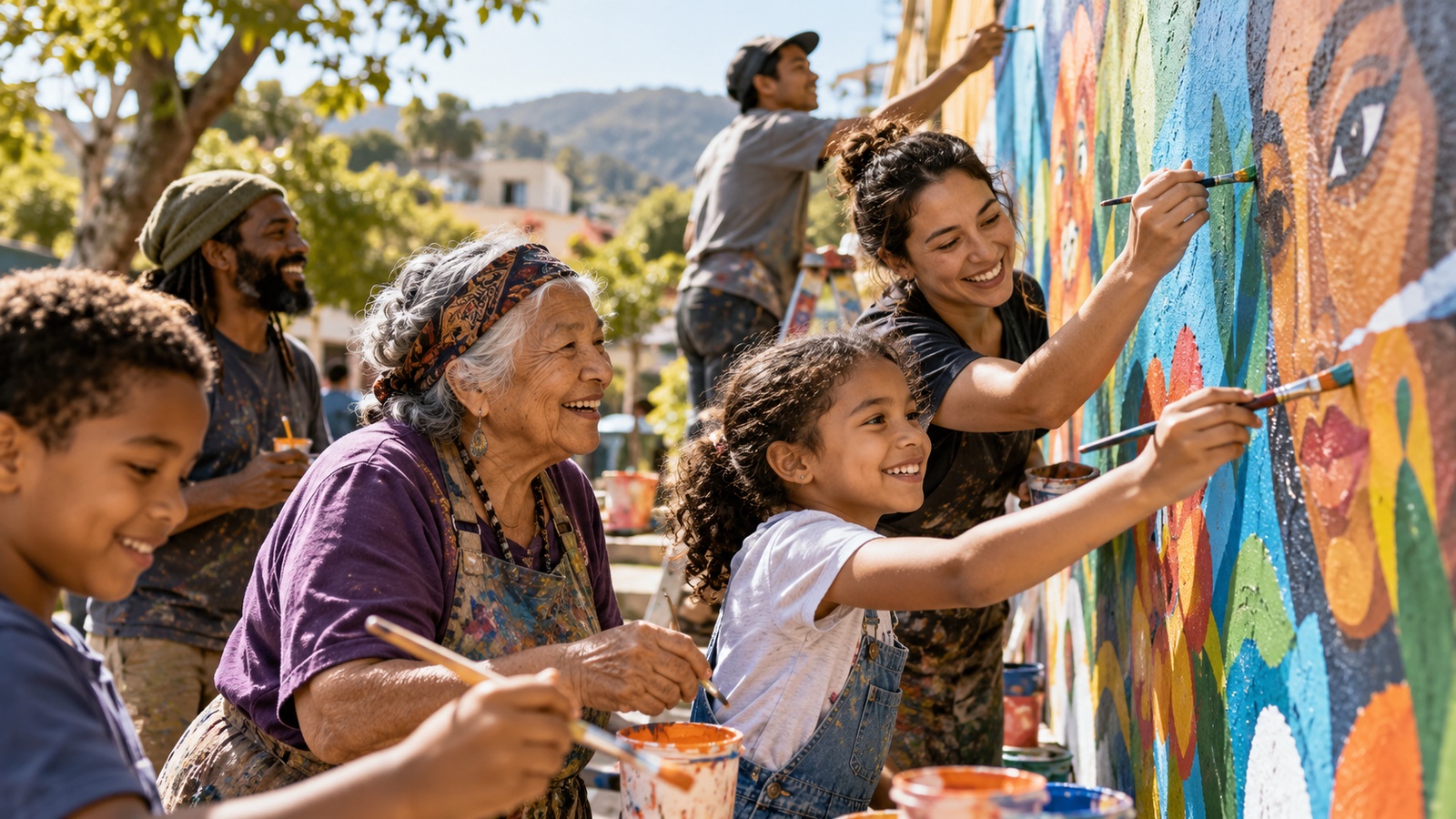
Many countries fund artists through a national arts council. Brazil does it differently. Its federal government sends culture money to the states, the Federal District and the municipalities, and each of them designs and runs its own calls for artists.[1][3] The federal government sets the rules; local governments choose the winners.
The policy carries the name of Aldir Blanc, the Rio de Janeiro writer and lyricist who died of COVID-19 in 2020, at 73. The following month, Brazil passed Law 14.017/2020 — the original “Lei Aldir Blanc” — which sent R$3 billion in emergency aid to cultural workers and to venues shut by the pandemic.[10]
That emergency measure became the model for something lasting. Law 14.399 of July 2022 created the PNAB as a five-year policy.[1] In May 2025, President Luiz Inácio Lula da Silva signed the law that made it permanent: the R$15 billion can now be transferred over a longer period, and once it is spent, the policy continues with money set in each year’s federal budget.[1][5][6]
R$15 bn
committed to local culture from 2023
R$3 bn
transferred in the first cycle, 2023
98%
of municipalities joined the first cycle
60%
of earlier funds must be spent before the next transfer
The Mechanics
How the Money Moves
The law splits the money roughly in half between states and municipalities, including the Federal District. Within each half, 80% is shared out by population and 20% by the federal revenue-sharing formulas used for states and cities.[1]
To receive it, a government submits an action plan on the federal Transferegov platform and a plan for spending the money, drawn up with civil society — preferably through its local culture council.[2][4] Starting January 1, 2027, only states and municipalities that have their own culture fund can receive transfers.[1][2]
The 60% rule
Before a new transfer, a government must show it has spent at least 60% of the federal culture money it already received. A government that misses the bar is not cut off; it can qualify again at the next annual check.[2][7] Only money that has actually left the dedicated PNAB bank account — payments to artists, suppliers and partners — counts. Published calls and committed funds do not.[13] The regulating decree exempts a government’s first year in the policy and leaves spending on federal infrastructure works under the Novo PAC program out of the calculation.[2]
In 2026, the Ministry of Culture first set September 30 as the check date for states and the Federal District, then moved it to October 30, 2026, in a notice issued on September 21. Municipalities are checked on December 14, 2026.[7][11][12]
Reporting on the 2025 law described a lower 50% bar for municipalities of up to 500,000 residents. The ministry’s 2026 notices and the regulating decree apply 60%, and DMM found no current 50% exception.[2][6][7] A public data panel, relaunched in October 2026, shows whether each government is cleared, not cleared or under review for its next transfer.[8]
DMM analysis
Where It Goes
What the Money Pays For
- 80% for direct support to the cultural sector: public calls, prizes, purchases of cultural goods and services, and monthly support to keep cultural spaces running.[1]
- 20% for wider access: programs in urban peripheries, rural areas and traditional communities.[1]
- Support for spaces: a monthly subsidy of R$3,000 to R$10,000 for cultural venues with at least two years of regular activity. In return, they must offer free activities for public-school students or in public spaces.[1]
- Community culture and buildings: under the rules for the current cycle, at least 10% must go to Cultura Viva, Brazil’s network of community culture points, and at least 20% to cultural infrastructure. Municipalities receiving R$360,000 or more must put at least 25% into Cultura Viva.[4]
- Fairness built in: calls must include affirmative-action measures, including reserved places for groups that have been underrepresented.[1][2]

From Policy to Paycheck
What a Real Local Call Looks Like
National figures are measured in billions. For most artists, the PNAB arrives as a local call worth a few thousand reais. One example is the second-cycle call published in April 2026 by Mutum, a municipality in the state of Minas Gerais.[9]
| Detail | Mutum, Minas Gerais — Call 01/2026 |
|---|---|
| Timeline | Published April 14, 2026; applications closed April 29; payments from May 25 |
| Budget | R$111,000 across 36 grants in seven categories, worth R$2,000 to R$5,000 each |
| Dance | Listed as a segment within the theater and performing arts category |
| Who could apply | Individuals, micro-entrepreneurs, companies, nonprofits and informal collectives represented by one person — all resident in the municipality for at least 12 months; one project per applicant |
| Reserved places | At least 25% for Black applicants, 10% for Indigenous applicants and 5% for people with disabilities |
| Documents | Brazilian ID and taxpayer number (CPF), a CV, tax-clearance certificates and proof of residence |
Source: Municipality of Mutum, PNAB Cycle 2 call 01/2026. Each municipality sets its own categories and amounts.
That scale is the point. A R$2,000 grant will not build a career on its own, but across thousands of municipalities it can pay for a rehearsal space, a first recording, a workshop for neighborhood kids or a costume budget — the kind of small, local money that rarely reaches artists outside capital cities.
For International Readers
Can Artists Outside Brazil Apply?
Generally, no. Calls are run by local governments and typically require local residence and Brazilian documents — the Mutum call, for example, required 12 months of residence in the municipality, a CPF and tax-clearance certificates.[9] Every call sets its own rules, so artists living in Brazil should read the specific call in their own state or city.
For artists elsewhere, the PNAB’s value is as a model. It is one of the largest experiments anywhere in sending national culture money down to local governments, with spending tests, community councils and reserved places written into the rules.
If you live in Brazil
Why It Matters to DMM
Lessons Beyond Brazil
DMM Global Arts has now looked at two very different national answers to the same question. France’s pass Culture puts money in young people’s hands and lets them choose what to see. Brazil’s PNAB puts money in local governments’ hands and asks them to fund the people who make culture. One funds audiences; the other funds artists.
- Decide close to the ground. Local calls can reach neighborhoods and art forms that national councils rarely see.
- Measure spending, not promises. The 60% rule ties future money to money that actually reached artists.
- Write fairness into the call. Reserved places for Black, Indigenous and disabled applicants are part of the rules, not an afterthought.
- Make it permanent. Artists cannot plan careers around five-year programs; Brazil chose to make the policy last.
It is the same thread that runs through DMM’s reporting on community arts programs in Lagos: talent is everywhere, and opportunity grows when someone builds a dependable bridge to it. That is DMM analysis, not a finding of any study.
What to watch next
Three dates decide who receives the next transfers: the spending check for states and the Federal District on October 30, 2026, the municipal check on December 14, 2026, and the culture-fund requirement that begins on January 1, 2027.[1][7][12] DMM will update this explainer after each.
Quick Answers
Frequently Asked Questions
What is the Aldir Blanc policy?
The Política Nacional Aldir Blanc de Fomento à Cultura (PNAB) is a Brazilian national policy, created by Law 14.399 in 2022, that transfers federal money to states, municipalities and the Federal District to fund culture through local public calls.[1][3]
How much money does the Aldir Blanc policy distribute?
R$15 billion committed from 2023, programmed at up to R$3 billion a year. The first cycle, in 2023, transferred R$3 billion.[1][4]
Is the Aldir Blanc policy permanent?
Yes. A law signed in May 2025 made it permanent: after the R$15 billion is transferred, the policy continues with money set in each year’s federal budget.[5][6]
Who can apply for Aldir Blanc funding?
Cultural workers, groups and organizations apply through calls published by their state or municipality, which set their own eligibility rules — usually including local residence.[3][9]
Does the Aldir Blanc policy fund dance?
Yes. Calls fund the performing arts, and dance appears as a listed segment in local calls such as Mutum’s 2026 call in Minas Gerais.[9]
Sources
- Presidency of Brazil (Planalto), Law 14.399 of July 8, 2022, compiled text with amendments including Law 15.132/2025
- Presidency of Brazil (Planalto), Decree 11.740 of October 18, 2023, compiled text with amendments
- Ministry of Culture of Brazil, Política Nacional Aldir Blanc de Fomento à Cultura (official page)
- Agência Brasil, “Política Aldir Blanc investirá R$ 12 bilhões em cultura em quatro anos” (April 14, 2025)
- Poder360, “Governo torna permanente a Política Nacional Aldir Blanc” (May 3, 2025)
- CNN Brasil, “Com sanção de Lula, Lei Aldir Blanc se torna permanente” (May 3, 2025)
- Ministry of Culture of Brazil, 2026 execution-check dates for the PNAB (July 28, 2026)
- Brasil 61, on the relaunched PNAB data panel (October 16, 2026)
- Municipality of Mutum (Minas Gerais), PNAB Cycle 2 call 01/2026 (April 2026)
- O Imparcial, on the signing of Law 14.017/2020, the original Aldir Blanc emergency law (June 2020)
- Ministry of Culture of Brazil, PNAB legislation and notices, including Comunicado nº 5/2026 (June 25) and nº 6/2026 (September 21) on the 2026 execution checks
- Brasil 61, “MinC amplia prazo para comprovação dos recursos da Política Nacional Aldir Blanc” (September 23, 2026)
- Pause Perin Advogados, summary of Comunicado nº 5/2026 on the 60% execution check (June 26, 2026)
Method: Portuguese-language laws, decrees, government notices and news reports were read in the original and paraphrased in English by DMM. Where sources differ, we say so. Labeled analysis is DMM’s own. This article explains public policy and is not legal advice. No program was paid for coverage.
Continue Around the World
More From DMM Global Arts
Stories marked PUBLISHED are live — click the title to keep reading. See all Global Arts stories →


DMM Global Arts Series
Real people. Real stories. A more creative world.
How creativity and culture help people around the world build better lives — with every opportunity dated and sourced.