
The Legacy / MC Hammer
Dance Mogul Magazine / The Legacy / Hip-Hop & Street Dance
MC HammerThe Dancer Who Turned Hip-Hop Into an Arena-Sized Dance Company
The world remembers the pants, the hit and the money. Long before any of it, there was a boy dancing in an Oakland parking lot, and later a rehearsal room full of young dancers who turned a rap concert into a touring dance company.
November 17, 2026 · Dance Mogul Magazine · The Legacy
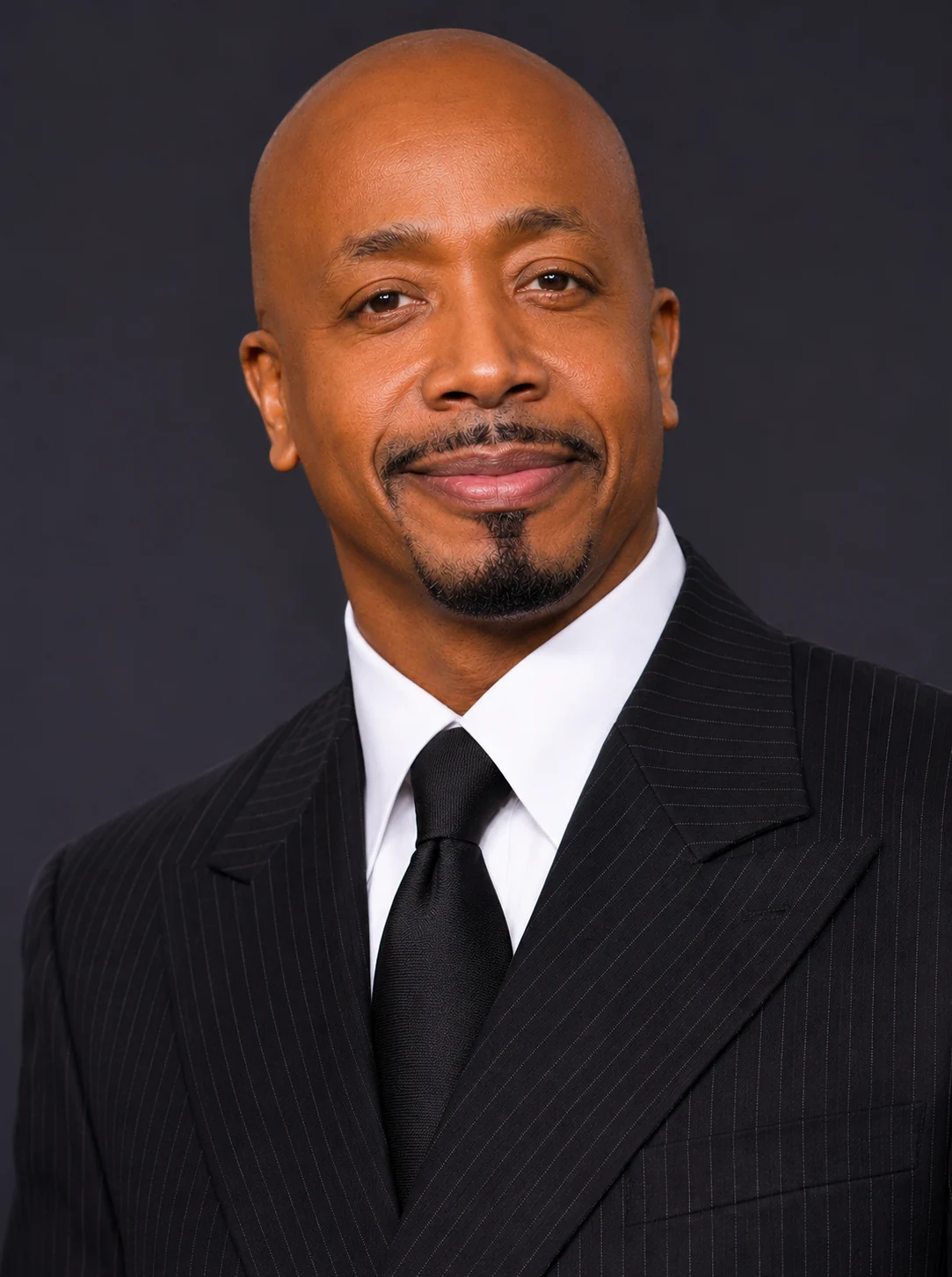
15
dancers in the 1990 touring company
21
weeks at No. 1 for Please Hammer Don’t Hurt ’Em
3
Grammy Awards, February 20, 1991
2
MTV VMAs in 1990, including Best Dance Video
Prologue
He danced first. Everything else came after.
The oldest scene in the MC Hammer story has no microphone in it. It has a parking lot, a crowd of baseball fans, and an Oakland kid copying James Brown. According to Rolling Stone’s 1990 cover profile, the owner of the Oakland A’s, Charlie Finley, spotted the 11-year-old doing James Brown splits outside the Coliseum, and that is how Stanley Kirk Burrell walked into the ballclub’s world.
Seventeen years later the same body was carrying an arena show. When The Seattle Times previewed his December 1990 concert, it described Hammer dancing without stopping, jumping, turning, twisting and moving sideways in what he called his “spider dance,” while 30 more people moved around him: 15 dancers, 11 backup singers, two deejays and two musicians.
That is the part of the story that usually gets skipped. Critics reviewed Hammer as a rapper. Business pages counted his money, first on the way up and then on the way down. Technology writers later admired his second act in Silicon Valley. Very few have looked at him the way a dancer would: as a performer who built his career on movement, and as the founder of what was, in practice, a touring dance company working inside a record company.
Dance Mogul Magazine is telling it that way now, and telling it with names. The dancers who came out of Hammer’s rehearsal room went on to record albums, coach champions and raise families. His first lead dancer, Alonzo “King Ho” Carter, was named head football coach at Sacramento State in December 2025. Hammer himself still dances in public. This is a living legacy, and a living legacy is easiest to get right while the people who made it can still set the record straight.
“I dance every day!”
MC Hammer, in a 2016 interview with HuffPost
File // At a Glance
MC Hammer at a Glance
Name — Stanley Kirk Burrell, known as MC Hammer and, at times, simply Hammer
Born — March 30, 1962, Oakland, California
Roles — Dancer, rapper, record producer, label founder, entrepreneur, minister
School — McClymonds High School, Oakland
Before music — Oakland A’s clubhouse kid, then three years in the U.S. Navy
The company — The Posse: Ho Frat Ho! (led by Alonzo “King Ho” Carter) and the dancers who became Oaktown’s 3.5.7
Signature — The Hammer Dance, the running man, the bump, and the wide-legged pants that took his name
Honors — Three Grammy Awards (1991); MTV VMAs for Best Rap Video and Best Dance Video (1990)
Record — Please Hammer Don’t Hurt ’Em: 21 weeks at No. 1 on the Billboard 200; certified Diamond
Later work — DanceJam co-founder (2007), technology adviser and investor, touring headliner
DMM connection — First Dance Mogul Magazine legacy feature on Hammer; part of the Hip-Hop & Street Dance collection
The Story · I
The Parking Lot Was His First Stage
Hammer grew up in Oakland, and by his own telling the first dancer he studied was on television. “I saw James Brown’s appearance at the Apollo on TV when I was three or four years old and sort of emulated it,” he told Rolling Stone in 1990. The magazine described a boy whose greatest pleasure was dancing in the neighborhood streets and parks, copying moves from his early soul heroes.
The splits outside the Coliseum opened a door. Hammer became a fixture around the A’s clubhouse, and, as the story is usually told, the players gave him the nickname that stuck, a nod to his resemblance to “Hammerin’ Hank” Aaron. The “MC,” for master of ceremonies, came with his first club performances. In between there was the Navy, three years mostly in California with six months in Japan, and the church, where Rolling Stone reported he found “a different type of discipline.”
Both of those disciplines would show up on his stage. So would the parking lot. Hammer learned early that a crowd will stop for someone who moves well, and he never stopped building on that.
The Story · II
A Label Built Out of a Car Trunk
Hammer started his own label. Rolling Stone reported that the company was “backed by a pair of $20,000 investments” from two Oakland A’s players, Mike Davis and Dwayne Murphy. The label went by Bustin’ Records and Bust It in different accounts, and its first product was Hammer himself.
He and his wife, Stephanie, worked as the promotion department, pushing records to local DJs and selling them wherever they could. According to uDiscover Music, his debut album, Feel My Power, sold about 60,000 copies that way, enough to get Capitol Records’ attention. Capitol signed him in 1988 and reissued the album, reworked, as Let’s Get It Started.
What Capitol bought was a show, not just a sound. From the start, Hammer’s records were built to be danced to and his performances were built to be watched. The next step was to find enough dancers to fill the stage he had in mind.
The Story · III
The Rehearsal Room That Became a Company
The dancers came out of the same Bay Area clubs and campuses Hammer knew. Sweet L.D., one of the women who would become Oaktown’s 3.5.7, remembered it simply: “I didn’t have any training and I got most of my experience in the club, Silk’s in Emeryville. That’s where I met Hammer.” She, Terrible T and Lil P became fixtures of his early videos, dancing in “Let’s Get It Started,” “Pump It Up” and “Turn This Mutha Out.”
Across the bay at Cal State Hayward, a football player named Alonzo Carter had started a dance crew called Club Nu-Ho as an alternative to fraternity life, a place where nobody got hazed. Every member had a name. Carter was King Ho, after Run-DMC’s “King of Rock.” When Hammer, a McClymonds High graduate like Carter, held auditions in Oakland, the crew showed up. According to the East Bay Express, Hammer chose Carter and two others as extras for his video shoots. A 1992 label profile says Hammer noticed Heavy Ho’s footwork on the set of “Let’s Get It Started” and invited the group in.
Their name came from a parking-lot encounter. As the East Bay Express told it, a fraternity member watching them rehearse in a studio parking lot recognized Omega-style stepping in their routine. Rather than battle over it, the dancers folded the step tradition of Black Greek life into their act, and the crew took the name Ho Frat Ho! Their first big show with Hammer was at the arena in Anaheim in 1988. Carter bought striped referee shirts, whistles and white gloves, and the crew rehearsed in the parking lot from ten in the morning. The crowd stood up. “Even Hammer paused,” Carter remembered.
By the end of that summer Carter had left school for the road. Ho Frat Ho! and the women of the Posse were now the moving parts of a professional touring show, and they trained like it. Carter, who also acted as the crew’s fitness coach, described days that began at 4 a.m. with a six-mile run and weights, followed by rehearsal all day and a performance at night.
Ho Frat Hooo! also shaped what everyone else on that stage did. In an April 12, 1991, interview with Black Radio Exclusive, King Ho estimated that the group created about 90 percent of the choreography for the entire tour, including routines for the background dancers, singers and musicians. As he described the process, the crew built the routines first; Hammer then reviewed them, added moves of his own and brought the pieces together into one show. The 90 percent is King Ho’s own estimate, given in the middle of the run, not an audited production credit. What it records is a working partnership: the crew built the movement, and Hammer shaped and finished it.
“We danced thirteen to fourteen hours a day, the same routine over and over again, from Sunday to Sunday.”
Sweet L.D., to Rolling Stone, 1990
A note for today’s dancers
The Story · IV
Fifteen Seconds He Would Not Let Them Cut
The director Rupert Wainwright got a phone call he did not expect. “Hi, this is MC Hammer,” he recalled the caller saying. “I’m calling from Capitol Records.” That call began a working relationship that would produce the video for a song built on Rick James’s “Super Freak”: “U Can’t Touch This.”
Wainwright told Fast Company in 2020 that his crew expected an easy Saturday. Then a tour bus pulled up, the dancers came out, and a voice like a sergeant major’s started calling the room to order. “It was the most organized thing you ever saw in your life,” he said. They shot for about 22 hours.
When Wainwright sent his first cut, Hammer’s reply was polite and firm: “Great video, Rupes. But you messed it up in the editing.” The director had removed a single, uninterrupted shot of Hammer shuffling at speed from one side of the stage to the other. Wainwright had a reason. “Nobody wants to watch you dance uninterrupted for 15 seconds,” he told Hammer.
Hammer wanted it back, and it went back. In the finished video, about two minutes in, after Hammer calls out “Break it down,” that 15-second take runs as the longest single shot in the piece. The world named it the Hammer Dance.
“Nobody wants to watch you dance uninterrupted for 15 seconds.”
Director Rupert Wainwright, recalling what he told Hammer, Fast Company, 2020
The world wanted exactly that. On September 6, 1990, the video won the MTV Video Music Awards for Best Rap Video and Best Dance Video. It was also nominated for Best Choreography, and published nominee lists credit MC Hammer and Ho Frat Hooo! as the choreographers. The nomination credited Hammer alongside his dancers on the biggest night in music video.
Here is the lesson inside the story. Hammer understood that in a dance video, the dancing is the story, and an edit that cuts it to keep things moving can cut away the very thing people came to see. He protected the take, and the take became his signature.
The pants deserve their own line. The Smithsonian’s National Museum of African American History and Culture holds the blue jacket and wide-legged pants Hammer wore in the 1988 video for “They Put Me in the Mix.” The museum lists the maker as unidentified. What is clear is why the cut worked: the fabric moved with the footwork and made every slide and pivot bigger from the back row.
The Story · V
Thirty People in Motion
Please Hammer Don’t Hurt ’Em came out in February 1990 and spent 21 weeks at No. 1 on the Billboard 200. It was later certified Diamond, for 10 million copies in the United States, and is widely reported as the first rap album to reach that mark. The tour that followed was a full production built around dancers, on a scale few rap shows had tried.
Rolling Stone counted a traveling group of about 70 people, including 15 dancers, a dozen background singers, eight security officers, seven musicians, three valets and two DJs. Pollstar reported that the tour grossed $26.3 million in North America in 1990, seventh among all touring acts that year. Before every show, Rolling Stone reported, Hammer led the company in prayer, asking God to “bless us with energy that we’ll be able to do above what we may ask or what we may think.”
The show reached young people offstage too. A December 1990 wire report noted that Hammer served as a role model and spokesperson for Pepsi-Cola’s 1990–91 national school assembly program. Two months later, on February 20, 1991, he won three Grammy Awards. Accepting the award for Best Rap Solo Performance, he dedicated it to the families of the men and women serving in the Persian Gulf.
The crews grew with him. Carter told the East Bay Express that the dancers performed nearly 300 times a year, on tour, at the Grammys, at the American Music Awards and on talk shows. Carter also appears in Please Hammer Don’t Hurt ’Em: The Movie, the long-form video that won Hammer his third Grammy.
“It was the most organized thing you ever saw in your life.”
Rupert Wainwright, director of “U Can’t Touch This”
The Story · VI
The Price of Perfection
A fair legacy tells the hard parts too. In the same 1990 cover story that celebrated him, Rolling Stone reported complaints from dancers and backup singers about strict rules on tour. Members had to return to their hotel rooms after shows or face a $100 fine. One former dancer said that if you were injured, you still had to come in to watch. A bodyguard who left after a pay dispute was harsher still.
Hammer did not hide from it. He told the magazine the rules were there to protect young people living on the road: “We don’t put curfews on you to control your life – just curfews that kind of help save your life.” He said none of the restrictions were abusive or oppressive.
Money was the other question. Looking back in 2020, Rock the Bells reported that even as Hammer’s star rose, the women of Oaktown’s 3.5.7 were not earning what professional dancers typically made, because their recruitment into his circle had been informal. The account raises questions about pay, expectations and contracts that deserve to be documented, and it carries a lesson every dancer should hear. Talent gets you in the room. A written agreement decides what you take home.
DMM’s reading, offered as interpretation, is that both things were true at once. Hammer ran his company with a discipline that made the show possible and also made it hard to live inside. The dancers paid part of the cost of that perfection, and they also left with skills, stages and a story that no one can take from them. Carter, for one, says the experience changed his life. The point of telling it straight is that the next generation can keep the excellence and fix the rest.
The Story · VII
Dancers Who Became Recording Artists
Hammer did something unusual with his dancers: he put some of them on records. The women of the Posse became Oaktown’s 3.5.7, named for their city and for the power of a .357 Magnum. Their debut album, Wild & Loose, came out in 1989 on Bust It and Capitol, and they followed it with Fully Loaded in 1991. The lineup changed over the years; Lil P left, and by the “Yeah! Yeah! Yeah!” video Sweet P and VC had joined. What they always had was choreography. As Kick Magazine put it, they had to be seen to be fully appreciated.
Ho Frat Ho! made the same jump. After the 1991 Grammys, Carter told the East Bay Express, the members decided to become their own rap group and signed with Hammer’s label. A 1992 profile listed the five as King Ho, Heavy Ho, Mighty Ho, X Ho and Lo Ho, said they wrote and choreographed their own material, and reported that the video for their single “Ho Frat Swing” was shot on the campus of Southern University in Baton Rouge. King Ho described the group as “an attitude, a way of life, a form of expression.” After a couple of singles, the contract was not renewed.
In 1992 Carter decided it was time to go home. He had a mother, a brother and a son to support. He started as a volunteer coach at McClymonds, his and Hammer’s old high school, then became the paid track coach, then the head football coach. Between 2000 and 2005, the East Bay Express reported, more than 40 of his players signed Division I scholarships.
“As a 17-year-old dad, that helped change my life.”
Alonzo Carter, on touring with Hammer, to KGUN 9, 2024
The Story · VIII
The Fall, Told Plainly
The company kept growing after the hits slowed. Early in 1992, Jet estimated that Hammer employed about 200 people, with an annual payroll of $6.8 million. In 1996 he filed for bankruptcy. TIME later summarized the filing as about $9.6 million in assets against $13.7 million in debts.
Most retellings stop there and call it a cautionary tale about spending. Hammer has always told it differently. “No, I lost my heart,” he said in a 2011 interview on Oprah.com, explaining that he had not taken the money only to bless himself. He said he had “employed 200 people in my community.”
You do not have to settle that argument to see what DMM sees. Dancers were a big part of that payroll. In DMM’s view, few hip-hop artists before or since have carried that many performers as a standing company. That choice made the show, and its cost was part of what brought the empire down. Both belong in the record.
“No, I lost my heart.”
MC Hammer, on his bankruptcy, Oprah.com, 2011
The Story · IX
Dance Was Always the Business Plan
When Hammer reinvented himself in Silicon Valley, he went back to dance. In 2007 he co-founded DanceJam with the entrepreneurs Geoffrey Arone and Anthony Young, a website where dancers could post videos, learn routines and face off. It raised $1 million from angel investors, including the venture investor Ron Conway, who had befriended Hammer at a baseball game.
“I expect him to integrate all his knowledge into this Web site,” Conway told the Associated Press in 2008. “He is the lightning rod for this whole thing.” Hammer told NPR that on DanceJam “you’ll be able to see the emerging dances as they’re happening.” The site was sold in 2009. Years later, dance clips would become one of the main ways the whole world shares culture online.
He kept going: a search start-up called WireDoo, advisory roles and investments. In 2011 he said the work kept him busy 10 to 12 hours a day. The through line from the Coliseum parking lot to the startup pitch is the same: Hammer has always believed that dance is something people will gather for, and that gathering can be built into a business.
The Story · X
Where Is MC Hammer Now?
He is still on stage. In 2019 he announced Hammer’s House Party, his first major tour in decades, sharing bills with hip-hop and R&B acts from the 1980s and 1990s. In February 2026 he surprised riders on San Francisco’s honorary Black History Month cable car, posing for photos and breaking into dance moves in a reel the city’s transit agency posted.
His first lead dancer is still dancing too, when the moment calls for it. Alonzo Carter’s practice-field “U Can’t Touch This” went viral in 2017, and the two remain close; Carter told KGUN 9 in 2024 that Hammer would be at Arizona’s games that fall. On December 15, 2025, Sacramento State named Carter its 14th head football coach. “Everything I learned from him,” Carter said, “I just poured it into coaching.”
The People Behind the Moment
The Company: A Living Credit Register
A legacy is made by people. These are the dancers the public record names as part of Hammer’s company, separated into what is documented and what is still open. This register is not complete, and it is not meant to be. It is meant to grow.
Documented
Alonzo “King Ho” Carter
Lead dancer and head choreographer; Ho Frat Ho! founder; crew fitness coach; today head football coach, Sacramento State.
Documented
Heavy Ho
Ho Frat Ho! member whose footwork Hammer noticed on the “Let’s Get It Started” set (1992 label profile).
Documented
Mighty Ho · X Ho · Lo Ho
Ho Frat Ho! members named in 1992. Legal names not yet independently confirmed.
Documented
Sweet L.D.
Posse dancer from the Silk’s club scene; founding member of Oaktown’s 3.5.7.
Documented
Terrible T
Posse dancer; founding member of Oaktown’s 3.5.7.
Documented
Lil P
Posse dancer; founding member of Oaktown’s 3.5.7; later left the group.
Open record
Sweet P · VC
Joined Oaktown’s 3.5.7 by the “Yeah! Yeah! Yeah!” video. Dates and full credits still being gathered.
Open record
The 15 dancers of 1990
Rolling Stone and The Seattle Times counted 15 dancers on the road. Most are still unnamed in the public record.
The Credit Record, Kept Honest
| Work | Credit as documented | Source |
|---|---|---|
| “U Can’t Touch This” video choreography | MC Hammer and Ho Frat Hooo! (shared credit) | 1990 MTV VMA Best Choreography nomination, as recorded in published nominee lists (MTV’s original document not yet located) |
| Hammer’s touring production choreography (as described in 1991) | Ho Frat Hooo!, led by King Ho: about 90% of the tour’s routines, including those for dancers, singers and musicians, by King Ho’s own estimate; Hammer reviewed the routines, added his own moves and brought the show together | Black Radio Exclusive, April 12, 1991, p. 74 (firsthand interview; the percentage is King Ho’s estimate, not independently quantified) |
| Alonzo Carter’s role | Lead dancer and head choreographer; danced in twelve Hammer videos | East Bay Express, 2009 |
| “U Can’t Touch This” song | Written by MC Hammer, Rick James and Alonzo Miller | Recording Academy (Best R&B Song, 1991) |
| “U Can’t Touch This” video direction | Rupert Wainwright | Fast Company, 2020; Grammy listing |
| Ho Frat Ho! material | Written and choreographed by the group | 1992 Bust It label profile |
| 1988 jacket and pants (Smithsonian) | Worn by MC Hammer; maker unidentified | Smithsonian NMAAHC object 2011.153.7.1-.2 |
Group credits stay with the group. Where a recollection and a document differ, DMM shows both.
Help us complete the record
The Screening Room
Watch the Work
Three official videos, in the order the company grew: the early Posse, the breakthrough, and the full-scale spectacle.
1988: “Pump It Up.” The early Posse at full speed, including the women who would become Oaktown’s 3.5.7. Watch how the dancers carry the frame as much as the rapper does.
Official upload: MC Hammer artist channel. If the player does not load, watch on YouTube.
1990: “U Can’t Touch This.” Directed by Rupert Wainwright. At about the two-minute mark, after “Break it down,” comes the 15-second take Hammer refused to let go.
Official upload: MC Hammer artist channel. If the player does not load, watch on YouTube.
1991: “2 Legit 2 Quit.” Wainwright again, with the company at its largest. A study in staging big groups so every line reads.
Official upload: MC Hammer artist channel. If the player does not load, watch on YouTube.
Follow the Money, Honestly
By the Numbers: The Economy Around Hammer’s Dance Company
Numbers can tell this story, but only if each one is labeled for what it is. Tour grosses and album sales describe the projects, not anyone’s paycheck. Here is what the record shows.
Tier 1: The projects
| Measure | Figure | Scope | Source |
|---|---|---|---|
| 1990 tour gross | $26.3 million | North America, 1990; 7th among all acts; gross ticket sales, not profit | Pollstar, as reported January 1991 |
| Album run at No. 1 | 21 weeks | Billboard 200, 1990 | Billboard chart history via XXL / 24/7 Tempo |
| Album certification | Diamond (10 million) | U.S. units | RIAA, as reported by XXL / 24/7 Tempo |
| Grammy Awards | 3 wins, 8 nominations | Career, Recording Academy | grammy.com |
These figures describe the projects. They are not the earnings of Hammer or any dancer.
Who was on the road, 1990
Bars drawn to scale (largest = 15). These six roles add up to 47 of the roughly 70 people Rolling Stone counted on the tour; the rest were crew and staff. Dancers were the single largest group.
Tier 2: The payroll, by the arithmetic
Jet’s early-1992 estimate
$6.8M
Annual payroll for about 200 people. Simple division gives roughly $34,000 per person ($6.8 million ÷ 200). That is arithmetic on a reported estimate, not a wage: the figure blends executives, staff, musicians and dancers, full-time and part-time.
Tier 3: What dance work pays today
Dancers, median
$24.80/hr
U.S. Bureau of Labor Statistics, May 2025
Choreographers, median
$26.59/hr
U.S. Bureau of Labor Statistics, May 2025
Context only: these are national medians for all dancers and choreographers, most of whom work part-time and project to project. They show why a standing company that kept dancers working all year was rare then and is rare now.
What DMM does not estimate
Where the Movement Came From, and Where It Went
The Lineage
Shaped by
James Brown on television, by Hammer’s own account
Oakland streets, parks and the Coliseum parking lot
The A’s clubhouse
The Navy and the church: two kinds of discipline
↓
MC Hammer
↓
Company & collaborators
Ho Frat Ho! (King, Heavy, Mighty, X and Lo Ho)
Oaktown’s 3.5.7
Director Rupert Wainwright
Bay Area club dancers from scenes like Silk’s in Emeryville
↓
Carried forward
Athletes coached by Alonzo Carter at McClymonds, Berkeley High, Contra Costa, San Jose State, Arizona and Sacramento State
Oaktown’s 3.5.7 as dancers turned recording artists
DanceJam’s early online dance community
Every party floor that still stops for “Hammer time”
Documented names and institutions only. Sources: Rolling Stone 1990; East Bay Express 2009; Michigan Citizen 1992; Fast Company 2020; Sacramento State Athletics.
Influence and Its Limits
What Belongs to Hammer, and What Belongs to Everyone
Hammer did not invent the running man, the bump or hip-hop dance. Those came out of clubs, parties, schoolyards and step shows that belong to whole communities. Ho Frat Ho!’s stepping came from the traditions of Black Greek life. Oaktown’s 3.5.7 came out of the Bay Area club scene. What Hammer did was put those dances in front of the largest audience hip-hop had reached, with a company big enough to make them look like theater. When MTV nominated the video for Best Choreography, the nomination credited Hammer and Ho Frat Hooo! together.
Why Now
A Living Legacy, and Why DMM Is Tracking It
Three reasons. Accuracy: the people who were in the room are still here to confirm names, dates and credits, and a record is easiest to correct while its sources can still speak. Access: Hammer and his dancers are still performing, coaching and teaching, so young people can still learn from them directly. Value: when a dancer’s contribution is written down with their name on it, it becomes part of their professional standing, and that matters for the dancers whose names were never on a poster.
DMM will add to this page as the record grows.
The Record, Year by Year
Career & Cultural Timeline
CULTURE = the dance and the scene · CAREER = his work · COMMUNITY = passing it on
1962 · CAREER
Stanley Kirk Burrell is born in Oakland, California, on March 30.
Early 1970s · CULTURE
At 11, he is spotted by A’s owner Charlie Finley doing James Brown splits outside the Oakland Coliseum.
Early 1980s · CAREER
Serves three years in the U.S. Navy after high school.
1986–87 · CAREER
Releases Feel My Power on his own label, funded by two A’s players and promoted by hand (release-year sources differ).
1988 · CAREER
Signs with Capitol; Let’s Get It Started. Club Nu-Ho dancers join the shoots and the summer tour.
1988 · CULTURE
Ho Frat Ho! wins a standing ovation at the Anaheim arena show.
1989 · CULTURE
His dancers Sweet L.D., Terrible T and Lil P become Oaktown’s 3.5.7; Wild & Loose is released.
1990 · CAREER
Please Hammer Don’t Hurt ’Em spends 21 weeks at No. 1. The tour carries 15 dancers.
Sept. 6, 1990 · CULTURE
“U Can’t Touch This” wins Best Rap Video and Best Dance Video at the MTV VMAs; published nominee lists credit Hammer and Ho Frat Hooo! with its choreography nomination.
1990–91 · COMMUNITY
Role model and spokesperson for Pepsi-Cola’s national school assembly program.
Feb. 20, 1991 · CAREER
Wins three Grammy Awards and dedicates his rap award to families of those serving in the Persian Gulf.
1992 · COMMUNITY
Alonzo “King Ho” Carter leaves the tour and begins coaching at McClymonds High School.
1996 · CAREER
Files for bankruptcy.
2007 · CULTURE
Co-founds DanceJam, a website for sharing and learning dance.
2019 · CAREER
Announces Hammer’s House Party tour.
Dec. 15, 2025 · COMMUNITY
Carter is named Sacramento State’s 14th head football coach.
Feb. 2026 · CULTURE
Surprises riders on San Francisco’s honorary Black History Month cable car with dance moves.
Nov. 17, 2026 · CULTURE
Dance Mogul Magazine publishes this legacy feature and opens a living credit register for his dancers.
Our Lens
Why MC Hammer’s Legacy Matters to Dance Mogul Magazine
Dance Mogul Magazine exists to tell lived stories that help people become better versions of themselves. Hammer’s story fits because it is not only a celebrity story. It is the story of a dancer who treated movement as serious work, built an organization around it, gave young people from his own city a way onto the world’s biggest stages, and then lived through the cost of that choice in public. We put people before popularity and contribution before controversy. Looked at that way, the most important thing Hammer built was not a mansion or a catalog. It was a company of dancers, and the careers that grew out of it.
What dance would be missing without MC Hammer
- The 15 seconds. That unbroken shot made his version of the dance recognizable around the world.
- The arena dance show. A rap tour with 15 dancers as its largest group of performers.
- A shared credit. A Best Choreography nomination that credited Hammer alongside his crew.
- Dancers on the record. Oaktown’s 3.5.7 and Ho Frat Ho! went from his stage to their own albums.
- A dance-first idea for the internet. DanceJam was built around dance video in 2007.
- A coaching tree. The discipline Carter learned on tour went into generations of athletes.
Seven Lessons
What Future Generations Can Learn From MC Hammer
1
Your first stage is wherever you are.
Hammer’s was a parking lot. Somebody important was watching.
2
Protect the moment that makes you, you.
He fought for 15 seconds of uninterrupted dancing, and those seconds became his signature.
3
Train like an athlete, recover like a professional.
Carry the commitment of his company, and pair it with sleep, food, water and rest. The 1990 schedules are history, not a plan.
4
Put names on the work.
Ask for your credit, and give credit to the people dancing beside you.
5
Get it in writing.
The dancers who later wondered about their pay learned that talent opens the door and a contract decides what you keep.
6
Know the difference between gross and income.
A $26 million tour is not $26 million in anyone’s pocket. Learn what things cost.
7
Pour it forward.
“Everything I learned from him, I just poured it into coaching,” Alonzo Carter said. That is what a legacy is for.
Coda
The Kid Is Still Dancing
Fifty-some years after Charlie Finley stopped to watch a boy do the splits outside the Oakland Coliseum, a 63-year-old man stepped onto a San Francisco cable car in February and started dancing for strangers. Nobody had paid for a ticket. Nobody needed to. The crowd stopped anyway, the way it always has.
That is the legacy, stripped down. Before the label, the hits, the company and the fall, there was a dancer who knew that movement could gather people. He built an empire on that idea, and when the empire was gone the idea was still there, and so were the dancers he brought with him. You can’t touch that.
FAQ
MC Hammer: Frequently Asked Questions
Who is MC Hammer?
MC Hammer is the stage name of Stanley Kirk Burrell, born March 30, 1962, in Oakland, California. He is a dancer, rapper, producer and entrepreneur whose 1990 album Please Hammer Don’t Hurt ’Em spent 21 weeks at No. 1 on the Billboard 200. He built his live show around a large company of dancers, including the crews Ho Frat Ho! and the women who became Oaktown's 3.5.7.
Did MC Hammer choreograph "U Can't Touch This"?
The choreography was a shared effort. When the video was nominated for Best Choreography at the 1990 MTV Video Music Awards, published nominee lists credit the choreographers as MC Hammer and Ho Frat Hooo!, the crew led by Alonzo "King Ho" Carter. Carter has been described as Hammer's lead dancer and head choreographer, and in a 1991 Black Radio Exclusive interview he estimated that the crew did 90 percent of the choreography for Hammer's tour, with Hammer reviewing the routines, adding moves of his own and bringing the show together. The song's songwriting Grammy went to Hammer, Rick James and Alonzo Miller.
Who were MC Hammer's dancers?
Documented members of his dance company include Alonzo "King Ho" Carter and the Ho Frat Ho! crew (stage names King Ho, Heavy Ho, Mighty Ho, X Ho and Lo Ho), and the dancers Sweet L.D., Terrible T and Lil P, who became the rap group Oaktown's 3.5.7. Many other dancers toured with him; DMM keeps a living credit register and welcomes documented corrections.
What is the Hammer Dance?
The Hammer Dance is the rapid side-to-side shuffle Hammer performs in a single uninterrupted shot about two minutes into the "U Can't Touch This" video. Director Rupert Wainwright has said he first cut the 15-second take and that Hammer insisted it go back in.
How many Grammy Awards has MC Hammer won?
Three, all at the 33rd Annual Grammy Awards on February 20, 1991: Best Rap Solo Performance and Best R&B Song (shared with Rick James and Alonzo Miller) for "U Can't Touch This," and Best Music Video, Long Form for Please Hammer Don’t Hurt ’Em: The Movie. The Recording Academy lists eight nominations in total.
Why did MC Hammer file for bankruptcy?
He filed in 1996, listing assets of about $9.6 million against debts of about $13.7 million, as TIME later summarized. Early in 1992 Jet had estimated that his companies employed about 200 people with a $6.8 million annual payroll. Hammer has said he "lost my heart," not his head, and has pointed to the 200 people he employed in his community.
What is MC Hammer doing now?
He still performs and appears in public. He headlined Hammer's House Party tour, announced in 2019, and in February 2026 he surprised riders on San Francisco's honorary Black History Month cable car. He has worked as a technology adviser and investor since co-founding the dance video site DanceJam in 2007.
The Legacy // Hip-Hop & Street Dance Collection
You are here: MC Hammer
Sources & Further Reading
- Rolling Stone, “Hammer Time,” Sept. 6, 1990
- The Seattle Times, “M.C. Hammer,” Patrick Macdonald, Dec. 14, 1990
- The Carolina Times, Dec. 15, 1990, p. 19 (Pepsi school program; tour company)
- Fast Company, Kc Ifeanyi, “The inside story of ‘U Can’t Touch This’,” Jan. 13, 2020
- East Bay Express, Dara Kerr, “U Can’t Touch This,” Sept. 9, 2009
- Black Radio Exclusive, Ho Frat Hooo! feature in the Bust It section, April 12, 1991, pp. 72–74 (World Radio History archive)
- The Michigan Citizen, Ho Frat Ho! profile, Sept. 27, 1992 (Bentley Historical Library)
- Recording Academy, MC Hammer awards and nominations
- Deseret News / AP, Grammy night report, Feb. 21, 1991
- Rock the Bells, Oaktown’s 3.5.7 feature, Nov. 6, 2020
- Kick Magazine, “Throwback: Oaktown’s 3.5.7.” (2023)
- Smithsonian NMAAHC, jacket and pants worn in “They Put Me in the Mix”
- uDiscover Music, “MC Hammer and the Legacy of Oakland’s Bust-It Records”
- TIME, celebrity bankruptcies: M.C. Hammer, Feb. 16, 2012
- Oprah.com, “Whatever Happened to MC Hammer,” Feb. 3, 2011
- Associated Press via The Spokesman-Review, DanceJam, Jan. 2, 2008
- TechCrunch, DanceJam funding, Nov. 6, 2007
- HuffPost, MC Hammer interview (2016)
- KGUN 9, Ryan Fish, Alonzo Carter, Aug. 26, 2024
- Sacramento State Athletics, Alonzo Carter biography
- SFist, MC Hammer aboard the Black History Month cable car, Feb. 13, 2026
- U.S. Bureau of Labor Statistics, Dancers and Choreographers
Illustration: Dance Mogul Magazine. Video embeds are official uploads shown through YouTube; rights remain with their owners. Pollstar and Jet figures are cited as reported. © 2026 Dance Mogul Magazine.