
Dance Mogul Magazine · Dance Industry
International Dance League Raises $15 Million: What Comes Next for Dancers in 2027?
The International Dance League is attracting investment and preparing to grow. The question now is how much of that growth becomes lasting opportunity for the people — and the communities — behind the movement.
November 18, 2026 · Dance Mogul Magazine Editorial
When Los Angeles crew GRV won the International Dance League's first Championship on September 20, 2026, it was the closing scene of an unpredictable inaugural season. The fourth-seeded team overturned the expectations built around Vancouver's Brotherhood, which had swept all five regular-season Series, and took the title in front of a hometown audience at the Shrine Expo Hall. GRV's final-round score of 94.00 edged Brotherhood's 93.57, with Jam Republic third at 90.86.
A month later, the story moved off the stage and onto the balance sheet.
On October 21, IDL announced a $15 million Series A financing round, led by Elysian Park Ventures and joined by Sony Group Corporation, Sony Corporation, KB Partners, APEX, Yamaha Music Innovations Fund and October Ventures. Elysian Park — the private investment arm of the Los Angeles Dodgers ownership group — also led the league's $7 million seed round in November 2025. Together, the two announced rounds total $22 million.
That investment matters. It gives a young professional dance organization greater capacity to stage competitions, support its teams and reach audiences. But for dance culture, the more consequential question is what such investment makes possible for dancers after the applause.
From a Championship to a Business Built Around Dance
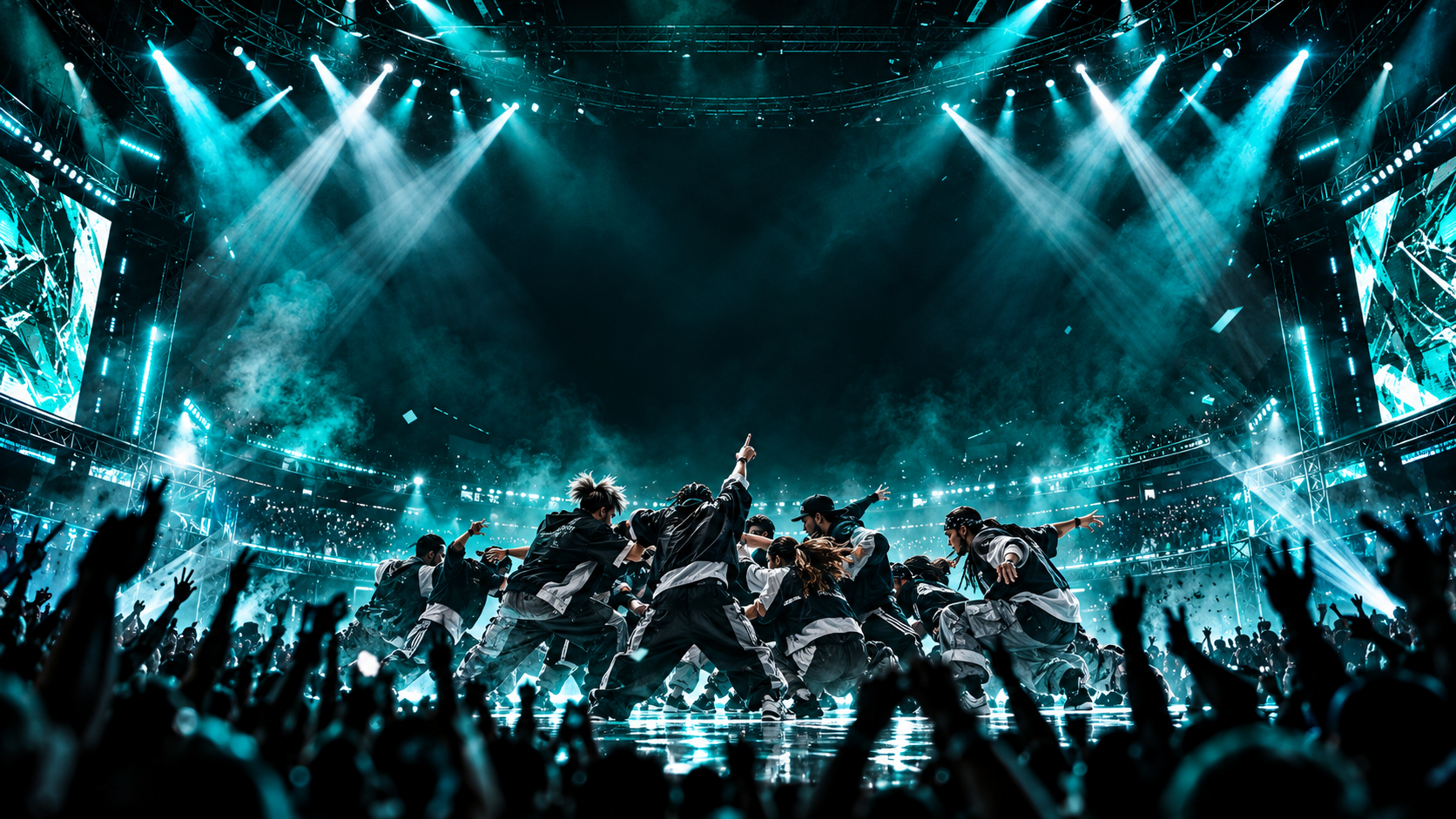
IDL's first official season began in May 2026 with six founding teams: Brotherhood of Vancouver, GRV of Los Angeles, 1MILLION of Seoul, Jam Republic of Singapore, Royal Family of Auckland and Quick Style of Oslo. The league built a season-long competitive structure — international Series events, standings, judging panels and a final Championship — around a Pro Division and a Community Division.
The model changed what an audience could follow. A dance crew was no longer judged only through one isolated competition. Viewers could watch teams respond to losses, adjust creative decisions, strengthen their chemistry and build recognizable identities across a season.
Brotherhood demonstrated sustained dominance by winning all five regular-season Series. GRV demonstrated a different kind of competitive resilience by winning the night that carried the title. Both achievements belong to IDL's inaugural history, and they should remain distinct — a difference DMM examined in its two-titles explainer.
For DMM, that distinction is valuable because meaningful dance reporting can examine more than a score. It can study artistry, discipline, leadership, cultural language and how performers develop when the stakes repeat rather than vanish after a single night.
Watch the movement
Official video · International Dance League on YouTube · Watch on YouTube
What the $15 Million Is Intended to Support
IDL says the new financing will fund expanded tour operations, broadcast and digital production, stronger infrastructure for teams and dancers, new fan experiences and the commercial ecosystem around professional dance. The league has also pointed to larger venues in response to demand.
The round follows a season the league reports sold out all six of its events, generated two billion social-media views and six million livestream views, and produced its first media-rights agreement, with ESPN2. Sponsors during the inaugural season included Honda, e.l.f. Cosmetics and CÎROC. Those audience totals are IDL's reported platform figures — not an independent count of unique people, and not evidence of profitability.
For a dance league, the significance is not simply that investors believe an audience exists. It is that capital is going behind the systems required to serve one: venues, international travel, technical production, teams, promotion and broadcast distribution.
Yet investment into an organization and compensation for the people who perform are two different measurements. The funding announcement discloses no individual dancer salary scale, no benefits package, no ownership arrangement and no dollar-by-dollar allocation of the round. Those remain subjects for continued reporting, not conclusions to assume.
Where the record stands
Confirmed: the $15 million Series A announced October 21, 2026; the named investor group; the November 2025 $7 million seed round; the 2026 ESPN2 rights agreement; GRV's Championship win and Brotherhood's undefeated regular season.
Announced plans: all six founding teams returning in 2027; expanded touring, production and fan experiences; larger venues.
Not established: the 2027 schedule and host cities; IDL's next media-rights partner, with the one-year ESPN2 replay deal concluded and the league in a negotiating window; individual dancer pay, medical benefits, retirement provisions, revenue sharing or equity; and the precise allocation of the new capital.
Six Teams Are Expected Back. The 2027 Calendar Is Still Ahead.
IDL's October announcement says all six founding teams will return in 2027, with the schedule and host cities to be announced. As of DMM's November 18 research check, the league's own newsroom carried no verified public 2027 calendar.
The return of six familiar organizations gives the next season a foundation. Brotherhood carries the distinction of the inaugural regular-season champion; GRV returns as the first Championship winner. The other four bring their own identities into a league where audiences now have a full season of competition against which to measure development.
What remains unknown matters just as much: whether the tour expands, which venues it uses, how Community Division access may change, and what broadcast distribution looks like next year. The 2026 ESPN2 agreement — which DMM covered when it was first announced — was a one-year arrangement for event replays, and Sports Video Group reported in November that the league has finished that deal and entered a negotiating window for its media rights. Where IDL lands next is one of the season's genuinely open questions.
The Broadcast Itself Is Being Rebuilt
One of the clearest signals about 2027 came not from the funding release but from a production interview. Speaking to Sports Video Group in early November, co-founder and CEO Connor Lim described a season-two broadcast built closer to a traditional sports telecast: graphics redesigned to sit around a network ticker, new camera positions, longer lenses so dancers and crowd can share one frame, play-by-play commentary, a reworked preshow, and a live event increasingly separated from the television show.
Lim told the trade publication the first-season format was workable but had not landed the way the league wanted — a candid assessment, and a practical one. Each venue ran a six-camera setup and a production truck staffed by crews who have also worked NBA, WNBA and NFL events. In IDL's format, teams share a bill but never face each other directly; they perform toward the audience, which makes the crowd's reaction the contest a viewer at home needs to see and hear. One detail from that reporting is worth sitting with: the stage camera operators are former dancers. The people framing the shots know what the movement is supposed to look like.
That reporting also sketches who is watching. Sports Video Group put the livestream audience at 80 percent ages 18 to 34 and skewing 55 percent female. For a rights buyer, that profile is the asset. For dancers, it is leverage — if it is converted into terms.
It also clarifies what the ESPN2 relationship actually was. The network carried replays rather than live events — the Championship replay aired October 21 as a made-for-television presentation, about a month after the night itself — while the live audience built on streaming platforms. Whatever a next rights partner buys, it is buying into a fanbase that already knows where to find the league live.
Beyond the Spotlight: Can a Professional League Build Professional Lives?
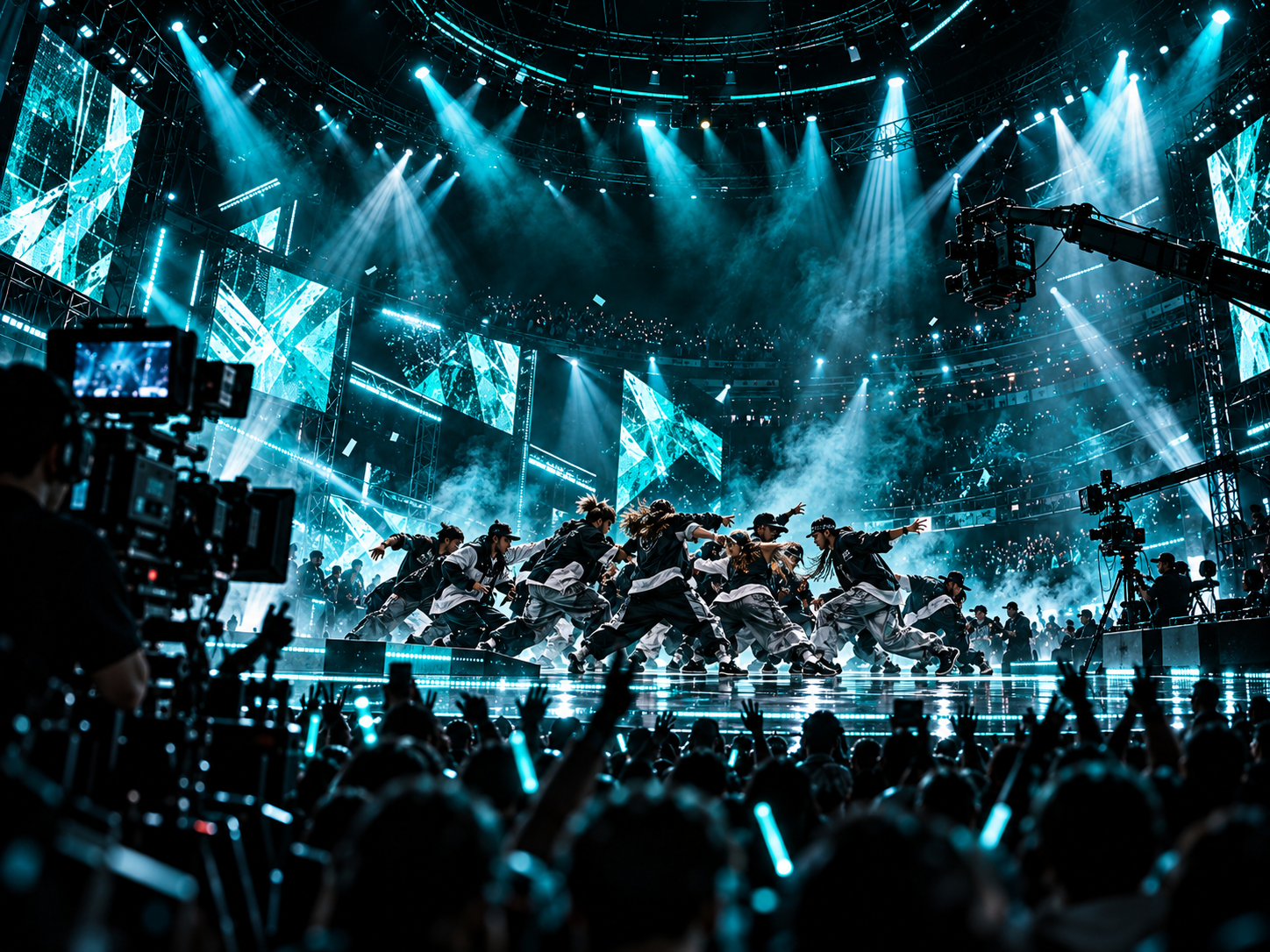
For generations, dance has produced world-class creativity without consistently offering the stability associated with established professional sports. Dancers have trained, created movement, mentored younger artists and carried performances audiences remember — often without equivalent public recognition or reliable economic security.
IDL's model is an attempt to change part of that structure. Reporting by Axios during the inaugural season described guaranteed minimums for teams across the season plus winnings based on final standings, with the league handling travel logistics, costs and visa applications. That is meaningful operational support. It does not, by itself, establish what each dancer takes home, how costs are shared inside a team, or whether a professional dancer can depend on league income year-round. Axios noted that the league's CEO hopes its success will create opportunities for individual dancers — a hope, stated as such.
There is also a figure worth tracking carefully. In February 2026, before the season began, Lim said on the league's own podcast that IDL was “spending $5 million directly on dancers,” describing money covering travel, hotels and direct payments to teams. That was a statement of intent at the start of a season, not an audited disbursement, and it should not be confused with the 2026 prize pool. What was actually paid, to whom, and over what period has not been published.
Those distinctions should guide the next phase of reporting. How are rehearsals supported? What protections exist during a global tour? What rights do dancers keep over their choreography, their recorded performances and the viral clips cut from them? Can younger performers find a sustainable path into the league without carrying disproportionate personal costs?
DMM believes a serious conversation about professionalizing dance must include those practical matters. Applause should not be mistaken for livelihood. Visibility opens doors; durable progress depends on what is built behind them — a theme running through DMM's work on long-term financial planning for dancers.
Watch the vision — in the league's own words
Official video · International Dance League on YouTube · IDL's own perspective, not independent proof of financial outcomes · Watch on YouTube
The Culture Cannot Be Separated From the Business
Open-style choreography draws on many movement traditions, including forms developed within Black, Brown and LGBTQ+ communities. Those traditions do not begin when a production company puts them on a stage. They carry the stories of social spaces, teachers, neighborhoods, clubs, battles and generations of dancers who built the language.
IDL has acknowledged that responsibility structurally. In February 2026 the league announced a Cultural & Historical Advisory Board, with Buddha Stretch as its first member, followed by Caleaf Sellers, LaTasha Barnes, Sekou Heru and Sherwin “Beast” Salonga. The board's stated role is to provide cultural and historical perspective on the styles IDL presents — particularly street and club dance — and to help guide how dance is framed across the league's content, broadcasts and educational work.
That guidance has reached beyond advice. LaTasha Barnes sat on the seven-judge Pro panel that decided the 2026 Championship, alongside Shaun Evaristo, Cheyenne Kibblewhite, Handy Yacinthe, Comfort Fedoke, Brandi Chun and Stephen Grey — a panel IDL assembled after removing the fan vote from the final, which the league said was meant to emphasize expert evaluation. Cultural authority, in other words, was placed at the scoring table and not only in the program notes.
That is a real foundation. Independent dance journalism should still examine how such guidance shows up in the finished product: how a style is named, whether its origins are explained on air, whether pioneers receive credit, and whether community organizations gain access to new opportunity rather than only new visibility. For DMM, cultural stewardship is not separate from professional advancement. An enduring institution must be able to tell audiences who made the movement possible, not only who won on a given night.
What the Performances Reveal — and What They Cannot Tell Us
Two 2026 stories remain available through IDL's official video library. Brotherhood's Championship set can be watched through the lens of consistency: a team arriving at the final after an undefeated season. GRV's title-winning round can be watched through the lens of response: a team that did not lead the standings delivering on the night the title was decided.
These performances are worth experiencing as art as much as competition. Watch how groups manage collective timing, use spacing to direct attention, build shifts in energy and establish identity inside the constraints of a judged event. Notice what makes a set feel urgent, playful, disciplined or unpredictable — while leaving specific artistic intentions to the dancers themselves unless they have explained them on record.
Official video · International Dance League on YouTube · Watch on YouTube · Full Championship replay
Video can document a remarkable moment. It cannot tell us whether the artist has reliable work six months later. That is why the financial and historical stories around this league deserve the same attention as the title race.
The Next Chapter Is About Accountability and Possibility
The new funding gives IDL a real opportunity to strengthen a structure many dancers have long deserved: one that treats their craft as the main event rather than the supporting act. The league has shown that audiences, broadcasters, sponsors and investors are willing to take competitive dance seriously.
The 2027 season will begin to test what happens next. Bigger events may create greater visibility. Stronger operations could give crews better conditions in which to work. Responsible cultural leadership can help ensure that growth credits the communities whose contributions made the format compelling in the first place.
None of those outcomes should be treated as guaranteed. They are possibilities that deserve evidence. Here is what Dance Mogul Magazine will be asking as the next season takes shape:
- What share of the new capital reaches teams, dancers and community programs?
- Are team minimums or per-dancer compensation structures changing for 2027, and will ranges be disclosed?
- What rehearsal support, injury care and insurance protections exist across a global tour?
- What rights do dancers and teams retain over choreography, recorded performances and their name and likeness?
- How does the Community Division develop — including cost of access and pathways toward professional teams?
- What decision-making role and resources does the Cultural & Historical Advisory Board carry?
- Is a 2027 media-rights partner signed, and how are the league's audience figures defined and measured?
The larger story is not only whether IDL becomes a successful sports property. It is whether that success helps dancers build lasting professional futures — and whether the history behind the movement stays visible as the spotlight grows brighter.
Continue DMM's IDL coverage
GRV's 2026 Championship upset, inside the Los Angeles night
Brotherhood's undefeated regular season
Who won IDL 2026? Two titles, explained
Frequently Asked Questions
How much did the International Dance League raise in 2026?
IDL announced a $15 million Series A round on October 21, 2026, led by Elysian Park Ventures, following a $7 million seed round announced in November 2025. The two publicly announced rounds total $22 million.
Who invested in IDL's Series A?
Elysian Park Ventures led the round, with participation from Sony Group Corporation, Sony Corporation, KB Partners, APEX, Yamaha Music Innovations Fund and October Ventures. Elysian Park, the investment arm of the Los Angeles Dodgers ownership group, also led the 2025 seed round.
Which teams will compete in IDL's 2027 season?
IDL says all six founding teams will return: Brotherhood, GRV, 1MILLION, Jam Republic, Royal Family and Quick Style. Rosters, venues and event dates were not announced in the funding release.
Has IDL announced its 2027 schedule?
Not as of November 18, 2026. Neither the October 21 funding release nor the league's newsroom listed 2027 dates or host cities; IDL says both will be announced.
Where can you watch IDL, and is the ESPN2 deal still running?
IDL's 2026 agreement with ESPN2 was a one-year arrangement carrying event replays, not live broadcasts; the Championship replay aired October 21, 2026. Sports Video Group reported in November 2026 that the deal has concluded and the league is in a negotiating window for its media rights. Live viewing in 2026 was on streaming platforms, with official replays on IDL's YouTube channel.
Does the $15 million go directly to dancers?
The round is an investment into IDL. The league says the capital will support team and dancer infrastructure among several other priorities, but no detailed allocation or individual compensation plan was disclosed.
Who won the first IDL Championship?
GRV won the Championship on September 20, 2026 at the Shrine Expo Hall in Los Angeles with a Round 2 score of 94.00. Brotherhood finished the regular season undefeated and placed second in the final at 93.57.
Sources
International Dance League, Series A announcement, October 21, 2026 · International Dance League, $7 million seed round, November 3, 2025 · International Dance League, ESPN rights release, July 27, 2026 · International Dance League, Championship recap, September 2026 · International Dance League, Cultural & Historical Advisory Board, February 19, 2026 · International Dance League podcast, “We Taught the World to Dance,” February 9, 2026 · Axios, emerging leagues and media deals, August 28, 2026 · Axios, IDL Series A, October 21, 2026 · International Dance League, Championship ESPN2 broadcast post, October 21, 2026 · Sports Video Group, IDL broadcast production, November 4, 2026.
Dance Mogul Magazine is an independent publication covering the International Dance League. Funding, audience and league-operation statements are attributed to IDL or the identified third-party sources; DMM's editorial analysis is its own. League names, results and official data remain the property of the International Dance League.
© 2026 Dance Mogul Magazine. All rights reserved.