
Dance Mogul Magazine · From the Archive · House & DJ Culture
Soulfulvibe: The DJs Who Built a Dance Floor Without Walls
An independent radio collective, a shared love of house music and a lesson in building something that can outlive the people who started it.
By Dance Mogul Magazine · Originally published January 2, 2014 · Expanded November 26, 2026
Before a dancer takes the first step, somebody has already made a decision about sound. A record has been selected. A rhythm has been introduced. An atmosphere has begun to take shape. The person responsible may never appear in the performance video, but their choices help determine what the dancer hears, feels and ultimately expresses. That relationship between the DJ and the dancer is one of the essential threads running through the history of dance culture.
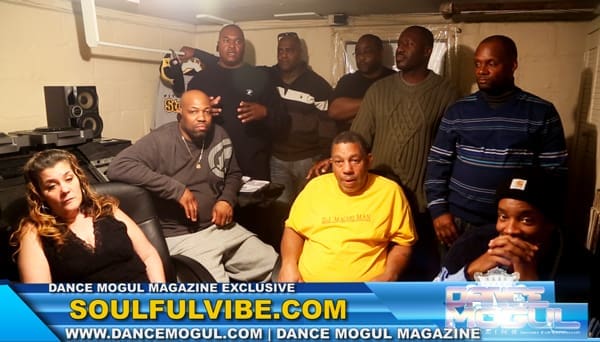
In September 2013, Soulfulvibe.com set out to bring that relationship into the world of independent internet radio. A collective of DJs, each with a distinct musical identity, came together to share music beyond the boundaries of a traditional club or local broadcast. When Dance Mogul Magazine sat down with the group for our January 2014 feature, we documented a team whose combined experience in urban music stretched across four decades. They were not simply presenting a collection of songs. They were creating a place for people to discover music, return to it and connect with one another.
More than a decade later, the importance of their example is easier to recognize. In an era when a young artist can upload a mix, publish a dance video or broadcast from a bedroom, it is worth remembering the people who were already developing independent spaces for creativity before the tools became as accessible as they are today. Soulfulvibe did not invent internet radio or house music. Its contribution was to put the possibilities of independent broadcasting to work for a particular community.
From the original DMM web article · January 2, 2014
Dance Mogul Magazine had the pleasure of sitting down with a group of dynamic individuals that share a common goal. The group has a long history in urban music, together spanning over 4 decades. The group is called Soulfulvibe, an organization that provides internet music to the world. Each DJ plays a set that includes his own personal style of music, taste, flavor, and specialty.
The internet radio portal is interactive, it archives music for people all over the world to tune in listen, chat and vibe to the music at their leisure. The group is led by Dj Rick Shivers and he is committed to helping to keep music in its purest form how the artist intended it to be.
Building Soulfulvibe: The foundation in 2013
The Soulfulvibe Exclusive in Dance Mogul Magazine’s 2014 print issue, the edition led by our exclusive interview with B-Boy Bebo, records that Soulfulvibe.com launched on September 4, 2013, under its two CEOs, DJ Hutch and DJ Rick Shiver. Station manager Michele “Houseluv” Rivera wrote that the station was created so DJs could promote their talent for playing and mixing house music over the internet, where it could be heard “in all four corners of the world.” The collective gave each DJ room for an individual approach to the music. Read the original print feature, pages 34–35.
The division of responsibilities matters. A station needs more than talented performers. It needs someone to maintain schedules, coordinate contributors, promote programming and bring new talent into the organization. Rivera described exactly that work: overseeing day-to-day operations, keeping every DJ’s show running smoothly, promoting the station and recruiting DJs. She called the station “drama free,” a place where everyone was there to enjoy the music and root for one another. Her account also mentioned outdoor park family parties, Soulfulvibe club nights, a planned first-anniversary party and station T-shirts. These were the station’s stated plans at the time, not proof that every event took place.
The original website coverage emphasized the collective’s respect for the music and its artists. DJs were encouraged to develop their own sets, rather than surrendering their identity to a single programming formula. Listeners could access archived music and interact with the station. Those choices made the platform more than a one-way broadcast: it offered ways to participate in a shared musical experience.
“It’s all about the music, not the egos.”
Soulfulvibe’s motto, recorded in Dance Mogul Magazine, page 34.


Dance Mogul Magazine also recorded the conversation on camera. The Soulfulvibe Exclusive Interview was uploaded to the DMM YouTube channel in five parts on January 1 and 2, 2014, and runs more than an hour and 40 minutes in total. All five parts appear in this article in their original order, beginning with part one below.
The people behind the sound
No cultural platform is built by a name alone. The print archive preserves a roster of 25 DJs, including contributors from the United States, the United Kingdom and the Netherlands. Their names deserve a place in the digital record, not merely a passing reference to the collective as a whole.
Historical DJ roster · DMM print archive, page 35
- DJ Rick (CEO)
- DJ Hutch (CEO)
- DJ Paul Alston
- DJ Faheem
- DJ Big Logan
- DJ Jinx
- DJ T. Simmons
- DJ Aint Mizbavin
- Mixman DJ Kel
- DJ Malik
- DJ Will Gee
- DJ Patzu (Amsterdam, Holland)
- DJ Scoop
- DJ Robb
- DJ Sam Sky
- DJ Nicky Non-Stop
- DJ Casanova
- DJ Tony Walker
- DJ Undershep
- DJ Shahied
- DJ Eric Lopez
- DJ Mike Touhey (UK)
- DJ Lee Jackson (UK)
- DJ Macho Man
- DJ Lucky
Michele “Houseluv” Rivera is recognized separately for station management. The print layout also carries portraits labeled DJ Malik, DJ Shahied, DJ Big Logan, DJ T Simmons, DJ Paul Alston, DJ Macho Man and Mixman DJ Kel, along with a group photograph captioned “Soulfulvibe Crew.” The roster is a snapshot of the organization at the time of the print feature; it is not a claim that all 25 DJs were founding members or that they still perform together. The print feature spells the co-founder’s surname Shiver, while DMM’s January 2014 web article uses Shivers. We preserve that distinction in the historical record pending confirmation.


From the underground club to a worldwide audience
To understand why a platform like Soulfulvibe mattered, we must look at the culture it served. House music grew out of Chicago’s underground dance scene, with Black and LGBTQ communities central to its early development. DJs such as Frankie Knuckles helped create musical environments that offered refuge, expression and connection. Disco, soul, funk and other musical traditions helped shape the sound. The music traveled, and distinct local dance practices developed through the clubs and communities that embraced it.
New York’s club scene also became a crucial environment for house dancers. The exchange between music and movement helped shape a dance vocabulary built on groove, footwork, flow and improvisation. These foundations can be explored in DMM’s house dance history and our profiles of Ejoe Wilson and Brian “Footwork” Green. Their stories provide wider context; they are not presented as members of Soulfulvibe.
Chicago has since made that history official. In August 2004 the city named a stretch of Jefferson Street honorary Frankie Knuckles Way, near the site of the Warehouse, where Knuckles was resident DJ from 1977 to 1982, according to the Encyclopedia of Chicago. On June 21, 2023, the City Council designated the Warehouse building at 206 South Jefferson Street a Chicago Landmark. The city’s landmark designation report notes that most music historians trace the genre’s very name to the club.
New Jersey grew its own branch of the family tree. Club Zanzibar opened in 1979 in a ballroom at 430 Broad Street in Newark, and Tony Humphries’ residency there helped shape the soulful, gospel-rooted style known as the Jersey sound, as the Newark storytelling project Newest Americans recounts. DJ Hutch’s own Mixcloud profile describes him as a New Jersey dance-music veteran: producer, DJ, club promoter, sound man and label owner. That places one of Soulfulvibe’s two CEOs inside one of house music’s most important regional traditions, though the print feature does not say where the station itself was based. DMM continues that Newark story in our profile of Tony McGregor and in 25 Years of Jersey Club.
Internet broadcasting did not replace the physical dance floor. It extended one important part of that experience: access to the sound. A person who could not attend a club could still discover a mix, learn the character of different selections and return to a broadcast for practice. For dancers outside major cultural centers, that accessibility opened another way to engage with the music. Soulfulvibe’s international roster reflected the ability of a shared musical language to cross geographic boundaries.
Watch: House Music — A Cultural Revolution
As you watch, pay attention to the relationship between the music, the spaces where people gathered and the freedom to move. The documentary helps explain how a genre can become a form of community and self-expression. Watch the documentary on PBS for the public television presentation and transcript.
The DJ is part of the dancer’s education
A dancer can learn a sequence of steps without developing a deeper understanding of the music. Musicality, however, asks something different. Listen for the bass line underneath the melody, the kick that establishes the pulse, the percussion that adds texture and the vocalist whose expression changes the emotional character of a track. Each of those elements offers a different opportunity for movement.
Practice to a full DJ mix rather than only the brief section used in a social media clip. Let one track transition into another without stopping. Notice how the change in energy affects your footwork, your breathing and your choices. Try staying with the groove for a whole musical phrase instead of responding to every individual sound. Then explore the same music with a partner or in a circle, where listening also means being aware of the people around you.
A DJ’s selection can introduce listeners to performers, musicians and producers whose names may not be familiar to them. A dancer who investigates those credits begins to understand the creative ecosystem behind a song. That knowledge can make a performance more intentional and a conversation with a DJ more meaningful. It can also help the next generation give proper recognition to the people responsible for the sound.


Music before ego: A lesson in collaboration
The motto preserved in the print archive is particularly relevant in a culture where individual visibility can become the measure of success. A collective does not require every member to sound alike. It requires each contributor to understand how their work supports something larger. A DJ can have a distinctive style and still celebrate the accomplishments of another DJ. A dancer can have an individual vocabulary and still make room for other people in a cypher.
This is a practical lesson for young artists. If you organize a dance session, introduce the DJs and other contributors by name. If you are invited to perform, consider the people who are responsible for the event running successfully. If a colleague creates a useful opportunity, share it. Good collaboration is not the absence of ambition; it is the ability to pursue ambition without treating someone else’s growth as a threat.
Independent organizations also require operational discipline. A shared calendar, reliable communication, technical preparation and a clear agreement about responsibilities can determine whether an exciting idea becomes a sustainable program. Soulfulvibe’s leadership structure illustrates why creative talent and operational talent should be recognized together.
The business of building your own opportunity
The collective’s independent broadcasting model offers a second lesson: an artist does not always have to wait to be chosen by an established institution. A team can identify a need and build an outlet around it. For Soulfulvibe, the outlet was internet radio. For a young creative today, it might be a monthly dance session, a community-based podcast, a small production company or a curated digital archive.
Start by deciding whom the project serves. Build a manageable schedule and invite collaborators whose values support the purpose. Understand the costs of hosting, equipment, promotion and licensing before making commitments. Music rights matter when broadcasting or distributing recorded work; obtain the appropriate permissions rather than assuming that independent distribution is exempt. Decide how contributors will be credited and compensated, and keep a record of the agreements. These are recommendations for future creators, not claims about the station’s finances or contracts.
The goal is not simply to gain followers. It is to build a resource that creates value for the people it reaches and can remain useful even when the original organizers step away. A project that depends entirely on one individual, one commercial platform or one password is more fragile than it may appear. Build with succession, documentation and shared responsibility in mind.
Where are they now? Following the surviving sound
Although the complete later history of Soulfulvibe remains undocumented, its programming left a trail. DJ Hutch’s Mixcloud archive holds three station mixes dated October 21, October 28 and November 25, 2014. The same page keeps his “Turn It UP! Sessions” from May and June 2013, one of them labeled for Cyberjamz.com, recorded in the months before Soulfulvibe launched. Two sets he uploaded in February 2020 show him still behind the decks years later.
A Mixcloud catalog for DJ Casanova, whose profile describes a Brooklyn-born DJ, producer and remixer now based in Nashville, includes a two-hour set titled “Live in The Mix (SoulfulVibe).” DJ Doug Brown, who does not appear on the 2014 roster, posted a July 12, 2015, episode of his “High Society” show to his podcast archive with a note inviting listeners to tune in every Sunday from 4 to 6 p.m. live on Soulfulvibe.com through the TuneIn app. That puts the station on the air nearly two years after its launch, with a weekly schedule and a mobile audience.
Snapshots kept by the Internet Archive add one more clue. Captures of soulfulvibe.com carry the station’s “Soulful Vibe” page title from 2014 through September 2020, and by late 2021 the address was serving an unrelated page. Today the domain appears in a domain-sale listing. None of this establishes when broadcasts ended, whether the organization continued elsewhere or what every member is doing today. We invite the original participants to help complete this record by sharing dated recordings, flyers, photographs, interviews and updates about their individual journeys.
For a young dancer, an archived set can still be an opportunity to listen actively. For a researcher, the same recording becomes evidence: a name, a broadcast date, a station affiliation and an example of the music being shared. That dual purpose is why preserving the sound matters.
A Soulfulvibe timeline: from the Warehouse to the archive
Soulfulvibe belongs to a longer story. This timeline places the station’s documented moments beside the house-music history it inherited, so readers can see both the foundation and what was built on it.
- 1977–1982The Warehouse operates at 206 South Jefferson Street in Chicago, with Frankie Knuckles as resident DJ. Most historians trace the name “house music” to the club.
- 1979Club Zanzibar opens on Broad Street in Newark. Tony Humphries’ residency there helps shape the Jersey sound.
- August 2004Chicago dedicates honorary Frankie Knuckles Way near the former Warehouse.
- May–June 2013DJ Hutch posts his “Turn It UP! Sessions,” including an episode labeled for Cyberjamz.com.
- September 4, 2013Soulfulvibe.com launches under its two CEOs, DJ Hutch and DJ Rick Shiver, with Michele “Houseluv” Rivera as station manager.
- January 1–2, 2014Dance Mogul Magazine uploads the five-part Soulfulvibe Exclusive Interview and publishes its web article on January 2.
- 2014DMM’s print issue runs the Soulfulvibe Exclusive on pages 34–35, with Rivera’s account, the station motto and the 25-DJ roster.
- October–November 2014DJ Hutch posts three Soulfulvibe.com mixes.
- July 12, 2015DJ Doug Brown’s “High Society” episode promotes a weekly Sunday show live on Soulfulvibe.com.
- 2014–September 2020Internet Archive captures of soulfulvibe.com show the “Soulful Vibe” page title.
- June 21, 2023The Warehouse building becomes a Chicago Landmark.
- November 2026DMM expands its archive coverage of Soulfulvibe. The domain is listed for sale.


Why Soulfulvibe should matter to the next generation
Every generation inherits something it did not have to build from nothing. The ability to share a dance performance online, find a mix from another country or connect directly with a musician is part of a much longer history of people creating their own channels of communication. Soulfulvibe represents one example of that work: a team using technology to give artists space, listeners access and music a community of advocates.
The foundation they laid within their collective can be understood through five commitments. First, respect the music: know the people behind the records and appreciate the traditions that inform them. Second, build opportunities: do not wait indefinitely for someone else to create a platform. Third, collaborate: recognize that collective progress can make individual growth possible. Fourth, organize: reliable systems allow creative work to endure. Fifth, preserve: document what you make so that the next generation does not have to reconstruct the story from fragments.
The Soulfulvibe blueprint: a foundation the next generation can build on
The station’s own records show how a working creative organization fits together. Each card below pairs something Soulfulvibe documented with a way a young DJ, dancer or organizer can build on it today. The first line is the historical record; the second is DMM’s guidance.
01 · Shared leadership
The record: Two CEOs shared the top of the organization, and a station manager handled operations, promotion and recruiting.
Build on it: Separate the creative leads from the person who runs the calendar, and credit both of them in public.
02 · A stated culture
The record: The motto “It’s all about the music, not the egos,” and a station its manager called “drama free.”
Build on it: Write your values down before you recruit. They tell newcomers what kind of room they are walking into.
03 · A regular schedule
The record: Weekly shows, including a Sunday slot from 4 to 6 p.m. in 2015.
Build on it: Consistency builds an audience faster than volume. Choose a time you can keep for a full year.
04 · An archive
The record: Shows were archived so listeners anywhere could replay them, and several DJs kept their own copies online.
Build on it: Keep dated recordings, tracklists and credits in storage you control, not only on someone else’s platform.
05 · Reach without borders
The record: DJs from the United States, the United Kingdom and the Netherlands, with listening through the TuneIn app.
Build on it: Meet listeners where they already are, and invite collaborators from other cities and countries.
06 · Community off the screen
The record: Park family parties, club nights and a planned first-anniversary celebration.
Build on it: Bring the online audience into a real room. A shared dance floor turns listeners into a community.
07 · Documentation
The record: A two-page print feature and a five-part video interview with Dance Mogul Magazine.
Build on it: Tell your story to a publication or archive while it is happening, and save your own copies of everything.
“Let’s All Show Each Other Love, Peace & Unity to Keep House Music Alive.”
Michele “Houseluv” Rivera, Soulfulvibe station manager, Dance Mogul Magazine print feature, page 34.
If you are a young DJ, learn how to build a set that communicates an idea rather than simply following a trend. If you are a dancer, become a student of the music and learn to work with the person behind the decks. If you are building an organization, give the people doing the quiet administrative work the same respect you give the people on stage. And if you are documenting culture, keep dates, credits, original files and permissions together. Do not assume a social media platform will preserve them forever.
Those actions can begin locally. Invite an experienced DJ to a youth workshop and ask them to explain how they select records. Record an oral history with permission. Create a playlist with artist credits. Hold a dance session where participants explore unfamiliar rhythms without the pressure to compete. Share the results with the community and make the materials available to future students wherever rights allow. This is how an inherited tradition becomes a living practice.
When the broadcast ends, the history should not
Dance Mogul Magazine documented Soulfulvibe while the collective was active. Today, the photographs, print feature and surviving video references offer a window into that period. They cannot answer every question, but they can keep the names and intentions of the team accessible to readers who were too young to encounter the station firsthand.
Cultural preservation is not reserved for the most famous artists. It includes people who built gathering places, managed schedules, selected records and kept independent creative platforms alive. Their stories reveal the infrastructure behind the movement. Without that infrastructure, many opportunities for dancers, DJs and audiences would never take shape.
Soulfulvibe’s story reminds us that the strength of a cultural contribution is not measured solely by the length of time a website remains online. It can also be measured by the principles a project demonstrates and the lessons future creators can carry forward. We honor this team by preserving the record, recognizing its contributors and encouraging others to build with the same respect for music, community and shared purpose.
Help complete the Soulfulvibe record
Were you a Soulfulvibe DJ, staff member or listener? Dance Mogul Magazine is gathering dated recordings, flyers, photographs, show schedules and stories from the station, along with updates on where each member’s journey has led since.
Share what you have through our contact page, and help the next generation inherit the whole story.
The next generation should not have to start from zero. Know the foundation, honor the people who built it, and create something that the generation after you can inherit.
Frequently asked questions about Soulfulvibe
What was Soulfulvibe.com?
It was an independent internet radio collective that showcased DJs and house music, with interactive listening and archived programming described in DMM’s original coverage.
Who founded Soulfulvibe and when?
The DMM print archive records DJ Hutch and DJ Rick Shiver as the station’s two CEOs and September 4, 2013, as its launch date. Michele “Houseluv” Rivera served as station manager.
How many DJs were part of Soulfulvibe?
DMM’s original printed feature lists 25 DJs from the United States, the United Kingdom and the Netherlands. This is a historical roster, not a current membership count.
What was Soulfulvibe’s motto?
“It’s all about the music, not the egos,” as recorded by station manager Michele “Houseluv” Rivera in DMM’s print feature.
Can I watch DMM’s Soulfulvibe interview?
Yes. All five parts of the Soulfulvibe Exclusive Interview, recorded for Dance Mogul Magazine in January 2014, are embedded in this article in their original order.
Why is Soulfulvibe relevant to dancers?
Its emphasis on musical discovery, individual expression and access to DJ sets provides an example of how independent music platforms can support dance education and community.
Is Soulfulvibe still active?
No current broadcasts have been documented, and the domain is now listed for sale. The latest show DMM has confirmed is DJ Doug Brown’s July 12, 2015, “High Society” episode, which promoted a weekly Sunday slot on Soulfulvibe.com. Archived mixes survive, but no closure date has been established.
Where can I learn more about house music and dance?
Explore the WTTW documentary embedded above, the surviving DJ mixes and DMM’s related house dance history features.
Sources and archival documentation
- Dance Mogul Magazine print archive: Soulfulvibe, pp. 34–35
- DJ Hutch — archived mixes
- DJ Casanova — music archive
- DJ Doug Brown — July 2015 broadcast listing
- PBS / WTTW — House Music: A Cultural Revolution
- WTTW official YouTube documentary
- Soulfulvibe domain-sale listing
- Dance Mogul Magazine — Soulfulvibe Exclusive Interview, part 1 of 5 (YouTube)
- Internet Archive — captures of soulfulvibe.com, 2013–2025
- City of Chicago — The Warehouse landmark designation report
- Encyclopedia of Chicago — Honorary Frankie Knuckles Way
- Newest Americans — The Newark Sound
Editorial note: This expanded retrospective builds on DMM’s original January 2014 web article and print documentation. Original photographs and all five parts of the 2014 video interview are retained. The individuals in the web photographs have not been individually identified here. The legacy interpretation and practical guidance are DMM editorial analysis, not attributed statements from the collective.
Continue exploring dance culture
- House Dance History: From Chicago to the World Stage
- Brian “Footwork” Green: The Rhythm, the Roots, and the Responsibility of Legacy
- Ejoe Wilson: House Dance Pioneer & Global Legacy
- The Legacy — DMM’s cultural archive
- Tony McGregor: The Newark House Pioneer Who Never Stopped Training
- 25 Years of Jersey Club: Newark’s Dance History
- Darryl D’Bonneau: Blending the Spirit of Gospel and House Music
- Dance Mogul Magazine Video Vault
© Dance Mogul Magazine · Inspiring Self-Empowerment Through Dance Culture