
Dance Mogul Magazine · The Legacy · House Dance
Ejoe Wilson: The House Dancer Who Helped Carry a Club Culture Around the World
From four straight Apollo Amateur Night wins and New York club floors to eleven years as Mariah Carey’s principal dancer, Elite Force, STOMP and nearly four decades of teaching, Ejoe Wilson helped move house dance from a lived social culture into a global language, without forgetting where it came from.
October 7, 2026 · Updated October 11, 2026 · Dance Mogul Magazine · Legacy Feature
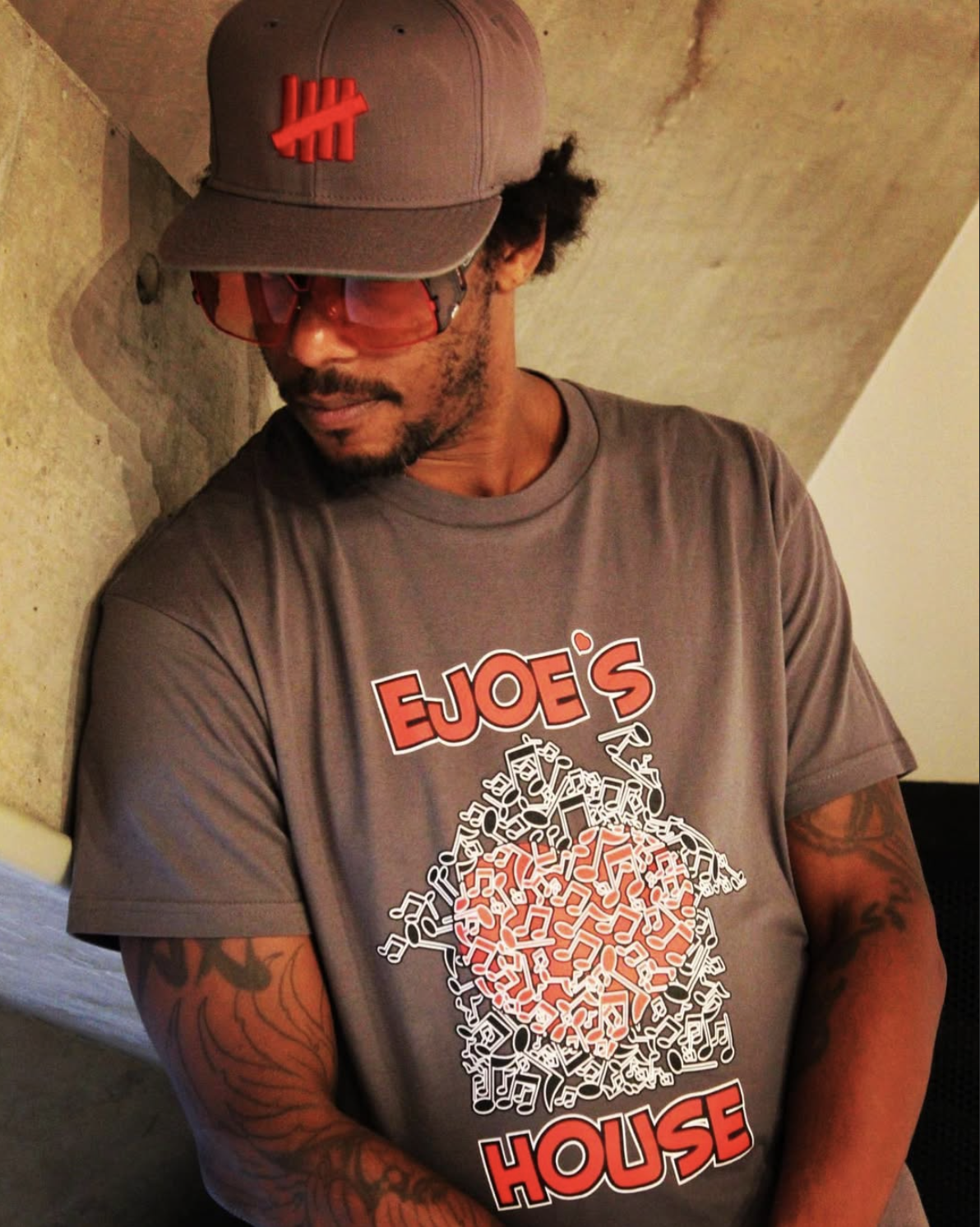
Ejoe Wilson learned early that he could command a room. As a teenager he walked onto the stage of Harlem’s Apollo Theater for Amateur Night, where the audience is famous for booing people off, and won. Then he came back and won again. His professional biographies record the run at four consecutive victories. Winning once means you connected. Winning four times means it was not an accident.
But the room that would define his place in dance history did not have theater seats. It had a sound system, a crowded floor and no mirror. By the late 1980s Wilson was part of the New York club generation that learned house the only way it could be learned then: from records, DJs, other bodies, exhaustion and repetition, with the music as the only teacher counting the beat.
In 1988 he helped do something new with that knowledge. With Voodoo Ray Ultarté and Sekou Heru, he began teaching house dance in an old Manhattan flamenco studio. His Peridance biography calls them the first house classes; DMM uses the more careful wording, among the earliest known formal house classes anywhere. Either way, a culture that had lived on club floors became something a stranger could study.
That is the thesis of this feature, and the reason Dance Mogul Magazine is tracking him now. Ejoe Wilson is not a finished chapter. He is one of the living sources of New York house dance: a dancer whose club knowledge carried him onto five Mariah Carey world tours and into STOMP, and a teacher who, nearly four decades after those first classes, is still being booked from Hiroshima to Malmö. His story is still being written, one workshop at a time.
“It’s necessary for us to teach the youth what it was, what it still is, and what it can be.”
— Ejoe Wilson, Dance Mogul Magazine 36 Chambers interview
Ejoe Wilson at a Glance
File // At a Glance
Name — Ejoe Wilson; known in Elite Force as “Twelve”
Roles — Dancer, teacher, judge, host, DJ, company founder and artistic director
Origin — New York; developed in South Bronx and Manhattan street, hip-hop and club-dance culture in the late 1970s and early 1980s
Trained — Street and hip-hop freestyle first; New York club floors; Apollo Amateur Night stage
Crews — Mop Top; Elite Force (first expansion member, debuted 1995)
Signature — Groove-driven house footwork, redirection and floor movement with a hip-hop root
Worked with — Mariah Carey (principal dancer, c. 1992–2003); MC Lyte, Heavy D, Monie Love, Deee-Lite, Pet Shop Boys, Will Smith; artists in Japan and China
Screen & stage — Five Mariah Carey world tours; Carey videos; STOMP from 2002 (New York and touring casts)
Company & events — Founder and artistic director of Beyond Phenomenon; co-founder, host and DJ of the weekly Soulgasm house party; host of House Dance International
Reach — Documented activity in 9 countries on 4 continents
Current work — Peridance house faculty; 2026 workshops in Hiroshima and Malmö
DMM connection — DMM 36 Chambers oral-history interview on education, cross-genre movement and teaching the next generation
4
Consecutive Apollo Amateur Night wins
5
Mariah Carey world tours
11
Years as Carey’s principal dancer
38+
Years teaching house since 1988
Before House: A New York Dancer Is Formed
Wilson’s professional biographies place his beginnings inside New York’s late-1970s and early-1980s street and hip-hop culture. Broadway Dance Center’s faculty record describes him dancing on the streets of the South Bronx as hip-hop was exploding; Peridance places the start of his movement journey in Manhattan in the early 1980s. The details differ slightly because this was not a career built inside one institution keeping one file. Street and club dancers developed before the industry had systems for documenting them.
He began as a hip-hop dancer, and he never stopped thinking like one. That root mattered later, when he became known internationally for house. In his teaching he still breaks house steps down against hip-hop music, because to him the styles are connected through deeper principles of rhythm.
When the Club Became the School
House dance cannot be understood if the club is treated as the place where the style merely happened to appear. The room was the education. Dancers learned from records, DJs, other bodies, stamina and the freedom to fail without the music stopping. No one counted an eight from the front of the room. The music told you, the people around you told you, and your own body told you.
Dance scholar Sally R. Sommer interviewed Wilson in New York in 1994 while documenting underground house dancing, and the later film Check Your Body at the Door preserved that whole New York club generation. Wilson belongs to that lived record: a period when house was a social practice before it became a class category.
House was never only vocabulary. It was listening, response, freedom, stamina, personality and the intelligence to make movement belong to the music in real time.
— DMM editorial context on Ejoe Wilson’s teaching legacy
1988: When Club Knowledge Entered the Studio
That is what made 1988 so important. Movement transmitted largely through participation in club culture could now be studied on purpose. A student did not have to survive the same rooms the pioneers survived to discover every principle. A teacher could isolate footwork, slow a groove down, build strength, correct posture, and then reconnect the technique to musical freedom.
That made the knowledge portable. A New York club dancer could teach in another state, then another country, then another continent. The class did not create house dance. But it created one of the mechanisms through which house dance could become global.
Mop Top, Elite Force and the New York Freestyle Bridge
Wilson became part of the Mop Top generation, the network of New York dancers whose work blurred the false line between street authenticity and professional performance. He then joined Elite Force, the crew formed in 1992 on the set of Michael Jackson’s “Remember the Time” by Buddha Stretch, Henry Link and Loose Joint. Elite Force’s official history says Wilson, known in the crew as “Twelve,” was the first dancer added after the three founders, and that he debuted with them in 1995.
The crew’s own description of him compares his impact on underground house dancing to Jimi Hendrix. The comparison is about voice, not fame: footwork, groove, redirection, floor work and timing were not separate tricks for him but one improvisational sound. That quality made him valuable in two economies at once, the underground economy of reputation and the commercial economy of entertainment.
Eleven Years in Mariah Carey’s Performance World
Wilson’s longest commercial relationship was with Mariah Carey. Peridance identifies him as her principal dancer from about 1992 through 2003, across five world tours: Music Box (1993), Daydream (1996), Butterfly (1998), Rainbow (1999) and Charmbracelet (2003). The same record connects him to Carey videos including “Dreamlover,” “Fantasy,” “Honey,” “Heartbreaker” and “Don’t Stop (Funkin’ 4 Jamaica).”
Look past the credits. A dancer whose knowledge was forged in New York club culture was performing in major venues in the United States, the United Kingdom, France, Germany, Japan and Australia beside one of the world’s best-selling artists. House culture had once depended on getting into the right room in New York. Now one of its leading dancers was crossing oceans. And every world tour is an economy built around movement: dancers, rehearsal directors, musicians, crews, wardrobe, hotels, promoters and local labor in every city.
STOMP, and the Industry That Needed the Clubs
In 2002 Wilson joined STOMP, performing with its New York and touring casts. His biographies also connect him with MC Lyte, Heavy D, Monie Love, Deee-Lite, Pet Shop Boys and Will Smith, plus artists in Japan and China. Those names matter because they document a transfer. The industry could finance videos and build sets, but it could not manufacture years of social-dance intelligence overnight. Dancers brought that into the room, and television multiplied it: young people replayed MTV and BET, copied steps, searched for the dancers and eventually walked into studios.
The theater did not make the street dancer legitimate. The theater got richer because it recognized what he already knew.
The Credit Record, Kept Honest
Over four decades, credits blur. DMM separates what is documented for Wilson individually from what belongs to his crews, and from artist names that biographies list without specifying the role.
| Artist / project | Credit type | Source |
|---|---|---|
| Mariah Carey: Music Box, Daydream, Butterfly, Rainbow, Charmbracelet tours | Individual: principal dancer, c. 1992–2003 | Peridance bio |
| Mariah Carey videos: “Dreamlover,” “Fantasy,” “Honey,” “Heartbreaker,” “Don’t Stop” | Individual: dancer | Peridance bio |
| STOMP (New York and touring casts), from 2002 | Individual: cast member | Peridance; Broadway Dance Center |
| Elite Force, from 1995 | Collective: crew member “Twelve” | Elite Force official history |
| Will Smith, TLC, Mariah Carey (crew work) | Collective: Elite Force with the Mop Top family | Elite Force official history |
| MC Lyte, Heavy D, Monie Love, Deee-Lite, Pet Shop Boys, Will Smith | Listed in biographies; role not specified | Peridance; BDC |
Biography credits are reported as published. Peridance mentions six Carey videos but names five; DMM publishes only the five named.
“They Need to Get the Education”
Years after the Apollo and the world tours, Dance Mogul Magazine interviewed Wilson at a 36 Chambers training event, where veteran dancers break movement down at a deeper level. He did not spend the conversation polishing his résumé. He explained the work. The “chambers” are areas of development: teachers break movement apart so dancers can build specific skills, cardiovascular endurance and strength, then reconnect those pieces to real dancing.
He also rejected rigid genre thinking. He began as a hip-hop dancer before he became known for house, he told DMM, and a house step can be broken down against hip-hop music because the principles connect.
“Just because [it’s] a certain kind of genre, it doesn’t mean that you can’t cross over.”
— Ejoe Wilson, Dance Mogul Magazine 36 Chambers interview
Asked why young dancers should come learn from veterans, his answer was direct: they need the education. They need the dances and the history they may not get elsewhere, from people who were present when the movement was carried into videos, across the country and overseas, and who “carried it on.” That one sentence about teaching youth “what it was, what it still is, and what it can be” is a whole curriculum. What it was requires history. What it still is requires participation. What it can be requires imagination.
“They’re only scratching the surface of their ability.”
— Ejoe Wilson on competition-focused dancers, DMM 36 Chambers interview
He was equally clear about the limits of teaching. A teacher can build skill, strength, control and access, he said, but cannot manufacture another person’s feeling. Technique gives you a larger vocabulary. Feeling gives you a reason to speak.
Watch: Ejoe Wilson in His Own Words
Ejoe in conversation, on the record, about the vision behind the dance.
DMM Oral History Archive
Ejoe Wilson’s 36 Chambers conversation is part of the Dance Mogul Magazine video archive. Watch the DMM interview collection on YouTube.
2012 · Amsterdam. At House Dance Forever, where he served as a judge, Wilson talks about his larger vision of dance and house culture. Preserved by the Rennie Harris American Street Dance Archive. Video via YouTube.
The Teaching & Travels Tracker
DMM built this tracker so readers can follow a living legacy the way it unfolds: date by date, place by place. Every row has a published source. It is a floor, not a ceiling. Peridance noted thirty years of worldwide teaching by 2019, far more than the dated listings that survive online.
| Date | Event | Place | Role |
|---|---|---|---|
| Oct 27, 2026 | Malmö Dance Week, open-level house workshop (scheduled) | Malmö, Sweden | Teacher |
| May 1, 2026 | 90-minute house workshop | Hiroshima, Japan | Teacher |
| Ongoing | Peridance Center house faculty; EXPG New York | New York, USA | Faculty |
| 2012 | House Dance Forever | Amsterdam, Netherlands | Judge |
| 2003 | Charmbracelet World Tour, Mariah Carey | International | Principal dancer |
| 2002 | STOMP, New York and touring casts | USA and touring | Cast member |
| 1999 | Rainbow World Tour, Mariah Carey | International | Principal dancer |
| 1998 | Butterfly World Tour, Mariah Carey | International | Principal dancer |
| 1996 | Daydream World Tour, Mariah Carey | International | Principal dancer |
| 1995 | Elite Force debut as “Twelve” | New York, USA | Crew member |
| 1994 | Interviewed by dance scholar Sally R. Sommer | New York, USA | Interview subject |
| 1993 | Music Box Tour, Mariah Carey | International | Principal dancer |
| 1988 | Early house classes with Voodoo Ray Ultarté and Sekou Heru | Manhattan, USA | Co-teacher |
| Undated | Early urban-dance teaching in Japan; Soulgasm weekly party; House Dance International | Japan; New York | Teacher; co-founder, host, DJ; host |
Sources: Peridance; Broadway Dance Center; Elite Force official history; Check Your Body at the Door bio; Rennie Harris American Street Dance Archive; Hiroshima studio listing; Malmö Dance Week. The Malmö row stays “scheduled” until the date passes.
Documented listings per year · bars drawn to scale
Counts are dated listings in DMM’s research set, not a full record. Years without a bar have no surviving dated listing, not no activity. 2026 counts Hiroshima and the scheduled Malmö workshop.
The Teaching Tree: How the Knowledge Became Work
When Wilson, Voodoo Ray and Sekou Heru began teaching house in 1988, they helped create a job that had not existed before: the house-dance teacher. That job now exists in studios around the world. His Check Your Body at the Door biography describes him as an early urban-dance teacher in Japan who introduced house to a mostly hip-hop community, and names him as co-founder, host and DJ of the weekly Soulgasm house party in Manhattan, host of the annual House Dance International competition, and founder and artistic director of the company Beyond Phenomenon.
Each of those roles employs other people. A party needs DJs, door staff and a room. A competition needs judges, hosts, videographers and dancers who travel in. A company needs performers. The U.S. Bureau of Labor Statistics notes that nearly all choreographers begin their careers as dancers. Wilson’s career shows the rungs above that: teacher, host, organizer, company director.
How the knowledge became work
1. 1988, the first classroom. Club knowledge becomes a teachable subject in a Manhattan studio.
2. The tour. Eleven years with Mariah Carey turn house training into steady professional work.
3. The studio. Peridance, EXPG and studios abroad make house a paid course of study.
4. The event. Soulgasm and House Dance International create work for DJs, judges, hosts and dancers.
5. The student becomes the teacher. Dancers he trained carry house into their own studios, crews and countries.
The Lineage: Who Shaped Ejoe, and Who He Shaped
Shaped by
South Bronx & Manhattan streets
hip-hop freestyle roots
The Apollo
four straight Amateur Night wins
NYC club floors
house as a social practice
Hip-hop music
the root he still teaches from
↓
Ejoe “Twelve” Wilson
New York · house dance
↓
Crews & collaborators
Voodoo Ray Ultarté
1988 classes
Sekou Heru
1988 classes
Buddha Stretch, Link, Loose Joint
Elite Force founders
Mop Top family
New York freestyle network
Mariah Carey
principal dancer, 1992–2003
Beyond Phenomenon
founder, artistic director
↓
Students & next generation
Studio students
Peridance, EXPG New York
Japan’s early house scene
hip-hop dancers introduced to house
Party & battle community
Soulgasm, House Dance International
Relationships drawn only from published sources: Peridance, Broadway Dance Center, Elite Force, Check Your Body at the Door. Individual students are not named because no source documents them.
Worldwide Impact: From the Apollo to Four Continents
Worldwide Impact // Documented Reach
| Country / region | What happened | Year | Evidence |
|---|---|---|---|
| USA | Apollo wins; 1988 classes; Elite Force; STOMP; Soulgasm; Peridance faculty | 1980s–2026 | Peridance; BDC; Elite Force |
| United Kingdom | Mariah Carey world tours | 1990s–2003 | Peridance |
| France | Mariah Carey world tours | 1990s–2003 | Peridance |
| Germany | Mariah Carey world tours | 1990s–2003 | Peridance |
| Australia | Mariah Carey world tours | 1990s–2003 | Peridance |
| Japan | Carey tours; early urban-dance teaching; Hiroshima workshop | 1990s–2026 | Peridance; CYBATD bio; studio listing |
| China | Work with artists in China | undated | Professional bios |
| Netherlands | House Dance Forever judge, Amsterdam | 2012 | Rennie Harris archive |
| Sweden | Malmö Dance Week workshop (scheduled) | 2026 | Malmö Dance Week |
9
countries with a source
4
continents
38
years, 1988 to 2026
Students he taught now teach in their own cities. That influence is real but cannot be counted, so it is not in the totals.
By the Numbers: The Economy Around Ejoe Wilson’s Art
House dance is culture, and it is also work. The figures below show the scale of the projects and industries Wilson’s dancing has moved through. DMM keeps them in separate tiers, because a hit record’s chart run is not a dancer’s paycheck and a national industry is not one artist’s output. No credible study isolates house dance as its own global industry, and no one has published Wilson’s personal earnings or student totals. DMM does not estimate them.
Tier 1 · Projects Ejoe danced in
| Measure | Figure | Scope | Source |
|---|---|---|---|
| Mariah Carey world tours as principal dancer | 5 | 1993, 1996, 1998, 1999, 2003 | Peridance |
| “Dreamlover” chart peak | No. 1 | Billboard Hot 100, 1993 | Billboard |
| “Fantasy” chart peak | No. 1 | Billboard Hot 100, 1995 | Billboard |
| “Honey” chart peak | No. 1 | Billboard Hot 100, 1997 | Billboard |
| “Heartbreaker” chart peak | No. 1 | Billboard Hot 100, 1999 | Billboard |
These describe the songs and tours, not Wilson’s share of them. They show the audience his dancing reached.
Inside one workshop · illustrative scenario
On May 1, 2026, a studio in Hiroshima, Japan, listed a 90-minute Ejoe Wilson house workshop with a capacity of 40, a member fee of ¥4,000 and a visitor fee of ¥4,500.
Maximum theoretical gross per session: 40 × ¥4,500 = ¥180,000.
Hypothetical. Members paid less, actual attendance is not published, and the studio’s revenue is not Wilson’s fee. The point is the chain: one teacher’s name filled a room that a studio, an organizer and local dancers built income around. For comparison, Malmö Dance Week lists his October 27, 2026 workshop at 200 SEK per student.
Tier 2 · The industries this art form feeds
$5.0B
U.S. dance studio revenue, 14,622 businesses (2025) · IBISWorld
Markets where house dance works · bars drawn to scale
Context only. These are whole industries, not the value of house dance or of any one dancer. Bar widths: 35.1 = 100%; 31.7 ÷ 35.1 = 90.3%; 15.1 ÷ 35.1 = 43.0%; 5.0 ÷ 35.1 = 14.2%.
$26.73/hr
Median U.S. choreographer wage, May 2024 · BLS
$23.97/hr
Median U.S. dancer wage, May 2024 · BLS
+5%
Projected dancer & choreographer jobs, 2024–34 · BLS
New York’s official nightlife study, using 2016 data, estimated that the sector supported about 299,000 jobs and $13.1 billion in compensation, with ancillary spending on retail, transportation and lodging alone supporting 48,000 jobs. Amsterdam Dance Event reported 600,000 visitors across 1,200-plus events in 2025. House dance did not create all of that. But house culture was born inside exactly this kind of nighttime economy, where admission was paid, DJs were hired, records were bought and late-night restaurants caught the crowd.
Once a culture makes money, the legacy question changes: who gets hired, who owns the festival and the footage, who is flown in to judge, and who gets named when club movement appears in commercial choreography. House dance was built on human capital before business had the phrase. Ejoe Wilson is one of its human archives.
How House Traveled, and What Belongs to Everyone
House dance developed collectively through club cultures and the dancers who shaped them. Wilson did not create it, and he does not claim to. He belongs to the influential generation that developed, performed, taught and carried the form internationally, alongside Voodoo Ray, Sekou Heru, Caleaf Sellers, Brooklyn Terry and many club regulars who never appeared on a tour poster. What his record shows is his specific contribution: helping make house teachable in 1988, carrying it onto the world’s biggest stages for eleven years, and naming its roots every time he teaches it abroad.
Where Is Ejoe Wilson Now?
As of October 2026, Wilson is still teaching. Peridance lists him as current house faculty in New York. On May 1, 2026, he taught a house workshop in Hiroshima, Japan, and on October 27, 2026, he is scheduled to teach an open-level house workshop at Malmö Dance Week in Sweden. Nearly four decades after those first formal classes, students can still stand in front of him and learn.
A Living Legacy, and Why DMM Is Tracking It
Most legacy writing arrives too late, after the classes stop and the people who could correct the record are gone. DMM’s Legacy series exists to do the work while the artist is still working.
For Wilson that matters in three practical ways. Accuracy: the scope of a 1988 “first” and an unresolved video count can still be checked with the source. Access: if the pioneer is still here, younger dancers can listen to the pioneer instead of an algorithm’s summary. Value: documented knowledge is what festivals, studios and universities book and pay for. Dance history loses something every time a generation waits until a teacher is gone before deciding the teacher mattered.
The DMM Archive Connection
Wilson’s DMM interview sits in the 36 Chambers series alongside DMM’s features on Sekou Heru, who taught beside him in 1988, Caleaf Sellers and Massiah “Peekaboo”. His Elite Force story connects to Henry Link and Buddha Stretch, and his house lineage to DMM’s House Dance: From Chicago to the World Stage and The American Social Dance Movement.
Career & Cultural Timeline
CULTURE = the scene around him · CAREER = his work · TEACHING = passing it on
LATE 1970s–EARLY 1980s · CULTURE
Develops inside New York street, hip-hop and club-dance culture.
TEEN YEARS · CAREER
Wins Amateur Night at Harlem’s Apollo Theater four consecutive times.
1988 · TEACHING
With Voodoo Ray Ultarté and Sekou Heru, begins among the earliest known formal house classes in Manhattan.
LATE 1980s–1990s · CULTURE
Becomes part of Mop Top and New York’s professional freestyle network.
1992–2003 · CAREER
Principal dancer for Mariah Carey: Music Box (1993), Daydream (1996), Butterfly (1998), Rainbow (1999), Charmbracelet (2003).
1994 · CULTURE
Interviewed by Sally R. Sommer while she documents underground house dancing.
1995 · CAREER
Debuts with Elite Force as “Twelve,” the crew’s first expansion member.
2002 · CAREER
Joins STOMP’s New York and touring casts.
2000s ONWARD · TEACHING
International teaching and judging; founds Beyond Phenomenon; Soulgasm and House Dance International.
2012 · TEACHING
Judges House Dance Forever in Amsterdam; interview preserved by the Rennie Harris archive.
DMM ERA · TEACHING
Explains the 36 Chambers philosophy to DMM: teach youth “what it was, what it still is, and what it can be.”
2019 · TEACHING
Peridance notes thirty years of worldwide house teaching.
2026 · TEACHING
Hiroshima workshop (May 1); Malmö Dance Week workshop scheduled (Oct 27); profiled in DMM’s Legacy series.
Why Ejoe Wilson’s Legacy Matters to Dance Mogul Magazine
Dance Mogul Magazine was founded on a simple conviction: dance is a bridge to a better life, and the people who build that bridge deserve to be documented by their own community. Wilson connects worlds that history books keep apart: street dance, club culture, house, hip-hop, commercial music, world touring, theater, education and entrepreneurship. The credit list proves he worked. The teaching proves he transmitted. The DMM interview proves he understood why transmission matters.
His story carries the values DMM puts first. Character before celebrity: he stood beside one of the biggest stars in the world without letting the stage become his origin story. Contribution before attention: he keeps choosing the classroom. People before popularity: he tells young dancers the truth, that they are only scratching the surface, and then helps them dig.
“We’re the teachers that can open those doors.”
— Ejoe Wilson, Dance Mogul Magazine 36 Chambers interview
What Dance Would Be Missing Without Ejoe Wilson
• A seat in the room where house became teachable, in 1988, beside Voodoo Ray Ultarté and Sekou Heru.
• Eleven years of house-trained movement on the world’s biggest stages, across five Mariah Carey world tours.
• Elite Force’s “Twelve,” the crew’s first expansion member and a bridge between hip-hop freestyle and house.
• Events that employ a scene, from the Soulgasm party to House Dance International and Beyond Phenomenon.
• A living teacher, still on faculty and still booked internationally in 2026.
What Future Generations Can Learn From Ejoe Wilson
1. Learn the culture, not only the step. Know the rooms, the music and the people that made a movement possible.
2. Music comes before category. Styles connect; understand rhythm deeply enough and movement can cross over.
3. Competition is not the whole dance. Winning a round measures a moment, not your understanding of the culture.
4. Teachers build skill; you build the feeling. Training gives you tools. You still have to develop a voice.
5. Pioneers are primary sources. When the person who carried the culture is still here, go learn from him.
6. Knowledge has economic value. History, technique and cultural language can make you a performer, teacher, judge, host, organizer or company director.
7. Global does not have to mean rootless. A dance can travel to Japan, Sweden and the Netherlands and still carry New York inside it, if teachers keep naming the roots.
Legacy Is What Still Moves After You
Picture a room of younger dancers. Some came to battle. Some found house online. Some know every name; some know none. Ejoe is telling them there is more: more history, more technique, more stamina, more feeling. They are only scratching the surface. Then he helps them dig deeper.
The kid who won the Apollo four times learned to command a room. The teacher he became spends his life handing that room to other people, and nearly four decades after the first class, the room keeps filling.
Ejoe Wilson: Frequently Asked Questions
Who is Ejoe Wilson?
Ejoe Wilson is a New York house dance pioneer, performer and international teacher whose career connects street and club culture with commercial music, world touring, theater and formal house education.
Did Ejoe Wilson create house dance?
No. House dance developed collectively through club cultures and the dancers who shaped them. Wilson belongs to the influential generation that developed, performed, taught and carried the form internationally.
What did Ejoe Wilson do for house dance education?
His Peridance biography says that in 1988 he, Voodoo Ray Ultarté and Sekou Heru began the first house dance classes in a Manhattan studio. DMM describes them as among the earliest known formal house classes.
Was Ejoe Wilson a dancer for Mariah Carey?
Yes. Peridance documents about eleven years as her principal dancer, from 1992 to 2003, across five world tours: Music Box, Daydream, Butterfly, Rainbow and Charmbracelet.
Was Ejoe Wilson part of Elite Force?
Yes. Elite Force’s official history says Wilson, known as “Twelve,” became the crew’s first expansion member and debuted with the group in 1995.
Did Ejoe Wilson perform in STOMP?
Yes. His faculty biographies document joining STOMP in 2002 and performing with the New York and touring casts.
Does Ejoe Wilson still teach?
Yes. Peridance lists him as house faculty, he taught in Hiroshima, Japan, in May 2026, and he is scheduled to teach at Malmö Dance Week in Sweden on October 27, 2026.
How much money does house dance generate worldwide?
No authoritative study isolates house dance as a standalone industry. It works inside larger economies such as electronic music ($15.1 billion in 2025, IMS) and nightlife, so DMM uses those figures only as context.
The Legacy // New York Dance Pioneers Collection
Henry Link · Elite Force founder, hip-hop freestyle
Buddha Stretch · Elite Force co-founder, DMM exclusive interview
Ejoe Wilson · Elite Force “Twelve,” house dance pioneer · You are here
Caleaf Sellers · Mop Top, Dance Fusion, 36 Chambaz
Massiah “Peekaboo” · Misfitss freestyle, Wreckin’ Shop
Sekou Heru · Dance Fusion, RhythmMetrics, “movement is medicine”
Tony McGregor · Newark house dance pioneer
Shock-a-Lock · New York locking pioneer
Mr. Wiggles · Rock Steady and Electric Boogaloos
Darrin Henson · choreographer, “Bye Bye Bye”
Dave Scott · You Got Served, Stomp the Yard
Boogaloo Shrimp · Breakin’ icon
The Legacy · The American Social Dance Movement · House Dance: From Chicago to the World Stage
Sources & Further Viewing
Peridance Center, faculty biography: Ejoe Wilson
Elite Force Crew, official history
House Dance Forever interview, Amsterdam 2012 (Rennie Harris American Street Dance Archive)
Dance Mogul Magazine on YouTube
Economic context: IBISWorld, Dance Studios in the US (2025); U.S. Bureau of Labor Statistics, Occupational Outlook Handbook, Dancers and Choreographers (May 2024 wages); IFPI Global Music Report 2026; IMS Business Report 2026; NYC Mayor’s Office of Media and Entertainment, nightlife economic-impact study (2016 data). Amsterdam Dance Event 2025 attendance report.
© 2026 Dance Mogul Magazine LLC · The Legacy Series · A Black-owned dance and empowerment publication since 2010