 Dance Mogul Magazine
The Spirit of Gratitude Series
Part 1 · The Dance Studio
Dance Mogul Magazine · Community Perspective · Part 1 of 3
The True Spirit of Gratitude: Everyone Has Something to Give
A real-world gratitude example from the dance studio: why we should be grateful no matter who helps us—and what gratitude looks like in all its forms.
October 26, 2026 · By Dance Mogul Magazine
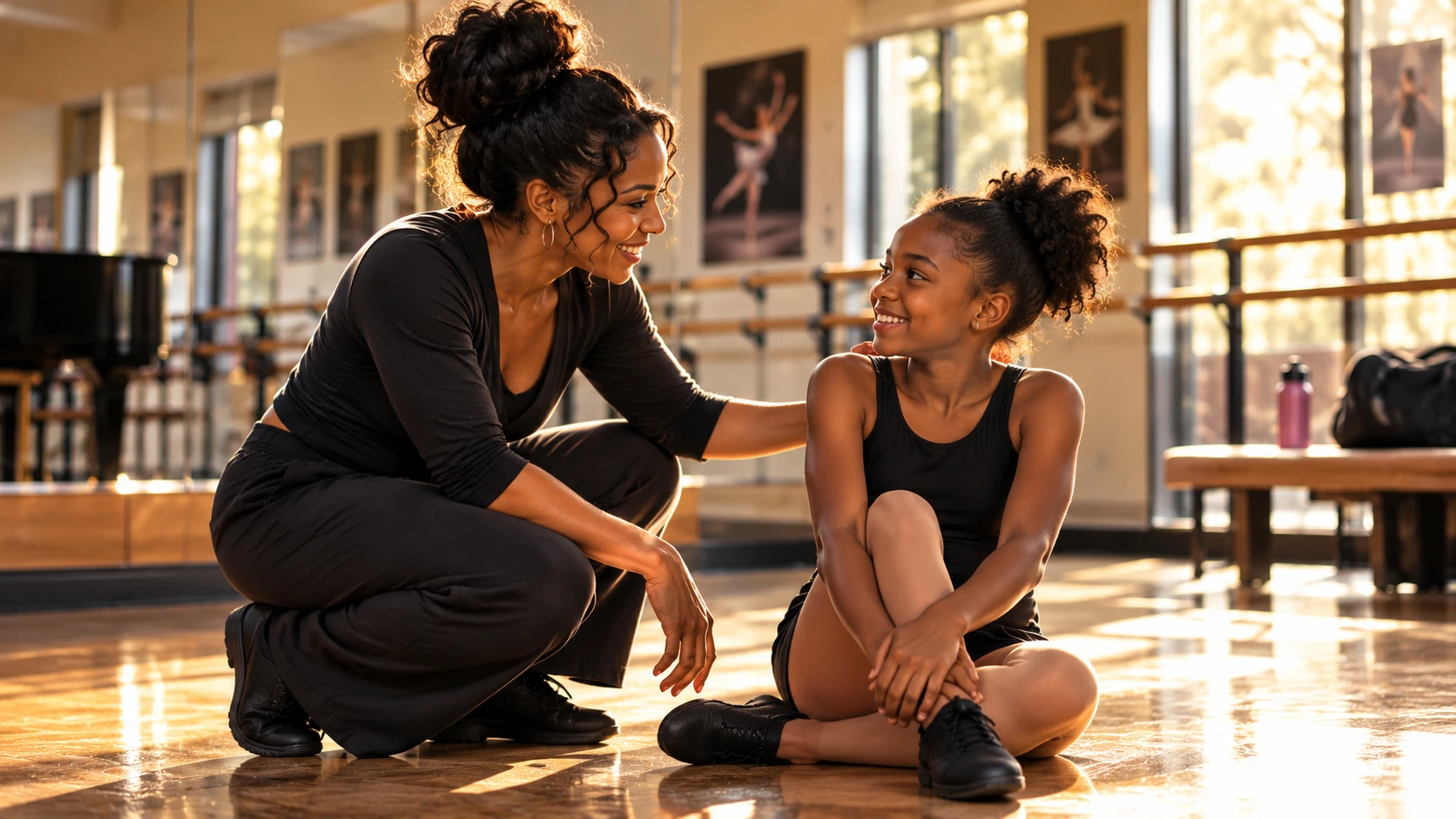
Ms. Renee kneels to talk with Kiara after the showcase. The lesson she shares has nothing to do with choreography. Illustration: Dance Mogul Magazine
Kinder CommunitiesRespect makes every room safer.
Stronger RelationshipsPeople stay close to those who see them.
Greater OpportunitiesGoodwill opens doors titles cannot.
A Compassionate WorldIt starts with one sincere thank-you.
The Saturday showcase at a neighborhood dance school was forty minutes from curtain when eleven-year-old Kiara found the problem. The elastic strap on her jazz shoe had snapped. Her mother was parking the car. Her teacher was cueing music. Kiara sat on the hallway floor and started to cry.
Mr. Earl, the building’s custodian, was rolling his cart past the dressing room. He had worked in that building longer than most of the students had been alive, and he had seen this moment before—so many times that he kept a small sewing kit on his cart. He knelt down, threaded a needle, and stitched the strap back in place in about five minutes. “Go dance,” he said.
Kiara ran to her place in line. She danced beautifully. And she never said a word to him.
About This Story
The people and scenes in this real-world example are illustrative composites drawn from everyday experiences, not reporting on specific individuals. The research cited is real and linked below.
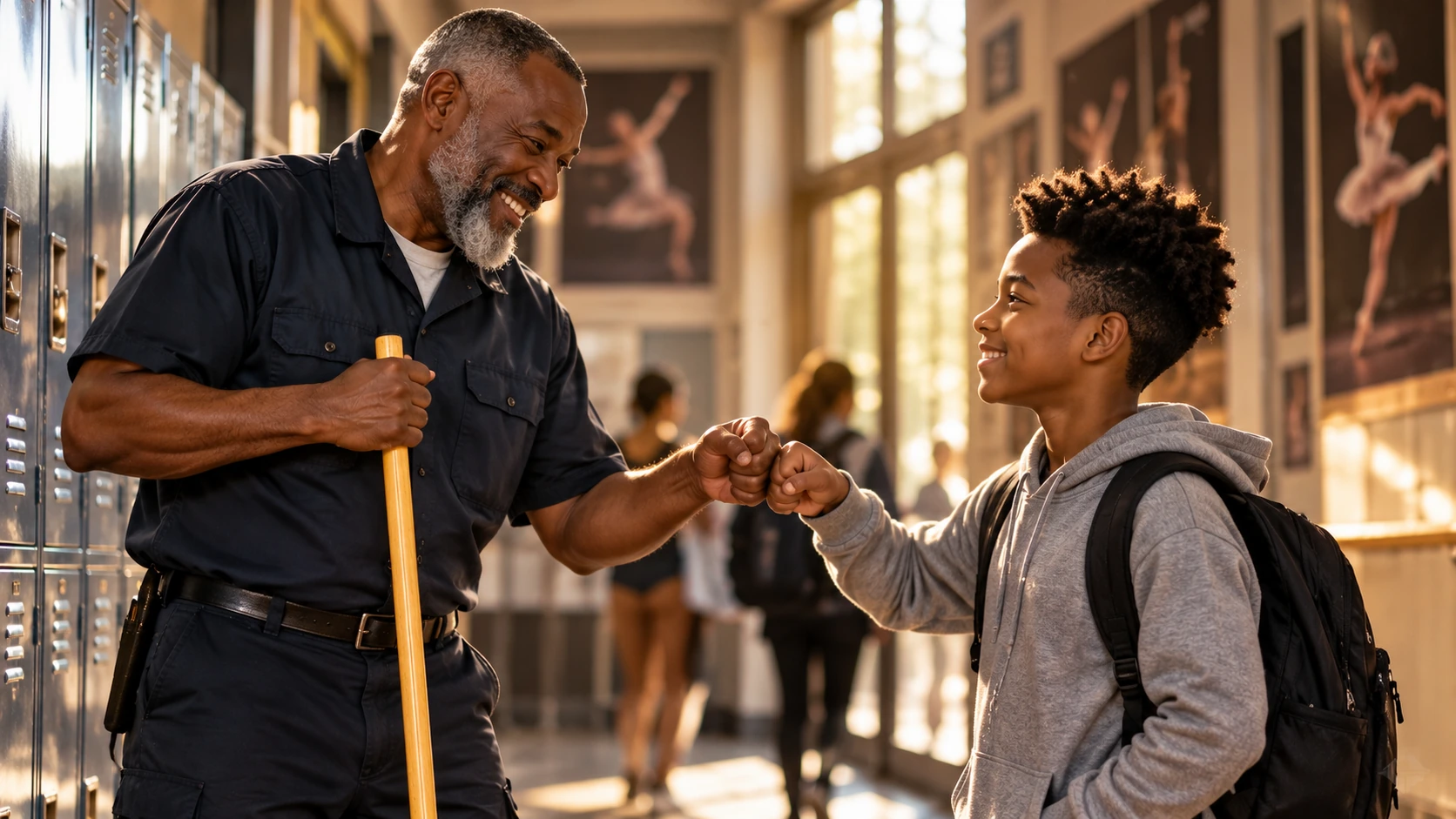
The Monday after the showcase, the thank-yous started. Illustration: Dance Mogul Magazine
A Fresh Perspective
Respect Has No Rank
After the show, Kiara’s teacher, Ms. Renee, knelt beside her and asked a simple question: “Did you thank Mr. Earl?” Kiara shrugged. “He’s just the janitor.”
Ms. Renee did not scold her. She said, “He’s the reason you danced tonight.” Then she asked Kiara to think about who else had helped the showcase happen—and whether she had thanked any of them.
It is easy to say thank you when help comes from someone we see as an authority: a teacher, a director, a person with status. It is harder when help comes from someone we have been taught, quietly, to see as lower. But gratitude is not about rank, title, money, or social status. It is about recognizing the value of a person’s heart, effort, and willingness to make a difference in your life.
What Thank You Sounded Like
The following Monday, Kiara found Mr. Earl near the front entrance. She was nervous. She did not know what to say, so she said exactly what happened: “Thank you for fixing my shoe. I wouldn’t have been able to dance.”
He laughed, told her that her turns looked good from the back of the auditorium, and mentioned that he had been sewing straps for twenty years. Another student, Jalen, overheard and offered a fist bump. Within a week, half the class knew Mr. Earl’s name. A few knew he used to dance himself.
Kiara’s worry—that she would not say it right—is one of the most common reasons people hold back thanks. In a series of experiments published in Psychological Science in 2018, researchers Amit Kumar and Nicholas Epley asked people to write letters of gratitude and predict how the recipients would feel. Writers consistently underestimated how happy and surprised recipients would be, overestimated how awkward the moment would feel, and worried too much about expressing themselves skillfully. The lesson for every dancer and every parent: you do not need perfect words. You need sincere, specific ones.
“
Gratitude is not a response to how much someone has, but to the kindness they choose to give.
DMM Editorial Reflection
The Bigger Picture
Everyone Has Something to Give
Once the students started noticing Mr. Earl, they noticed everything. He salted the front steps before the Saturday class arrived. He held the door for dancers carrying heavy bags. He knew which kids were picked up late, and he found reasons to keep working near the lobby until every one of them was gone.
We all have unique gifts and opportunities to help one another. A smile, a kind word, a helping hand, or a small act of service can lift someone’s day—and sometimes change the direction of a life.
When we receive kindness, no matter who it comes from, gratitude honors the giver’s humanity. It says, I see you. I value what you did. It matters. That acknowledgment builds confidence, strengthens relationships, and creates a culture of respect and belonging.
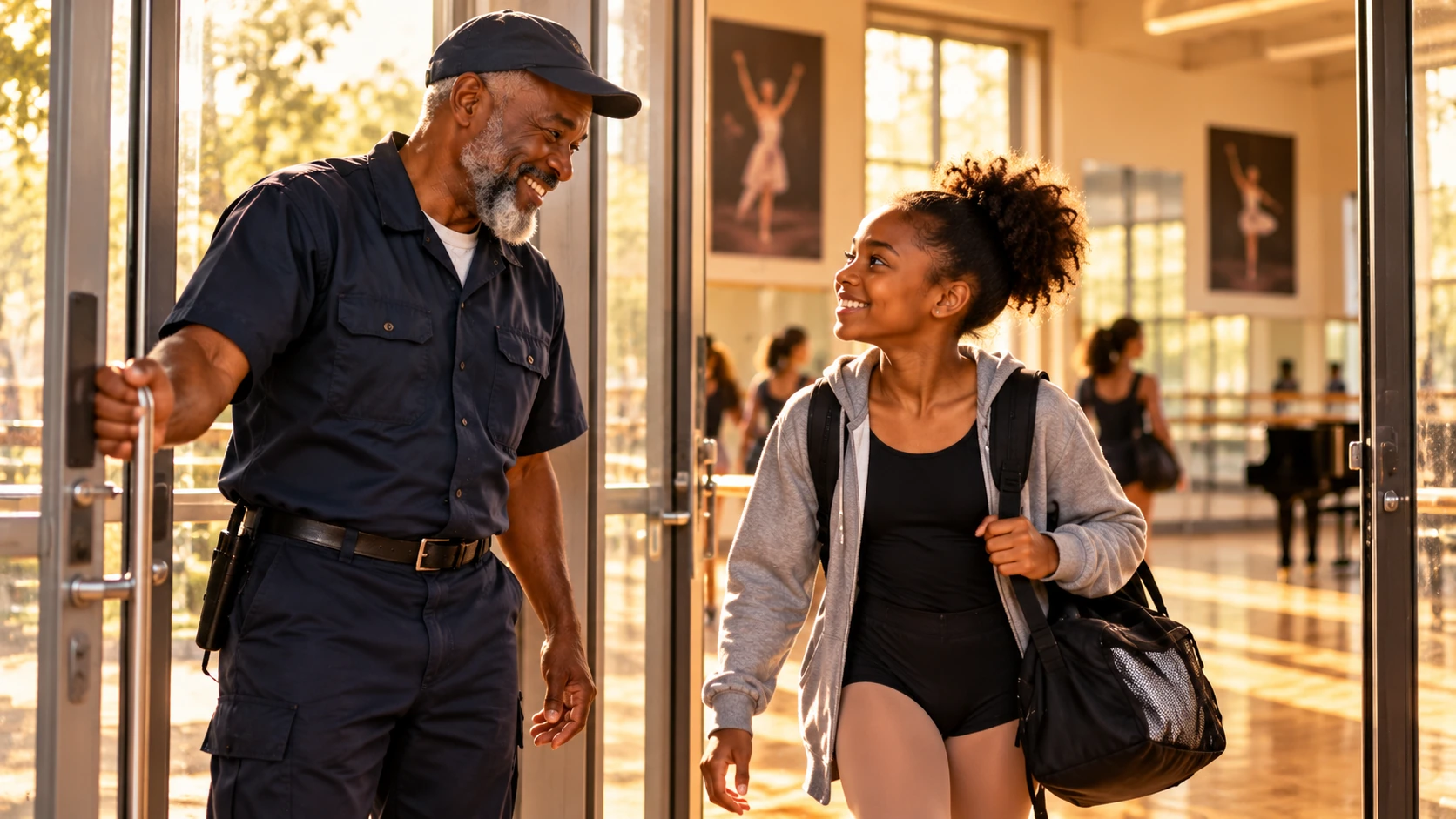
Some of the most important work in a building happens before the music starts. Illustration: Dance Mogul Magazine
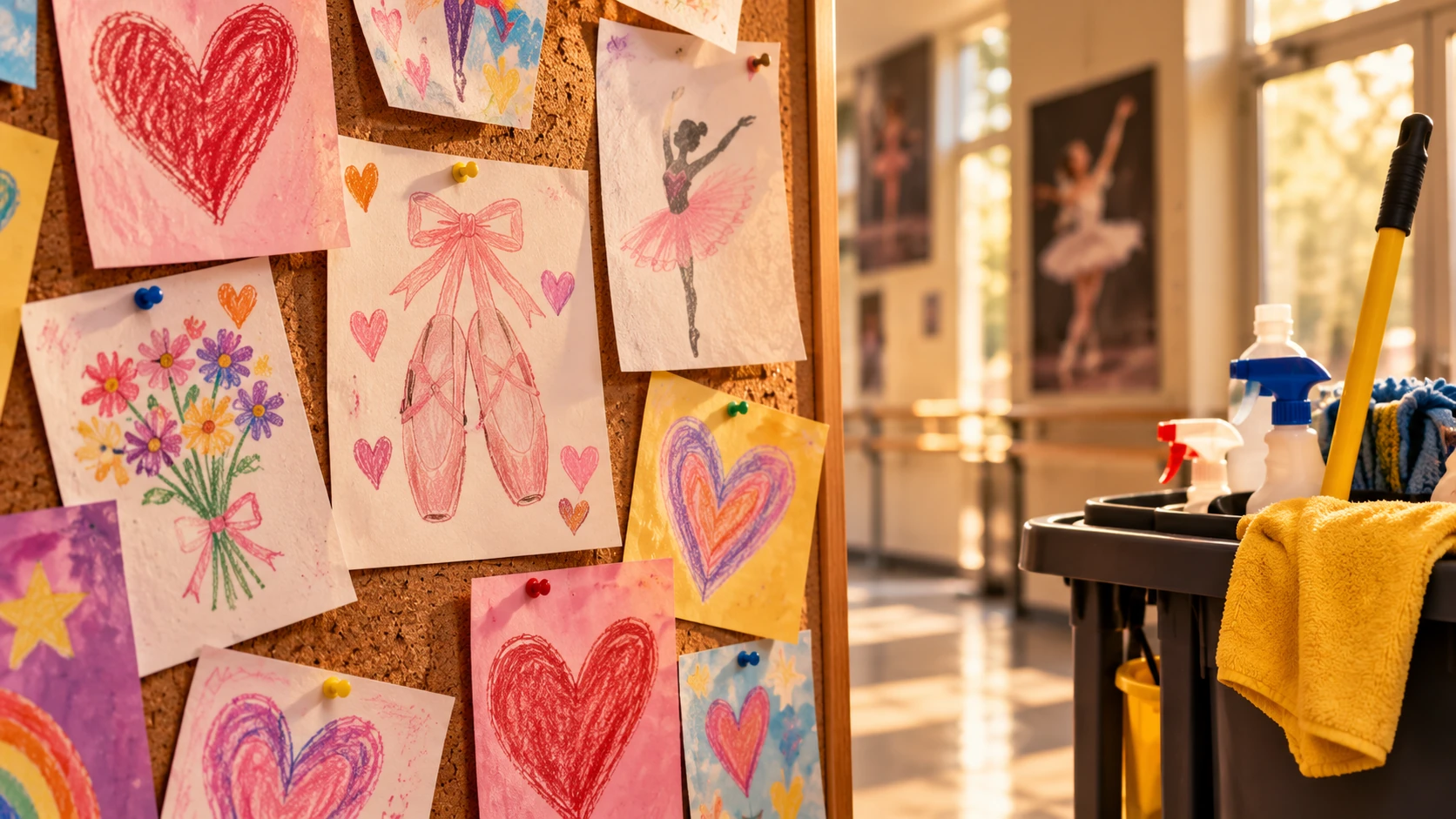
Gratitude made visible: the class’s cards, pinned beside the cart. Illustration: Dance Mogul Magazine
What the Spirit of Gratitude Looks Like
Gratitude in All Forms
Ms. Renee turned the moment into a class project. Every student made a card for someone who helped the showcase happen—the sound technician, the parents who sewed costumes, the volunteer at the door, and Mr. Earl. His cards ended up pinned to the bulletin board beside his cart.
At the spring showcase, the class added one more gesture: a final bow toward the wings, where the crew stood. The spirit of gratitude can show up in simple, everyday ways:
- A genuine “thank you” — a few sincere words go a long way, especially when they name what the person did.
- A smile or kind gesture — let your appreciation be visible, not assumed.
- Listening — give someone your full attention; it tells them they matter.
- Paying it forward — treat others with the same kindness you received.
- Respect and inclusion — value every person, regardless of their role or title.
- Encouragement — acknowledge the effort, not just the result.
- Remembering — follow up and let people know their help made a difference later, too.
How to Teach This in Your Studio, Classroom or Home
- Learn the names of the people who keep the space running. Custodians, front-desk staff, drivers, security officers and volunteers are part of every performance.
- Thank people specifically. Name the action and its effect: “Because you fixed the sound, the whole show stayed on time.”
- Let children watch you do it. Kids learn gratitude far more from what adults model than from what adults require.
- Put the unseen in the credits. List the crew, custodians and volunteers in showcase programs and thank them from the stage.
- Follow up. A note a week later tells someone their help was not forgotten the moment it ended.
The Lesson Kiara Kept
Years from now, Kiara may not remember the choreography from that Saturday. She will likely remember the man who knelt on a hallway floor so a crying eleven-year-old could dance—and the teacher who taught her that he deserved to be thanked.
That is the true spirit of gratitude: not a rule about manners, but a habit of seeing people. Gratitude keeps us humble, connected, and open to the good in others, no matter where they stand in life. Psychologist Robert Emmons, writing for UC Berkeley’s Greater Good Science Center, describes gratitude as an emotion that strengthens relationships because it asks us to see how other people have supported us. In a dance studio, that support is everywhere—if we look.
Why This Matters to DMM
DMM documents dance as a bridge to character, community and purpose. For many young people, the dance studio is the first place they learn discipline, teamwork and respect—long before they learn a professional repertoire.
Stories like this one reflect what we stand for: people before popularity, character before celebrity, and contribution before attention. The dancers we celebrate in our features all had a Mr. Earl somewhere in their story. Teaching the next generation to see those people is how culture is carried forward.
Continue The Spirit of Gratitude Series
- Series Opener
Why Should I Be Grateful to Someone I Consider “Below” Me? - Part 1 · You are reading
The True Spirit of Gratitude: Everyone Has Something to Give - Part 2
Real-World Gratitude Example: When Help Comes From Someone Society Overlooks - Part 3
Real-World Gratitude Example: Gratitude Changes You
Frequently Asked Questions
What is a good example of showing gratitude to someone others overlook?
Learn their name, thank them for something specific they did, and tell them the difference it made. “Thank you for fixing my shoe—I wouldn’t have been able to dance tonight” means more than a general “thanks.”
How can teachers and parents teach children gratitude?
Model it first. Thank the custodians, drivers, and helpers in front of children, use their names, and give kids simple ways to say thank you, such as a card or a dedicated bow at a showcase.
Do I need the perfect words to thank someone?
No. Research by Amit Kumar and Nicholas Epley found that people worry about saying thanks well, but recipients care far more about the warmth of the message than its polish.
Research & Further Reading
This real-world example is an illustrative composite. The research it references is listed here.
- Kumar & Epley — “Undervaluing Gratitude: Expressers Misunderstand the Consequences of Showing Appreciation,” Psychological Science (2018), University of Chicago summary
- Greater Good Science Center (UC Berkeley) — Gratitude Defined
- Read the series opener: Why Should I Be Grateful to Someone I Consider “Below” Me?
Related DMM reading: Cultural Succession: A Message to the Next Generation · Kim Gingras on Taking Risks and Remaining Humble · Mentorship
Dance Mogul Magazine
Inspiring Self-Empowerment Through Dance Culture
© 2026 Dance Mogul Magazine LLC