
Dance Mogul Magazine · Exclusive Interview · Soul Train · Where Are They Now
Christopher Jefferson: From Vine to American Soul
He built an audience one six-second video at a time, then helped tell the story of the show that put soul music and dance on national television. Christopher Jefferson’s 2019 Dance Mogul interview, expanded with the career that surrounded it.
By Dance Mogul Magazine · Originally published March 18, 2019 · Updated and expanded November 2026
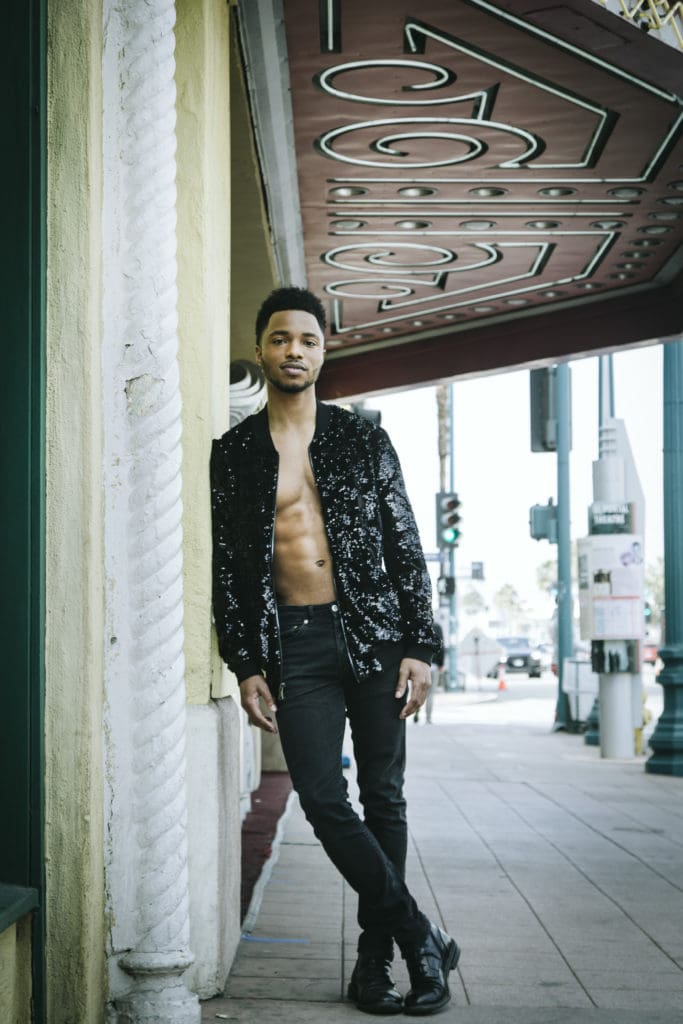
Artist Spotlight · 2026
Christopher Jefferson is an actor, singer and musician from Dallas, Texas. He played Jeffrey “JT” Tucker, the gifted young producer in the fictional trio Encore, across both seasons of BET’s American Soul (2019–2020), the drama about Don Cornelius and the birth of Soul Train. Before that he led the Houston drama 5th Ward and guested on network shows including Black-ish and S.W.A.T.
When Dance Mogul Magazine spoke with Christopher Jefferson in March 2019, he was weeks into the biggest role of his young career. BET had just launched American Soul, a scripted series about Don Cornelius and the creation of Soul Train, and Jefferson was one of its leads. He was 23, a former Vine personality who had moved to Los Angeles only a few years earlier, and he was suddenly part of a story about one of the most important stages American music and dance ever had.
Our original interview captured him at that turning point: the piano lessons, the choir rooms, the social media following, the audition that changed everything. Seven years later, this update puts that conversation back in front of readers with the full arc around it. It traces where his skills came from, what the role asked of him, why Soul Train still matters, and what any young performer can take from the way he built his own path.
At a Glance
Hometown: Dallas, Texas
Disciplines: acting, singing, piano, guitar, dance
First audience: Vine, where he drew hundreds of thousands of followers
Best-known role: Jeffrey “JT” Tucker in American Soul (BET, 2019–2020), 17 episodes
Other credits: 5th Ward, Black-ish, S.W.A.T., Single Parents, Angie Tribeca, Game Shakers, You’re the Worst
Who Is Christopher Jefferson?
Christopher Jefferson was born in Dallas on May 26, 1995, according to his IMDb biography, which describes him as coming from an artistic family that always valued the arts. The profile his publicist supplied to DMM in 2019 adds the detail that shaped everything after it: he grew up in a family of athletes who also embraced the arts, and he was raised to pursue what he loved.
Music came first. He started playing piano at six, then added singing and guitar. In middle school and high school he kept going, joining choir and taking part in plays and musicals. By the time he left high school he was a young performer with several instruments, a stage voice and a comic streak, which is a rare combination to carry into an acting career.
His IMDb biography says he became serious about theatre and film in high school and earned a theatre scholarship to study in Texas. After moving to California he trained with acting coach Aaron Speiser. Within a short stretch he was booking network television.
A Vine Star Before Hollywood
Before casting directors knew his name, an audience did. Jefferson’s natural comedic timing made him one of the more popular personalities on Vine, the six-second video app that shut down in 2017. According to his 2019 press profile, his clips drew hundreds of thousands of followers and millions of views.
He did not treat that following as an end in itself. He moved to Los Angeles at 22 to pursue singing and acting professionally, and by the time DMM interviewed him he had already released three singles to iTunes and Spotify. As he told us, his online fans were more than numbers. He called them his family, and said that without them it would have been very difficult to survive in LA.
Christopher Jefferson Career Timeline
1995
Born May 26 in Dallas, Texas.
Age 6
Begins playing piano; later adds singing and guitar.
Middle and high school
Performs in choir, plays and musicals.
College
Earns a theatre scholarship to study in Texas, per his IMDb biography.
Mid-2010s
Builds a following on Vine with comedy clips that draw millions of views.
2016
Screen credit in Boy Bye (IMDb).
Late 2010s
Moves to Los Angeles at 22, trains with Aaron Speiser and releases three singles.
2018
Plays Ray Ray Kennedy in 5th Ward, the Urban Movie Channel drama that premiered March 2, 2018; guest roles on Black-ish, S.W.A.T., Single Parents and Angie Tribeca.
February 5, 2019
American Soul premieres on BET with Jefferson as series regular Jeffrey “JT” Tucker.
2019
Guest roles on Nickelodeon’s Game Shakers and FXX’s You’re the Worst. Dance Mogul Magazine publishes his exclusive interview on March 18.
May 27 – July 15, 2020
American Soul Season 2 airs, set in 1975. Jefferson’s run as JT totals 17 episodes.
Leading Man Work in 5th Ward
One credit deserves more attention than it usually gets. Before American Soul, Jefferson played Ray Ray Kennedy in 5th Ward, an original drama from director Greg Carter based on his 1997 film Fifth Ward. The series streamed on Urban Movie Channel beginning March 2, 2018, alongside singer Mýa and Carl Anthony Payne II.
The show follows three generations of the Kennedy family in Houston’s Fifth Ward and the pressures that bear down on the neighborhood. Ray Ray is a young man caught between fast money and doing right by the people he loves. His IMDb biography lists it as a lead role. When the series returned for a second season in 2020, the part was played by another actor.
Christopher Jefferson in American Soul
BET’s American Soul told the story of Don Cornelius, played by Sinqua Walls, as he built Soul Train into a national institution. The first season is set in the show’s earliest years, between 1971 and 1973; the second jumps ahead to 1975. Alongside real figures, the writers created a fictional family whose lives ran through the show, and that is where Jefferson came in.
He played Jeffrey “JT” Tucker. BET’s own cast introduction called JT gifted, distrustful and an old soul, a natural-born producer who can play everything from Bootsy to Bach. On screen he forms the trio Encore with siblings Simone and Kendall Clarke, played by Katlyn Nichol and Jelani Winston, while carrying a family on his back at home. Kelly Price, Jason Dirden and Iantha Richardson rounded out the regular cast, and Kelly Rowland guest-starred as Gladys Knight.
The series premiered with back-to-back episodes on February 5, 2019. A second season of eight episodes ran from May 27 to July 15, 2020. Episode listings on TVmaze credit Jefferson in 17 of the show’s 18 episodes, through the season two finale, “So Long, Sucker.”
The role suited him for a reason. JT is a musician first, and Jefferson brought real piano, vocal and movement training to a part that asked for all three. He told DMM the character was sort of like him, but not entirely, and that his singing and dancing background made the performance scenes easier. The emotional weight was the harder part. JT goes through a lot, he said, and he loved the challenge of commanding those emotions.
I was really interested in my character JT. He’s sort of like me but not entirely like me.
Christopher Jefferson to Dance Mogul Magazine, 2019
“Time for a look into BET’s new original series AMERICAN SOUL,” from the official Soul Train YouTube channel. This video ran with the original 2019 Dance Mogul Magazine feature.
A clip from episode 102: Simone and Kendall’s Soul Train audition lands while JT faces trouble at home. Official Soul Train YouTube channel.
Why Soul Train Still Matters
To understand what Jefferson stepped into, start in Chicago. Don Cornelius was a radio newsreader and reporter who had been promoting and emceeing touring concerts he called “The Soul Train.” In 1970 he took the idea to television, and Soul Train premiered on Chicago’s WCIU-TV on August 17, 1970, as a live weekday show. The following year, support from Chicago-based Johnson Products Company helped carry it into national syndication, beginning October 2, 1971.
It ran in syndication until March 25, 2006, one of the longest-running syndicated programs in American television history. For 35 years it brought soul, R&B and later hip-hop artists into living rooms across the country. As BlackPast notes, it arrived when there were few outlets for popular Black culture in the United States.
For dancers, Soul Train was more than a music show. The dance floor and the famous line were where new movement was seen first, and where many careers began. DMM has documented that history for years, from the Soul Train Dancers to waacking pioneer Tyrone “The Bone” Proctor and locking innovator Don “Campbellock” Campbell.
American Soul brought some of that history back to life with dancers who knew it. In our exclusive interview with Ricky Evans, the locking dancer described how he and fellow members of The Hood Lockers drove to Atlanta on a week’s notice to audition for a recreation of one of The Lockers’ famous Soul Train performances. Their crew co-founder, Marcus Tucker, was cast as Don Campbell. Jefferson’s JT and those real-life tributes lived side by side in the same series.
From Vine to Prime Time: Two Ways to Find an Audience
There is a reason this story is worth telling now. Christopher Jefferson stands at the meeting point of two very different ways of being discovered. The performers who danced on Soul Train reached the nation because a producer built them a stage and a syndicator carried it. Jefferson’s generation learned to build the stage themselves, on a phone, one clip at a time.
In DMM’s view, his casting brought those two eras together. A performer whose first audience came from a social app was hired to help dramatize the television program that first gave many young dancers a national audience. The tools changed completely. The need to be seen, and the work required to be ready when you are, did not.
| The Soul Train era | The social media era |
|---|---|
| A national television stage | Digital platforms anyone can post to |
| Live dance floors and the Soul Train line | Short-form performance and comedy videos |
| A studio audience | Online communities of followers |
| Producers and syndicators decide who is seen | Creators build their own audience |
| National exposure, week after week | Potential global reach overnight |
Neither path is easy, and neither replaces training. Jefferson’s own story makes the point: the following got attention, but the piano lessons, the choir rooms, the theatre scholarship and the acting coach are what let him deliver once the audition came.
The 2019 Dance Mogul Exclusive Interview
What follows is Dance Mogul Magazine’s original interview with Christopher Jefferson, published March 18, 2019, during the first season of American Soul. It is reproduced as it ran.
Dance Mogul: How did you balance all your talents, childhood and education growing up?
Christopher Jefferson: It was pretty difficult. I had a lot of talent but trying to strictly focus on school was tough. Especially since you have to do a lot of work in Pre-Ap/Ap classes.
Dance Mogul: What was it like growing up in a talented family, were there any pressures?
Christopher Jefferson: There weren’t really any pressures! My family is big on doing what you love just as long as it pays the bills
Dance Mogul: Who were some of your inspirations growing up?
Christopher Jefferson: Denzel Washington. Michael Jackson. Bruce Lee.
Dance Mogul: When did you know you wanted to take entertainment seriously?
Christopher Jefferson: Definitely when working became my meditation
Definitely when working became my meditation
Christopher Jefferson to Dance Mogul Magazine, 2019
Dance Mogul: How did social media play a role in your journey?
Christopher Jefferson: Social Media helped me grow my fanbase as a recording artist. I also met some pretty cool people in the industry through it. Without my fanbase (my family), it would have been very difficult to survive in LA.

Dance Mogul: How did the American Soul role come about?
Christopher Jefferson: My agent Robin Nassif sent me the audition containing all the details. I was really interested in my character JT. He’s sort of like me but not entirely like me.
Dance Mogul: What does it mean to you to be a part of and work on a legacy such as Soul Train?
Christopher Jefferson: It’s definitely an honor. I mean we’re talking about history here. My parents grew up watching this show. Soul Train’s energy and purpose are deeply rooted in me. I’m very grateful.
Dance Mogul: What was it like preparing for the performance scenes? Did your background in singing and dancing help prep you for this role?
Christopher Jefferson: Oh, I definitely had to put the work in. JT goes through a lot as a person so I loved the challenge of commanding all the emotions that went with it. My background in singing and dancing only made things easier.
Dance Mogul: What advice do you have for up and coming entertainers that are pursuing their dreams?
Christopher Jefferson: Everyone has a dream. Not everyone wants to work for it. There’s no correct path or road map to this but if it’s your purpose, find a way
There’s no correct path or road map to this but if it’s your purpose, find a way
Christopher Jefferson to Dance Mogul Magazine, 2019
Dance Mogul: Is there anyone you would like to thank for helping you on your journey this far?
Christopher Jefferson: God. My mom. My dad. My brother. My wonderful friends My wonderful agent My hard-working manager.
Away from the camera, his 2019 profile noted, he kept to a demanding routine of cardio, weight training and regular yoga, and counted photography, fashion and cooking among his passions.
Jefferson joins the AfterBuzz TV panel to talk through American Soul Season 1, Episode 5, “Fault Lines.” From the AfterBuzz TV Dramas YouTube channel.
Where Is Christopher Jefferson Now?
This is where the record thins out, and DMM would rather say so than fill the gap. As of November 2026, Jefferson’s IMDb credits end with the American Soul season two finale in July 2020. We did not find reliable reports of new screen roles, music releases or dance projects since then.
That is not the same as saying he stopped working. Many performers move into stage work, music, teaching, writing or careers outside the spotlight without a press release, and a quiet public record says nothing about the quality of a life. What the record does show is a young artist who turned a handful of skills and an online following into a series-regular role on a national network before he turned 25.
Seven years after our first conversation, Dance Mogul Magazine would welcome the chance to hear the next chapter in his own words.
What Young Entertainers Can Learn From Christopher Jefferson
Develop more than one skill. Piano, guitar, singing, theatre and comedy each opened a different door for him, and American Soul asked for several of them in one role.
Build your own audience. Vine gave him a fanbase before the industry did. Treated seriously, social media can be a professional resource instead of a pastime.
Keep training anyway. Popularity online did not replace the theatre scholarship or the acting coach. Preparation is what lets you deliver when the call comes.
Know the history you are part of. He understood that playing a role inside the Soul Train story meant carrying something his parents grew up with. Knowing who opened doors for earlier generations gives today’s work its weight.
Find your own route. His advice in 2019 still stands: there is no correct path or road map, but if it is your purpose, find a way.
Why It Matters to DMM
Dance Mogul Magazine exists to tell lived stories that help readers become better versions of themselves. Christopher Jefferson’s story is about self-direction. He did not wait to be discovered. He practiced, performed, built an audience, moved across the country and put in the work, so that when an agent sent over an audition for a show about Soul Train, he was ready.
It also strengthens one of DMM’s longest-running threads. Our Soul Train coverage follows the dancers, crews and pioneers who made that floor famous, and pieces like our profiles of Rosie Perez and Darrin Henson show how dance stages launch lasting careers. Jefferson’s interview adds a rare perspective: a performer from the social media generation stepping inside that history to help retell it. Read more first-person stories in our Exclusive Interviews.
Continue the Soul Train Story
Explore DMM’s preservation work on The Legacy, meet the Soul Train Dancers, read how The Lockers reached the American Soul screen in our Ricky Evans interview, and browse every style in the Dance Styles Hub.
The Story Continues
Christopher Jefferson’s 2019 interview is a snapshot of a young artist at the moment his work met a much bigger story. He came to Los Angeles with a following, a set of skills and a belief that work could be a kind of meditation. He left a mark on a series that honored one of the most influential stages in American music and dance.
For readers chasing their own breakthrough, that may be the lasting lesson. Platforms rise and disappear. Vine is gone, and Soul Train ended its run two decades ago. The discipline behind the performance, and the respect for the people who came before, travel with you to whatever stage comes next.
Sources
Dance Mogul Magazine, “Christopher Jefferson | American Soul,” March 18, 2019, including the press profile and photographs by Annie Shak supplied for the feature.
IMDb, Christopher Jefferson biography and credits.
BET, Take a Sneak Peek at the Cast of American Soul.
TVmaze, Christopher Jefferson episode credits.
Next TV, UMC to Launch Original Drama Series in March (5th Ward).
Encyclopaedia Britannica, Soul Train.
BlackPast, Soul Train (1970–2006).
Wikipedia, American Soul (season and air dates).
© Dance Mogul Magazine. Interview originally published March 18, 2019. Photographs by Annie Shak.