
DMM Cultural History Feature
Before Hollywood Sold the Movement: How Black Education, Hillman and Dance Helped Shape Popular Culture
From HBCU classrooms and a Thursday-night step competition to music videos, box-office dance films and the phone in your hand: the teachers, choreographers and dancers who turned movement into one of popular culture’s defining languages, and why Hillman’s return brings the story home.
By Dance Mogul Magazine | Cultural History Feature | September 2026
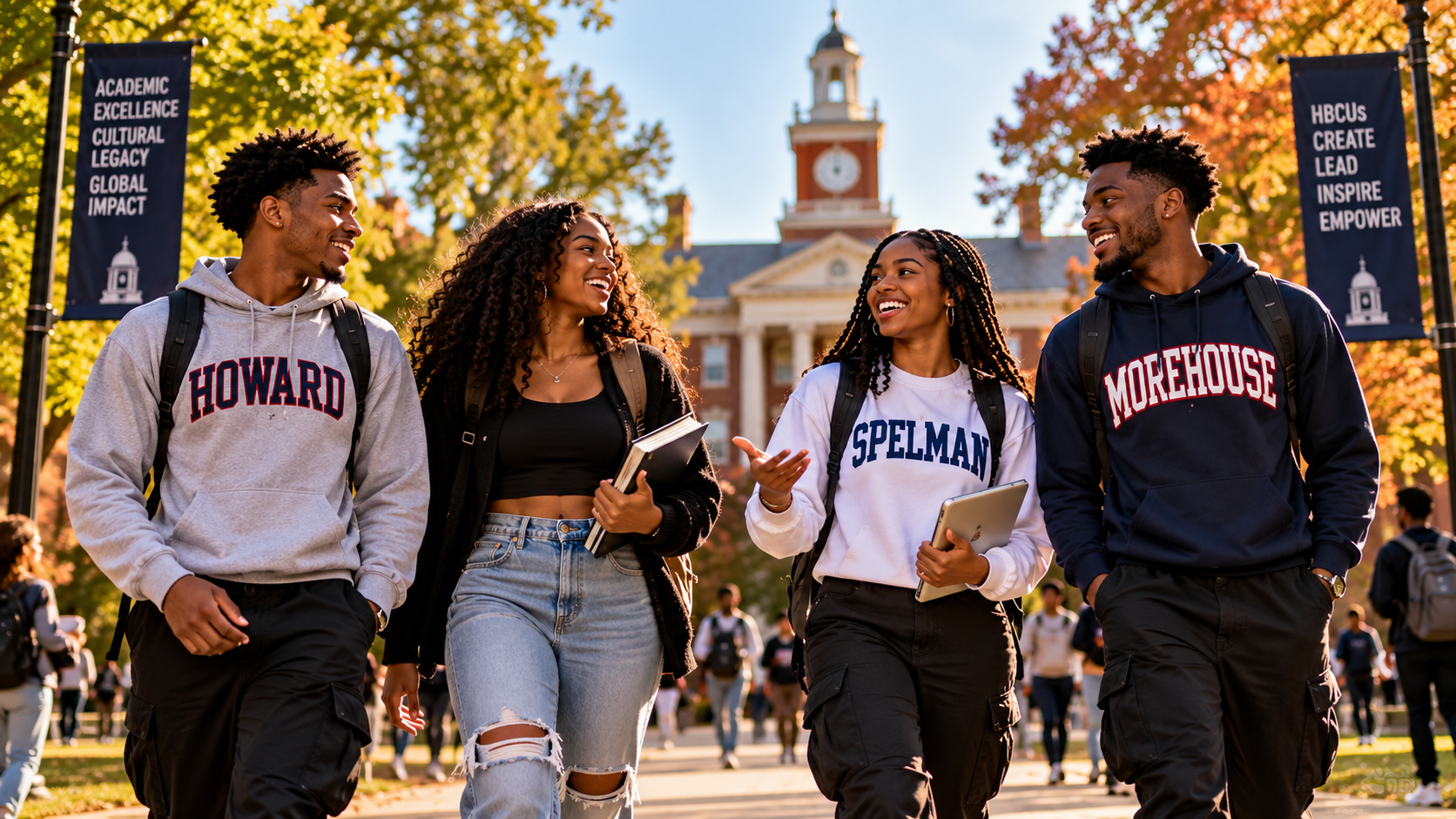
From the classroom to the world. Illustration: Dance Mogul Magazine.
Before Hollywood learned that dance could sell movie tickets, before music videos turned choreographers into architects of the image, and before a routine could cross the world from a phone in a teenager’s bedroom, Black artists needed somewhere to learn. They needed a place to rehearse, experiment and fail, and to imagine themselves into professions that were not always ready to welcome them.
For generations, education was part of that doorway. On historically Black college campuses, classrooms, theaters, rehearsal halls, marching fields and fraternity and sorority traditions made room for artistry and intellect to grow side by side.
Then the artists carried what they learned off campus: onto stages, onto television, into music videos, into Hollywood, and eventually around the world.
This is Dance Mogul Magazine’s account of that journey. It isn’t a list of dance movies or a nostalgia piece. It follows the people entertainment coverage usually leaves behind the stars: the teachers, choreographers, dancers and institutions. At every turn we ask the questions that matter most to our readers. Who created that movement? Who taught it? Who performed it? Who got the credit? And where did those dancers go next?
The story is worth your gratitude. Almost everything you love about how popular culture moves passed through somebody’s classroom first.
The Journey at a Glance
Classroom → HBCUs and Black arts institutions build training, audiences and traditions
Screen → Soul Train, Fame, School Daze and A Different World carry them into American homes
Video → Choreographers become the architects of the MTV image
Box office → Dance films earn hundreds of millions of dollars worldwide
Phone → Dancers distribute their own work and fight for credit
Home → Hillman returns, built with HBCU hands
Part I
Before the Spotlight: The Classroom Was the First Stage
The story starts earlier than most people expect. In 1871, a group of students at Fisk University in Nashville organized as the Fisk Jubilee Singers. According to the Smithsonian’s National Museum of African American History and Culture, their tours “raised enough money to save their struggling college, while also introducing the African American spiritual to the world.” Performance and education were bound together from the beginning, and the art literally kept the school alive.
The museum also records a plainer truth. “During the Jim Crow Era, when many concert venues were off-limits for Black people, HBCUs welcomed Black audiences into musical performances that would have been inaccessible otherwise.” For much of the twentieth century, the Black college campus was a training ground and a public stage at once.
At Howard University in Washington, D.C., that stage took formal shape. Howard began granting academic credit for public speaking in 1874. A College Dramatic Club followed in 1909, and in 1919 Thomas Montgomery Gregory formalized the Dramatic Art curriculum and named the troupe the Howard Players. By Howard’s own account, in 1949 the Players became “the first American university theatre group invited to tour Europe.” Dance grew up inside the theater program as a minor and was approved as a major by 1993. The alumni list reads like a history of Black performance: Roxie Roker, Phylicia Rashad, Debbie Allen, Taraji P. Henson and Chadwick A. Boseman.
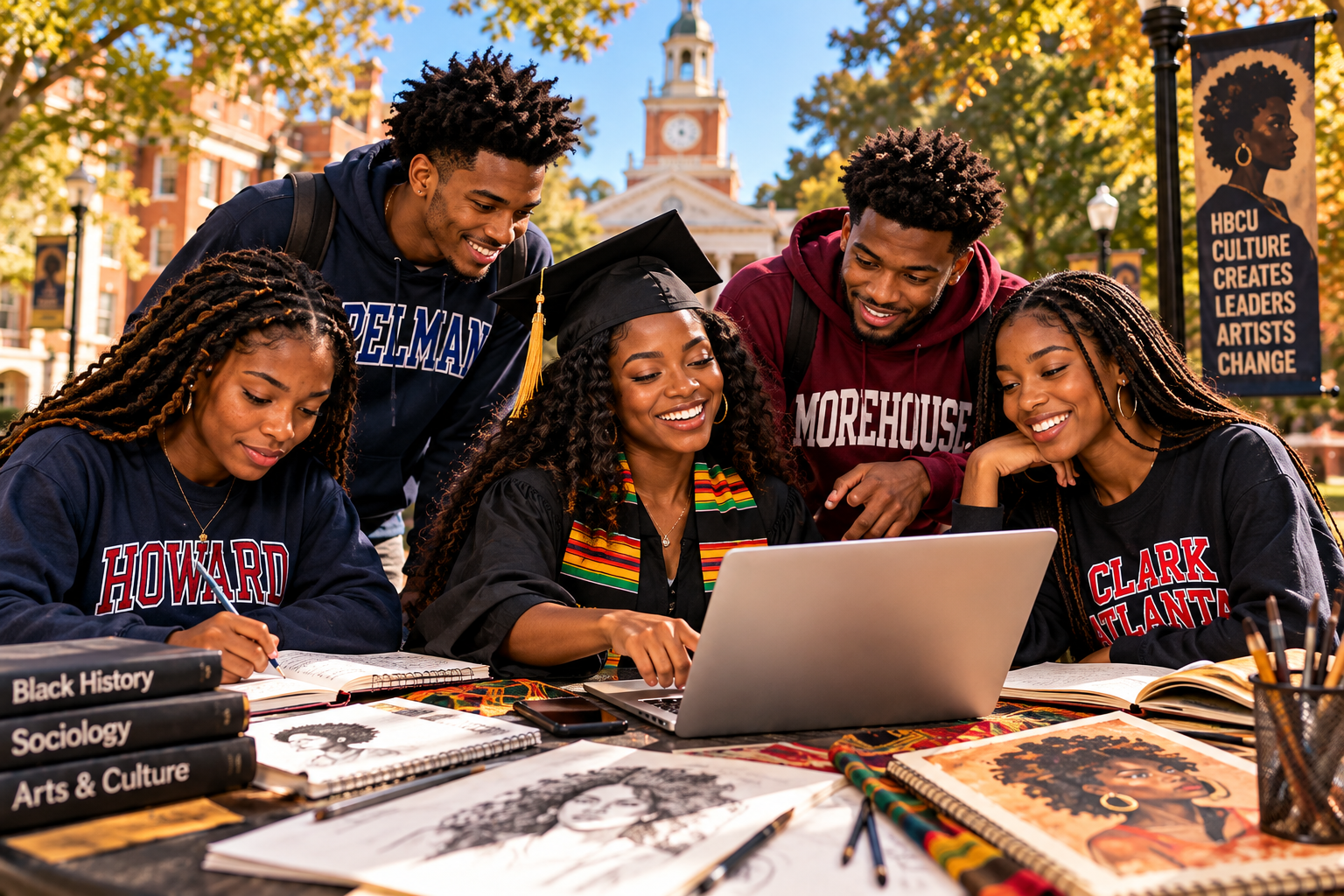
Classroom, library, studio: where the story begins. Illustration: Dance Mogul Magazine.
Movement lived outside the theater too. Five of the nine historically Black Greek-letter organizations, the Divine Nine, were founded at Howard: Alpha Kappa Alpha, Omega Psi Phi, Delta Sigma Theta, Phi Beta Sigma and Zeta Phi Beta. Their traditions helped give the world stepping, a percussive, synchronized art form that uses the body as a drum and the voice as a second instrument. Folklorist Elizabeth C. Fine, whose book Soulstepping documents the tradition, describes a practice developed by African American fraternities and sororities that blends “synchronized percussive movement, singing, speaking, chanting, and drama.” Scholars still debate exactly when the modern step show took shape. It came together in the second half of the twentieth century from call-and-response, drill, and the choreography of Black vocal groups. Howard’s homecoming step show has run every year since 1976.
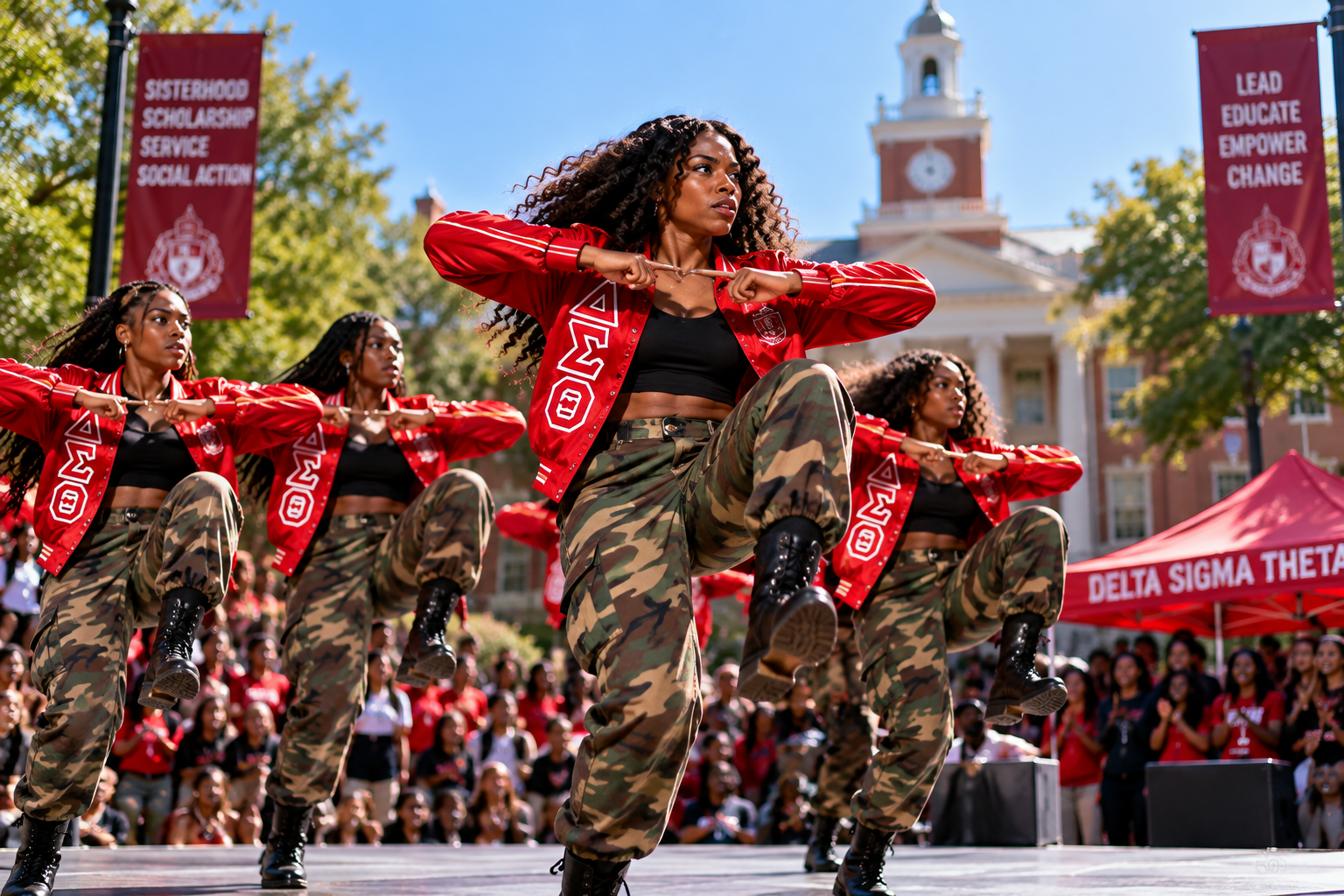
Stepping: the body as drum, the voice as second instrument. Illustration: Dance Mogul Magazine.
On other campuses the marching band became its own school of movement. At Florida A&M, director William P. Foster’s band “combined traditional military band style with popular music,” the Smithsonian notes. HBCU bands served as “training grounds for the next generation of music teachers.”
A necessary distinction. Stepping is not a style of hip-hop dance, and it did not come from Hollywood. It belongs to Black collegiate and fraternal life, with its own history, values and rules. Throughout this feature we keep stepping, breaking, locking, popping, krump and studio choreography distinct, because each has its own origin and its own communities.
Part II
When Education Became Possibility: Debbie Allen and the Howard Doorway
Few careers show the doorway more clearly than Debbie Allen’s. As a child in segregated Houston she was turned away from ballet training because she was Black. As a teenager, the North Carolina School of the Arts had her demonstrate technique for other applicants and then rejected her, saying she lacked “the right type of body for ballet.”
She followed her sister Phylicia to Howard. There she met Mike Malone, a choreographer and director who taught musical theater at the university. The Washington Post later counted Allen among the performers who built professional careers after studying under him. Malone’s own story shows the same pattern of education creating opportunity. In 1968 he and Peggy Cooper Cafritz started a Workshop for Careers in the Arts, which grew into Washington’s Duke Ellington School of the Arts in 1974, with Malone as its first artistic director.
Allen graduated cum laude in 1971. Fifty-five years later, standing before Howard students at a 2026 screening, she was asked what she had fought hardest to get right about Black college life. Her answer was one sentence long.
I didn’t have to fight at all, because I went to Howard University.
— Debbie Allen, Howard University, September 20, 2026 (The Dig at Howard University)
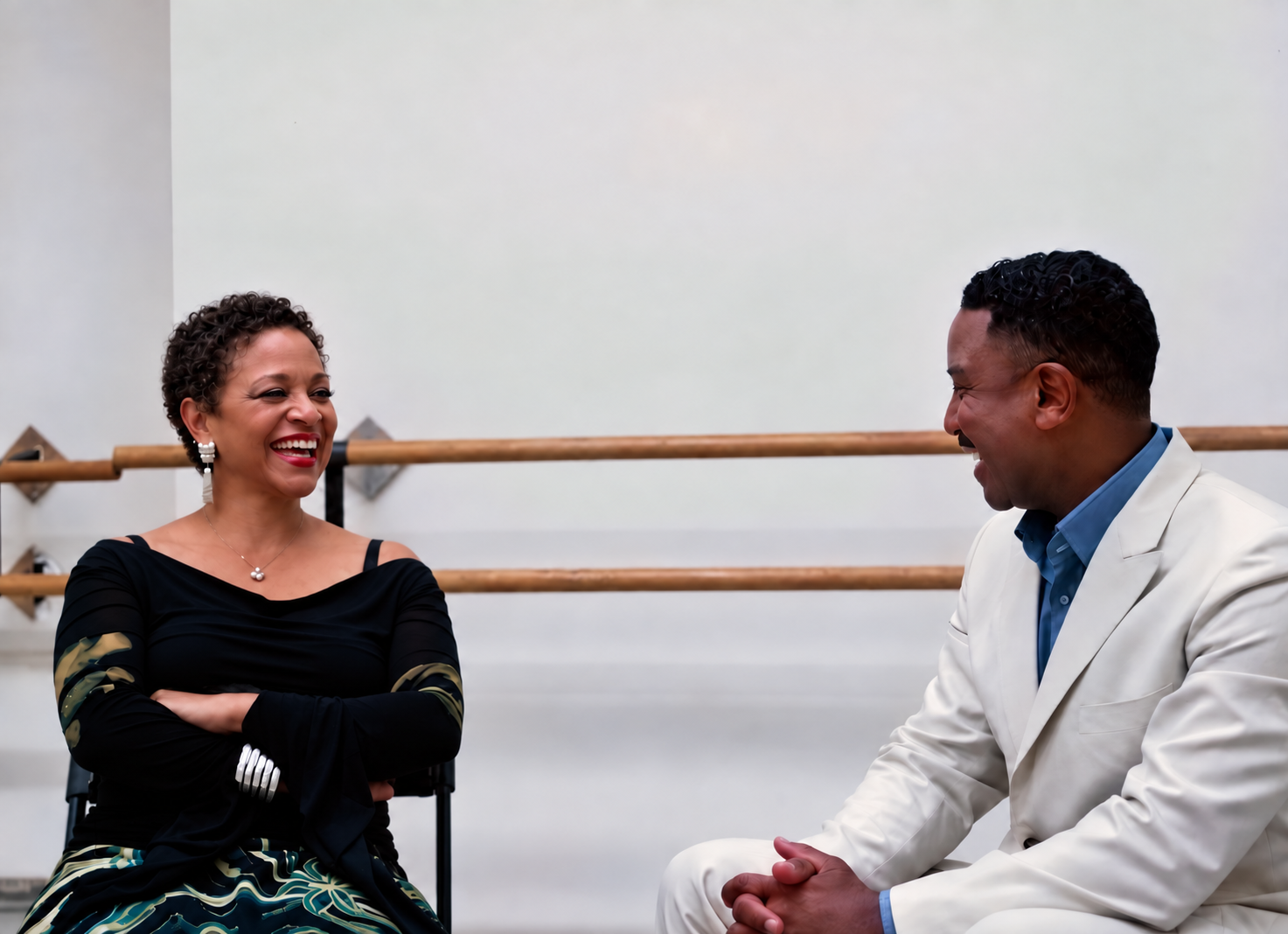
Debbie Allen in conversation with Dance Mogul Magazine. Photo: DMM Archive.
That confidence would matter enormously, because Allen was about to carry what she knew into the most powerful medium of her time. (We trace her full journey in Debbie Allen Returns to Hillman and The Early Beginnings of a Dance Legend.)
Part III
Television Becomes a Dance Classroom
Long before Hollywood built a genre around it, television was already teaching America how Black America moved.
Soul Train: A Weekly Lesson in Style
Soul Train debuted on Chicago’s WCIU in August 1970 and went into national syndication on October 2, 1971, with Don Cornelius as creator and host. It ran until 2006. Every week the Soul Train Line gave dancers a runway, and young viewers everywhere studied it the way music students study scores.
The dancers became teachers to a nation. Don Campbell developed locking in Los Angeles, recorded “The Campbellock” in 1972 and formed The Lockers. According to his published biography, he was removed from Soul Train in 1973 “for requesting that performers be paid.” Remember that detail, because this story comes back to it. Soul Train dancers Jeffrey Daniel and Jody Watley became members of the group Shalamar. In 1982 Daniel performed the backslide, the step now known worldwide as the moonwalk, on Britain’s Top of the Pops. Michael Jackson sought him out, and Daniel later co-choreographed the “Bad” and “Smooth Criminal” videos with Vincent Paterson.
A girl in Los Angeles was watching all of it. Fatima Robinson, who would become one of the most important choreographers of the music-video era, told the Television Academy Foundation that she learned by recreating Soul Train and Solid Gold routines with her sisters. Television had become a dance classroom.
DMM has honored this era before, including Thelma Davis, the unsung Soul Train dancer and Tyrone “The Bone” Proctor.
Fame: When the Dance Teacher Became the Star
In 1980, Alan Parker’s Fame, set at New York’s High School of Performing Arts with choreography by Louis Falco, won Academy Awards for Best Original Score and Best Original Song. Debbie Allen had a small role as dance teacher Lydia Grant. When NBC turned Fame into a series in 1982, Allen became its center: star, choreographer, director and eventually producer. The show ran on NBC and then in first-run syndication until 1987, 136 episodes in all, and Allen won Emmy Awards for its choreography.
Look at what America was watching. The most visible dance story on television wasn’t about a battle or a crew. It was about a school. Education and training sat at the heart of the most influential dance story of the early 1980s, years before the movies turned to battles.
Part IV
Black College Life Reaches the Screen: School Daze and A Different World
Two works arrived within months of each other, and together they carried the Black college campus to national audiences.
School Daze (1988)
Spike Lee drew on his years at Morehouse College for School Daze, released by Columbia Pictures on February 12, 1988, through his 40 Acres and a Mule Filmworks. Set at the fictional Mission College during homecoming weekend, it confronted colorism, class, fraternity culture and campus politics head-on. The AFI Catalog records that Atlanta University Center administrators restricted filming out of “concern about the film’s portrayal of black colleges.”
Its movement was created by choreographer Otis Sallid, with Dyane Harvey as assistant choreographer. The film’s step sequences and E.U.’s “Da Butt,” which reached No. 1 on Billboard’s R&B chart, put fraternity movement and Black social dance on movie screens nationwide. The film earned $14.5 million domestically on a final budget of about $6.1 million. A North Carolina state history account notes that stepping became nationally prominent after School Daze.
A Different World (1987–1993)
NBC’s A Different World premiered on September 24, 1987, as a spinoff of The Cosby Show. After its first season, Debbie Allen took over as producer and director and rebuilt fictional Hillman College from the inside out, drawing on what she had lived at Howard. She went on to direct 83 of the series’ 144 episodes. Greek life, homecoming, activism, romance, class and colorism came into American living rooms every Thursday night.
There was a telling crossover. Jasmine Guy and Kadeem Hardison, the show’s Whitley and Dwayne, had both appeared in School Daze. The film and the series weren’t competing to be first. They were two windows into the same world, opening at the same moment.
Part V
When Hillman Stepped
On Thursday, December 1, 1988, NBC aired “A Stepping Stone,” Season 2, Episode 7 of A Different World. It was directed by Debbie Allen and written by Cheryl Gard, and Nielsen figures put its audience at 36.1 million viewers.
The plot is simple and very Whitley. The women of Gilbert Hall are preparing for an inter-dorm step competition, and Whitley Gilbert appoints herself choreographer. Her perfectionism drives her teammates away until Jaleesa removes her from the squad. Then the line takes the floor, and for many viewers it was the first step routine they had ever seen.
Setting the record straight. The competition in “A Stepping Stone” is between dormitories, not fraternities or sororities, so the episode borrowed Greek step culture rather than depicting a Greek show. We could not find a published credit naming who choreographed or coached the routine. Until one surfaces, DMM will not guess. If you taught that step, we want to hear from you.
One small thread ties the episode to what came next. Dancer Lisa Marie Todd stood in the Gilbert Hall line. Less than two years later she was an original member of In Living Color’s Fly Girls.
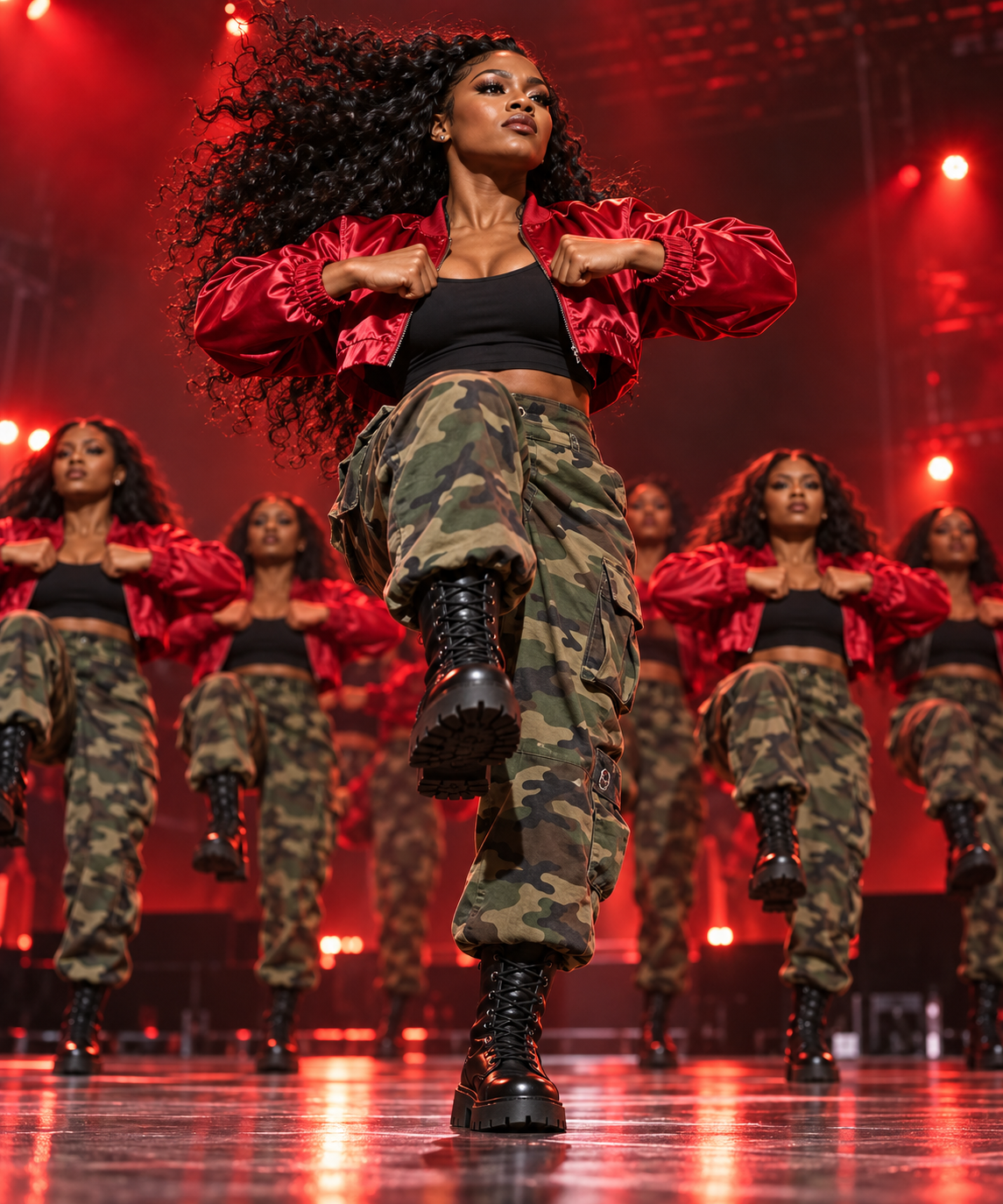
Precision, sound and sisterhood: the language Hillman carried into American homes. Illustration: Dance Mogul Magazine.
Somewhere in America, a young dancer was watching, and she did something a lot of us did in the VCR era.
That changed something in me, being able to see myself on screen.
— Felicia Pride, creator and showrunner of Netflix’s A Different World, to the Associated Press (September 2026)
According to the AP, Felicia Pride watched the show with her family on Thursday nights and became captivated by a step-show episode. She had never seen stepping, so she recorded it on a VCR and played it back until she had learned the routine. The AP doesn’t name the episode; “A Stepping Stone” is the series’ best-known step episode and the likeliest match. Hold on to her story. We’ll come back to it.
Part VI
The Music Video Revolution: Choreographers Become Architects
When MTV made the music video the center of pop culture, the choreographer became one of the most important people on the set. The people who built those images deserve their names in lights.
Michael Peters and the Blueprint
Brooklyn-born Michael Peters studied with Talley Beatty, Alvin Ailey and Bernice Johnson Reagon. He won the 1982 Tony Award for Dreamgirls, shared with Michael Bennett, and then choreographed Michael Jackson’s “Beat It” and “Thriller.” “Thriller” won the MTV Video Music Award for Best Choreography in 1984, credited to Jackson and Peters. Peters said he came from a Brooklyn housing project, and that seeing “something I could relate to translated into musical terms” convinced him this was work he could do. Read DMM’s full study of him: Michael Peters: The Structural Genius Who Built the MTV Aesthetic, and The Choreographers Behind Michael Jackson.
The Janet Era and the Rise of the Named Choreographer
Paula Abdul won the VMA for Best Choreography in 1987 for Janet Jackson’s “Nasty.” In 1990 the award went to “Rhythm Nation,” co-choreographed by Janet Jackson and Anthony Thomas, whose Rhythm Nation 1814 film also won the Grammy for Best Long Form Music Video. The next two years, Frank Gatson, Travis Payne and LaVelle Smith Jr. won back-to-back for En Vogue’s “My Lovin’” and “Free Your Mind.”
Fatima Robinson: Clubs Were Her Classroom
The girl who learned from Soul Train grew up to shape the 1990s. Fatima Robinson had no conservatory pedigree. She danced in Los Angeles hip-hop clubs, and she described them to the Television Academy Foundation with reverence: “Dancing felt like where I was closest to God. It was my church, the clubs… clubs were my classroom.” At 21 she choreographed Michael Jackson’s “Remember the Time” video, released in 1992, and went on to shape the look of Aaliyah’s videos. She won the 2002 VMA for Mary J. Blige’s “Family Affair.”
Her turning point came from another Soul Train alumna. Rosie Perez gave her advice that every young dancer reading this should write down:
You have to call yourself a choreographer, and you have to charge for that service.
— Rosie Perez’s advice, as recalled by Fatima Robinson (Television Academy Foundation)
In Living Color and the Fly Girls
Perez knew what she was talking about. A Soul Train talent scout had discovered her in a Los Angeles club, and from 1990 she choreographed the Fly Girls, the in-house dance troupe of Fox’s In Living Color, earning three Primetime Emmy nominations. The troupe became a launchpad. Original members included Carrie Ann Inaba, Deidre Lang and Lisa Marie Todd. Jennifer Lopez joined in the third season. Laurieann Gibson, a Toronto-born, Ailey-trained dancer, was a Fly Girl in 1993 and 1994. The road from ensemble dancer to cultural figure now ran through prime time.
Part VII
Hollywood Discovers the Audience
The First Wave: 1984
Hollywood had already tested the waters. In May 1984, Cannon’s Breakin’ put Los Angeles street dancers Adolfo “Shabba-Doo” Quiñones and Michael “Boogaloo Shrimp” Chambers on screen and grossed $38.7 million domestically. Its budget was reported at about $1.2 million. A month later, Orion’s Beat Street, produced by Harry Belafonte and David V. Picker and directed by Stan Lathan, featured the New York City Breakers and the Rock Steady Crew. Beat Street helped introduce breaking and hip-hop culture to East and West Germany, one of the first signs that the movement would travel.
The Second Wave: 2001–2005
The modern dance-film era arrived in January 2001 with Save the Last Dance from Paramount and MTV Films. It blended ballet and hip-hop, its hip-hop choreography was by Fatima Robinson, and it grossed $131.7 million worldwide.
Two years later, Universal’s Honey (2003), directed by Bille Woodruff, cast Jessica Alba as a music-video dancer. Its choreographer, former Fly Girl Laurieann Gibson, also played Honey’s rival on screen, and the character was inspired by Gibson’s own life. The film earned $62.2 million worldwide on an $18 million budget. The Fly Girl had become the model for a Hollywood heroine.
In January 2004, Chris Stokes’s You Got Served, starring Marques Houston, Omarion, J-Boog, Raz-B and Lil’ Fizz with Jennifer Freeman and Steve Harvey, opened at No. 1 with $16.1 million. It earned $50.6 million worldwide on an $8 million budget. Its choreographer was Dave Scott, who had no formal training and learned by studying musicals, b-boy films and music videos. The film brought him the Choreography Media Honor for best choreography in a feature.
Not every dance form arrived through a studio. In 2005, David LaChapelle’s documentary RIZE introduced moviegoers to clowning and krump, forms born in South Central Los Angeles and carried by Tommy the Clown, Tight Eyez, Lil’ C and Miss Prissy. Neither is interchangeable with breaking or studio hip-hop. They are expressive forms with their own neighborhoods and their own reasons for existing.
Part VIII
The Box-Office Dance Boom
In August 2006, Step Up arrived, directed by Anne Fletcher, a choreographer who had moved behind the camera. Starring Channing Tatum and Jenna Dewan, it earned $114.2 million worldwide on a $12 million budget and started a franchise.
Stomp the Yard: Stepping Takes No. 1
On January 12, 2007, Screen Gems released Stomp the Yard, and it opened at No. 1 with $21.8 million. Directed by Sylvain White and produced through Will Packer and Rob Hardy’s Rainforest Films, it followed a Los Angeles street dancer, played by Columbus Short, into the step culture of the fictional Truth University. It was filmed around Atlanta, including Morris Brown College, Morehouse College, Clark Atlanta University and Georgia Tech. Dave Scott choreographed, with Chuck Maldonado as associate choreographer. The film grossed $75.5 million worldwide on a $13 million budget.
The film’s central idea matters to this history. A dancer trained in battles has to learn that stepping is more than another style to master. It is a tradition, carried by brotherhood, history and rules. Stomp the Yard didn’t invent stepping for the movies; School Daze and A Different World had been there two decades earlier. What it did was bring Black collegiate movement to the top of the national box office. DMM has celebrated Maldonado’s career in our feature on Chuck Maldonado.
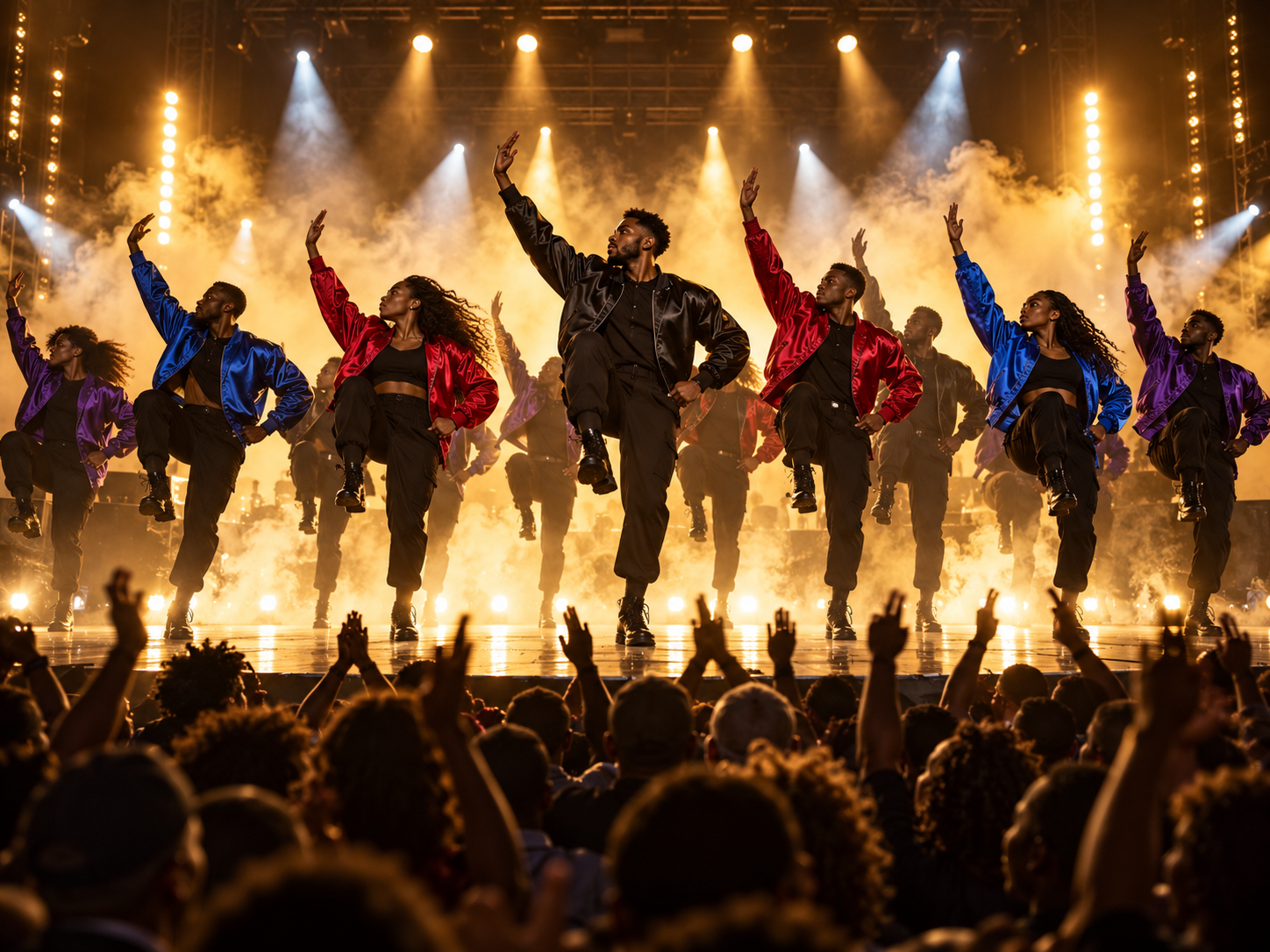
From the yard to the big screen. Illustration: Dance Mogul Magazine.
The Franchise Goes Global
Then the Step Up sequels began to grow.
Step Up 2: The Streets (2008), directed by Jon M. Chu, credited its choreography to Jamal Sims, Nadine “Hi Hat” Ruffin and Dave Scott. It earned $151 million worldwide. Its cast was full of working dancers, including Adam G. Sevani, Danielle Polanco, Mari Koda, Christopher Scott, Luis Rosado, Harry Shum Jr., LaJon Dantzler and Telisha Shaw.
Step Up 3D (2010), again directed by Chu with Jamal Sims as supervising choreographer, became the franchise’s biggest earner at $159.3 million worldwide. Almost three of every four dollars came from outside North America.
Step Up Revolution (2012), directed by Scott Speer, turned flash mobs into cinema. Jamal Sims led a team that included Christopher Scott, Travis Wall and Chuck Maldonado. “We wanted to do something that meant something,” Sims told The Hollywood Reporter.
Step Up All In (2014), directed by Trish Sie, brought back familiar dancers, with Christopher Scott among its choreographers.
Across five U.S. theatrical releases, the Step Up films grossed about $651 million worldwide by Box Office Mojo’s count, and roughly two-thirds of it came from outside North America. Movement developed in American communities was now filling theaters around the world.
Who Built the Movement: Selected Dance Films
| Film | Year | Director / Distributor | Worldwide Gross | Choreography |
|---|---|---|---|---|
| Fame | 1980 | Alan Parker / MGM | $21.2M* | Louis Falco |
| Breakin' | 1984 | Joel Silberg / Cannon | $38.7M* | Street dancers incl. Shabba-Doo, Boogaloo Shrimp |
| Beat Street | 1984 | Stan Lathan / Orion | $16.6M* | NYC Breakers & Rock Steady Crew on screen |
| School Daze | 1988 | Spike Lee / Columbia | $14.5M* | Otis Sallid; asst. Dyane Harvey |
| Save the Last Dance | 2001 | Thomas Carter / Paramount–MTV Films | $131.7M | Fatima Robinson |
| Honey | 2003 | Bille Woodruff / Universal | $62.2M | Laurieann Gibson |
| You Got Served | 2004 | Chris Stokes / Screen Gems | $50.6M | Dave Scott |
| Step Up | 2006 | Anne Fletcher / Touchstone | $114.2M | Anne Fletcher (choreographer-director) |
| Stomp the Yard | 2007 | Sylvain White / Screen Gems | $75.5M | Dave Scott; assoc. Chuck Maldonado |
| Step Up 2: The Streets | 2008 | Jon M. Chu / Touchstone–Summit | $151.0M | Jamal Sims, Nadine “Hi Hat” Ruffin, Dave Scott |
| Step Up 3D | 2010 | Jon M. Chu / Disney | $159.3M | Jamal Sims (supervising) |
| Step Up Revolution | 2012 | Scott Speer / Lionsgate | $140.5M | Jamal Sims, Christopher Scott, Travis Wall, Chuck Maldonado |
| Step Up All In | 2014 | Trish Sie / Lionsgate | $86.2M | Christopher Scott and team |
On a phone, swipe the table sideways to see every column. Box office: Box Office Mojo. *Domestic only; no international figure reported. Grosses show commercial reach, not profit, since marketing and distribution costs are not public. Choreography credits are as verified from AFI, Variety, The Hollywood Reporter and the choreographers’ published credits.
Part IX
From Background Dancer to Cultural Figure
The films mattered for another reason. They turned dancers from anonymous background performers into people audiences knew by name, and many of them went on to build careers behind and in front of the camera.
Christopher Scott started out dancing for tips on Santa Monica’s Third Street Promenade. He played “Hair” in Step Up 2 and later choreographed Step Up Revolution and Step Up All In. He choreographed the film In the Heights (2021), which filled Washington Heights streets and swimming pools with dancers. He has earned five Emmy nominations, most recently in 2026 for Wicked: One Wonderful Night. “I’ve been almost on this mission to showcase street dancing as a beautiful art form and putting it together with ballet,” he told the Motion Picture Association.
Harry Shum Jr. danced in Step Up 2 and Step Up 3D, became a household face as Mike Chang on Glee, and went on to Crazy Rich Asians and Everything Everywhere All at Once. In September 2026 he competed on the Season 35 premiere of Dancing with the Stars.
Stephen “tWitch” Boss finished as runner-up on So You Think You Can Dance in 2008. He played Jason in Step Up 3D, Revolution and All In, then became the resident DJ and later an executive producer of The Ellen DeGeneres Show. He died in December 2022, and dancers everywhere still carry his joy.
Jamal Sims went from the Step Up franchise to choreographing Disney’s Aladdin (2019) and Encanto, with Emmy nominations from 2023 to 2025. Dave Scott, who helped define the look of an entire decade of dance film and taught for years on So You Think You Can Dance, died on June 16, 2025, at 52. His movement is still being learned in studios and living rooms today.
Look at the pattern. It runs from community to crew, from battle to music video, from film to television, and on to choreography, producing and teaching. Not every artist followed that road, but the road exists because the ones who came earlier built it.
Part X
The Screen Becomes the Phone
Television, music video, DVD, YouTube, and then social media: each step moved distribution closer to the dancer. By the late 2010s, a dancer didn’t need a network or a studio to reach millions. They needed a phone.
That power came with an old problem in a new form. In September 2019, Jalaiah Harmon, a 14-year-old dancer from Fayetteville, Georgia, created the “Renegade” to K Camp’s “Lottery,” which became one of the most-performed routines on the internet. Others who danced it became famous; she went largely uncredited. “I tried to comment under people’s posts saying it was me, but nobody would believe me,” she told Variety. After The New York Times told her story in February 2020, she put it simply: “I was happy when I saw my dance all over. But I wanted credit for it.”
Part XI
Credit, Ownership and Who Gets Remembered
Think back to Don Campbell, removed from Soul Train in 1973, by his biography’s account, for asking that performers be paid. Think of Rosie Perez telling Fatima Robinson to charge for her work. Half a century of this story comes down to one question: who owns the movement?
Choreographers are answering it. JaQuel Knight, who won the 2009 VMA for Beyoncé’s “Single Ladies” alongside Frank Gatson Jr., founded Knight Choreography and Music Publishing and registered copyright in his choreography. The first was “Single Ladies,” documented in a Labanotation score, followed by work including “Formation.”
Copyrighting movement is about putting the power back in the artist’s hands.
— JaQuel Knight (The Root, April 2021)
The courts are listening. On November 1, 2023, the U.S. Court of Appeals for the Ninth Circuit revived choreographer Kyle Hanagami’s copyright claim against Epic Games over a Fortnite emote. It ruled that the lower court had erred by “reducing plaintiff’s choreographic work to a series of unprotectable ‘individual poses.’” Choreography, the court recognized, is more than a list of steps.
DMM covers this in depth in Dance Copyright & Legal Issues: How Choreographers Protect Their Work and in our Kyle Hanagami profile. The lesson for every reader is the one Rosie Perez passed on thirty years ago: name your work, value your work, protect your work.
Part XII
Back to Hillman
On September 24, 2026, A Different World returned on Netflix: ten episodes created and run by Felicia Pride, with Debbie Allen as executive producer, director of the premiere and, once again, Dr. Langhorne. Deborah Wayne (Maleah Joi Moon), the youngest daughter of Dwayne and Whitley, arrives at Hillman as a freshman. So does Shaquille Johnson (Cornell Young IV), a star quarterback who, Netflix says, surprises everyone by choosing an HBCU. And one Hillman legacy is already there at the front of the classroom. Netflix’s official cast guide identifies Dr. Brooklyn Boyer (Raven Goodwin) as “the daughter of Hillman alum Dr. Kimberly Reese-Boyer and a legacy herself.” She is now an adjunct professor of psychology. Her mother, Kimberly (Charnele Brown), is “a graduate of Hillman Medical School” and an award-winning heart surgeon.
What stands out most for DMM is the way this Hillman was built. It was filmed on the campuses of Clark Atlanta University, Spelman College and Morehouse College. Nearly 60 percent of its background performers were HBCU students or alumni, and a ten-member HBCU student advisory committee worked on set and in the writers’ room. Several of its young actors came straight from HBCUs, among them Dasan Frazier (Morehouse ’22), Joshua Suiter (North Carolina A&T ’22) and Kennedi Reece (Howard ’26), who plays Hazel Henry.
The movement traditions came too. “Strolling is a big thing at Morehouse and the AUC in general,” Frazier told Andscape. “Like, all the schools have stroll teams, even freshman stroll teams.”

Built with HBCU hands. Illustration: Dance Mogul Magazine.
Before the premiere, Netflix took the show on a Road to Hillman tour of HBCU campuses: Prairie View A&M, Chicago State, Hampton and Norfolk State, Howard, Spelman and Morehouse. At Howard, on September 20, Allen and Reece screened the series in the Ira Aldridge Theater. The conversation was moderated by Dr. Raquel Monroe, a dance studies scholar and dean of the Chadwick A. Boseman College of Fine Arts, and Phylicia Rashad made an unannounced appearance. “We didn’t want to have any false moves anywhere,” Allen said. “The work that we did is relevant, remains relevant, and needs to be continued.”
Part XIII
The Generation That Watched Now Creates
Now bring the threads together.
A girl in the late 1980s pressed record on a VCR, rewound a step routine until her body knew it, and felt, in her words, that something “changed” in her. Decades later, Felicia Pride is the one deciding how Hillman looks to a new generation, and the woman who directed that episode directed her premiere.
A Howard musical-theatre major auditioned in her own campus theater in 2025 and flew to Los Angeles for a chemistry read during finals week. “Just watching Ms. Debbie work is a masterclass,” Kennedi Reece told Howard. Fifty-five years after Allen graduated from Howard, a new Howard graduate is on Hillman’s campus too.

The generation that watched now creates. Illustration: Dance Mogul Magazine.
The story plays out inside the show as well. Kimberly Reese studied at Hillman, became a surgeon and raised a daughter who also passed through Hillman. That daughter, Dr. Brooklyn Boyer, came back to teach the next class. It’s the full cycle this feature has been tracing: education leads to a career, and the career leads back to the classroom to teach the next generation. This time it’s written into Hillman’s own family tree.
We present these connections as DMM’s reading of the record, not as destiny. But the record is remarkable, and it shows what DMM believes about education and culture. Doors that open for one artist rarely close behind her. She holds them open.
Conclusion
The Movement Never Stayed in One Place
The culture didn’t begin with television. Television opened a window onto it, film made the window bigger, and music videos spread it faster. Dance movies built an industry around movement, and digital media finally put distribution in dancers’ own hands.
Now Hillman has returned, and the question isn’t whether a new series can recreate the old one. The more interesting question is what Hillman means today, after four decades in which the movement, music, style and joy once treated as a specialty became the center of popular entertainment.
This story began with doors that education opened, and it ends with a new generation walking back through them, carrying everything that happened in between.

Every door starts in a classroom. Illustration: Dance Mogul Magazine.
So the next time a routine stops you mid-scroll, or a movie makes you want to dance in your seat, remember where it came from, and say thank you.
The Credit Roll: Say Their Names
The institutions — Fisk University, Howard University and the Howard Players, Florida A&M, Spelman, Morehouse, Clark Atlanta and every HBCU that gave Black artists a home
The teachers — Mike Malone, Thomas Montgomery Gregory, William P. Foster, Debbie Allen
The traditions — the Divine Nine and generations of steppers and strollers
The television pioneers — Don Cornelius, Don Campbell, Jeffrey Daniel, Jody Watley, Rosie Perez and the Fly Girls
The architects — Otis Sallid, Dyane Harvey, Michael Peters, Paula Abdul, Anthony Thomas, Frank Gatson Jr., Travis Payne, LaVelle Smith Jr., Fatima Robinson, Laurieann Gibson, JaQuel Knight
The film-era builders — Dave Scott, Jamal Sims, Nadine “Hi Hat” Ruffin, Chuck Maldonado, Christopher Scott, Travis Wall, Anne Fletcher
The dancers — Shabba-Doo, Boogaloo Shrimp, the NYC Breakers, Rock Steady Crew, Tight Eyez, Lil’ C, Miss Prissy, Harry Shum Jr., Stephen “tWitch” Boss, Adam G. Sevani, Mari Koda, Danielle Polanco, Luis Rosado and thousands whose names never reached the credits
The next generation — Jalaiah Harmon, Felicia Pride, Kennedi Reece, Dasan Frazier, Joshua Suiter and you
Why This Matters to Dance Mogul Magazine
Documenting the Hands Behind the Movement
Every DMM story has to answer one question: how does this help someone become a better version of themselves? This one answers it with a promise. The path from a classroom to the world is real. It was built by teachers who stayed late, dancers who asked to be paid, choreographers who insisted on their names, and institutions that opened doors when others wouldn’t.
Dance Mogul Magazine was founded in 2010 to document exactly these people, the artists who too often go uncredited while their work moves the world. If you have a piece of this history, whether a credit, a photograph or a memory of who taught the step, share it with us. Let’s make sure the record remembers.
Frequently Asked Questions
Did A Different World create stepping?
No. Stepping developed within historically Black fraternities and sororities and draws on African and African American performance traditions. A Different World, and Spike Lee's School Daze in the same period, carried stepping to national audiences who had never seen it.
What is the A Different World stepping episode?
"A Stepping Stone," Season 2, Episode 7, aired on NBC on December 1, 1988. It was directed by Debbie Allen and written by Cheryl Gard. The ladies of Gilbert Hall prepare for an inter-dorm step competition, with Whitley leading the routine.
Who choreographed School Daze?
Otis Sallid is credited as choreographer of School Daze (1988), with Dyane Harvey as assistant choreographer, according to the AFI Catalog.
Who choreographed Stomp the Yard?
Dave Scott is credited as choreographer of Stomp the Yard (2007), with Chuck Maldonado as associate choreographer. Scott also choreographed You Got Served and co-choreographed Step Up 2: The Streets.
How much did the Step Up movies make?
The five U.S. theatrical Step Up films grossed about $651 million worldwide, according to Box Office Mojo, with roughly two-thirds earned outside North America.
Who were the Fly Girls?
The Fly Girls were the in-house dance troupe of Fox's In Living Color (1990-1994), choreographed by Rosie Perez in the show's first four seasons. Members included Carrie Ann Inaba, Deidre Lang, Lisa Marie Todd, Jennifer Lopez and Laurieann Gibson.
Can choreography be copyrighted?
Yes. Choreographic works can be registered with the U.S. Copyright Office. Choreographer JaQuel Knight registered his "Single Ladies" choreography, and in 2023 a federal appeals court revived Kyle Hanagami's choreography claim against Epic Games.
How did HBCUs shape dance and popular culture?
HBCUs gave Black artists places to study, perform and build traditions during eras when many institutions excluded them. Howard University's theatre program trained artists such as Debbie Allen, and five of the nine historically Black Greek-letter organizations were founded at Howard.
Sources & Verification
Smithsonian National Museum of African American History and Culture; Howard University (Howard Magazine; The Dig); The Hilltop; University of Illinois Press (Elizabeth C. Fine, Soulstepping); N.C. Department of Natural and Cultural Resources; The Washington Post; AFI Catalog; Television Academy and Television Academy Foundation; Netflix Tudum; Associated Press (Jonathan Landrum Jr., Sept. 21, 2026); Andscape; Variety; The Hollywood Reporter; The New York Times; The Root; Dance Magazine; Box Office Mojo (all box-office figures); Motion Picture Association; ABC News; Newsweek; Deadline and trade obituary coverage; Loeb & Loeb (Hanagami v. Epic Games, 9th Cir. 2023). Where a credit could not be verified, this article says so. Awards are identified as wins or nominations.
Continue Your Journey
Explore more from the Dance Styles Hub and discover how dancers across every genre are shaping the future of movement and performance.
• Debbie Allen Returns to Hillman: DMM’s special feature on the Netflix return
• Black Dance: From the Beginning of Time to the World Stage
• Michael Peters: The Structural Genius Who Built the MTV Aesthetic
• The Choreographers Behind Michael Jackson
• Dance Copyright & Legal Issues: how choreographers protect their work
• Howard University Honors Brown Ballerinas: DMM’s 2015 review
• Breaking at the Olympics: when street dance reached the world’s biggest stage
• The Responsibility of Dance Media: shaping narratives and preserving culture
• Join the Dance Mogul Community: connect with the global dance community
© 2026 Dance Mogul Magazine LLC | dancemogul.com | Inspiring Self-Empowerment Through Dance Culture