Archive Update · Empowerment
Ashleigh Thornton: From Noire Naturals to Education and Advocacy
The young entrepreneur DMM interviewed in 2013 went on to win a university business competition and pursue a different kind of empowerment through legal education and youth advocacy.
By Dance Mogul Magazine · Originally published March 24, 2013 · Updated and expanded November 2026

Artist Spotlight
Ashleigh Thornton founded Noire Naturals while studying business at UNC Charlotte. The university documented her venture-competition success in May 2013. Her public professional profile connects the business to her later Stetson Law publication on school discipline and youth justice.
A young woman can recognize a problem in her own life and turn it into something that gives other people more choices. In 2013, Dance Mogul Magazine met Ashleigh Thornton at that point in her career. She had developed a hair-care business while completing her education, and she understood something that would remain relevant well beyond her original product line: personal achievement becomes more meaningful when it creates opportunities for others.
This story belongs in a dance publication because dancers live entire lives beyond rehearsals and stages. Appearance, identity, professional presentation, entrepreneurship, education and the ability to speak up all shape the conditions under which artists work. Thornton told DMM she had studied ballet for eleven years. Her subsequent journey offers an opportunity to look at how creative discipline can inform a career in business and public service.
The 2013 Interview
The following material is preserved from the original DMM publication. Formatting and historical media presentation have been updated; the interview reflects the subject’s statements at the time.
Ashleigh Thornton is the Owner and Creator of NoireNaturals LLC an all-natural line of hair products, designed to cater to the unique needs of kinky, curly, and wavy hair types. Ashleigh launched NoireNaturals on September 17, 2011, completely debt-free, only using savings from internships with companies such as Procter & Gamble and Hallmark Cards Inc. in Kansas City, Missouri. Since its launch, NoireNaturals been featured on several radio and TV stations, including FOX Charlotte, and local newspapers, such as The Charlotte Observer and The Charlotte Post. NoireNaturals has also received both national and international attention, recently being featured in the November 2012 issue of Seventeen Magazine.

In addition to being an entrepreneur, Ashleigh is a senior-level honors student at UNC Charlotte. Dance Mogul Magazine is constantly searching the globe to find those that know their purpose is to inspire and empower others, especially our youth. During the time of our countries worst economic hardships, it is urgent that we find those that are willing to give and we are proud to present Ashleigh, not only a go-getter but a go-giver.
MEDIA / WATCH
Original 2013 video (title unverified)
Original DMM archive reference; video availability has not been independently established.
Dance Mogul: Tell us about your educational experience and how you now use that to help grow your business of hair care products and your inspirations for doing it?
Ashleigh Thornton: Though I am not a chemistry major, I believe that it was the discipline and invaluable skill sets that I developed through my studies in the Belk College of Business and Honors Program at my university (UNC Charlotte) that have aided me in creating a successful business. My inspiration for starting NoireNaturals came when I decided to stop using chemical straighteners and go natural. I experimented with several different products, and found that many of them contained harmful ingredients; once I learned that there were many other people who shared my same frustration, I decided to formulate an all-natural product line of my own.
Dance Mogul: What advice would you have for female dancers in regards to helping them manage their hair after hours of rehearsals?
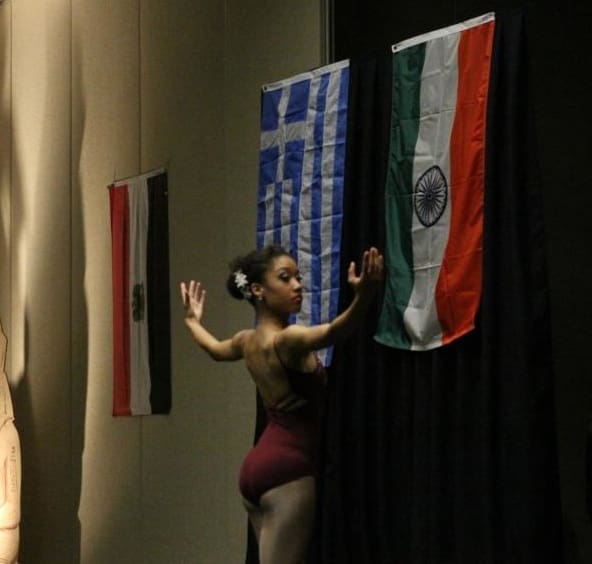
Ashleigh Thornton: I actually danced ballet for 11 years, so I know the struggle! After practice (depending on the intensity of the rehearsal) a quick spritz with a mixture of tea tree oil and water can usually do the trick for freshening up, in place of actually washing your hair*

Dance Mogul: How did you get involved with motivational speaking and why do you feel that field is so needed for our youth today?
Ashleigh Thornton: I think we all have the responsibility of “paying it forward.” In addition to continuing to grow my own small business, I also have a strong desire to promote entrepreneurship and innovation among other members of our community. I have seen firsthand how much of an impact the success (and failure) of small business has on the economic well-being of our country, and one of my goals is to actually serve as an elected official, with a special interest in representing the concerns and needs of those who have consistently been underrepresented in our government, that group is the younger generation.
Dance Mogul: No matter what field you partake in the most important ingredient is to have a strong work ethic, can you tell us how you built yours and how have you been able to maintain it?
Ashleigh Thornton: Being one of the youngest entrepreneurs in a multi-billion-dollar industry, while also being a full-time student, has taught me many things; most importantly, it has taught me that in life, especially in business, sometimes you just have to go for it. You have to be fearless, with solid faith, and COMPLETE confidence in your abilities, you have to persevere and keep on pushing.
“I think we all have the responsibility of “paying it forward.””
— Ashleigh Thornton, DMM interview, 2013
“sometimes you just have to go for it.”
— Ashleigh Thornton, DMM interview, 2013
Ashleigh Thornton Career Timeline
2011 — Noire Naturals launches, according to DMM’s historical interview.
2012 — Female Entrepreneur Association publishes her founder interview.
March 2013 — DMM publishes Paying it Forward.
May 2013 — UNC Charlotte documents the venture category and J. Chris Murphy awards.
2017 — Stetson reports participation in Ms. JD Leadership Academy and student leadership.
2018 — Stetson documents her school-discipline guide and graduation celebration.
Starting with a problem, rather than a product
In the original interview, Thornton explained why she developed her own product line. Her search for hair-care products that met her needs led her to think about other people with similar concerns. In the 2012 Female Entrepreneur Association interview, she described the difficulty of finding satisfactory options after moving away from chemical straighteners. Her account frames the company as a response to an unmet need, rather than a business created around a passing trend.
There is a meaningful distinction between identifying a personal frustration and establishing that enough customers share it to sustain a business. An aspiring entrepreneur has to learn whether the problem affects a broader audience, whether the proposed solution is useful, whether people can afford it and whether the company can provide the same quality consistently. Thornton’s interviews document the first stage of that process through her own experience and the conversations that encouraged her to take the idea further.
According to DMM’s original profile, she launched Noire Naturals on September 17, 2011 using savings from internships rather than taking on startup debt. That is a historically reported financing decision, not a universal recommendation that every entrepreneur should avoid borrowing or a claim about the company’s later finances. What makes the decision worth studying is the way she connected education, employment experience and a specific business objective.
The name Noire Naturals also invites discussion of a larger cultural issue. Black consumers have often had to negotiate expectations about how their hair should look in workplaces, schools, performance spaces and public life. Entrepreneurship in this area can be about choice and representation as well as commercial opportunity. This does not mean every person with textured hair wants the same products or style. It means the market benefits when people whose needs have been overlooked are empowered to describe those needs and participate in developing solutions.
A milestone just weeks after the DMM interview
The strongest direct follow-up to the March 2013 feature comes from UNC Charlotte. On May 3, the Belk College of Business reported that Thornton’s company had won the undergraduate student category at the Charlotte Venture Challenge, held May 1 at the NASCAR Hall of Fame. The university also reported that she received the J. Chris Murphy Award recognizing its leading student-led team.
The competition was a setting in which aspiring companies presented their business plans to investors and experienced businesspeople. The college described a large field of applicants, followed by finalist presentations and questioning. That setting matters because a young founder has to communicate the logic behind a company to people who may have no personal experience with the original problem. The university record is independent confirmation of a specific achievement shortly after DMM’s interview.
In a pitch, a founder needs to connect the customer’s problem to a viable offer. A product description alone cannot answer questions about distribution, costs, demand, competition or the ability to grow. Thornton’s example gives a student entrepreneur a useful model: begin learning those disciplines before leaving school, draw on mentors where possible and seek environments where an idea can receive informed scrutiny.
The college’s report also stated that she was scheduled to graduate in May and intended to concentrate on building her company. It does not establish that Noire Naturals achieved a particular revenue level or continued operating indefinitely. DMM makes no current sales, distribution, product availability or valuation claims. A historical award is worth recognizing on its own terms without turning it into an unsupported account of later commercial success.
What this story means to dancers and creative founders
A dancer may have an idea for a clothing line, an educational program, a rehearsal service, a digital product or a community event. The entrepreneurial process starts by listening. What problem actually costs dancers time, money or opportunity? Is it a problem a particular community experiences, or is the founder assuming that everyone works the same way? A small, well-defined audience can provide better feedback than a large collection of people who are only loosely interested.
A useful early experiment is to speak to potential customers before committing substantial funds. Ask what they already do to solve the problem, what they dislike about the current options and what would make an alternative worthwhile. Where a product involves cosmetics or health-related claims, safety, labeling and applicable regulations are essential. A business should not imply that a product is effective or safe solely because it is described as natural. The historical interview includes Thornton’s personal hair-care suggestions; they are preserved as part of the record, not presented as current medical or product-use guidance.
The next challenge is building a realistic budget. A dancer accustomed to investing in classes and auditions may understand the importance of setting aside money, but a business also needs a record of its expenses, revenue and inventory. Separate personal and business spending where appropriate. Think about the costs of production, packaging, insurance, fulfillment, returns and taxes. A product that looks profitable before these costs are counted may not support the founder’s time or the wages of future collaborators.
Creative professionals can use the same principles when their product is an experience. A workshop needs an appropriate venue, a curriculum, insurance, registration procedures and clarity about who supervises minors. A performance project needs rehearsal time, technical support, fair compensation and an audience-development plan. The business framework should serve the cultural mission rather than replace it. A well-planned project gives its founder a stronger chance of continuing to serve the people it was designed for.
From entrepreneurship to the art of asking why
The later record points to a significant expansion of Thornton’s interests. Her public professional profile lists both Noire Naturals and her school-to-prison-pipeline advocacy project. That direct connection supports identifying her with the Ashleigh Thornton featured in Stetson Law’s institutional news. In September 2017, Stetson reported that she had participated in the Ms. JD Leadership Academy at Harvard and held student leadership roles, including work with its child-advocacy organization.
In November 2018, Stetson Law published a feature on her guidebook, The Art of Asking Why: A School Administrator’s Guidebook for Combating the School-to-Prison Pipeline. The school described a twenty-page educational resource developed in response to concerns about the impact of disciplinary practices on children. Thornton had gained experience during an internship in the juvenile division of the 13th Judicial Circuit State Attorney’s Office. The guide encouraged educators to examine the reasons behind student behavior and consider the effects of disciplinary decisions.
The publication brought together legal vocabulary, Florida-specific information and a call for more thoughtful treatment of young people. Stetson reported that Florida Supreme Court Justice Peggy Quince contributed its foreword and that faculty mentors provided guidance. A December 2018 university announcement documented Thornton among its graduating class celebrations. These records establish a new chapter in her education and advocacy; they do not establish her current employer, present bar status or a continuing legal practice in 2026.
The transition is especially interesting in light of the 2013 DMM interview. Thornton talked about wanting to support young people and encourage them to develop ideas of their own. Five years later, the university was documenting her development of a resource for adults responsible for young people’s educational environments. The subject had changed from hair-care entrepreneurship to legal education, but the desire to create useful tools for other people remained visible.
Why access and dignity belong in dance education
Dance education offers a practical setting in which adults can help young people build trust, discipline, teamwork and confidence. Teachers establish expectations about punctuality, effort and respect. Those expectations can coexist with the recognition that students may face barriers that are not visible in the studio: transportation, family obligations, financial strain or difficulty accessing appropriate resources. A compassionate response does not require eliminating boundaries; it requires understanding what is actually happening before deciding how to respond.
The principle behind asking why can help an educator distinguish an intentional disruption from a student who has not understood the task, a dancer who is injured or a young person who needs support. It can also help a studio owner examine whether its own policies create avoidable obstacles. A student who cannot afford a costume may need a different solution from one who refuses to follow a safety rule. Good judgment requires attention to the circumstances, while maintaining fair and consistent expectations.
The parallel should not be mistaken for a claim that Thornton created a dance-specific legal program. Her documented guide is directed at school administrators. DMM draws an editorial connection to the way arts educators work with youth, because both settings involve adults with responsibilities for young people. Dance communities have an opportunity to model environments in which students can ask questions, be treated with dignity and receive appropriate support.
An arts organization can put those principles into practice through transparent financial policies, clear expectations, accessible communication and realistic routes for families to raise concerns. It can develop relationships with local schools and support services rather than trying to solve every issue by itself. The goal is not to turn a dance teacher into a lawyer or counselor, but to establish a culture where people know when to seek qualified assistance.
Where is Ashleigh Thornton now?
The latest substantive independent milestones located for this update are the 2017 and 2018 Stetson records, supported by her professional profile connecting her later advocacy to the Noire Naturals founder. Her present business operations and professional role have not been independently confirmed. DMM welcomes an update from Thornton and will distinguish any future account she provides from the dated institutional record.
A living archive should be able to recognize that a person’s path is still unfolding. Not knowing a current job title is not a reason to fill a profile with assumptions. We can identify the entrepreneurial award and the advocacy publication as concrete contributions while leaving the next chapter open for direct verification.
Why it matters to Dance Mogul Magazine
The original interview was not simply an advertisement for hair products. It was an example of a young person using education and work ethic to create a business, and speaking about the responsibility to give back. The later university records expand that story into a discussion of how entrepreneurial thinking can be applied to public problems. A guidebook, like a product, is an attempt to turn knowledge into something other people can use.
DMM’s self-empowerment mission is not confined to a single profession. A former ballet student can become an entrepreneur or advocate. A dancer can become an educator, designer, researcher or business owner. The common thread is the decision to develop a skill, understand a need and apply that knowledge with purpose. The related profiles below explore different ways creative professionals have built careers beyond the most visible part of their original craft.
Frequently Asked Questions
Who is Ashleigh Thornton?
The 2013 DMM subject is the Noire Naturals founder and UNC Charlotte business student whose later public profile connects her to Stetson Law advocacy.
When did Noire Naturals launch?
The original DMM profile dates its launch to September 17, 2011.
What award did she receive in 2013?
UNC Charlotte reported the undergraduate category win and the J. Chris Murphy Award at the Charlotte Venture Challenge.
What is The Art of Asking Why?
A guide for Florida school administrators on the school-to-prison pipeline, documented by Stetson in 2018.
Is Noire Naturals still operating?
Current operations and product availability have not been independently confirmed.
Explore Related DMM Stories
Melissa Sue Anderson: From Commercial Dance to Inspiring the Next Generation
Marcus Borders: Beyond Disney, From Tampa Dance to Theater Choreography
Jae Fusz: From Buffalo to Britney Spears, Pop Performance and DJ Culture
The Story Continues
The story of paying it forward begins with a willingness to recognize that our own experiences can reveal challenges other people are facing. Thornton’s documented journey shows that a person can use different professional disciplines to address those challenges.
DMM’s 2013 interview remains valuable because it preserves the voice of a young founder before her later achievements were documented. The archive invites readers to consider what they might build, what they might learn and whose life could benefit from that effort.
Sources and Further Reading
The original interview is preserved from the Dance Mogul Magazine archive. The following dated records support the editorial update; current roles are not inferred from undated biographies.
Female Entrepreneur Association — 2012 founder interview
UNC Charlotte — May 2013 venture competition
Stetson — 2017 leadership academy
Stetson — 2018 guidebook feature
Stetson — December 2018 graduation
Thornton’s professional profile — identity bridge
Topics: Ashleigh Thornton, Noire Naturals, Entrepreneurship, Youth Advocacy
© 2026 Dance Mogul Magazine · Inspiring Self-Empowerment Through Dance Culture