
Archive Update · Dance Industry
Melissa Sue Anderson: From Commercial Dance to Inspiring the Next Generation
From a New Jersey dance studio to Los Angeles, Milwaukee and the classroom: the story of an artist who transformed a performing career into opportunities for others.
By Dance Mogul Magazine · Originally published March 24, 2013 · Updated and expanded November 2026

Artist Spotlight
Melissa Sue Anderson is a dancer, choreographer and educator from Brick, New Jersey. DMM interviewed her during her Dance Rogue years in 2013. Later records document her co-founding SueMo in Milwaukee and her leadership of the Elevate program at Studio Five Dance Company in its 2022 guide.
For a young dancer, a teacher who sees potential can change the direction of an entire life. Melissa Sue Anderson remembers one such relationship in her 2013 conversation with Dance Mogul Magazine: a ballet instructor who pushed her to develop her ability and helped her find a deeper connection to dance. Years later, the dancer who had once been inspired by a mentor was building educational experiences of her own.
Anderson’s story is compelling because it does not stop at the film credit, agency contract or professional performance. Those accomplishments form one chapter of a career that has moved between commercial work, independent choreography, touring workshops and artistic leadership. The subsequent record makes her original commitment to the next generation particularly meaningful. This is the New Jersey-trained dance artist, not the actress of the same name known for Little House on the Prairie.
The 2013 Interview
The following material is preserved from the original DMM publication. Formatting and historical media presentation have been updated; the interview reflects the subject’s statements at the time.
Melissa Sue Anderson originates from Brick, NJ and began her dance training early at The American Academy of Ballet and Standing Ovation School of Dance. As a teenager, Melissa Sue spent her time touring nationally with Tremaine Dance Conventions starting as their official Ballet Assistant but soon moved into other styles assisting such choreographers as Doug Caldwell, Desiree Robbins, and Liz Imperio. In 2004 she moved to Los Angeles to complete the scholarship program at EDGE Performing Art Center and signed with top dance agency BLOC. In her professional career, Melissa has been blessed with many versatile opportunities including Tokyo Disney, commercials, music videos, and was a featured dancer in the film “The Curious Case Of Benjamin Button.” She also enjoys company work and has worked in several companies including BHUMN at the Ballet Austin, Seamless Dance Theater, and JADD Co. She also is a recognized adjudicator for various dance competitions including StarQuest. Melissa’s passion also extends to teaching and choreography. She teaches locally in Los Angeles and also sets choreography for studios across the nation. As the official Ballet and Contemporary Master Instructor for Dance Rogue Intensives, Melissa tours the country inspiring and being inspired by the young dancers of today. It is that exact reason why Dance Mogul Magazine is honored to present Melissa Sue. We feel the more we promote selfless spirits the more the youth and even the world have a chance to learn that type of behavior and apply it.

Dance Mogul: When did you discover you had a passion to dance?
Melissa Sue: I started classes at a very young age, and while I always enjoyed dancing I didn’t find my true love and passion until I was a bit older. When I was 13 years old I won a yearlong scholarship for Tremaine Dance Conventions. At the time their Ballet Instructor was a fantastic woman named Sylvia Rico. She saw potential in me and really pushed and inspired me to work hard until I worked my way up to being her assistant on tour. Her belief and mentorship in me sparked a passion for dance that was ignited in my teen years and has only continued to grow since.
Dance Mogul: Who are some of your inspirations?
Melissa Sue: I feel like I am constantly finding new people that inspire me in my craft. In a professional sense, some of my biggest inspirations are creative minds like Peter Chu, Ryan Heffington, and Kate Jablonski. I find their vocabulary for contemporary movement to be innovative and their works have inspired me to explore my own movement on a deeper level. As a touring faculty member for Dance Rogue Intensives I am inspired by my boss, Charles Lawrence, who created a unique environment for our young dancers to express and better themselves as dancers and people. I am also incredibly surprised and inspired by the young dancers I teach and come into contact with. Our future professional dancers are amazing and I’m so excited to see the changes they will bring to the dance industry.
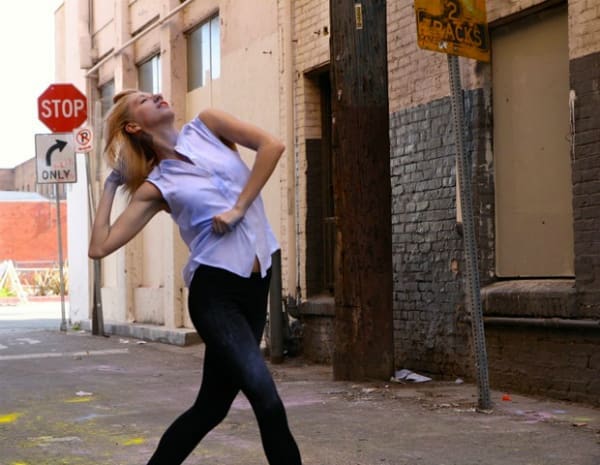
Dance Mogul: Did your parents support your dancing?
Melissa Sue: Yes! Especially my mother. She has been my rock and support system ever since I was a small child. Even as an adult professional dancer I find the most joy in sharing my successes and consoling in sharing my hardships. She is truly a wonderful being.
Dance Mogul: Was it difficult leaving NJ to move to LA?
Melissa Sue: NO! 🙂 I was ridiculously excited to leave NJ to start my journey in Los Angeles. I love the East Coast, but my whole life I always felt there was a more appropriate place for me to thrive as an artist. The first time I came to Los Angeles to take a class at EDGE Performing Art Center I knew there was no other place to cultivate my career. It didn’t hurt that I was already accepted into the EDGE scholarship program, so I was extremely excited to participate in that as well.
Dance Mogul: How were you able to get signed by BLOC?
Melissa Sue: The EDGE scholarship program provides dancers with a unique opportunity to meet dance agents in LA. At the end of the year, the scholarships put on a huge show choreographed, by some of the top names in the industry. Agents from all dance agencies come to see the show and scout out talent. From there we had private auditions with the agents and after the auditions and interviews with several agencies, I found BLOC to be the best fit for me at the time.
Dance Mogul: What was it like to work on The Curious Case Of Benjamin Button?
Melissa Sue: It was extremely exciting! As a child, my favorite dancer to watch in movies was BeBe from A Chorus Line. Well, BeBe’s real name is Michelle Johnston and she was one of my first dance idols. She was actually the choreographer for the film and so to meet and work with one of your childhood idols is an experience most dancers can only dream of!
Dance Mogul: You have been blessed with many opportunities, what are some of your favorites and some of the people you have gotten a chance to work with thus far?
Melissa Sue: I have been really lucky to have a very versatile career. Every “job” I’ve worked on has in some capacity been a favorite moment. From my teen years on I’ve worked with some of the top names in the industry and they have all been about as amazing as I could ever imagine them to be. Something that I never saw happening in my life is having the opportunity with Dance Rogue to teach side by side with some of the most well-known names in the industry like Twitch, Lil C, and Ryan Ramirez. You want to say as a professional adult that you don’t get starstruck, but I’ll tell you sitting at a table participating in a Q& A with Twitch is a surreal experience. You’re kind of like is this really happening!?!
Dance Mogul: Tell us about the Dance Rogue Intensives?
Melissa Sue: A little over 2 years ago I was feeling a little discouraged as a dancer and wanted to start myself on a new career path in the dance industry. I fell in love with teaching and choreography, and while my dance resume boasted a lot of great accomplishments, my teaching resume did not. Charles Lawrence the founder of Dance Rogue decided to take a chance on me as a choreographer and ever since then Dance Rogue has been a pivotal part of my career.
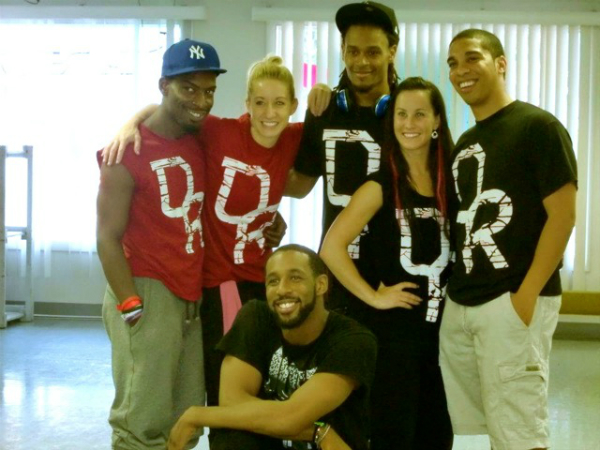
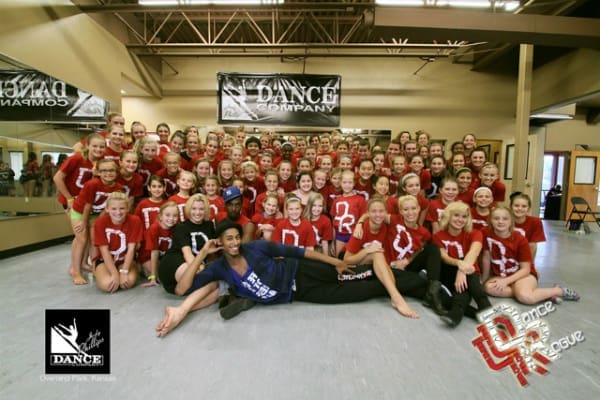
Essentially Dance Rogue Intensives is the answer to the common dance convention. At dance conventions students do get to take from some huge names in the industry, but since there are so many students and studios crammed into usually a hotel ballroom so many kids get overlooked. Dance Rogue works to give students and studios the quality professional classes and faculty a convention provides, but on a more individual scale. We come to studios that hire us to host intensives at their studios working intensively with their students. In a weekend we usually dance together over 20 hours, host an audition with awesome scholarships, and most importantly forge a relationship with these studios to get them to the level they want to be at. Our motto is “Be better today than you were yesterday, and be better tomorrow than you are today” #FreeYourDance 🙂
MEDIA / WATCH
Dance Rogue 2013 | Melissa Sue | Fineshrine
Original DMM archive reference; video availability has not been independently established.
Dance Mogul: What advice would you have for young up and coming dancers that want to be professionals?
Melissa Sue: Go for it! Work tirelessly! And believe in yourself! When you are confident in your talents people will be confident in you. It’s a crazy industry with huge highs and unfortunate lows, but if you believe in your art and work hard for it you will make your mark in the dance world.
MEDIA / WATCH
Dance Rogue 2012 | 2 Day Intensive | Jody Phillips Dance Company in Overland Park, Kansas
Original DMM archive reference; video availability has not been independently established.
Dance Mogul: Is there anyone you want to thank for helping you along your journey?
Melissa Sue: I want to mostly thank all my students! Whether they are kids I work with on a weekly basis, or students I meet just to set choreography or teach for a weekend they leave a huge impact on me. At this point in my career, everything I do is for the students that inspire me to better myself as a person, choreographer, and dancer.
MEDIA / WATCH
Dance Rogue 2012 | Melissa Sue | Youth Combo
Original DMM archive reference; video availability has not been independently established.
For More on Melissa Sue and Dance Rouge: http://dancerogue.com/ DanceRogue/Home.html
“When you are confident in your talents people will be confident in you.”
— Melissa Sue Anderson, DMM interview, 2013
“At this point in my career, everything I do is for the students that inspire me to better myself as a person, choreographer, and dancer.”
— Melissa Sue Anderson, DMM interview, 2013
Melissa Sue Anderson Career Timeline
Teenage years — Tremaine scholarship, assisting and foundational training in New Jersey.
2004 — Moves to Los Angeles for EDGE scholarship; later signs with BLOC.
2011–2013 — Dance Rogue faculty; 2013 DMM interview and Fineshrine concept video.
2017 — Danceworks DanceLAB lists SueMo and Anderson.
2018 — SueMo fifth-anniversary program.
2019 — Local reporting documents her departure from SueMo.
2022 — Studio Five guide names her Elevate director and documents touring intensives.
From dance scholarship to a professional career
The 2013 interview traces a route familiar to many competition and convention dancers, but the details reveal the work behind it. Anderson describes a yearlong Tremaine scholarship and the mentorship of Sylvia Rico as catalysts for her development. Instead of assuming that early technical success was sufficient, she continued learning in a setting where she could observe the demands of professional teaching. The distinction between attending a class and assisting one is substantial: an assistant has to know the material, model it consistently and notice how the other students are responding.
The original profile places her move to Los Angeles in 2004, where a scholarship at EDGE Performing Arts Center brought her into contact with the commercial dance community. Her explanation of the subsequent agency auditions is valuable for a student trying to understand the industry. A showcase can introduce a dancer to representatives, but the process of being represented also involves demonstrating fit and making an informed choice among agencies. Anderson selected BLOC after the program’s audition and interview opportunities. That is a historical account, not a description of the agency’s current recruitment policy.
Her early career combined film and theme-park performance with company work and teaching. The Studio Five guide later repeated her Tokyo Disney and The Curious Case of Benjamin Button credits and listed industrial and promotional jobs alongside contemporary company work. The variety is important. Commercial jobs may require a dancer to communicate a director’s vision efficiently, while company repertory may demand a different kind of movement research and emotional investment. A performer who develops both capacities has more ways to contribute to a production.
2013: finding a choreographic voice
In a February 2013 Dance Rogue blog post, Anderson described the process of organizing her first dance concept film, Fineshrine. The account provides a rare companion to DMM’s interview because it shows her thinking about the work before the audience sees the result. She was not just learning movement; she was organizing a creative project, working with collaborators and making choices about filming. Dance Rogue identified her as its protege development director in a separate May 2013 post.
A concept video can help a choreographer develop authorship outside the constraints of a competition routine. Music, costume, location, camera movement and editing all contribute to the audience’s experience. For a student studying the medium, watch the relationship between the movement and the image rather than concentrating only on the difficulty of individual steps. Where does the camera reveal something the stage cannot? Does a change in framing alter the significance of a gesture? Does the movement communicate a coherent emotional idea?
The transition also offers a useful lesson for artists who want to produce their own work. A finished piece requires more than an idea. It depends on communicating the concept to collaborators, securing an appropriate location, planning rehearsal and camera time, and crediting the people responsible for the final result. Anderson’s account demonstrates the importance of giving yourself permission to start a project before you have a long directing résumé.
SueMo and the move into independent company leadership
By 2018 Anderson’s work was documented in Milwaukee through SueMo: A Dance Experience. A July 2018 announcement for the company’s fifth-anniversary concert identifies her and Morgan “Mo” Williams as co-founders. The program, FI|V|E, was scheduled at the Marcus Center for the Performing Arts in August and brought together selections from earlier seasons. A Danceworks release had also included SueMo and Anderson in its January 2017 DanceLAB presentation.
That development gives the 2013 interview a second act. Anderson had already expressed her enthusiasm for choreography and student development. Creating a company expands the responsibilities of a choreographer: recruiting and rehearsing dancers, choosing collaborators, planning programs and developing an audience for work that is not attached to an established commercial star. A company creates the possibility of employing or showcasing other artists and providing a context for emerging work. It also requires realistic financial planning.
The fifth-anniversary program is significant because it documents continuity across seasons rather than only a single performance. An independent dance company develops an identity through its repertoire, the relationships of its artists and the experience it offers audiences. Revisiting earlier pieces is one way for a company to show its growth and give a new audience access to work that might otherwise disappear after a performance.
A subsequent Shepherd Express report in 2019 noted that Anderson had departed the company. It would therefore be inaccurate to describe her as its current artistic director. An artist’s legacy at an institution can be acknowledged without implying that the person still holds the position. This is an example of why dated program credits and later reporting should be read together.
Where is Melissa Sue Anderson now?
The 2022 Studio Five Dance Company guide identifies Anderson as the Elevate director. It also documents two in-studio touring intensives she founded, The Transformation Movement and The Collective Movement. These programs reinforce the pattern of a performer using her experience to develop educational structures rather than relying solely on individual teaching bookings.
The guide confirms the connection to the artist DMM interviewed by naming her Brick origins, Standing Ovation training, EDGE scholarship, BLOC representation and film work. Its description of early touring places her at a slightly different age than her own recollection in the 2013 Q&A. DMM preserves her original account and uses the broader teenage period rather than forcing an exact age across the two sources.
The latest substantive institutional record located for this update is that 2022 guide. DMM has not independently established whether she retains the same role in November 2026 or whether her independent intensives continue to operate. The historical progression is well supported, but a new interview would be necessary to accurately describe her current teaching schedule and future plans. We welcome a direct update from Anderson.
What young dancers can learn from her career
First, develop more than one kind of professional readiness. Technical training provides the foundation, but a dancer also needs the ability to take direction, adapt to unfamiliar movement and work productively with an ensemble. A film set, a competition studio and a contemporary concert have different expectations. Recognizing the purpose of the work can help a performer decide how to use their training.
Second, treat teaching as a separate craft. A dancer who performs a sequence beautifully may not yet know how to teach it to a room with different ages and abilities. Teaching means breaking material into accessible steps, adapting feedback to individual needs and making the learning environment safe for experimentation. The original interview is especially useful because Anderson describes the gap between her performing résumé and her teaching résumé and the opportunity Dance Rogue gave her to grow.
Third, measure progress across time rather than only by comparison with others. Anderson’s description of Dance Rogue emphasizes the individual studio and its relationship with the instructors. A student who is learning to improve can set a meaningful goal for the week, practice deliberately and document progress. For a studio owner, an intensive should have a purpose that extends beyond bringing in a recognizable name: a guest faculty member can offer tools that local teachers continue using after the event ends.
Finally, when creating your own artistic project, make room for both artistic and business skills. A company or workshop needs fair agreements, transparent budgeting, clear responsibilities, appropriate supervision and credit for the contributors. Those are part of the craft, not distractions from it. Building a sustainable career is often a process of learning how to create conditions in which other people can do their best work.
Why it matters to Dance Mogul Magazine
DMM’s 2013 profile captured Anderson’s transition toward choreography and education at a time when she was actively explaining what she wanted to contribute. Subsequent records show that ambition developing into a company, intensives and studio leadership. The continuity is more meaningful than simply appending additional credits to the original biography.
For young readers, the story offers a broader definition of success. You may be a dancer, choreographer, teacher, producer or a combination of those roles at different points in your life. The ability to support the next generation is not reserved for people who have finished performing. It can develop alongside your own artistic growth. The companion DMM interviews linked below examine other ways artists turn training and opportunity into careers.
Watch and Explore Melissa Sue Anderson’s Work
MEDIA / WATCH
Watch: Fineshrine — artist’s concept and process
Dance Rogue’s original behind-the-scenes article identifies her as the concept creator and choreographer. The archived YouTube reference appears in the interview above.
Frequently Asked Questions
Who is Melissa Sue Anderson?
The DMM subject is a dancer, choreographer and educator from Brick, New Jersey, not the television actress of the same name.
What movie did she dance in?
The original DMM profile and later Studio Five guide list The Curious Case of Benjamin Button.
What was SueMo?
An independent Milwaukee contemporary dance organization she co-founded with Morgan Williams. A 2019 report notes her departure.
What did she do at Dance Rogue?
She served on its teaching faculty and was identified as protege development director in 2013.
Where was she working most recently in the documented record?
Studio Five’s 2022 company guide identifies her as Elevate director. Her 2026 role has not been independently confirmed.
Explore Related DMM Stories
Ashleigh Thornton: From Noire Naturals to Education and Advocacy
Marcus Borders: Beyond Disney, From Tampa Dance to Theater Choreography
Jae Fusz: From Buffalo to Britney Spears, Pop Performance and DJ Culture
The Story Continues
The student who remembered Sylvia Rico’s belief in her became an artist whose work extended into the lives of other dancers. That is a record worth preserving. A successful career can be measured not only through what an artist performs, but also through the opportunities that their knowledge makes possible.
The next chapter is hers to tell. DMM will continue to value the voices of dancers who make education, independent creativity and professional growth part of their life’s work.
Sources and Further Reading
The original interview is preserved from the Dance Mogul Magazine archive. The following dated records support the editorial update; current roles are not inferred from undated biographies.
Dance Rogue — Anderson on creating Fineshrine, February 2013
Dance Rogue — faculty profile, May 2013
Danceworks press release — January 2017
BroadwayWorld — SueMo fifth anniversary, July 2018
Shepherd Express — 2019 company transition
Studio Five — 2022 company guide, Elevate Director
Topics: Melissa Sue Anderson, SueMo, Dance Rogue, Contemporary Dance
© 2026 Dance Mogul Magazine · Inspiring Self-Empowerment Through Dance Culture







I am text block. Click edit button to change this text. Lorem ipsum dolor sit amet, consectetur adipiscing elit. Ut elit tellus, luctus nec ullamcorper mattis, pulvinar dapibus leo.