Archive Update · Dance Industry
Jae Fusz: From Buffalo to Britney Spears, Pop Performance and DJ Culture
The dancer who studied pop music videos as a child built a career in the world that inspired him, then brought his knowledge of movement and music into the DJ booth.
By Dance Mogul Magazine · Originally published April 4, 2013 · Updated and expanded November 2026

Artist Spotlight
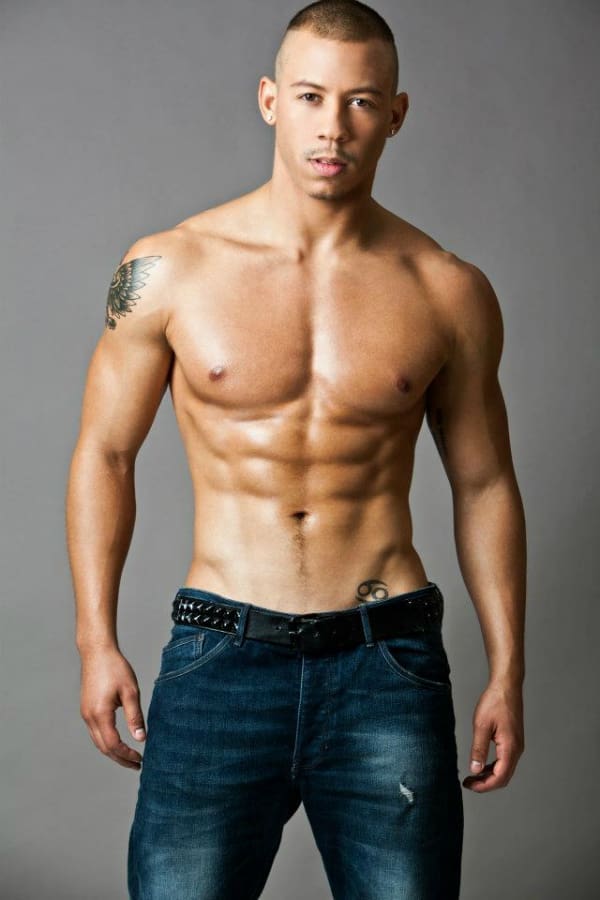
Jae Fusz is a dancer, choreographer and DJ whose early training in Buffalo led to commercial performance in Los Angeles. DMM interviewed him in 2013 after his Femme Fatale Tour breakthrough. Later credits and event listings document continued music-related work, including a 2024 music video and 2025–2026 DJ bookings.
Jae Fusz did not begin his dance journey with the certainty that a professional contract would be waiting for him. As a young fan of pop music, he watched the dancers who helped shape the visual identity of his favorite artists. He began taking classes in western New York and eventually made the decision to travel across the country to Los Angeles. In time, one of the artists he had studied as a child became an artist for whom he performed.
Dance Mogul Magazine recorded that story in April 2013. The conversation was about more than getting a job with Britney Spears. Fusz talked about the importance of training, support from family, auditions, perseverance and better conditions for professional dancers. The later record offers a chance to examine how those early experiences developed into a career that extends from touring and music videos to choreography and DJ culture.
The 2013 Interview
The following material is preserved from the original DMM publication. Formatting and historical media presentation have been updated; the interview reflects the subject’s statements at the time.
Born in Buffalo, NY Jae Fusz began dancing at the age of 15. He started taking a weekly hip-hop class at the Future Dance Center under Denise and Gino Vaccaro for fun and soon realized dance was more than just a hobby. He joined their competing team and started training in jazz and ballet as well, and knew this was a career he wanted to pursue. After graduating highschool Jae spent a year saving up as much money as he could and in the summer of 2009 packed up his car and drove across the country to Los Angeles to pursue his dance dreams. New to the scene Jae started taking dance classes and just tried to get his face out there. After a month he auditioned and got signed to McDonald Selznick Associates Agency and was ready to start getting his career in motion. It definitely was not an easy road and as a dancer, you hear the word “No” a lot more than “Yes”. However, Jae kept pushing and auditioning trying to reach his dreams and make his mark in LA. Jae booked his first job a few months after moving to LA dancing for Leona Lewis on “Dancing with the Stars”. But his big break came when he auditioned and booked Britney Spears’ Femme Fatale World Tour. He also danced for artists such as Ke$ha, Miley Cyrus, Christina Aguilera, Keri Hilson, Cher Lloyd, Mel B (spice girls), Kimberly Cole, and just came off of Nicki Minaj’s Pink Friday World tour. He as appeared on many tv shows with theses artists including, MTV, the American Music Awards, Jay Leno, The Today Show, The Ellen Degeneres show, Dancing with the Stars, The Voice, NBA All-stars game, Americas Got Talent, Much Music Video Awards, VH1 Divas Live, and Disney Channel. Jae continues to push himself and keep reaching his dreams where ever they take him and only hopes to inspire others.
Dance Mogul Magazine is honored that Jae took the time out of his busy schedule to talk to us. We know the industry can be very demanding especially of the dancer’s time. We are proud to present another example of a person that doesn’t mind taking the time to give back to the dance community and culture that helped build him up to the person he is today. That is what a true Dance Mogul does.
Dance Mogul: Who were some of your dance inspirations growing up?
Jae Fusz: I began dancing when I was about 16 years old. But growing up I was a huge fan of pop music and I can remember being in the 5th grade learning every step to Britney Spears’ music videos. I guess you can say I was kind of obsessed, but I remember studying people like Nick Florez, Brian Friedman, Andre Fuentes, etc before I even knew I wanted to dance. And just for fun because I loved what they were doing. When I started taking dance classes I was super inspired by Janet Jackson and the evolution of her career. I loved the way she infused strong street jazz and hip hop, and how powerful her videos were (my favorite was “Miss You Much”). I guess you could say I knew the dance avenue I wanted to take was dancing for female pop stars. I started taking classes at The Future Dance Center in Hamburg, NY under Denise and Gino Vaccaro. They had dancing careers in Los Angeles and moved back to Buffalo to open up a dance studio, and they pretty much the best thing that has ever happened to me. They just had so much knowledge on so many different styles of dance from hip hop to jazz, to ballet, to tap, they did it all. And they not only trained us in the technical aspect of dance but brought knowledge of how to take your dance ability and apply it into a career. Definitely 2 of my biggest inspirations and some of the most talented teachers and dancers I have ever met.
Dance Mogul: Were your parents supportive of you?
Jae Fusz: My Family was always super supportive of my dream to dance. My mom was a single mom and worked really hard to support me and my sisters so she didn’t have much time to take me to classes and away to conventions and such. My Aunt Diane was really my dance angel and would drive me all overtaking me to different dance conventions and pay for classes/costumes/etc. Those two women really are the reason I was able to dance and I definitely would not have been here without their support.
Dance Mogul: Explain your cross country journey to LA to pursue your dreams.
Jae Fusz: It literally was the craziest thing I had ever done and I even think back now like what was I thinking. I basically went to college for a semester and dropped out knowing it wasn’t what I wanted to be doing with my life. I wanted to be living in LA pursuing a dance career. I worked at a clothing store for a year and saved up as much money as I could and literally packed up my car with as much as I could fit and drove to LA. I had no furniture, very little money, and I just was eager to try and see if I could make it in this business.
Dance Mogul: What was the audition process like for MSA?
Jae Fusz: When I got to LA the first thing I did was started to research dance agencies. Within the first week, I was there I saw that one of the agencies out here was having an open audition. I went and we learned a hip hop combination, freestyled, and they made a few cuts. I made it all the way till the end and I felt really good about it. I ended up not getting a call from them for representation and I must admit I was really bummed. But it definitely didn’t stop me. You will hear “No” a million more times as a dancer than “Yes” and you can’t let that stop you. I then saw that MSA was going to be watching a class at The Edge in Hollywood. So I went and took the class and afterward I received an email from my now agent Jenn Proctor to come in for a meeting and that was where I got signed. I have been with MSA ever since and they definitely were the first ones to believe in me.
Dance Mogul: What is it like working with Ke$ha, Miley Cyrus, Christina Aguilera, Keri Hilson, Cher, Lloyd, Mel B (spice girls), Kimberly Cole, Nicki Minaj, and Britney Spears. Do the artists value their dancers; do you feel your art and work is truly appreciated?
Jae Fusz: I honestly feel every artist loves dancers. As much as sometimes we get overlooked I think that everybody can see that we pretty much make the show come to life. And that’s the most incredible feeling.
Dance Mogul: You have done many television performances, what have been some of your favorites?
Jae Fusz: I really can’t even begin to pick a favorite I have enjoyed everyone haha.
Dance Mogul: What advice would you have for young up and coming dancers that want to be professional?
Jae Fusz: Just that if this is something you want to do, go for it full force. There is nothing worse in life than regret. Gain as much knowledge as you can about all types of dance and study the industry. Become educated on what it is you want to do with your career.
Dance Mogul: How can the dance industry be improved?
Jae Fusz: I think just more benefits for dancers, whether through pay, or working conditions, health insurance, etc. The great thing about now is that we have amazing groups such as Dancers Alliance who are fighting and making huge improvements for dancers. So at the rate, we’re going now as a community hopefully things just keep getting better for us dancers.

Dance Mogul : Do you feel there is a need for Magazines like Dance Mogul, so the dancers can have their voices be heard on a regular base?
Jae Fusz: I totally feel there is a need for magazines like this. It is always important for a community to have a place where their voice and can be heard and others can gain knowledge for others’ gifts and experiences.
Dance Mogul: Is there anyone you would like to thank for helping you on your journey?
Jae Fusz: Definitely my family for their support, my teachers Denise and Gino Vaccaro, my friends and co-workers out there, and my agents.
“There is nothing worse in life than regret.”
— Jae Fusz, DMM interview, 2013
“Become educated on what it is you want to do with your career.”
— Jae Fusz, DMM interview, 2013
Jae Fusz Career Timeline
Mid-teens — Begins training in the Buffalo area at Future Dance Center.
2009 — Moves to Los Angeles and later signs with MSA, according to DMM.
2010 — Listed in Kyle Hanagami’s Carnival set.
2011 — Performs on Britney Spears’ Femme Fatale Tour.
2013 — DMM interview; Kwanza Jones video credits him as a dancer.
2017 — Reported performing with Spears and Mikey Pesante.
2024 — Credited dancer in ADÉLA’s SUPERSCAR.
2025–2026 — Public event listings document DJ billing.
The Buffalo foundation: learning to see dance as a career
In the original DMM interview, Fusz credits Denise and Gino Vaccaro at Future Dance Center in Hamburg, New York with developing his technical training and his understanding of professional dance. He recalled studying pop music videos before he knew he wanted to pursue the field, and then training across several styles. The archive gives two approximate starting ages, fifteen in the original introduction and about sixteen in his answer. Rather than manufacture a precise date, we describe the beginning as his mid-teens.
His early story demonstrates how access to teachers with industry experience can make an unfamiliar career seem possible. A student who is learning a sequence for the first time may think primarily about remembering steps. A teacher who understands commercial work can also explain how a sequence needs to be performed for an audition or a camera, and what it means to work in an ensemble.
The support Fusz describes from his aunt and family is an important part of this record. Training costs money, and a young dancer needs transportation, time and encouragement. Not every family can provide those resources in the same way. Community programs, scholarships and accessible local instruction can help broaden the range of people who are able to imagine a professional future in dance.
From Los Angeles auditions to the Femme Fatale Tour
DMM’s original profile places his move to Los Angeles in the summer of 2009. He described taking classes, researching agencies, auditioning and ultimately signing with McDonald Selznick Associates. His experience provides a useful account of the early commercial dance pipeline. Being represented was an important step but did not remove the need to continue training and build relationships within the professional community.
Fusz’s 2011 Femme Fatale Tour work with Britney Spears is supported by the filmed tour’s cast record and his own later interview published on Absolute Britney in 2016. The significance of the credit is amplified by his earlier recollection of learning Spears’ choreography from music videos. The person who once studied the movement from outside the industry was now part of a professional production. A fan’s familiarity with a performer’s style can become a starting point for artistic study, provided it is developed into adaptable professional skill.
For the audience, a concert can feel spontaneous even though the dancers are executing carefully prepared material. A touring dancer has to learn how to reproduce the choreography while preserving its energy across repeated performances. Musical cues, transitions, formation changes and adjustments for the stage all matter. Professional reliability includes being prepared to work under the creative direction of other people, respecting the contributions of the production team and taking care of the body over a demanding schedule.
A later 2017 report about a Spears performance identified Fusz alongside dancer Mikey Pesante. That confirms a documented continuation of his work with the artist beyond the early tour. It should not be taken as evidence of an uninterrupted employment relationship or a complete account of every engagement between the dates.
From ensemble performance to screen work
The archival record is particularly valuable because it offers several examples of different kinds of work. Choreographer Kyle Hanagami’s Vimeo page for his March 31, 2010 Carnival set lists Fusz among the performers. In 2013, Kwanza Jones published official credits for her Vicious music video identifying him as one of the dancers. The artist’s website is useful evidence because it names the people whose work contributed to the final video.
The later music-video record includes ADÉLA’s 2024 SUPERSCAR. Published credits identify Fusz among the dancers and name Miguel Zárate as choreographer. This distinction is important: a performer should receive recognition for dancing in a project without being assigned a choreographic credit that belongs to someone else. Dancers can contribute interpretation, timing, presence and ensemble cohesion even when the choreography is not theirs.
When watching a screen performance, pay attention to what happens around the lead artist as well as to the lead artist. Consider how dancers shape the visual composition, how the camera changes the audience’s perception of distance and how an ensemble supports a musical transition. A dance performance made for camera may involve repeating a sequence for different angles, adjusting movement to frame size or ensuring continuity across takes. These general observations help a reader appreciate the craft without claiming that a particular rehearsal process was observed.
The records span different stages of Fusz’s career, from a 2010 choreographers’ showcase to music videos released years apart. They help counter the tendency to reduce a dancer’s professional identity to a single employer. A career can grow through a series of projects, with each opportunity demanding a slightly different use of the same foundation.
Where is Jae Fusz now? From the stage to the DJ booth
The later record identifies another aspect of his work: DJing. A Los Angeles-area event organizer describes Fusz as both a dancer and a DJ, listing major pop performance credits in its promotional biography. A July 2025 Phoenix event also billed him as its featured DJ. A November 20, 2026 West Hollywood ticket listing included him in its lineup. These are event listings rather than independently observed performances, but they establish that he was publicly advertised for DJ work into 2026.
His SoundCloud mix PARTY POPPER | vol 2 provides an additional artist-linked music resource. For a dancer, moving into DJ work can be a way to apply an existing familiarity with phrasing, energy and the audience’s relationship to music. The skills are not identical, but the creative dialogue between the dance floor and the person selecting the music is a natural place for the two disciplines to meet.
A performer learns how music can organize movement in time. A DJ learns how choices about rhythm, sequence and transitions can shape the atmosphere of a room. Both need to understand how people respond to energy. The DJ booth also offers a different form of authorship: rather than performing someone else’s choreography to an existing track, the DJ chooses how to assemble a musical experience. That is an editorial interpretation of the documented career shift, not a claim about Fusz’s private motivations.
We have not independently verified his full 2026 performance calendar, current agency representation or whether a new tour is planned. The latest dated event listing establishes a public billing, not a guarantee of future bookings. DMM welcomes a direct update from Fusz about how his work in dance, choreography and music continues to develop.
A dancer’s voice in the business of entertainment
One of the most forward-looking parts of the April 2013 interview was Fusz’s answer about improving the industry. He spoke about compensation, conditions and health insurance, and identified Dancers Alliance as an organization working toward improvements. That subject remains relevant to a performer whose work is often organized around individual projects rather than a single permanent employer.
Dancers Alliance’s current website explains its role advocating for fairer pay and conditions on non-union work and representing dancers in broader industry discussions. Its published rates and working-conditions resources give artists a place to begin learning about negotiations. These are advocacy guidelines and resources, not a promise that every job automatically carries the same terms. Union-covered jobs may have separate contractual requirements.
An emerging performer should learn to ask what the job actually includes: rehearsal compensation, performance dates, travel, cancellation arrangements, use of filmed material, wardrobe and safety considerations. A booking that appears exciting may involve substantial unpaid preparation or expenses if the agreement is unclear. Asking for the terms in writing is part of treating dance as a profession.
Financial planning also matters when income arrives irregularly. A dancer can set aside money for periods between jobs, training, taxes and health-related expenses. Developing additional skills may create options during changes in the performance market. Fusz’s later DJ work is one documented example of an artist extending his relationship with music into another area of professional activity.
Why it matters to Dance Mogul Magazine
DMM’s interview captures an artist speaking about his career while it was still developing. The later record gives those words additional context. Fusz pursued the kind of performance that had inspired him, continued appearing in music-related projects and developed a role in DJ culture. His interest in improving conditions for dancers also reminds us that an individual career and the well-being of a professional community are connected.
For the next generation, the message is to develop both artistic ability and knowledge of the industry. Study the movement, understand the music, build relationships with teachers and peers, and learn how the business works. A professional career is rarely a straight path, and each new opportunity is also a chance to learn how to create the next one.
Watch and Explore Jae Fusz’s Work
MEDIA / WATCH
Watch: Kyle Hanagami — Carnival (2010)
Uploaded by choreographer Kyle Hanagami; Fusz is listed among performers. Study how an ensemble supports the choreography.
MEDIA / WATCH
Official artist page names Fusz as a dancer and Phlex as choreographer.
MEDIA / WATCH
Watch: ADÉLA — SUPERSCAR (2024)
Official music video; credits identify Fusz as a dancer and Miguel Zárate as choreographer. Contains mature themes.
MEDIA / WATCH
Listen: PARTY POPPER | vol 2 — Jae Fusz
Artist-linked mix; listen for the musical transitions and energy of a DJ set.
Frequently Asked Questions
Who is Jae Fusz?
A Buffalo-trained dancer, choreographer and DJ who pursued commercial dance in Los Angeles.
When did he dance for Britney Spears?
His 2011 Femme Fatale Tour credit is documented in the filmed tour record and his later interview.
What is one later music-video credit?
ADÉLA’s 2024 SUPERSCAR credits him as a dancer, with Miguel Zárate as choreographer.
Does Jae Fusz also DJ?
Yes. Event organizers billed him as a DJ in 2025 and a 2026 listing included him in its lineup.
What industry issue did he discuss in 2013?
He emphasized improved pay, working conditions and benefits for dancers, and mentioned Dancers Alliance.
Explore Related DMM Stories
Melissa Sue Anderson: From Commercial Dance to Inspiring the Next Generation
Ashleigh Thornton: From Noire Naturals to Education and Advocacy
Marcus Borders: Beyond Disney, From Tampa Dance to Theater Choreography
The Story Continues
In 2013, Fusz encouraged young dancers to pursue their ambitions and learn as much as possible about the profession. The subsequent record gives that advice a broader meaning. It is not only about earning the first booking; it is about continuing to develop knowledge and applying it as the industry and the artist evolve.
The child who studied movement in pop music videos found a place within the medium that inspired him. His story continues to offer a useful lesson about the relationship between curiosity, preparation and the ability to create new opportunities.
Sources and Further Reading
The original interview is preserved from the Dance Mogul Magazine archive. The following dated records support the editorial update; current roles are not inferred from undated biographies.
Kyle Hanagami — 2010 Carnival performance
Plex — filmed Femme Fatale Tour cast credit
Absolute Britney — Fusz interview, 2016
Attitude — 2017 performance report
Kwanza Jones — official Vicious video and credits
Cinderblock TV — SUPERSCAR credits
Oso Sucia Events — DJ artist biography
DJ IMAGE — July 2025 event listing
Eventim — November 20, 2026 lineup
Dancers Alliance — rates and conditions
Topics: Jae Fusz, Britney Spears, Commercial Dance, DJ Culture
© 2026 Dance Mogul Magazine · Inspiring Self-Empowerment Through Dance Culture