
Dance Mogul Magazine · The Legacy · Hip-Hop Freestyle
Massiah Peekaboo: Foundation, Freestyle and the Responsibility to Carry Hip-Hop Forward
From Queens and the Misfitss to Wreckin’ Shop, a major-label rap album, house dance, international judging and a lifelong argument for foundation, Massiah “Peekaboo” has asked one question for decades: who gets to define the culture after it leaves the neighborhood?
October 7, 2026 · Updated October 11, 2026 · Dance Mogul Magazine · Legacy Feature
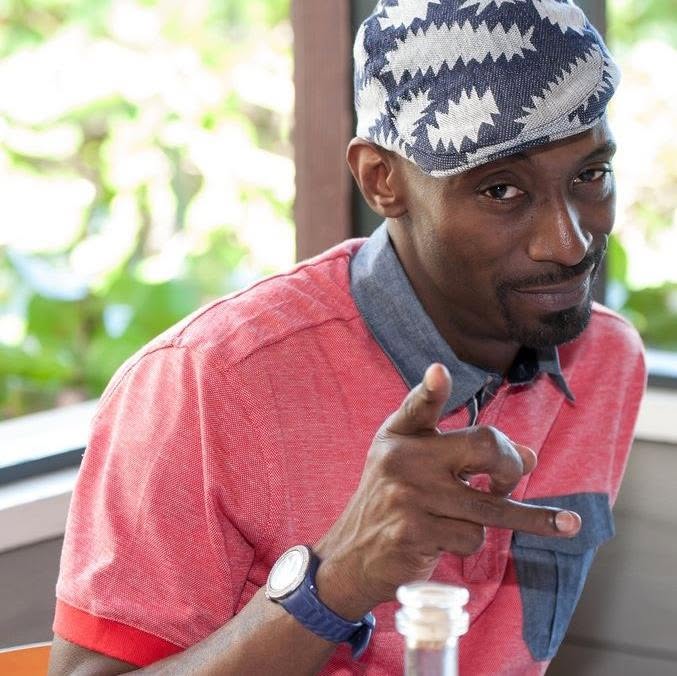
In 1992 a public-television crew followed a group of young Black dancers through the streets and clubs of Brooklyn. The episode, cataloged today by the American Archive of Public Broadcasting as Alive TV; ‘Reckin’ Shop Live from Bklyn, caught them talking about style, explaining how hip-hop was changing, dancing with children on the sidewalk and freestyling on the microphone. In the club battle sequence, dance-history breakdowns of the footage identify a member of the Misfitss called Peekaboo.
Nobody on that shoot could have known the footage would become one of the primary visual records of early-1990s New York freestyle. Or that the dancer in the battle would go on to make a major-label rap album, judge in Europe, teach at camps built around the pioneers, and spend his later years telling young dancers that freedom means more when you know what is underneath it.
Years later, describing the purpose of the 36 Chambaz of Stylz camp to Dance Mogul Magazine, he reduced it to three words: “Foundation, fundamentals, facts.” He talked about dancers who lived the music before they taught it, and what disappears when a new generation inherits the movement without the context.
That is the thesis of this feature, and the reason DMM is tracking him now. Massiah Peekaboo is not a finished chapter. He is one of the living sources of New York freestyle hip-hop: a dancer who moved through crews, clubs, house, commercial entertainment and recording, and who never stopped insisting that the people inside a culture should be the ones defining it.
“Freestyle has always been my door.”
— Massiah “Peekaboo,” Dance Mogul Magazine interview
Massiah Peekaboo at a Glance
File // At a Glance
Name — Massiah “Peekaboo”; recording catalogs spell it “Messiah Peekaboo”
Roles — Freestyle dancer, MC and recording artist, choreographer, teacher, judge
Origin — Queens, New York, by his own account to DMM; crew and recording identity rooted in Brooklyn and Flatbush
Trained — Freestyle and New York club floors; formal classes in ballet, modern and jazz; house
Crews — Misfitss; the rap trio Mystidious Misfitss
Signature — Musical, individual hip-hop freestyle with a strong house and clubbing influence
Worked with — With the Misfitss: EPMD, Little Shawn, Salt-N-Pepa, Mariah Carey; a 2019 profile adds Kwame and choreography for Diana Ross and Salt-N-Pepa
Screen & record — Wreckin’ Shop Live from Brooklyn (1992); A Who Dat? (1995, 550/Epic; reissued 2024)
Reach — Documented activity in 2 countries, plus crew-level influence in Japan
Current work — Legacy teaching and judging; his 1995 album back in circulation since the 2024 reissue
DMM connection — DMM exclusive interview at 36 Chambaz of Stylz on foundation, house and cultural self-determination
1992
Wreckin’ Shop airs on public TV
1995
A Who Dat? on 550 / Epic
2024
Album reissued by 90’s Tapes
30+
Years on film and on record
Queens: Before the Name Became a Credit
The public record on Peekaboo’s early life is thinner than his influence deserves, which is part of why Legacy work matters. Street-dance history was carried person to person long before searchable credits existed.
What he gives DMM directly is an anchor: he is from Queens. Later records place the Misfitss in Brooklyn and the rap trio in Flatbush. Those facts do not conflict. One says where the dancer came from; the other says where a crew and a recording identity took shape.
He also describes a young dancer who refused to stay in one box. Before he was widely known, he took classes in ballet, modern and jazz, and remembers trying a more formal training program for several months while still managing regular school. The program’s name is unclear in the surviving transcript, so DMM does not guess it. The point is the pattern: the street dancer was never against learning. He was testing systems and keeping what fit his body. Freestyle was where all of it got reorganized into something personal.
The Misfitss: A Crew Inside New York’s Freestyle Generation
Dance-history sources consistently place Peekaboo with the Misfitss, alongside Marquest, Rubberband, Kito and Prancer. Brian “Footwork” Green’s historical notes place the crew in the same New York ecosystem as Wize Guys, Mop Top and Elite Force, and name Marquest, Peekaboo and Rubberband as the core trio who also became a rap group.
That detail tells you something important. In the early 1990s, “dancer” and “rapper” were not separate departments. Hip-hop was a culture, not a résumé. Dancing, rhyming, styling yourself, battling, traveling with artists and making records were all expressions of the same world.
1992: When the Culture Documented Itself
Wreckin’ Shop preserved more than choreography. Watch closely and you see individuality: rhythm, posture, attitude, timing, clothing and personality all part of the movement, nobody a copy of anybody else. That is exactly the argument Peekaboo would keep making decades later, when he told younger dancers to stop searching for someone else’s identity and build their own.
“House Changed My World”
One of the most revealing moments in the DMM interview is about house. Around the turn of the 1990s, the music around him changed. Hip-hop had given him a door; house opened another. He does not describe the styles as rivals for his body. He describes house as something that changed how he heard hip-hop.
“House changed my world. House gave me a new perspective [on] how to dance hip-hop.”
— Massiah “Peekaboo,” Dance Mogul Magazine interview
That corrects a modern misunderstanding. Today styles are packaged as separate classes with separate teachers. The New York club world that shaped Peekaboo was more porous; dancers traded ideas because they shared rooms, music and crews. Brian Green describes house emerging through New York “clubbing,” with disco, freestyle and hip-hop dancers all contributing. Peekaboo gives the lived version, and his simplest self-description follows from it:
“People say I’m a hip-hop dancer, but I think I’m a dancer.”
— Massiah “Peekaboo,” DMM archive
From the Club to the Entertainment Industry
The Misfitss came of age as hip-hop’s movement language became valuable to the commercial industry. Artists and labels wanted the energy and credibility of the street and the club, and dancers who built their identities outside institutions found themselves on tours, television sets and videos. Society Dance Academy’s biography credits the Misfitss collectively with dancing for EPMD, Little Shawn, Salt-N-Pepa and Mariah Carey. A 2019 profile published around Poland’s Rytm Ulicy event says Peekaboo worked with Little Shawn, Kwame and Mariah Carey and choreographed for Diana Ross and Salt-N-Pepa.
What matters is not the celebrity list. A generation of Black street dancers carried movement created in their communities into mass media, often before the industry was equally serious about preserving the dancers’ names. That gap between influence and documentation is exactly what a Legacy archive is supposed to close.
The Dancers Picked Up Microphones
Peekaboo, Rubberband and Mushmouth Marquest became the trio Mystidious Misfitss. Their album A Who Dat? arrived in 1995 through the 550/Epic system, with tracks including “I Be,” “Trix of a Misfit,” “M.I. Crooked Letter,” “Streets, Avenues & Boulevards,” “Upside Down,” “Nu Sounds,” “Ooo Wee!” and “Red Light,” plus a Buckwild remix of “I Be.” The title sounds like a challenge from artists who had already lived a full creative life in one part of hip-hop and were asking listeners to catch up.
A freestyler listens differently. Timing, phrasing, interruption and surprise are already part of the dancer’s craft; on a microphone they become vocal rhythm. The medium changed. The relationship to music did not.
For years the album lived the way many under-documented records do: remembered by collectors, DJs and people who were there. In December 2024, 90’s Tapes reissued it in limited vinyl, CD and cassette editions and digitally, with bonus and remix material. Rediscovery is part of legacy. A dancer whose early-1990s movement survives in a black-and-white public-TV document now has a mid-1990s album circulating again three decades later. Movement and music both left evidence.
The Credit Record, Kept Honest
Crew culture is collective. DMM separates what is documented for Peekaboo individually from what belongs to the Misfitss, and from claims in a single profile.
| Artist / project | Credit type | Source |
|---|---|---|
| Alive TV; ‘Reckin’ Shop Live from Bklyn (1992) | Individual: appears in club battle sequence | AAPB catalog; footage breakdowns |
| Mystidious Misfitss, A Who Dat? (1995) | Individual: member of the recording trio | Spotify catalog; 90’s Tapes |
| EPMD, Little Shawn, Salt-N-Pepa, Mariah Carey | Collective: Misfitss crew | Society Dance Academy bio |
| Little Shawn, Kwame, Mariah Carey | Individual work, per one profile | Rytm Ulicy / NaszeMiasto (2019) |
| Diana Ross, Salt-N-Pepa | Choreography, per one profile | Rytm Ulicy / NaszeMiasto (2019) |
| 36 Chambaz of Stylz (July 2017) | Individual: Misfitss faculty | and8.dance event archive |
Collective and single-profile credits are reported as published and have not been matched to production credits.
The Student Is the Teacher
By 2019 the message had not changed. At Poland’s Rytm Ulicy he explained what he watches for as a judge: not who packs the most moves into a round, but whether the dancer lets the music lead instead of planning every surprise for the panel. He described approaching young dancers whose creativity moved him and telling them so, and remembered a young girl becoming emotional when he affirmed her dancing. Helping young people build confidence, he said, is part of his purpose.
In the DMM conversation he urged dancers to learn widely, respect other people’s lanes, and add that knowledge to their own style until the result belongs to nobody else. That is not confusion. It is authorship.
“I’ve had multiple crews of dancers. Some have moved on to higher levels.”
— Massiah “Peekaboo,” Dance Mogul Magazine 36 Chambaz interview
Watch: Peekaboo on Film and on Record
The two pieces of evidence his early career left behind: the battle and the record.
1992 · Brooklyn. Wreckin’ Shop Live from Brooklyn. The AAPB independently catalogs the 1992 Alive TV episode; the public upload identifies Peekaboo in the battle sequence. Video via YouTube.
1995 · The record. “I Be” from A Who Dat?. Public archival upload presented as historical listening context; not identified as an official label channel. Video via YouTube.
DMM Oral History Archive
Peekaboo’s 36 Chambaz of Stylz interview is part of the Dance Mogul Magazine video archive. Watch the DMM interview collection on YouTube.
The Teaching & Travels Tracker
DMM built this tracker so readers can follow a living legacy date by date. Every row has a published source. It is a floor, not a ceiling: decades of workshops, crews and judging seats left far fewer dated listings online than they deserve.
| Date | Event | Place | Role |
|---|---|---|---|
| Dec 2024 | A Who Dat? reissue, 90’s Tapes (vinyl, CD, cassette, digital) | Worldwide release | Recording artist |
| 2019 | Rytm Ulicy | Piła, Poland | Judge / guest |
| Jul 2017 | 36 Chambaz of Stylz intensive week | New York, USA | Misfitss faculty |
| 1995 | A Who Dat?, Mystidious Misfitss (550/Epic) | USA | Recording artist |
| 1992 | Alive TV; ‘Reckin’ Shop Live from Bklyn | Brooklyn, USA | Featured dancer |
| Undated | Misfitss video and stage work with EPMD, Little Shawn, Salt-N-Pepa, Mariah Carey | USA | Crew dancer |
Sources: AAPB; Spotify catalog; 90’s Tapes; and8.dance; Rytm Ulicy / NaszeMiasto; Society Dance Academy.
Documented listings per year · bars drawn to scale
Counts are dated listings in DMM’s research set, not a full record. Years without a bar have no surviving dated listing, not no activity.
The Teaching Tree: How the Knowledge Became Work
There was no audition pipeline for a teenager from Queens or Brooklyn. A crew leader created the first opportunities: the shows, the video calls, the battles, the trips. The crew was the first employer. The Misfitss generation also proved that one skill set could support several careers: dance led to video and tour work, freestyle timing led to a rap album, and experience led to choreography, judging and faculty roles. The U.S. Bureau of Labor Statistics notes that nearly all choreographers begin their careers as dancers. Peekaboo’s path shows how many doors that first career can open.
How the knowledge became work
1. The crew. Young dancers learn foundation, freestyle and how to carry themselves in a circle.
2. The stage. Crew reputations open doors to videos, tours and television, the first paid work.
3. The microphone. Musicality becomes a second profession: Mystidious Misfitss and A Who Dat?
4. The classroom. Veterans become faculty, judges and workshop teachers at home and abroad.
5. The next crew. Former students lead crews of their own, and the cycle of opportunity repeats.
The Lineage: Who Shaped Peekaboo, and Who He Shaped
Shaped by
Queens
where he says he comes from
NYC clubs & house
“House changed my world”
Ballet, modern, jazz
early formal classes
Freestyle
“my door”
↓
Massiah “Peekaboo”
New York · hip-hop freestyle
↓
Crews & collaborators
Marquest & Rubberband
Misfitss core / Mystidious Misfitss
Kito & Prancer
Misfitss
Dance Fusion & Elite Force
fellow 36 Chambaz faculty, 2017
Buckwild
“I Be” remix
↓
Students & next generation
Crews he led
dancers who “moved on to higher levels”
Camp students
36 Chambaz of Stylz
Battle generations
dancers he judged in Poland and beyond
Relationships drawn only from published sources and DMM’s interview. Individual students are not named because no source documents them.
Worldwide Impact: When New York Freestyle Traveled
Dance biographies in the United Kingdom and music documentation in Japan point to the influence the Misfitss and Mop Top generation had on Japanese dancers: not just steps, but groove, individuality, fashion and musicality studied closely from VHS tapes and visiting teachers. A culture can undervalue its own architects while people thousands of miles away study the details.
Worldwide Impact // Documented Reach
| Country / region | What happened | Year | Evidence |
|---|---|---|---|
| USA | Wreckin’ Shop; Misfitss crew work; A Who Dat?; 36 Chambaz of Stylz | 1992–2017 | AAPB; Spotify; and8.dance |
| Poland | Rytm Ulicy judge and interview | 2019 | NaszeMiasto |
| Japan | Misfitss / Mop Top generation influence on Japanese dancers | 1990s onward | Dance and music histories (crew-level) |
2
countries with a dated source
3
continents incl. crew-level Japan
32
years, 1992 to 2024 reissue
Japan is documented for the Misfitss and Mop Top generation collectively, not as a dated Peekaboo visit. Influence through footage and students is real but cannot be counted.
By the Numbers: The Economy Around Massiah Peekaboo’s Art
Hip-hop freestyle is culture, and it is also work. DMM keeps the figures below in separate tiers, because an album’s release is not a dancer’s paycheck and a global industry is not one artist’s output. No sales figures for A Who Dat?, no workshop prices and no personal earnings are published for Peekaboo, and DMM does not estimate them.
Tier 1 · Projects Peekaboo made
| Measure | Figure | Scope | Source |
|---|---|---|---|
| Public-TV documentary appearance | 1992 | Alive TV episode, preserved by AAPB | AAPB |
| Major-label album | 1995 | A Who Dat?, 550 / Epic system | Spotify catalog |
| Reissue formats | 4 | Vinyl, CD, cassette and digital, Dec 2024 | 90’s Tapes |
These describe the projects, not Peekaboo’s share of them. A record that returns in four formats thirty years later is evidence of lasting demand.
Tier 2 · The industries this art form feeds
$5.0B
U.S. dance studio revenue, 14,622 businesses (2025) · IBISWorld
Markets where hip-hop dance works · bars drawn to scale
Context only. These are whole industries, not the value of hip-hop dance or of any one dancer. Bar widths: 31.7 = 100%; 15.1 ÷ 31.7 = 47.6%; 5.0 ÷ 31.7 = 15.8%.
$26.73/hr
Median U.S. choreographer wage, May 2024 · BLS
$23.97/hr
Median U.S. dancer wage, May 2024 · BLS
+5%
Projected dancer & choreographer jobs, 2024–34 · BLS
For hip-hop dancers the most important number is not the biggest one. It is the classroom. Every class, camp and battle workshop in that U.S. studio industry depends on teachers who learned somewhere. Peekaboo’s generation learned in the circle and the club, then became the people the industry hired to teach it.
How the Freestyle Traveled, and What Belongs to Everyone
New York freestyle was built by a generation, not by one dancer. The Misfitss, Wize Guys, Mop Top, Elite Force and countless club regulars shaped it together. DMM does not crown Peekaboo an inventor, and he does not claim the title. In the DMM interview he says he does not consider himself a legend because he decided to call himself one; it is something other people gave him after years of work, and he finds it humbling. What the record shows is his specific part: a dancer on the 1992 film, a voice on the 1995 record, and a teacher still arguing for foundation.
Where Is Massiah Peekaboo Now?
The latest public record DMM reviewed does not support inventing a 2026 calendar or claiming a current project we cannot verify. His most recent dated listing is the December 2024 reissue of A Who Dat?; his most recent dated teaching and judging appearance in the record is Rytm Ulicy in 2019. His philosophy keeps circulating through the 36 Chambaz lineage, and Wreckin’ Shop is still watched and taught as a primary record of early-1990s New York freestyle.
A Living Legacy, and Why DMM Is Tracking It
Peekaboo’s story shows why legacy work cannot wait. Accuracy: he is visible in a 1992 document, yet basic biographical details remain hard to establish, and his album sits under a different spelling than his dance biography. Those gaps can still be closed with the source. Access: a pioneer who is still here can still be booked, interviewed and learned from. Value: documented contribution is what festivals, camps and reissue labels can see and pay for. The 2024 reissue proves the point.
“We need to control our own destiny.”
— Massiah “Peekaboo,” Dance Mogul Magazine interview
His sharpest warning to DMM was about cultural agency. His generation had no social media; they had to find the rooms and build reputations in person. He is glad the doors are open now. His question is what young dancers will do with the access. If the people who live the culture do not document, teach, debate and correct it themselves, he argues, the public record will be written around them.
The DMM Archive Connection
Peekaboo’s DMM interview belongs to the 36 Chambaz series alongside DMM’s features on Caleaf Sellers, who also appears in Wreckin’ Shop, Ejoe Wilson and Sekou Heru. His freestyle generation connects to Henry Link and Buddha Stretch of Elite Force, and to DMM’s living archive The American Social Dance Movement.
Career & Cultural Timeline
CULTURE = the scene around him · CAREER = his work · TEACHING = passing it on
EARLY YEARS · CULTURE
Grows up in Queens, by his own account; takes ballet, modern and jazz classes; freestyle becomes his door.
LATE 1980s–EARLY 1990s · CULTURE
Joins the Misfitss in New York’s freestyle generation alongside Marquest, Rubberband, Kito and Prancer; house changes how he hears hip-hop.
1992 · CAREER
Appears in the club battle sequence of Alive TV; ‘Reckin’ Shop Live from Bklyn.
EARLY–MID 1990s · CAREER
Misfitss crew work connected with EPMD, Little Shawn, Salt-N-Pepa and Mariah Carey.
1995 · CAREER
Mystidious Misfitss release A Who Dat? through 550/Epic.
2017 · TEACHING
Misfitss faculty at the 36 Chambaz of Stylz intensive in New York; DMM interview on foundation and agency.
2019 · TEACHING
Judges and speaks at Rytm Ulicy in Poland about letting the music lead.
2024 · CULTURE
90’s Tapes reissues A Who Dat? on vinyl, CD, cassette and digital.
2026 · CULTURE
Profiled in DMM’s Legacy series.
Why Massiah Peekaboo’s Legacy Matters to Dance Mogul Magazine
DMM’s Legacy project exists because too many of the people who built dance culture can be found everywhere except in the record that should name them. Peekaboo represents the problems the archive is designed to correct: visible work with an incomplete biography, crew credits without production-level detail, a name spelled two ways, and influence clearer overseas than at home. Those are reasons to write the story carefully, not to skip it.
He also carries DMM’s values. Character before celebrity: he refuses to call himself a legend. Contribution before attention: he talks about building other people’s confidence. People before popularity: his concern is not whether young dancers repeat his name, but whether the culture still knows where it came from when they become the elders.
What Dance Would Be Missing Without Massiah Peekaboo
• A face in the 1992 footage that still teaches the world what New York freestyle looked like.
• Proof that dancers were MCs too, on a 1995 major-label album back in print in 2024.
• A house-and-hip-hop bridge, in his words, house “gave me a new perspective” on hip-hop.
• A teacher’s standard, “foundation, fundamentals, facts,” carried into camps and judging tables.
• A call for cultural self-determination that every young dancer with a phone and an audience should hear.
What Future Generations Can Learn From Massiah Peekaboo
1. Foundation is not the enemy of innovation. Knowing where movement came from gives you more choices about where to take it.
2. Learn outside your label. His path crosses hip-hop, house, formal classes, clubs, commercial work and rap.
3. Musicality comes before showing off. Let the music lead instead of planning every surprise.
4. Individuality has to be developed. Study widely, then transform it until your choices sound like you.
5. There is no new or old hip-hop. “It’s just hip-hop.” Grow it, but know its source.
6. Document your culture. If the people inside a movement do not preserve it, someone else defines the story.
7. The goal of being an elder is succession. Today’s young dancers will carry the torch; the elders should be able to sit down and watch.
Freestyle Is Still the Door
It started with a kid from Queens who tried every class he could and kept coming back to freestyle. It was filmed in Brooklyn in 1992, pressed onto a record in 1995, and pressed again in 2024.
Through all of it the message never changed: learn the foundation, then become more yourself. Every time a young dancer studies the groove before the trick, or says the name of the people who opened the room, part of Peekaboo’s argument is still moving.
Massiah Peekaboo: Frequently Asked Questions
Who is Massiah Peekaboo?
Massiah “Peekaboo” is a New York freestyle hip-hop dancer, teacher and recording artist associated with the Misfitss and the rap trio Mystidious Misfitss. He appears in the 1992 documentary Wreckin’ Shop Live from Brooklyn.
Is his name spelled Massiah or Messiah Peekaboo?
Both appear. Dance biographies use Massiah Peekaboo; the Mystidious Misfitss recording catalog and 2024 reissue use Messiah Peekaboo. DMM keeps both.
What crew was Peekaboo part of?
The Misfitss, a New York hip-hop crew whose members included Marquest, Rubberband, Kito and Prancer. Marquest, Rubberband and Peekaboo also formed Mystidious Misfitss.
Was Peekaboo in Wreckin’ Shop Live from Brooklyn?
Yes. The 1992 Alive TV episode is preserved by the American Archive of Public Broadcasting, and breakdowns of the footage identify Peekaboo in the club battle sequence.
What was Mystidious Misfitss?
The rap trio of Rubberband, Mushmouth Marquest and Peekaboo. Their album A Who Dat? came out in 1995 through the 550/Epic system and was reissued by 90’s Tapes in 2024.
How did house dance influence Peekaboo?
He told DMM that house “changed my world” and gave him a new perspective on how to dance hip-hop. He calls himself a dancer rather than only a hip-hop dancer.
Which artists did Peekaboo work with?
Biographies credit the Misfitss collectively with EPMD, Little Shawn, Salt-N-Pepa and Mariah Carey. A 2019 profile adds Kwame and choreography for Diana Ross and Salt-N-Pepa.
The Legacy // New York Dance Pioneers Collection
Henry Link · Elite Force founder, hip-hop freestyle
Buddha Stretch · Elite Force co-founder, DMM exclusive interview
Ejoe Wilson · Elite Force “Twelve,” house dance pioneer
Caleaf Sellers · Mop Top, Dance Fusion, 36 Chambaz
Massiah “Peekaboo” · Misfitss freestyle, Wreckin’ Shop · You are here
Sekou Heru · Dance Fusion, RhythmMetrics, “movement is medicine”
Tony McGregor · Newark house dance pioneer
Shock-a-Lock · New York locking pioneer
Mr. Wiggles · Rock Steady and Electric Boogaloos
Darrin Henson · choreographer, “Bye Bye Bye”
Dave Scott · You Got Served, Stomp the Yard
Boogaloo Shrimp · Breakin’ icon
The Legacy · The American Social Dance Movement · House Dance: From Chicago to the World Stage
Sources & Further Viewing
American Archive of Public Broadcasting: Alive TV; ‘Reckin’ Shop Live from Bklyn
Society Dance Academy: Massiah Peekaboo biography
Brian “Footwork” Green: New York hip-hop and house history notes
90’s Tapes: Mystidious Misfitss, A Who Dat? reissue
Spotify catalog: A Who Dat? (1995)
36 Chambaz of Stylz: 2017 event archive
Rytm Ulicy / NaszeMiasto: Peekaboo interview, 2019
Economic context: IBISWorld, Dance Studios in the US (2025); U.S. Bureau of Labor Statistics, Occupational Outlook Handbook, Dancers and Choreographers (May 2024 wages); IFPI Global Music Report 2026; IMS Business Report 2026; NYC Mayor’s Office of Media and Entertainment, nightlife economic-impact study (2016 data).
© 2026 Dance Mogul Magazine LLC · The Legacy Series · A Black-owned dance and empowerment publication since 2010