
Dance Mogul Magazine · The Legacy · House Dance
Sekou Heru: Movement Is Medicine — The House Pioneer Who Made Dance a Cultural Language
From Trenton to New York’s underground clubs, from the first house classes of 1988 to Dance Fusion, international classrooms, a pop-rock landmark and a documentary about the rooms that made it all possible, Tony “Sekou Heru” Williams has spent decades insisting that house is more than steps. It is a language, and he is still teaching it.
October 7, 2026 · Updated October 11, 2026 · Dance Mogul Magazine · Legacy Feature
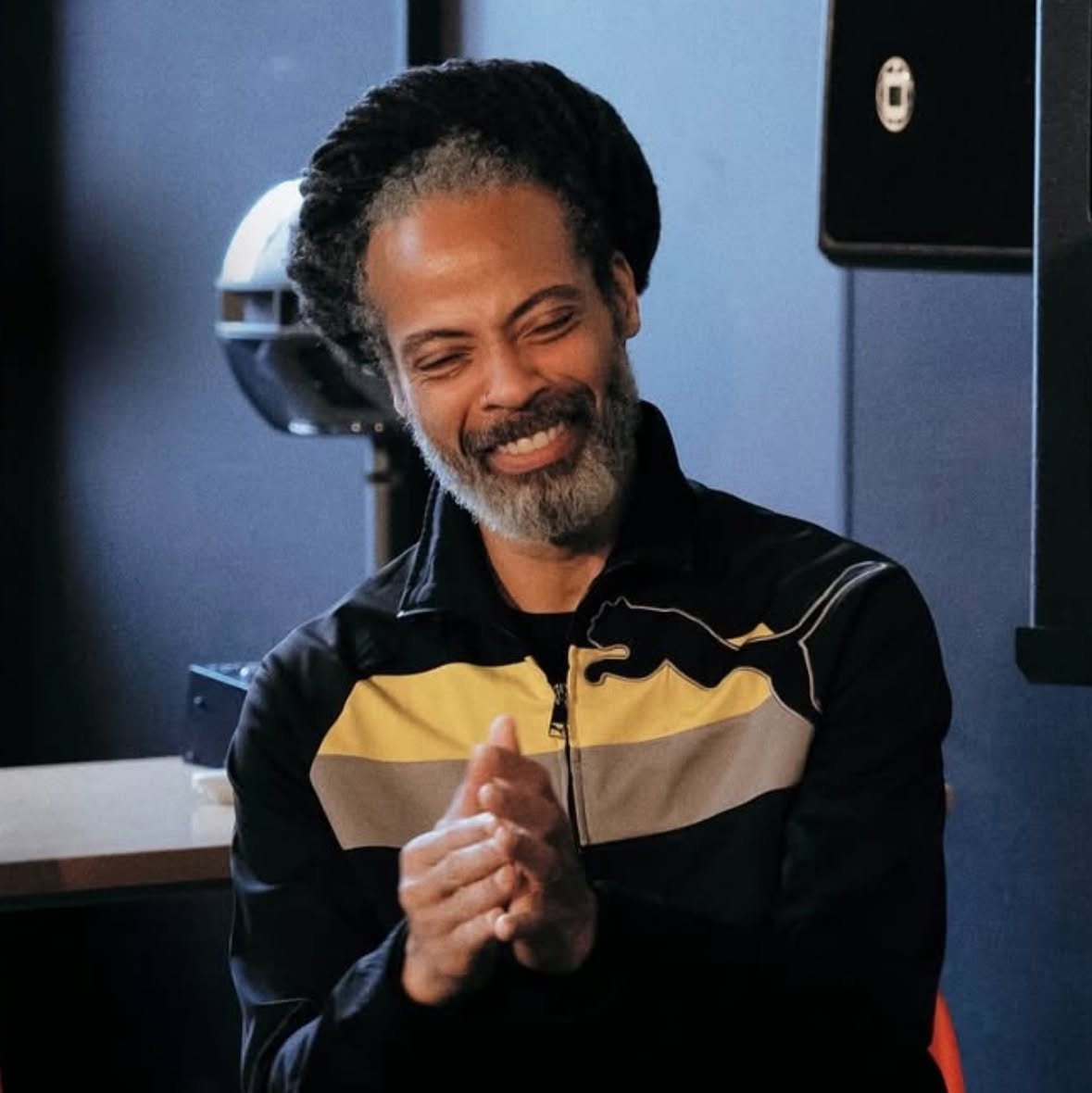
Sekou Heru did not answer Dance Mogul Magazine’s first question with a step. Asked what the 36 Chambers training concept meant to him, the Trenton-born house pioneer began with discipline. The chamber, he explained, represented how seriously the dancers regarded what they were carrying: not a collection of moves, but cultural identity, spirituality and a way of life.
Then he widened the frame. The movement, he told DMM, did not appear by accident. It had taken generations of people, music, migration, social spaces and embodied knowledge to arrive at that particular place and time. His job, as he understood it, was to give that knowledge back.
He had been giving it back for a long time already. In 1988, according to the Peridance biography of fellow pioneer Ejoe Wilson, Sekou, Wilson and Voodoo Ray Ultarté began teaching house dance in an old Manhattan flamenco studio, among the earliest known formal house classes anywhere. A culture that had lived on club floors was about to become something a stranger could study.
That is the thesis of this feature, and the reason Dance Mogul Magazine is tracking him now. Sekou Heru is not a finished chapter. He is one of the living sources of New York house dance: a founding member of Dance Fusion NYC, the creator of a movement method built on the idea that movement is medicine, a 2026 cultural adviser to a global dance league, and a co-executive producer of a documentary about the rooms that made the culture. His story is still being written.
“This is a cultural language. It is not something that just popped up by accident, but this took hundreds of years to get to this position in space and time.”
— Sekou Heru, Dance Mogul Magazine archival interview
Sekou Heru at a Glance
File // At a Glance
Name — Tony Williams, known worldwide as Sekou Heru
Roles — Dancer, choreographer, master teacher, mentor, fitness practitioner, cultural adviser, documentary co-executive producer
Origin — Trenton, New Jersey; based in Brooklyn / New York City since 1989
Trained — B-boying first; modern dance at Mercer County School of the Arts; New York and New Jersey club floors; Capoeira Angola with Mestre João Grande from 1993
Crews — Founding member of Dance Fusion NYC; founder / co-director of MOPTOP Universal
Signature — House rooted in the floor, fused with hip-hop, martial-arts-informed movement and conditioning
Methods — POWERHOUSE DANCE Fusion Fitness; RhythmMetrics
Worked with — DJ Jazzy Jeff & The Fresh Prince; Mariah Carey; Fred Ho & The Afro Asian Ensemble; Fall Out Boy (choreographer)
Screen & stage — Brown Sugar, 25th Hour, Marci X; Soul Train, The Arsenio Hall Show; music videos
Reach — Documented activity in 8 countries on 3 continents, including Dance Fusion’s collective teaching
Current work — International Dance League Cultural & Historical Advisory Board; artist and co-executive producer of No Dancing Allowed
DMM connection — Original DMM oral-history interview on house, 36 Chambers, youth training and movement as medicine
1988
Early house classes begin
1993
Capoeira Angola study begins
2006
MTV VMA for “Dance, Dance”
2027
No Dancing Allowed wide-release target
Trenton, a B-Boy and a School of the Arts
Sekou’s story begins in Trenton, New Jersey. Institutional biographies describe a young Tony Williams drawn to the performing arts early, with B-boying as his first love. That matters, because house never became a separate compartment in his body. Breaking taught him weight, attack, a relationship with the floor and improvisational problem-solving. Every language he learned later was added to that one, not swapped for it.
In high school he attended Mercer County School of the Arts and studied modern dance. That gave him concert-dance structure, technical study and an awareness of the whole body, a vocabulary that would eventually sit beside street and club movement rather than compete with it.
Long before faculty biographies began calling his style a fusion of house, hip-hop, martial arts and fitness, the ingredients were already collecting in real time: Trenton, breaking, formal training, the cypher, the floor, the music and a young dancer’s need to find his own physical language.
The Commute That Became an Education
By the late 1980s Sekou was crossing between New Jersey and New York to learn club culture at its source. His ImPulsTanz biography traces that education through rooms including The Tunnel, The World, the original Sound Factory, Red Zone, Shelter, Club 88 and Newark’s legendary Club Zanzibar. In 1989, according to the same record, he made New York City his home.
Those clubs were not just nightlife addresses. They were laboratories where B-boys, jazz dancers, tap dancers, modern dancers and people with no formal résumé answered the same record in different ways. The floor rewarded listening, individuality and the ability to exchange energy without a rehearsal schedule.
For DMM, the Zanzibar connection carries particular weight. Sekou’s path runs through the same New Jersey club lineage that made Newark a capital of soulful house. His story is not only New York house history; it is the traffic between New Jersey and New York, dancers crossing the river with music, movement and relationships, then crossing back.
“Whenever you want to learn a form of cultural language, you need to go to the origin of the place to learn it.”
— Sekou Heru, Dance Mogul Magazine archival interview
1988: When a Club Language Entered the Studio
House was created socially before it became a class. That distinction is the key to Sekou’s place in the story.
In his current Peridance biography, Ejoe Wilson recalls that in 1988 he, Voodoo Ray Ultarté and Sekou Heru began what that biography calls the first house dance classes, in an old flamenco studio remembered there as “Fasiels.” Other Dance Fusion sources spell it “Fazil’s.” DMM keeps both spellings and attributes the “first” to Wilson’s record, because oral and community histories often reach the page by more than one route.
The larger point holds without turning a first into a myth. Sekou was present for one of the hardest transitions in house history: the moment a culture learned in clubs and cyphers started entering scheduled instruction. It raised questions that have never gone away. How do you teach foundation without freezing improvisation? How do you name a movement without convincing a student the name matters more than the feeling? How do you carry house into studios around the world without cutting it off from the music, people and conditions that made it? Sekou’s career keeps returning to those questions.
Dance Fusion NYC: Friendship Becomes Infrastructure
Sekou became a founding member of Dance Fusion NYC, the collective established in 1997 and associated with Caleaf Sellers, the late Marjory Smarth and the wider network of New York club dancers. What began as shared nights and friendships became a vehicle for performance, education and international exchange.
Dance Fusion members traveled to teach and judge, with documented activity in Japan, Russia, France, Finland and other countries. Sekou appeared repeatedly at Japan’s Dance Delight as a guest judge and featured dancer. The significance is not simply that Americans were traveling. They were carrying a social dance into places where students might meet house first through a studio, a festival or a battle, rather than through the kind of New York club that had trained the teachers. The teacher had to transmit technique and context at the same time.
Earthbound Studio now describes Dance Fusion as one of the crews that carried New York’s house culture across the globe: not merely a dance company, but part of the machinery by which an underground culture became international.
The 36 Chambers: Discipline Behind the Freedom
To an outside eye, freestyle looks like pure spontaneity. Sekou’s explanation of the 36 Chambers pushes the other way: freedom is supported by discipline. The chamber concept recognizes that every teacher carries specialties, while the group shares knowledge across them. No single instructor claims to contain the whole tradition.
In the DMM interview, Sekou identifies his own chamber with a strong relationship to the floor and the ground. The automatic transcript blurs the end of that phrase, so DMM does not guess at the missing word. What is documented independently is his long engagement with floor-based movement, breaking, Capoeira, conditioning and systems that ask a dancer to organize the whole body. The house dancer, in his teaching, is not a pair of feet. The dancer is a whole person responding to sound, space, history, gravity and other people.
Capoeira, Conditioning and “Movement Is Medicine”
In 1993 Sekou began studying Capoeira Angola with Mestre João Grande at the Capoeira Academy in New York City. It joined the breaking and modern dance already in his body and widened how he thought about level changes, circular movement, attack and escape, balance and the relationship between standing and the ground.
When DMM asked why younger dancers should train with the older generation, he answered from the perspective of age as much as lineage. Young people take youth for granted, he said; the body feels indestructible until experience teaches otherwise. Then he offered the sentence that may best explain the second half of his career.
“Movement is medicine for your mind and for your body, for your heart, your soul — and the music is medicine for your mind as well.”
— Sekou Heru, Dance Mogul Magazine archival interview
The idea did not stay a quote. Sekou became a certified fitness instructor and developed POWERHOUSE DANCE Fusion Fitness, joining house movement with conditioning and mobility. Later came RhythmMetrics, a method the University of Maryland documented in its 2019 madDASH festival. It combines sacred geometry, sound and specialized movement to build spatial awareness while teaching African Diasporic dance genealogy, fitness fundamentals and house foundations. It uses cyphers and live music to echo the club, and it builds in injury prevention. That is “movement is medicine” turned from philosophy into method.
From the Club Floor to Tours, Film and a Pop-Rock Landmark
Sekou’s career also ran through the professional entertainment industry. Institutional biographies credit him with touring with DJ Jazzy Jeff & The Fresh Prince and with Fred Ho & The Afro Asian Ensemble in the martial-arts stage work Voice of the Dragon. He performed with Mariah Carey at Michael Jackson’s United We Stand benefit concert, appeared in Brown Sugar, Spike Lee’s 25th Hour and Marci X, and danced on Soul Train and The Arsenio Hall Show.
In 2005 he choreographed Fall Out Boy’s “Dance, Dance” video, which turned a high-school dance into a tightly built world of awkwardness, character and release. It won the Viewer’s Choice Award at the 2006 MTV Video Music Awards. A choreographer formed by breaking, house, modern dance and Capoeira shaped a rock band’s visual identity without the result looking anything like a house battle. The knowledge was still there, in rhythm, timing, group dynamics and the understanding that movement can tell a story before a lyric explains it.
Those credits matter, but not because commercial visibility makes club culture legitimate. The order is the reverse. Sekou entered the industry carrying movement intelligence built elsewhere, and the industry benefited from knowledge developed in communities that often received far less recognition.
The Credit Record, Kept Honest
Over three decades, credits blur. DMM separates what is documented for Sekou individually from what belongs to Dance Fusion as a collective, and from roles that biographies list without specifying the job.
| Artist / project | Credit type | Source |
|---|---|---|
| Fall Out Boy, “Dance, Dance” (2005) | Individual: choreographer | Peridance; Broadway Dance Center; Texas Woman’s University bios |
| DJ Jazzy Jeff & The Fresh Prince | Individual: touring dancer | Peridance; BDC bios |
| Fred Ho & The Afro Asian Ensemble, Voice of the Dragon | Individual: touring performer | Peridance; BDC bios |
| Mariah Carey at United We Stand | Individual: performer | Peridance; BDC bios |
| Brown Sugar, 25th Hour, Marci X | Individual: film appearances | Institutional bios |
| MC Lyte, Pet Shop Boys, Foxy Brown, Jay-Z, Aretha Franklin, Will Smith | Music videos; role not specified | Institutional bios |
| International teaching in Japan, Russia, France, Finland | Collective: Dance Fusion NYC members | Dance Fusion histories; Earthbound Studio |
Biography credits are reported as published and have not been independently matched to production credits.
The Teacher Who Treats the Whole Person
International teaching became one of the through-lines of Sekou’s life. He judged organized street-dance competitions, taught workshops across borders and mentored dancers who later built house communities of their own. Peridance and Broadway Dance Center list him on faculty, and ImPulsTanz in Vienna carries his artist biography.
In 2017 the Seattle House Dance Project named him its honored guest educator, judge and mentor, in an event that combined workshops, a panel, battles, performances, DJs and community recognition. That ecosystem is his argument in miniature: house is culture, not technique alone. Dancers who trained with him describe the relationship as mentorship rather than class attendance. A class transfers information. Mentorship transfers responsibility.
“Take back the layer.”
— Sekou Heru, urging younger dancers to go deeper, Dance Mogul Magazine archival interview
Watch: Sekou Heru in His Own Words
Two conversations, a decade apart, that show how consistent the philosophy has stayed.
DMM exclusive. Sekou’s firsthand explanation of the 36 Chambers concept, cultural language, generational training and his belief that movement and music are medicine. Video: Dance Mogul Magazine.
2025 · Then and now. In the Enculturation conversation “House Dance is a Divine Language,” Sekou revisits spirituality, music as instruction, the changing body, Dance Fusion and the responsibility of passing culture forward. Video via YouTube.
The Teaching & Travels Tracker
DMM built this tracker so readers can follow a living legacy the way it unfolds: date by date, place by place. Every row has a published source. It is a floor, not a ceiling. Sekou’s decades of studio and festival teaching are far larger than the dated listings that survive online.
| Date | Event | Place | Role |
|---|---|---|---|
| 2026 | No Dancing Allowed pre-release run: Summer Dance Forever / Cinedans; Flavourama; Cypher Playground Festival | Amsterdam; Salzburg; Toronto | Artist & co-executive producer |
| 2026 | International Dance League Cultural & Historical Advisory Board | International | Adviser |
| Apr 2026 | AbunDance Awards | Brooklyn, USA | Honoree |
| 2025 | Enculturation podcast, “House Dance is a Divine Language” | Online | Guest |
| Sep 2024 | Works & Process at the Guggenheim: No Dancing Allowed preview and discussion | New York, USA | Artist & co-executive producer |
| 2019 | madDASH festival, University of Maryland: RhythmMetrics | College Park, USA | Teacher / method creator |
| 2017 | Seattle House Dance Project | Seattle, USA | Honored guest educator, judge, mentor |
| Undated | Japan Dance Delight (repeated appearances) | Japan | Guest judge / featured dancer |
| Ongoing | Peridance; Broadway Dance Center; ImPulsTanz artist | New York; Vienna | Faculty / artist |
| 1988 | Early house classes with Ejoe Wilson and Voodoo Ray Ultarté | Manhattan, USA | Co-teacher |
Sources: Ejoe Wilson Peridance bio; Peridance; Broadway Dance Center; ImPulsTanz; University of Maryland; Seattle House Dance Project; International Dance League; Earthbound Studio; Guggenheim; Cinedans; Flavourama; The Well Toronto; AbunDance Academy.
Documented listings per year · bars drawn to scale
Counts are dated listings in DMM’s research set, not a full record. Years without a bar have no surviving dated listing, not no activity. 2026 counts AbunDance, the IDL board and three festival screenings.
The Teaching Tree: How the Knowledge Became Work
Sekou’s teaching has always reached past the step. The 1988 classes turned house into something a student could study. His later methods turned it into something a body could sustain, and that widens the job market for a house dancer: a teacher with a method can work in studios, fitness programs, universities and festivals. The U.S. Bureau of Labor Statistics notes that nearly all choreographers begin their careers as dancers. Sekou’s career is a working model of the next rungs: dancer, teacher, method-builder, adviser.
How the knowledge became work
1. The club. Zanzibar, The World and Shelter teach music, exchange and freedom.
2. The first classes. In 1988 house becomes a subject a teacher can be paid to teach.
3. The method. POWERHOUSE and RhythmMetrics carry house into fitness and university settings.
4. The mentor. Students become teachers, judges and community builders in their own cities.
5. The archive. Advisory boards and documentaries turn living memory into paid cultural work.
The Lineage: Who Shaped Sekou, and Who He Shaped
Shaped by
Trenton B-boying
first love
Mercer County School of the Arts
modern dance
NY & NJ clubs
Zanzibar, Shelter, The World
Mestre João Grande
Capoeira Angola, 1993
↓
Tony “Sekou Heru” Williams
Trenton · house dance
↓
Crews & collaborators
Ejoe Wilson
1988 classes
Voodoo Ray Ultarté
1988 classes
Caleaf Sellers
Dance Fusion NYC
Marjory Smarth
Dance Fusion NYC
MOPTOP Universal
founder / co-director
Earthbound Studio
No Dancing Allowed
↓
Students & next generation
Studio students
Peridance, Broadway Dance Center
House communities
Seattle House Dance Project, Japan
RhythmMetrics participants
University of Maryland, 2019
Relationships drawn only from published sources: Peridance, BDC, ImPulsTanz, University of Maryland, Earthbound Studio, Seattle House Dance Project. Individual students are not named because no source documents them.
Worldwide Impact: From Trenton to Three Continents
Worldwide Impact // Documented Reach
| Country / region | What happened | Year | Evidence |
|---|---|---|---|
| USA | 1988 classes; Dance Fusion; Seattle House Dance Project; University of Maryland; Guggenheim preview | 1988–2026 | Peridance; UMD; Guggenheim |
| Japan | Dance Delight guest judge and featured dancer | repeated, undated | Institutional bios |
| Russia | Dance Fusion teaching and judging | undated | Dance Fusion histories (collective) |
| France | Dance Fusion teaching and judging | undated | Dance Fusion histories (collective) |
| Finland | Dance Fusion teaching and judging | undated | Dance Fusion histories (collective) |
| Austria | ImPulsTanz artist (Vienna); No Dancing Allowed excerpt at Flavourama (Salzburg) | 2026 | ImPulsTanz; Flavourama |
| Netherlands | No Dancing Allowed at Summer Dance Forever / Cinedans, Amsterdam | 2026 | Cinedans |
| Canada | No Dancing Allowed preview, Cypher Playground, Toronto | 2026 | The Well Toronto |
8
countries with a source
3
continents
38
years, 1988 to 2026
Russia, France and Finland are documented for Dance Fusion members collectively. Influence through students who now teach in their own cities is real but cannot be counted, so it is not in the totals.
By the Numbers: The Economy Around Sekou Heru’s Art
House dance is culture, and it is also work. The figures below show the scale of the projects and industries Sekou’s dancing has moved through. DMM keeps them in separate tiers, because a hit video’s chart run is not a choreographer’s paycheck and a national industry is not one artist’s output. No one has published Sekou’s personal earnings, student totals or economic footprint, and DMM does not estimate them.
Tier 1 · A project Sekou choreographed
| Measure | Figure | Scope | Source |
|---|---|---|---|
| “Dance, Dance” video honor | Viewer’s Choice | MTV Video Music Awards, 2006 | MTV |
| “Dance, Dance” chart peak | No. 9 | Billboard Hot 100, 2006 | Billboard |
These describe the project, not Sekou’s share of it. They show the audience his choreography reached. No published workshop price was found for a one-workshop scenario, so none is shown.
Tier 2 · The industries this art form feeds
$5.0B
U.S. dance studio revenue, 14,622 businesses (2025) · IBISWorld
Markets where house dance works · bars drawn to scale
Context only. These are whole industries, not the value of house dance or of any one dancer. Bar widths: 35.1 = 100%; 31.7 ÷ 35.1 = 90.3%; 15.1 ÷ 35.1 = 43.0%; 5.0 ÷ 35.1 = 14.2%.
$26.73/hr
Median U.S. choreographer wage, May 2024 · BLS
$23.97/hr
Median U.S. dancer wage, May 2024 · BLS
+5%
Projected dancer & choreographer jobs, 2024–34 · BLS
Sekou’s contribution sits at the base of that chart and holds up everything above it. The studio economy only works when teachers can last, and “movement is medicine” is, among other things, a plan for a long working life.
How House Traveled, and What Belongs to Everyone
House dance was built by a generation of club dancers in Chicago, New York, New Jersey and beyond, not by one person. Ejoe Wilson, Voodoo Ray, Caleaf Sellers, Marjory Smarth, the Zanzibar and Shelter regulars who never appeared in a video: all of them shaped the vocabulary Sekou teaches. DMM does not call him an inventor of the form, and the record does not need him to be one. What it shows is narrower and more impressive: he helped make house teachable, carried it abroad with Dance Fusion, and then spent the second half of his career making sure the body and the history survive the trip.
Where Is Sekou Heru Now?
As of October 2026, Sekou is working on memory. He sits on the International Dance League’s Cultural & Historical Advisory Board, which exists to protect the historical framing and cultural integrity of street and club dance forms on a professional global platform. He is an artist and co-executive producer of Earthbound Studio’s No Dancing Allowed, a documentary on Black American social dance, New York club culture, house, government restrictions on dancing and the artists who carried these forms through threatened spaces. Earthbound’s synopsis places the young dancer from Trenton inside the story as he meets Marjory Smarth, Voodoo Ray and Caleaf Sellers and joins the community that becomes Dance Fusion.
The film previewed at the Guggenheim in September 2024 and in 2026 entered a festival run in Amsterdam, Salzburg and Toronto, with a wider release planned for 2027. In April 2026 the AbunDance Awards in Brooklyn honored him alongside Caleaf Sellers, Buddha Stretch and others.
A Living Legacy, and Why DMM Is Tracking It
Most legacy writing arrives too late, after the classes stop and the people who could correct the record are gone. DMM’s Legacy series exists to do the work while the artist is still working.
For Sekou that matters in three practical ways. Accuracy: the spelling of a 1988 studio and the scope of a “first” can still be checked with the people who were there. Access: young dancers can still learn RhythmMetrics and house foundation from the source in person. Value: when a pioneer’s contribution is documented, festivals, universities, leagues and filmmakers can see it, cite it and pay for it. His advisory seat and producer credit are proof that documentation turns cultural knowledge into recognized professional standing.
The DMM Archive Connection
DMM holds something more valuable than a résumé: Sekou’s own voice, recorded years before his advisory seat and documentary credit, already warning against shallow transmission and describing dance as language and medicine. His story connects directly to DMM’s features on Ejoe Wilson, who taught beside him in 1988, and Caleaf Sellers, his Dance Fusion co-founder, and to DMM’s history House Dance: From Chicago to the World Stage and the living archive The American Social Dance Movement.
Career & Cultural Timeline
CULTURE = the scene around him · CAREER = his work · TEACHING = passing it on
EARLY YEARS · CULTURE
Grows up in Trenton, New Jersey; B-boying becomes his first love.
HIGH SCHOOL · CAREER
Studies modern dance at Mercer County School of the Arts.
LATE 1980s · CULTURE
Crosses between New Jersey and New York for club culture: Club Zanzibar, The World, The Tunnel, Sound Factory-era spaces, Shelter.
1988 · TEACHING
With Ejoe Wilson and Voodoo Ray Ultarté, begins among the earliest known formal house classes at a studio remembered as Fasiels / Fazil’s.
1989 · CULTURE
Makes New York City his home (ImPulsTanz biography).
1993 · CAREER
Begins studying Capoeira Angola with Mestre João Grande.
1990s · CAREER
Tours with Jazzy Jeff & The Fresh Prince and Fred Ho’s Voice of the Dragon; music video, television and film work.
1997 · TEACHING
Dance Fusion NYC is established, with Sekou a founding member; international teaching and judging follow.
2005–2006 · CAREER
Choreographs Fall Out Boy’s “Dance, Dance”; it wins MTV VMA Viewer’s Choice in 2006.
2017 · TEACHING
Honored guest educator, judge and mentor, Seattle House Dance Project.
2019 · TEACHING
University of Maryland documents RhythmMetrics at the madDASH festival.
2024 · CULTURE
No Dancing Allowed preview and discussion at the Guggenheim.
2025 · CULTURE
Enculturation conversation, “House Dance is a Divine Language.”
2026 · CAREER
IDL Cultural & Historical Advisory Board; AbunDance Awards honoree; No Dancing Allowed screens in Amsterdam, Salzburg and Toronto; profiled in DMM’s Legacy series.
2027 · CULTURE
Earthbound Studio’s published plan targets the wider release of No Dancing Allowed.
Why Sekou Heru’s Legacy Matters to Dance Mogul Magazine
Dance Mogul Magazine was founded on a simple conviction: dance is a bridge to a better life, and the people who build that bridge deserve to be documented by their own community. Sekou’s life sits squarely inside that mission. A New Jersey kid crossed the river to learn a culture at its source, helped make it teachable, carried it overseas, worked in commercial entertainment without letting the credits become his identity, and then turned toward health, teaching and preservation.
His story also carries the values DMM puts first. Character before celebrity: he talks about responsibility before résumé. Contribution before attention: method-building and mentoring are the least glamorous and most generous work in the culture. People before popularity: his teaching starts from the whole person, body and mind.
What Dance Would Be Missing Without Sekou Heru
• A seat in the room where house became teachable, in 1988, beside Ejoe Wilson and Voodoo Ray Ultarté.
• A founding pillar of Dance Fusion NYC, one of the crews that carried New York house around the world.
• RhythmMetrics, a method that treats house as genealogy, fitness and injury prevention, not just footwork.
• “Movement is medicine,” a philosophy that gives dancers a plan for a long working life.
• A living bridge to the archive, as a league adviser and co-executive producer of No Dancing Allowed.
What Future Generations Can Learn From Sekou Heru
1. Technique is not culture. Steps can be written down. Culture lives in relationships to music, people, place, history and purpose.
2. Freedom is built on discipline. Freestyle does not mean untrained; the deepest freedom comes from preparation and respect for foundation.
3. Go to the source when you can. As he told DMM, to learn a cultural language you go to the place it comes from.
4. Your body is part of your career. Longevity has to be trained; movement is medicine, but only if you protect the body that carries it.
5. Commercial work does not have to erase identity. You can work in film, video and touring and still carry the values of the rooms that trained you.
6. Go deeper than the surface. “Take back the layer,” he told younger dancers. Learn what is underneath the step.
7. Preservation is active. Legacy is mentoring, correcting the record and leaving evidence the next generation can use.
The Language Keeps Moving
It started with a B-boy in Trenton and a train toward New York, toward rooms like Zanzibar and Shelter where the teacher was often the room itself. It became a class in 1988, a crew in 1997, a method, an advisory seat and a film.
Decades after he first told DMM that house is a cultural language, Sekou Heru is still teaching it, still asking dancers to go deeper, and still treating movement as medicine. The language keeps moving because he keeps passing it on.
Sekou Heru: Frequently Asked Questions
Who is Sekou Heru?
Sekou Heru is Tony Williams, a Trenton, New Jersey-born house dancer, choreographer, teacher, mentor and cultural advocate. He is a founding member of Dance Fusion NYC and the creator of the RhythmMetrics method.
Did Sekou Heru help teach some of the earliest house classes?
Yes. According to Ejoe Wilson’s Peridance biography, Wilson, Voodoo Ray Ultarté and Sekou Heru began what that biography calls the first house dance classes in 1988 at a Manhattan studio remembered as Fasiels (also spelled Fazil’s). DMM attributes the “first” label to that record.
What is Dance Fusion NYC?
A New York house-dance collective established in 1997 whose members carried club-developed movement into performances, workshops, battles and international education. Sekou is a founding member.
What is RhythmMetrics?
Sekou’s movement method combining sacred geometry, sound, specialized movement, African Diasporic dance genealogy, fitness fundamentals and house foundations, with cyphers, live music and injury prevention. The University of Maryland documented it in 2019.
Did Sekou Heru choreograph Fall Out Boy’s “Dance, Dance”?
Yes. Institutional biographies credit him with choreographing the 2005 video, which won the Viewer’s Choice Award at the 2006 MTV Video Music Awards.
What did Sekou Heru mean by “movement is medicine”?
In his DMM interview he connected movement to mental, physical, emotional and spiritual wellbeing and called music medicine for the mind. His fitness work, POWERHOUSE DANCE Fusion Fitness and RhythmMetrics put that idea into practice.
What is Sekou Heru doing now?
In 2026 he serves on the International Dance League Cultural & Historical Advisory Board and is an artist and co-executive producer of Earthbound Studio’s documentary No Dancing Allowed, which is screening at festivals ahead of a planned 2027 release.
The Legacy // New York Dance Pioneers Collection
Henry Link · Elite Force founder, hip-hop freestyle
Buddha Stretch · Elite Force co-founder, DMM exclusive interview
Ejoe Wilson · Elite Force “Twelve,” house dance pioneer
Caleaf Sellers · Mop Top, Dance Fusion, 36 Chambaz
Massiah “Peekaboo” · Misfitss freestyle, Wreckin’ Shop
Sekou Heru · Dance Fusion, RhythmMetrics, “movement is medicine” · You are here
Tony McGregor · Newark house dance pioneer
Shock-a-Lock · New York locking pioneer
Mr. Wiggles · Rock Steady and Electric Boogaloos
Darrin Henson · choreographer, “Bye Bye Bye”
Dave Scott · You Got Served, Stomp the Yard
Boogaloo Shrimp · Breakin’ icon
The Legacy · The American Social Dance Movement · House Dance: From Chicago to the World Stage
Sources & Further Viewing
Dance Mogul Magazine interview with Sekou Heru (YouTube)
Enculturation: “Sekou Heru: House Dance is a Divine Language” (2025)
Peridance Center, faculty biography: Sekou Heru
Peridance Center, faculty biography: Ejoe Wilson (1988 classes)
Broadway Dance Center, faculty: Sekou Heru
University of Maryland, madDASH Festival 2019
International Dance League, Cultural & Historical Advisory Board
Earthbound Studio, No Dancing Allowed
Guggenheim Works & Process, Fall 2024 press release
Cinedans, Summer Dance Forever 2026
The Well Toronto, Cypher Playground Festival
AbunDance Academy, 2026 AbunDance Awards
Economic context: IBISWorld, Dance Studios in the US (2025); U.S. Bureau of Labor Statistics, Occupational Outlook Handbook, Dancers and Choreographers (May 2024 wages); IFPI Global Music Report 2026; IMS Business Report 2026; NYC Mayor’s Office of Media and Entertainment, nightlife economic-impact study (2016 data).
© 2026 Dance Mogul Magazine LLC · The Legacy Series · A Black-owned dance and empowerment publication since 2010