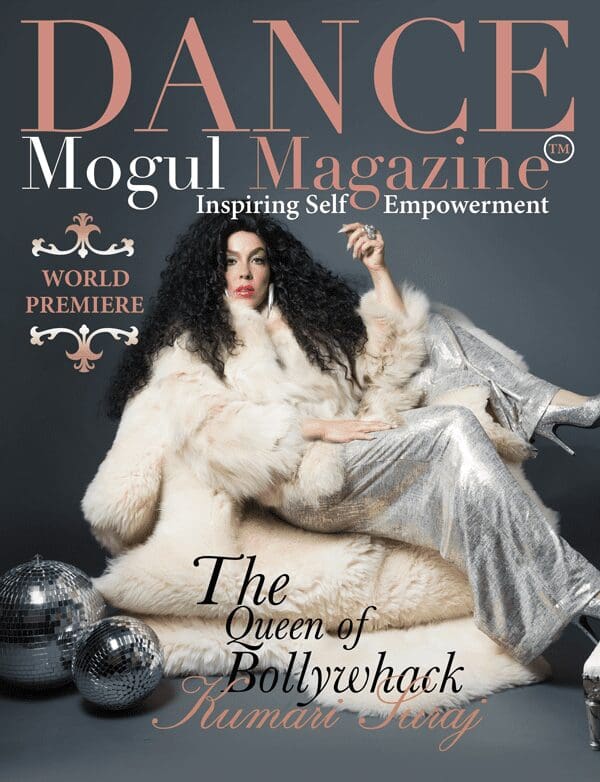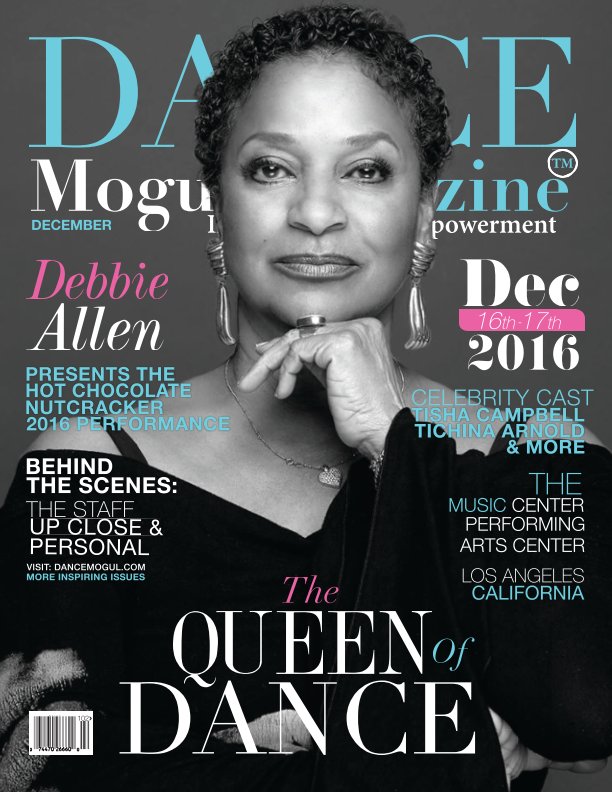
Dance Mogul Magazine · From the Archive · Editor’s Letter
History Through the Pure Intent of Visionaries: Flo Jenkins, 2014
In 2014, Dance Mogul Magazine editor-in-chief Flo Jenkins wrote what the magazine’s founding story meant to her, and tied it to Debbie Allen, the nameless Soul Train dancers and the birth of a global culture. Her letter is restored here, followed by where that mission stands today.
Originally published July 16, 2014 · Updated November 28, 2026 · Dance Mogul Magazine
A Note From Dance Mogul Magazine
This letter was written by Flo Jenkins when she served as our editor-in-chief, and it ran on pages 46 and 47 of the 2014 issue featuring Debbie Allen. It is her own reading of what the Dance Mogul story meant to her, and how she chose to express it. We have kept her words as she wrote them, with light grammar and punctuation fixes, and added a 2026 section at the end on our continued commitment to the arts.

In This Issue
Debbie Allen — Emmy Award–winning director, actress, dancer and youth advocate, and creator of the family dance musical Brothers of the Knight.
Exclusive interview by Flo Jenkins. Preview or order the Debbie Allen issue on MagCloud.
History… Through the Pure Intent of Visionaries
By Flo S. Jenkins, Editor-in-Chief, 2014
Sometimes, simply by doing what you believe is right and following a passion, you make history, particularly if you do what you do well and with the right intent. But how many folks have carved a place in history or become trailblazers with the specific intent of doing so? Perhaps political leaders make deliberate moves for historical purposes, but probably not your ordinary citizen.
However, the fact is that untold numbers of ordinary people have unwittingly made history by affecting the lives of multitudes in positive ways, whether they touched family and friends or millions worldwide. Making history often begins with a gesture as “small” as lending a hand to someone who needs or deserves it. Other times, it’s seeing potential in someone who doesn’t yet see it in themselves and encouraging them to develop it.
People who make history are often visionaries, though they don’t always see it that way or purposely plan it while the vision is coming to pass. People like our Dance Mogul Magazine father-and-son duo, CEO and co-founder Basil Harris and his son, co-founder Anthony Harris, along with our cover personality, Debbie Allen, are clearly visionaries!
And visionaries, by the nature of their pure intent, draw to themselves like-minded, like-hearted teammates who help with the visions and the unfolding history. For the Dance Mogul founders, that includes consultants like Shock-a-Lock, New York’s first locker, who is all about helping people connect invincible faith, gratitude and vision to their purpose.
The Harris duo has found a need and dared, with compassion, to fill it. They are making history through this one-of-a-kind publication, through their clear intent to use the art form of dance to encourage, and to bring from the shadows to the forefront talented people in the field of dance, some of whom never get their just recognition.
In essence, through the vehicle of this publication, the Harris team is choosing to bring forth the value of self-empowerment to so many who don’t know how powerful they already are. No magazine to date has heartfully taken on this challenge, especially without any money-laden backers involved. But with vision, faith and courage, no challenge is too big.
“Making history often begins with a gesture as ‘small’ as lending a hand to someone who needs or deserves it.”
— Flo Jenkins, 2014
And, likewise, Ms. Debbie Allen has done, and continues to do, the same: empowering and supporting communities of young people in particular. This is evident in her powerful musical, Brothers of the Knight. She has made history on many levels and continues to do so. But you have to look back at her past to see how she carved a unique path in history, starting out as a dancer full of passion, talent and love for the craft.
I, too, started out as a dancer. Like Debbie, as a small child, dancing was my passion and love. I, too, was a little Southern girl who, because of segregation, had no easy or real access to professional training. Our paths were different in that I was able to realize my passion only through free dance classes in our local park, with teachers like the famous Eartha Kitt, Claude Thompson and others. Then, thankfully, I was able to take advantage of arts education classes in junior high and high school, and then in college.
My love of dance continued when I entered the working world and became the youngest executive editor of the nation’s only Black teen magazine. My passion for dance grew as I watched the Soul Train dancers in the ’70s! They were urban street dancers with exciting moves never before witnessed on television. These “nameless” dancers needed to be acknowledged.
And so, as an editor, I was able to provide the platform for their acknowledgment, along with an avenue to some semblance of voice and visibility that led to jobs in the entertainment industry for some of them. I was able to share a unique style of dance with the world simply by spotlighting young street dancers.
Yes, street dancing—Black street dancers—would eventually impact the world… and make history! That history includes a revolution AND an evolution: the ushering in of an entire culture called Hip Hop, an entertainment and dance culture that included Locking and Popping as well as the Moonwalk, and so much in between.
This exciting culture has spanned every corner of the world, entered elite boardrooms and become a multibillion-dollar business! From one little ole Black TV show called Soul Train to many television shows, to TV commercials, to cartoons, to the movie industry, to concert stages, to documentaries, and now book after book, we see the impact of this phenomenal dance culture. Clearly, we have witnessed how history is, and was, made.
For me, things have come full circle. I watched a unique and creative dance history begin, foresaw its forceful unfolding, and knew that eventually it would blow the minds of millions of people! Part of the role I played in the ’70s, I continue to gladly play now, in 2014. And that is to encourage, mentor and empower the younger generation by showcasing talented and innovative people who express themselves so powerfully through the art of dance.
— Flo S. Jenkins, Editor-in-Chief, Dance Mogul Magazine, 2014
The Debbie Allen Issue and Brothers of the Knight
Flo Jenkins’ letter ran in the issue that featured Debbie Allen and her family dance musical, Brothers of the Knight. The show is a modern take on the Brothers Grimm tale The Twelve Dancing Princesses. A group of brothers, forbidden to dance by their strict preacher father, slip out every night, and the only clue is the worn-out shoes beside their beds each morning.
Allen created the piece with the Kennedy Center in Washington, D.C., her second work for the Center after Pepito’s Story in 1996, and that production set the tale in Harlem, according to Playbill. Its choreography won her the 1999 Helen Hayes Award for Outstanding Choreography in a resident production, according to BroadwayWorld’s awards record, and the music is by Grammy winner James Ingram.
In the summer of 2014, when this letter was published, Allen relaunched the show at the Saban Theatre in Beverly Hills and took it on a five-city tour through Los Angeles, Boston, Philadelphia, Washington, D.C., and Charlotte, as Good Black News reported. She produced it with her husband, former NBA All-Star Norm Nixon, auditioned young performers in each city and trained them herself, opening the auditions to kids who were not only in dance schools.
That is the thread Flo Jenkins pulled on in her letter. Allen has warned for years that arts education is disappearing from public schools, and the Debbie Allen Dance Academy, the nonprofit for youth and teens she founded in 2001, is part of her answer. A musical about young people who refuse to stop dancing, performed by young people who might never have set foot in a studio, is exactly the kind of history-making Flo described: lending a hand to someone who deserves it.
Who Is Flo Jenkins?
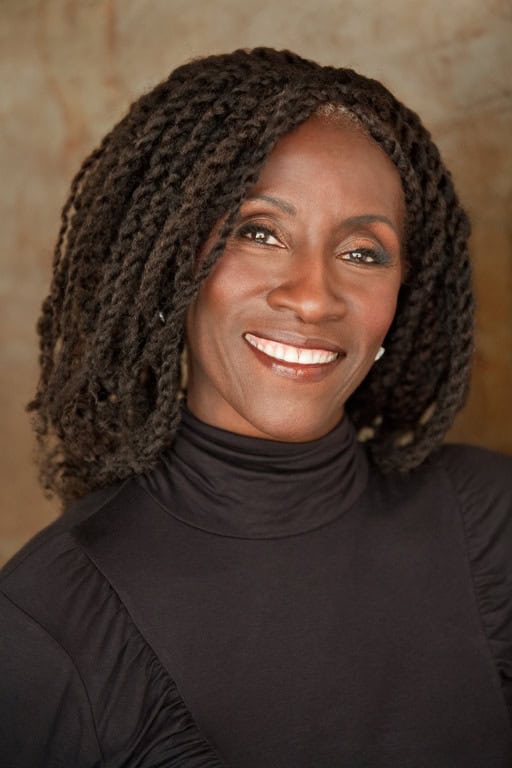
Flo Jenkins came to Dance Mogul Magazine with a rare perspective: she had already spotlighted street dancers long before most publications thought to ask their names. As the young executive editor of Right On!, a national teen entertainment magazine, she ran cover stories that helped lift the Jackson 5, Michael Jackson and the Soul Train show, according to her professional biography.
Original Soul Train dancer Damita Jo Freeman has credited Flo Jenkins with introducing the show’s dancers to a public that was curious about who they were, as EURweb reported in 2019. That is the same work she describes in her letter above, giving “nameless” dancers a voice.
Her career has also included publicity at Arista Records and KTLA-TV, teaching college writing and a writing program for elementary students in Compton, California, and founding the Words That Flo! editorial consultancy. Her book Telling Our Stories Ourselves was published in 2012. At Dance Mogul, she served as consultant and editor-in-chief, and she also wrote “What’s Your Brand: Perceived Image or Reality?” for our readers in 2014.
She has kept advocating for those early dancers. In a 2021 open letter on Soul Train’s 50th anniversary, Flo Jenkins urged the producers of the Soul Train Awards to honor the original dancers on air while they are still here to receive it.
The Soul Train Dancers Flo Jenkins Championed
When Flo Jenkins calls the early Soul Train dancers “nameless,” she means it literally. The show went national in December 1971, and, as she has written, its dancers received no pay beyond a small lunch on taping days. Her pages at Right On! helped put their names and faces in print.
Her own writing for Dance Mogul names many of them. In her August 2014 essay, she traced where they went: Don Campbell, creator of the worldwide Locking sensation; Damita Jo Freeman, who became an actress and a choreographer for Diana Ross, Whitney Houston, Lionel Richie and James Brown; Pat Davis, who danced for Diana Ross and became an international bodybuilder; and Jeffrey Daniel, whose career with Shalamar led him to help Michael Jackson fine-tune the Moonwalk.

She also named Tyrone “the Bone” Proctor, who taught dancers around the world, and Jody Watley, who went from Shalamar to an award-winning solo career. In her 2021 open letter she added Thelma Davis, Sharon Hill and Freddie Maxie, along with Scoobie Doo, Skeeter Rabbit and Slim the Robot, who danced with the Lockers, and noted that Don Campbell and Tyrone Proctor are no longer with us.
Read Flo’s full essay, “What’s Your Brand”, and Dance Mogul’s profiles of Thelma Davis and Tyrone “The Bone” Proctor.
Flo Jenkins and Dance Mogul: A Timeline
1970s
As the young executive editor of Right On!, she puts Soul Train’s dancers in print.
2012
Publishes her first book, Telling Our Stories Ourselves.
JULY 2014
As Dance Mogul’s editor-in-chief, writes “History Through the Pure Intent of Visionaries” for the Debbie Allen issue.
AUGUST 2014
Publishes “What’s Your Brand: Perceived Image or Reality?” in Dance Mogul.
JANUARY 2019
Joins original Soul Train dancer Damita Jo Freeman in a EURweb interview about the show’s early dancers.
DECEMBER 2021
Publishes an open letter urging the Soul Train Awards to honor the original dancers on air.
NOVEMBER 2026
Dance Mogul restores this letter and renews its commitment to the arts.
Our Continued Commitment to the Arts
When Flo Jenkins wrote this letter, she pointed out that Dance Mogul Magazine had taken on its mission without money-laden backers. That is still true. More than a decade later, we remain an independent, self-funded, Black-owned publication, and we still measure our work the way she described it: by whether a dancer who had been in the shadows is finally seen.
Her letter reads differently today because so much of what she foresaw has come to pass. The street styles she watched on Soul Train now fill competition stages, classrooms and screens around the world. What has not changed is how easily the people behind those styles can be forgotten. That is why our commitment to the arts is not a slogan. It is daily work.
Preserving the Stories Already Told
Our archive holds more than a decade of interviews with dancers, choreographers, educators and pioneers. We are rebuilding those stories one by one, restoring the original photographs and the footage artists shared with us, and adding where their journeys have taken them since. A story that cannot be found cannot inspire anyone, so we are making sure these voices stay within reach.
Honoring Pioneers While They Are Here
Flo Jenkins has asked the entertainment world to honor the original Soul Train dancers while they can still hear the applause. We share that conviction. Through The Legacy series and our Soul Train dancers coverage, we document the people who built this culture, by name, with their own words wherever we can.
Keeping Artists’ Dreams and Hope Alive
A dream rarely ends for lack of talent. More often, it fades for lack of encouragement, visibility or someone willing to say, “I see what you are building.” Our Featured Artist profiles exist for that reason. They give rising and established artists a full, accurate record of their work that they can share with audiences, schools and employers.
Every story we publish still has to answer one question: how does this help someone become a better version of themselves? Dance is our foundation, and through it we cover discipline, purpose, resilience, community and legacy. That is the self-empowerment Flo Jenkins wrote about in 2014, and it is the promise we intend to keep.
If you are an artist, educator or community leader whose work deserves to be seen, we want to hear from you. Contact Dance Mogul Magazine and tell us your story.
— Dance Mogul Magazine, November 2026
Continue Reading on Dance Mogul
Debbie Allen × A Different World (Netflix 2026): Special Feature
Debbie Allen’s The Hot Chocolate Nutcracker
Sources
Flo Jenkins, “History… Through the Pure Intent of Visionaries,” Dance Mogul Magazine, 2014 (pages 46–47). Flo Jenkins professional biography, LA Phil. EURweb, “Damita Jo Freeman, Former Soul Train Dancer,” January 2019. Flo S. Jenkins, “Soul Train 50th: You Blew It,” EURweb, December 15, 2021. Playbill, coverage of Brothers of the Knight at the Kennedy Center. Good Black News, coverage of the Brothers of the Knight premiere and tour, June 2014. BroadwayWorld, Debbie Allen awards record. TheaterMania, Brothers of the Knight revival, 2008. Flo Jenkins, “What’s Your Brand,” Dance Mogul Magazine, August 2014.
© Dance Mogul Magazine. Editor’s letter by Flo S. Jenkins, first published in Dance Mogul Magazine in 2014.