
Dance Mogul Magazine · Exclusive Interview · Popping
Hit Master Fish: Carrying the West Coast Hit Around the World
In 2012, popper Terrence “Hit Master Fish” Williams sat down with Dance Mogul Magazine and traced a life lived in funk: a James Brown record at a family barbecue, a Bronx high school gym in the summer of 1983, a barber’s chair he walked away from, and the students he now teaches around the world.
By Dance Mogul Magazine · Interview recorded and first published October 2012 · Rewritten and expanded November 2026
Artist Spotlight · At a Glance
Name: Terrence “Hit Master Fish” Williams
Style: Popping, with a specialty in hitting; second in command of the G-Style movement
Roots: Los Angeles and Gardena, California, with family in New York and Baltimore
Dancing since: 1972 (age two); popping since 1979
New York breakthrough: Summer 1983 in the Bronx: Freeze Force, then Dance System 10
On film: Beat This: A Hip Hop History (BBC, 1984)
Today: Based in Rotterdam, the Netherlands; teaches, judges and mentors internationally
Before YouTube, before battle livestreams and before anyone filmed a cypher on a phone, a dance style travelled one body at a time. It moved on school buses that carried kids across county lines, in the trunks of low riders with the music turned up, on VHS tapes passed hand to hand, and in the suitcases of children who spent their summers with relatives on the other side of the country. Hit Master Fish was one of those children.
His story is the story of a hit — the sharp muscle contraction at the centre of popping — and of how one Los Angeles kid carried it from the West Coast to the Bronx, through the quiet years when nobody was paying for it, and finally into classrooms on several continents.
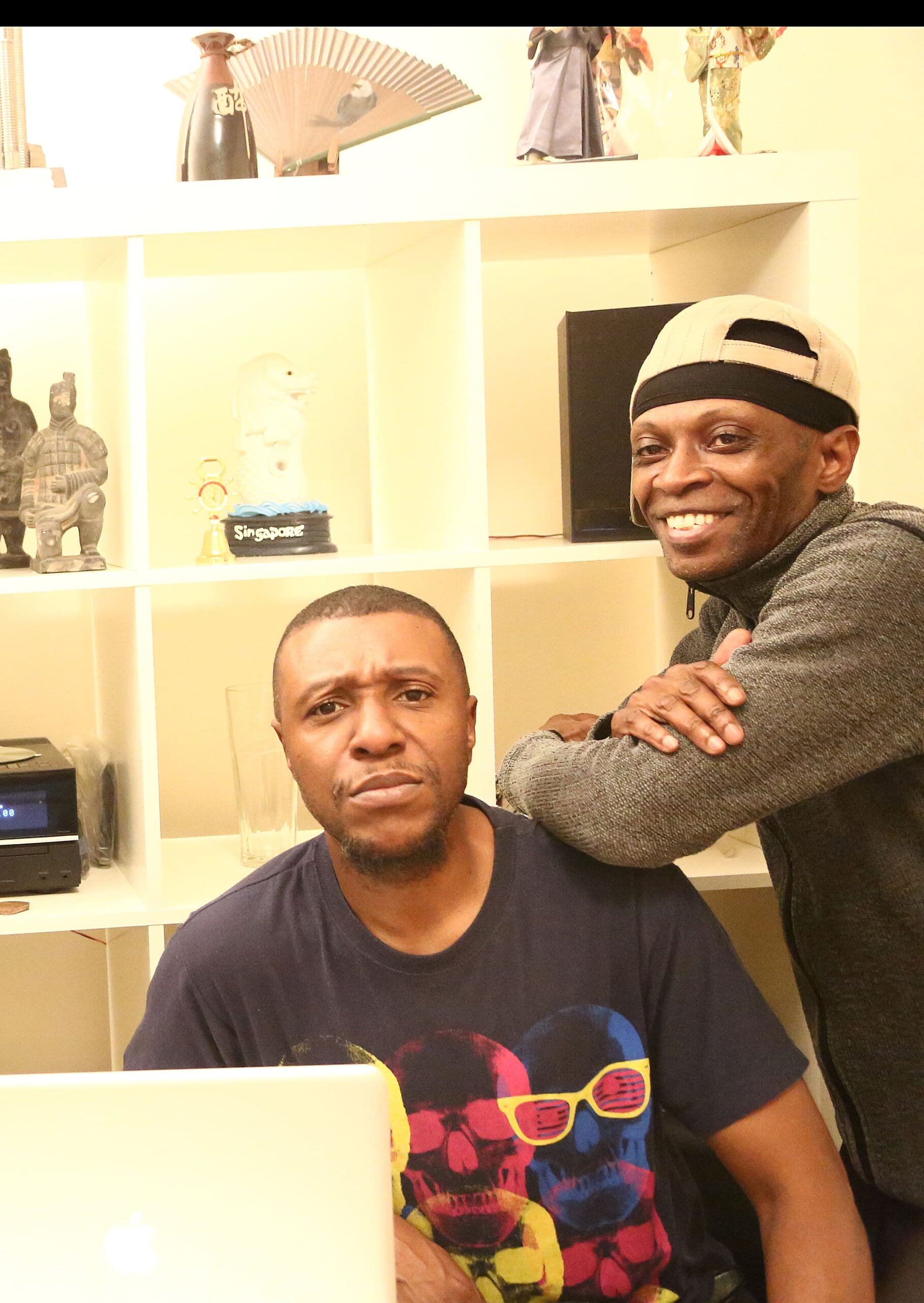
Dance Mogul Magazine first published this conversation in October 2012, when Fish was building an international teaching career and preparing to judge at Juste Debout, the Paris-founded festival for standing street dance styles. The full video interview, recorded in New York with locking pioneer Shock-a-Lock and the late Soul Train legend Tyrone “The Bone” Proctor in the room, ran more than half an hour. For this edition we have gone back to that recording, transcribed it, and presented the heart of it below, alongside the history that surrounds it and an update on where Fish’s work stands today.
Watch the Full 2012 Interview
The Interview: Hit Master Fish in His Own Words
Transcribed from Dance Mogul Magazine’s 2012 video interview and lightly edited for clarity and length. Bracketed words are editorial additions.
A James Brown Record and a Two-Year-Old
Dance Mogul: Give us some background about yourself and how you came to be involved with dance.
Hit Master Fish: First of all, my name is Terrence “Hit Master Fish” Williams. I got involved with dancing from the age of two. My mom said we were at a barbecue, and they were playing James Brown. She said I hopped out of her lap and started doing the footwork — and my mom’s a dancer. She said, “I never seen you dance,” and the whole barbecue just gathered around, like, where did this little boy learn how to dance? So it’s a natural thing for me.
James Brown was my biggest influence from that point on. That’s in ’72, so I’ve been dancing ever since. I started popping in ’79; they were doing it in my community. I’m from L.A., in Gardena, but my family lived here [in New York], and I also have family in Baltimore. My whole life I was getting embedded in East Coast, West Coast and Southern culture, because I was traveling back and forth.
Low Riders, Marching Drums and the Schoolyard Exchange
Dance Mogul: Were there famous dance groups in California at the time, or was the popping you saw more of a social dance?
Hit Master Fish: It was social. When we went outside you had low riders — guys with El Caminos and Monte Carlos — they would pop their trunks and we would just dance. We were doing funky dances. There was a dance called the Pop. And at my school, Normandie Elementary, right off Normandie and Vernon Avenue, we had people coming from Compton and different parts of different counties. This is how moves and styles got exchanged during that time.
One guy named Raymond would float — the first time I ever saw floats. Donald would drop straight back on his hands and come back up. I would go back to my community and exchange some of that stuff. A lot of times we didn’t have music, so we would wait until after school, when the band would come out beating the drums, and we would just pop.
Hit Master Fish: In 1981 we moved to Gardena, and there it was more like we were always banging. A lot of OGs from Cali know what I’m talking about — the Samoans, a lot of them hit hard. Banging is what we call a direct interpretation of a hit, and a mentality of a hit.
The Music That Moved Them
Dance Mogul: Each coast had its own flavor of music inspiring the dancers. What songs made you say, okay, let’s go?
Hit Master Fish: The Gap Band, Prince — “Controversy” — and you still had Parliament, because Parliament had already settled in. The SOS Band. There was so much incredible funk and soul coming out at that time. Funk began to change: coming out of the disco era you had P-Funk, and then electro funk was coming in. Kraftwerk was coming in, and “Planet Rock.” In L.A. I remember “Call Me” by Skyy. That music was infusing the way we moved. Remember, popping is the funky dancing robot.
It’s a sped-up version of a robot with a hit. A robot, you just dying; popping, you hit. It’s all interpreted through robotic movement.
“Popping is the funky dancing robot. It’s a sped-up version of a robot with a hit.”— Hit Master Fish, 2012
Soul Train and a Mother Who Popped
Dance Mogul: When you were a kid, did you sit around every Saturday to make sure you watched Soul Train?
Hit Master Fish: Oh man, Soul Train. My mom was a dancer — my mother used to pop. At that time in L.A. we called it pop locking, but we’re not even going to get involved with that. My mother used to go and watch Jeffrey Daniel and them do shows at different clubs in the late ’70s and early ’80s. She would come back and say, “I just saw Jeffrey! He did that backslide across the floor.” To this day my mom loves Jeffrey Daniel. She was a great funk dancer, and she taught me the footwork. All my footwork, I use to this day.
Hit Master Fish: She’s originally from Baltimore, and she raised my brother and me in California and also in New York, so we always traveled. The first time I ever saw a b-boy was about ’78 in the Bronx. A kid was doing upright, then he hit the ground. I’m eight years old: what is that? This is Tracey Towers in the Bronx. You would see people coming with tables, then speakers and cords and wires and turntables, and they would walk to the back of the park.
About an hour later you hear music, and we all just take off back there and everyone’s dancing. I had no idea I was getting embedded into hip-hop culture.
The Summer of 1983: “You an Electric Boogie?”
Hit Master Fish: I’ll never forget the summer of 1983. My brother and I flew from Cali to New York. We grew up with the kids in the building, so whenever I came they looked forward to it — “Fish is here.” We were standing in the hallway holding a general conversation, and one of them goes, “Hey man, you an electric boogie?” I said, “No, what is that?” So they started popping. I said, “You talking about pop?” Boom, boom, boom.
They said, “Whoa!” They grabbed me, picked me up and took me across the street to [DeWitt] Clinton High School. In the gym is where all the b-boys and the poppers and lockers were practicing. They said, “We got a young kid from California, he can pop.” Out here at the time, popping meant you hit hard, you had a strong pop. So I would pop, and they just lost their minds. I wasn’t even two weeks here and I had met people like Wiggles, Fabel, Mr. Freeze.
Dance Mogul: So you came for the summer and ended up staying for over a year. How did the community introduce you to those people?
Hit Master Fish: During the summer there was an Italian community in the north Bronx, the Villa, and every summer they would have a carnival with rides. Zulu Nation and all the street dancers would come out, everyone had big boxes, and they would just start boogieing and b-boying. People introduced me — “This is Fish, he’s from California” — and word got around. When I met Freeze, he took me to Gates Place, to his community. He had a young crew called the Freeze Force — Baby Freeze, Tiny Freeze — it was about four of us, and we formed a crew. I was 13.
Dance Mogul: Was popping already here when you arrived?
Hit Master Fish: Boogieing was here. But my hit was totally different than what they were doing — and still is to this day, almost 30 years later.
Freeze Force, Dance System 10 and a Kid Earning His Own Money
Dance Mogul: When you performed with those dancers, did they embrace you?
Hit Master Fish: They embraced me. We would go to Freeze’s house and practice, and you would meet so many famous dancers. That same year, or later that same year, I did Beat This, which became a hip-hop documentary, the history of hip-hop. Bambaataa, Kool Herc, everyone is in there. I performed every Friday at the Fun House. I performed for Nancy Reagan. I performed at Madison Square Garden.
Later the Freeze Force introduced me to another group that was performing, DST — Dance System 10 — which had a pretty big name in the Bronx. I also did a Michael Jackson impersonation at the time, and they would get us to perform at the Red Parrot and different locations. You’re talking about a kid, 12 or 13 years old, coming in the house at five or six o’clock in the morning with two hundred and fifty dollars. That’s a lot of money back then.
Hit Master Fish: I was still in school. I stayed because I was making money, and my aunt and my parents saw something in my dance, so they allowed me to stay in New York. They trusted my manager; my manager had a talk with my aunt, and we had a contract. I wasn’t the youngest — Baby Freeze was 11, and he was an incredible b-boy. That’s how I met people I know to this day, who can vouch that I was there at that time. Plus I was in New York magazines with the Freeze Force and Dance System 10.
Freestyle, New Jack, House — and the Quiet Years
Hit Master Fish: From the mid to late ’80s we were coming out of b-boy, popping and locking, and getting into what we called freestyle — what they call hip-hop now. Either people left and stopped dancing, or you kept going. Then we came into new jack, and that kept us going from the late ’80s on. Our hairstyles changed; we got flat tops. In the late ’80s we left California and moved to Baltimore.
My family is here in New York, only a three-hour drive, so I was back and forth all the time. But Baltimore had its own culture. It had a tremendous house culture in the ’80s, and Washington, D.C. too. We would go party down there every weekend.
Hit Master Fish: Then in the ’90s, things died. Around the mid-’90s b-boying started making a resurgence — and this is with no internet. Rock Steady Crew had an event, and international dancers were coming who were still b-boying and popping. Then in the late ’90s you had Freestyle Session and B-Boy Summit. Those are b-boy events, but poppers, b-boys and lockers always hung together. The young kids saw these OG poppers, and that’s how popping and locking began to make their resurgence.
In California you still had die-hards like Flattop and Boppin’ Andre; here you had Fabel, Wiggles, Clown, Float Master John — people who never left the culture and kept it going with street shows or whatever it might be. When these arts came back, those people were still around and had a story to tell.
“Fish, They’re Popping Again”
Hit Master Fish: This is prior to YouTube, prior to the internet. It was just people trying to get back into what we love to do. My friend Buddha Monk would come get me in Baltimore and say, “Fish, they popping again. You got to come out and show them.” I was in my 30s. I would go out and pop on the kids. I had no idea that in 2012 I would be a world traveler, with students planted around the world who are helping feed their families, embedded in a culture I started to build from the early 2000s until now.
Hit Master Fish: This guy here, Shock-a-Lock, played a major role in that. I never got back into popping to teach. I just wanted to do shows. He would always laugh: “Fish, why are these people coming up to you? Why do they want to learn?” What happened was, they were watching VHS videos of OG poppers from Cali in nightclubs, sacking and strutting, and they came to me: “Fish, I saw these guys doing the same stuff you’re doing. That’s real West Coast stuff.”
I was very shy about it, and then I began to teach the kids — people like Oz, Ziggy, Big Mike, Supreme. Then we started traveling up to Montreal and met some young kids there.
“Everything was interpreted from the hit. We all wave, we all animate, we all robot, we all tick, we all glide. A popper can do anything.”— Hit Master Fish, 2012
A Popper Can Do Anything
Dance Mogul: When you went back to teaching, did you see it as a career?
Hit Master Fish: At the time I wasn’t thinking about a career. I was thinking about giving back a different style of popping, because popping is a very versatile dance and there was never one way to do it. I thought, I can share what I grew up doing in my community, where we based everything off the hit — how you hit. Everything was interpreted from the hit. We all wave, we all animate, we all robot, we all tick, we all glide.
A popper can do anything under the umbrella of those styles. And we have people who specialize — in ticking, gliding, waving, robot. Just because you specialize doesn’t mean you don’t know how to do other things. I specialize in hitting. People say, “Fish, we don’t see you hitting all the time.” That’s because I’ve got a thousand other ways to do things.
Dance Mogul: So if you’re going to battle, you’re not limited to one style?
Hit Master Fish: Please bring your lunch. Because it goes down.
G-Style: Waving, Animation and Banging
Dance Mogul: There’s a style called G-Style. Are you familiar with it?
Hit Master Fish: I’m the second in command of G-Style. The original term came out of Pomona. The guys in Pomona were poppers, but they were wave masters — they took waving to a whole other level. They took waving from a move and made it into a style. They’ll tell you they didn’t create waving; they innovated styles of it and moves of it. Now, the G means gangster, but not in terms of being a gangster.
If you go talk to a girl and you get her number and she’s smiling — man, that’s gangster. It’s like a badge: top of the game. The Pomona guys had their own thing from the ’70s up until the 2000s, when I met Slick Dogg. He had been part of their crew from the beginning. We came together and said we’re going to teach the kids about banging, about hitting, about animated ways. Our three basic principles are waving, animation and banging, and we work everything off of those.
A Building of Their Own
Dance Mogul: What else do you hope to accomplish in your dancing career?
Hit Master Fish: I want to establish a dance school, and I want to own a building, especially in Manhattan, where young kids and event throwers can come in and throw their events without getting charged all this money — where kids can say, “Fish, can I rent your space for a reasonable price?” and have an outlet. My whole thing is to bring in ownership. It’s like what Jay-Z did with hip-hop: he didn’t just rap, he made clothes, he took ownership, he became an entrepreneur.
I want to be an entrepreneur in street dance — not for my benefit, for the benefit of the young kids, so they have somewhere to go. Some people have to move their events outside of Manhattan, but Manhattan is central. International people coming into the country can get through Manhattan. If I can centralize a place where people can practice their art and throw events, I think that would help the community a lot.
Packing Up the Clippers
Dance Mogul: A hundred years from now, what would you want people to remember about you?
Hit Master Fish: I would want people to remember me as a person who gave himself to the art, to give back to the youth. I was a hair stylist for 16 years, a barber. In 2006 I packed up my clippers. I said, I’m going to dance — whatever the struggles, whatever it may be, I’ll deal with that. It was so funny: I was in a barbershop in Brooklyn packing up my clippers, and they said, “Where are you going?” I said, “It’s over for me.
This life I lived with these clippers is over. I’m just going to dance.” I packed it up, I went around the world and I made a name for myself. I built my community, because people were only seeing one side of popping. There are many facets and many dimensions to this style of dance, and I wanted to show that and give it back.
“In 2006 I packed up my clippers. I said, I’m going to dance — whatever the struggles, I’ll deal with that.”— Hit Master Fish, 2012
To the Young Dancer Who Feels What He Felt
Dance Mogul: What would you say to a young person who has the same feelings about dance that you had?
Hit Master Fish: Dream, turn your dreams into reality, and just push. There could be obstacles. For some people it doesn’t happen right away, and some people come right in, and that’s okay — just keep pushing. But the most important thing in all of street dance is creativity. I stress this all the time: we are all born original. Every individual is born original. You cannot dance like Hit Master Fish, as much as you may try. Let someone love the way you move. Inspire someone.
My family told me I was too old to get back into dance. Now they pull out my passport and say, you’ve been around the world. They have to respect that, because I told them what I was going to do, and I went and accomplished it. And guess what: I haven’t even scratched the surface of what I want to do and what I want to give back to hip-hop culture.
Thank Yous
Hit Master Fish: These two gentlemen here, Shock-a-Lock and Brother Tyrone Proctor, have been a great inspiration since I met them. Oz Ninja has been a great supporter of mine throughout the world; people have hired me because he told them about me. Slick Dogg and the whole G-Style movement. And my mom, for giving me her gift, because my mom truly had the gift of being funky. These people came before me — I might have been dancing when they were dancing, but I was just a kid. The kids are my inspiration now, because they keep me creating. I won’t let them be me. I refuse.
The Hit Before the Internet: How Popping Crossed the Country
To understand why a handful of Bronx teenagers carried a 13-year-old across the street to show him off, it helps to know where his dance came from. Popping grew out of California’s funk dance scene in the 1970s. Its best-known origin story centres on Fresno’s Sam “Boogaloo Sam” Solomon and the crew that became the Electric Boogaloos, though historians of the style point out that competing Fresno and Oakland stories exist and that the dance absorbed influences from many neighbourhoods at once. PBS SoCal’s Artbound has documented how those Fresno dancers used the style as a source of identity and pride.
By the time Fish was popping on a Los Angeles schoolyard in 1979, the vocabulary was already rich: the hit itself, the robot, waves, ticks, glides, floats and the boogaloo’s rolling hips and knees. Television accelerated it. Soul Train carried West Coast funk styles into living rooms every weekend, and Fish’s own mother followed dancers such as Jeffrey Daniel from club to club.
The East Coast received those styles in pieces, which is why the kids in Fish’s building asked if he was an “electric boogie” — the name New Yorkers often used for the West Coast funk styles. The Bronx County Historical Society’s exhibit on the borough’s dance history describes how, at the height of the crew era, respected New York breaking crews kept dedicated “boogie boys” whose rounds added contrast in battles.
Into that world walked a kid from Gardena whose hit had been trained in a different place, by different people, to different records. The Bronx dancers did not have to be told it was the real thing. They could see it.
That moment was captured, in part, on film. Beat This: A Hip Hop History, directed by Dick Fontaine and broadcast in 1984 as part of the BBC’s Arena strand, was among the first documentaries to treat hip-hop as a culture rather than a fad, with Afrika Bambaataa and Kool Herc among its subjects. Fish, by his own account and in festival biographies of his career, was among the young dancers who appeared in it.
A Popping Vocabulary: The Terms Fish Uses
Fish’s interview is full of working language that dancers use without explaining. Here is a short guide for readers who are new to the style. Definitions are general; individual teachers and lineages describe some of these terms differently.
Hit (or pop): A sharp, controlled contraction and release of muscles, landed on the beat. Fish calls it the foundation that “everything was interpreted from.”
Banging: Fish’s Gardena-era term for hitting hard and directly — both a technique and, in his words, “a mentality of a hit.”
Robot: Mechanical, isolated movement that imitates a machine. Fish describes popping as “the funky dancing robot” with a hit added.
Wave: The illusion of a ripple travelling through the arms or body. In Fish’s account, the Pomona dancers behind G-Style turned waving from a move into a style.
Tick: Small, rapid hits that break a movement into fractions, like the second hand of a clock.
Glide and float: Footwork that makes the dancer appear to slide or drift across the floor without walking.
Animation: Movement that imitates stop-motion film, with frames and stutters, often paired with exaggerated character work.
Strutting: A family of West Coast funk styles built on precise, posed, rhythmic movement; Fish mentions it among the club footage dancers studied on VHS.
Boogaloo and boogieing: Rolling, fluid movement of the hips, knees and head. In 1983 New York, Fish says, “boogieing” was the local name for what was already being danced.
G-Style: As Fish explains it, a Pomona-rooted approach built on three principles: waving, animation and banging.
Hit Master Fish: A Career Timeline
1972At age two, dances to James Brown at a family barbecue, the first time his mother sees him dance.
1978Sees his first b-boy at Tracey Towers in the Bronx while visiting family.
1979Starts popping at nine years old in Los Angeles, trading moves with schoolmates from Compton and other neighbourhoods.
1981Family moves to Gardena, California, where he absorbs the hard-hitting “banging” approach.
Summer 1983Taken to the DeWitt Clinton High School gym in the Bronx; meets Mr. Wiggles, PopMaster Fabel and Mr. Freeze, joins the Freeze Force and stays in New York for more than a year.
1983–84Performs with Dance System 10 at venues including the Fun House and the Red Parrot; appears in the BBC documentary Beat This: A Hip Hop History (1984), by his account.
Late 1980sFamily relocates to Baltimore; dances freestyle, new jack swing and house in the Baltimore and Washington, D.C. club scenes.
Late 1990s–2000sReturns to popping as the style revives; begins teaching students in New York and Montreal; joins forces with Slick Dogg and the G-Style movement.
2006Leaves a 16-year career as a barber and hair stylist in Brooklyn to dance full time.
October 2012Sits down with Dance Mogul Magazine for this interview.
2013Judges popping at Juste Debout and reports back to DMM; teaches a workshop at Compete to the Beat in New York.
September 2026Teaches a popping masterclass at JOAT, Montreal’s international street dance festival; now based in Rotterdam.
Dates through 2012 come from Fish’s own account in the interview above; 2013 and 2026 entries are documented in the sources listed at the end of this article.
From the Archive: Hit Master Fish at the Judges’ Table
A few months after this interview, Fish was doing exactly what the original 2012 post said he was preparing for: judging popping at Juste Debout. The festival’s international preselection tour took him to stops he later named as favourites — Korea, Greece and Spain — and in our 2013 follow-up he said what he looked for on every stop was the basics of the dance. That 2013 conversation now lives, with its photos, inside DMM’s festival coverage: Juste Debout: Worldwide Street Dance Festival.
The second clip shows him in the judge’s showcase at Juste Debout USA in January 2013, the kind of moment where a judge is expected to show, not tell, what the standard is.
Where Is Hit Master Fish Now?
Fourteen years after this interview, Fish is still doing what he told us he had only begun to do. The JOAT International Street Dance Festival in Montreal, which booked him for a popping masterclass at Place des Arts in September 2026, describes him as a popping pioneer and educator with more than four decades in the culture, now living in Rotterdam in the Netherlands and travelling internationally to teach, perform, judge and mentor dancers of every generation (JOAT Festival, 2026 masterclasses).
Montreal is a meaningful place for that booking. In the interview, Fish describes travelling there in the early years of his teaching and meeting “some young kids.” Some of those students went on to careers of their own. Montreal dancer Elie-Anne Ross, who has worked with Cirque du Soleil and the Just for Laughs festival, lists Fish among the city’s popping pioneers she trained with for five years after discovering the style in 2006 (Tangente). That is the “students planted around the world” he talked about, made visible.
His New York ties also run through DMM’s own archive. In July 2013 he taught a workshop at Compete to the Beat at PMT House of Dance in Manhattan, alongside Don “Campbellock” Campbell, Shock-a-Lock, B-boy Nemesis and Dreamz, at an event where DMM’s CEO served as guest host (Compete to the Beat). The dream of a Manhattan building where young dancers can rent space at a fair price is one we could not find any public record of being realised; we would welcome an update from Fish on that goal.
The People in the Room
This conversation was recorded with two elders sitting nearby, and Fish thanked them both by name. Shock-a-Lock, the East New York locker whom the Brooklyn Public Library’s Folk Feet oral-history project describes as an original locker who developed his style at Brooklyn block parties, is the friend Fish credits with laughing him into teaching. Tyrone “The Bone” Proctor, the original Soul Train dancer and waacking pioneer, died in June 2020 at the age of 66. Read DMM’s tribute in Tyrone “The Bone” Proctor: Soul Train and Waacking, and our profile of the locking originator Fish worked alongside in 2013, Don “Campbellock” Campbell.
Why It Matters to Dance Mogul Magazine
Dance Mogul Magazine exists to tell lived stories that help someone become a better version of themselves, and Fish’s interview does that on several levels at once. It is a history lesson told from inside the culture, by someone who was a child in the rooms that later generations study on video. It is a reminder that styles are carried by people, and that a kid who keeps his own way of moving can change what a whole community understands a dance to be.
It is also a career story that adults need as much as young dancers do. Fish spent 16 years behind a barber’s chair before he decided, in his mid-thirties, that dance was the work he would build the rest of his life around. His family told him he was too old. His answer was a passport full of stamps and students who are now teachers themselves.
His closing message — that every person is born original, and that the goal is to be loved for the way you move — is the same one DMM has carried since 2010. Explore more voices like his in our Exclusive Interviews, go deeper into the style through the Poppin archive, and see how it connects to other forms in the Dance Styles Hub.
Frequently Asked Questions About Hit Master Fish
Who is Hit Master Fish?
Hit Master Fish is the stage name of Terrence Williams, a popping dancer, teacher and judge who started popping in Los Angeles in 1979, made his name in the Bronx in 1983, and now teaches and judges internationally from Rotterdam.
Where is Hit Master Fish from?
He grew up in Los Angeles and Gardena, California, with family in New York and Baltimore, and spent summers in the Bronx, where he joined the Freeze Force and Dance System 10.
What is Hit Master Fish known for?
He is known for his hitting, the hard, direct pop of West Coast popping, for his role in the G-Style movement alongside Slick Dogg, and for teaching students in North America and beyond.
Was Hit Master Fish in Beat This: A Hip Hop History?
By his own account in this interview, and according to his 2026 JOAT Festival biography, he appeared in the 1984 BBC documentary Beat This: A Hip Hop History, directed by Dick Fontaine.
What is G-Style popping?
As Hit Master Fish explains it, G-Style grew out of Pomona, California, where poppers turned waving into a style; its three basic principles are waving, animation and banging, or hard hitting.
Continue the Coverage
→ Juste Debout: Hitmaster Fish’s 2013 judge report and DMM’s festival coverage
The Story Continues
When Fish told us in 2012 that he had not scratched the surface, it sounded like ambition. Looking back, it reads more like a plan. The kid who was carried across a Bronx street because his hit was different is now the teacher people travel to learn from, and the lessons he gives are the same ones his mother gave him: footwork, feeling and funk.
If you are one of Fish’s students, or you were in a gym, a club or a carnival lot where he danced, Dance Mogul Magazine wants to hear your story. The history of popping is still being written by the people who lived it.
Sources
Dance Mogul Magazine, Compete to the Beat coverage (July 2013 workshops)
JOAT International Street Dance Festival, “Masterclasses 2026”
Tangente, artist biography of Elie-Anne Ross
Brooklyn Public Library, “Folk Feet: Shock-a-lock” (2009)
Bronx County Historical Society, “When the Bronx Moved” dance history exhibit
PBS SoCal Artbound, “Straight Outta Fresno”
Hit Master FishPoppingG-StyleFreeze ForceJuste DeboutBronx Hip-Hop HistoryWest Coast Funk StylesStreet Dance TeachersExclusive Interview
© Dance Mogul Magazine. Interview content © 2012 Dance Mogul Magazine. All rights reserved.