
Archive Update · Accountability & Safeguarding
Erik Saradpon: 2013 Interview, 2022 Case and Dance Safety
A historical interview revisited in light of a later criminal case, with a focus on the safety of young dancers and the accountability of adults in positions of trust.
By Dance Mogul Magazine · Originally published March 21, 2013 · Updated and expanded November 2026
Editorial Update
Editor’s notice: This article originally presented Erik Saradpon as a choreographer and youth mentor. In April 2022, he pleaded guilty to three felony offenses involving minors; he was sentenced on May 26, 2022 to three years and four months in prison. The original interview is retained for historical transparency, not endorsement. This feature discusses child sexual abuse without graphic detail.
A dance studio can be the first place a child discovers that their ideas and abilities have value. It can also be a place where an adult has significant influence over that child’s opportunities, social life and confidence. When a teacher abuses that authority, the responsibility rests with the adult, not the young person. A publication that champions dance education must be willing to confront that reality, including when its own archive contains earlier favorable coverage.
In March 2013, Dance Mogul Magazine interviewed Erik Saradpon about FORMALity, college, teaching and the opportunities he said he was creating for young people. The subsequent criminal case fundamentally changes the context in which those words should be read. We are preserving the interview as a dated record while placing the confirmed later developments before it. The safety and dignity of those harmed take precedence over the reputation of any artist or institution.
What happened after the 2013 interview
A 2018 McCallum Theatre master-class program and a 2020 teacher-conference biography documented Saradpon’s work in choreography, FORMALity and dance instruction. Those records establish his professional visibility at the time; they cannot be used to infer that a teacher was safe or that the endorsements remain current.
In October 2020, local reporting identified the Temecula instructor as having been arrested in connection with alleged sexual offenses involving minors. The legal proceedings resulted in a guilty plea in April 2022 to three felony counts. On May 26, 2022, a Riverside County Superior Court judge imposed a prison sentence of three years and four months under a plea agreement. Reporting from City News Service identified him as Eric Eustacio Saradpon; the earlier coverage and professional biographies establish the connection to the same Temecula instructor known professionally as Erik Saradpon. See the contemporaneous news reports in the sources below.
The allegations reported at the time of arrest are not identical to the counts resolved by the plea. We therefore distinguish the arrest from the later guilty plea and sentencing, and do not present every original allegation as a conviction. The studio stated in 2022 reporting that his employment had been terminated in October 2020. We have not verified his present custodial status, current residence or any subsequent professional activity. An old biography still accessible online is not evidence of current employment or good standing.
The people affected by these offenses are not supporting characters in a choreographer’s career story. Their right to safety, privacy and support remains central. This update does not identify them or repeat graphic testimony. It also does not imply misconduct by the dancers, colleagues or other people mentioned in the original interview. Association with an artist is not evidence of complicity.
A dated record, not a present-day recommendation
The original DMM interview below contains favorable language about leadership and giving back. Those statements belong to the 2013 publication and are not a current assessment of Saradpon’s character. Maintaining a visible distinction is important because search engines can continue surfacing old articles long after their publication date. A reader who arrives from a search deserves to encounter the later outcome before any historical praise.
The case also illustrates the limits of conventional entertainment reporting. An interview may document what someone said about themselves; a professional biography may document a claimed credit; a performance may demonstrate technical skill. None of those artifacts establishes what happened away from the stage. A cultural archive can preserve creative history and still refuse to treat talent as proof of ethical conduct.
DMM’s earlier profile should remain accessible in context rather than be silently rewritten as if the original interview never occurred. The historical photographs document the original publication, not current approval. The old performance references are retained as archive citations rather than newly promoted videos. No person pictured alongside the subject should be assumed to have known about, participated in, or been harmed by his conduct.
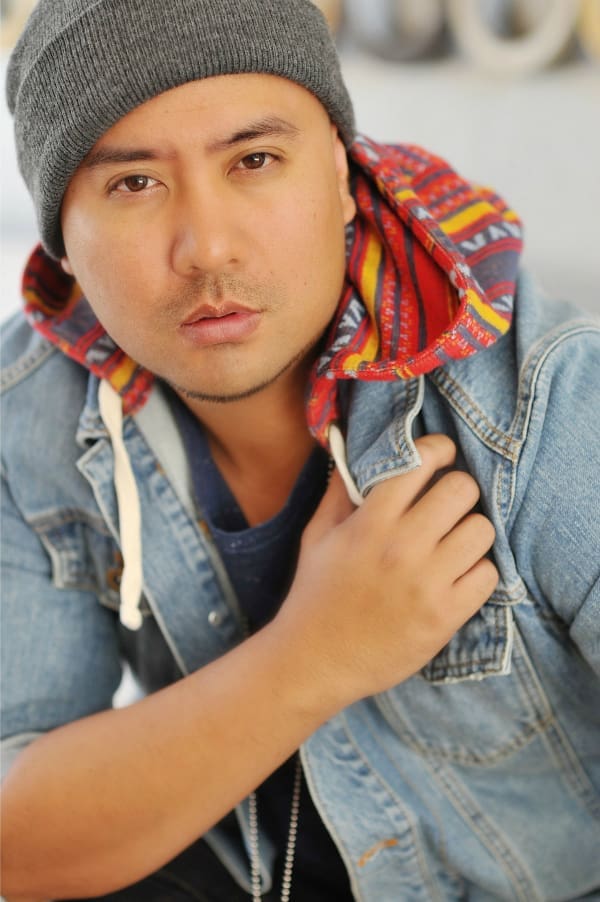
The 2013 Interview
The following material is preserved from the original DMM publication. Formatting and historical media presentation have been updated; the interview reflects the subject’s statements at the time.
Erik Saradpon is a nationally-distinguished choreographer & teacher. A graduate of San Diego State University, Erik has dedicated his talents to empowering the lives of the youth by engaging them in positive lifestyles & healthy alternatives through music & dance. He is known for founding/directing national champions, FORMALity, a professional hip-hop dance company. Since its birth in 1996, FORMALity has been featured on The Ellen Show and has done industrials for Pepsi, Sea World, and Paul Mitchell. He has recently choreographed for Monsters Of Hip Hop and a Paula Abdul Tribute for Choreographer’s Carnival. His work was featured on Paula Abdul’s “Live To Dance” and Fox’s “Mobbed.” His routines have won choreography awards and championships at the regional & national levels at such competitions as Hall Of Fame, Showbiz, and ESPN Championships. In 2010, Erik was awarded Choreographer Of The Year at the KAR Nationals in Las Vegas. His students have received representation with top agencies Bloc, MSA & CTG and have since danced for Justin Bieber, Jennifer Lopez, and Will Smith. He produces an annual show named PLATFORM, and the Urban Legends Hip Hop Workshop. International credits include Canada, Finland, Colombia, Germany, Holland, Croatia & the U.K. Erik was generous enough to share his journey, work ethic and work he is doing in the community for the kids, all the ingredients of a Dance Mogul. In any career, it comes a point in time after achieving so much that you have to sit back and say, well what am I doing for others. Dance Mogul Magazine has been known to be very preachy, so we will just start showing you examples and hopefully, the youth will be able to find inspiration and build upon it.
Dance Mogul: At what age did you develop a passion for the arts?
Erik Saradpon: It had to be when I was in grade school. I was never enrolled in any sort of dance class. The only access to the arts I had was through TV, movies, or radio. I never realized how much art was in the world until I was older. I just remember hearing my older brothers playing music after school, and they would be playing everything from Duran Duran, Lisa Lisa & Cult Jam, New Edition, and of course, Michael Jackson. Music came into my life first and dance was soon to follow.
Dance Mogul: Were your parents supportive of you?
Erik Saradpon: In the traditional sense, no. They didn’t support me dancing or pursuing the arts, but they did support me in succeeding. It wasn’t until they saw the residuals of where dance could take me, that they took a liking for my profession. Up until now, there weren’t very many Asian-American role models in the arts. It’s a large part of the reason why I am so invested in my career and my dancers.
MEDIA / WATCH
Historical reference only; current availability has not been established.
Dance Mogul: How did you balance dance and higher education?
Erik Saradpon: It wasn’t easy. There were more days that I wanted to dance instead of study. I’m proud that I was able to earn my bachelor’s degree and still pursue dance. In college was where I was really developing the structure of my dance company, FORMALITY. That was such a distraction, and ultimately why it took my seven years to graduate from San Diego State. What kept me motivated was being able to prove to my parents, and myself, that I could master academics and the arts.
Dance Mogul: What made you get involved with healthy living?
Erik Saradpon: I realized early that most of the people dancing for me were kids, and that anything I expose them to could have a direct influence on their character. To keep my company growing, I wanted parents to entrust me with their dance education.
Dance Mogul: How were you able to start your own dance company?
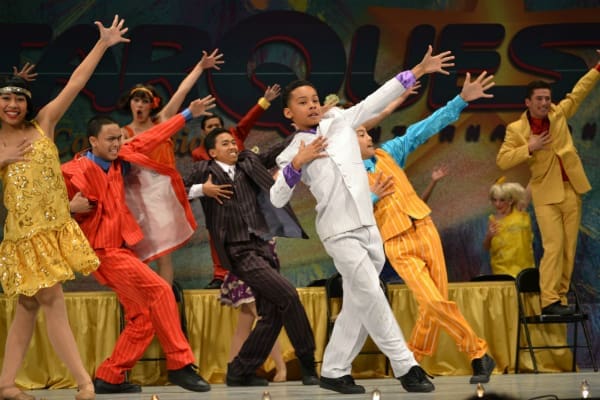
Erik Saradpon: In high school, a few of my closest friends were looking for a creative outlet to put our energy in. We were all in the show choir together, so we were all used to working with each other. Our high school threw a talent show, we entered and won, and the rest is history.

Dance Mogul: What have been some of your favorite experiences that dance has brought into your life?
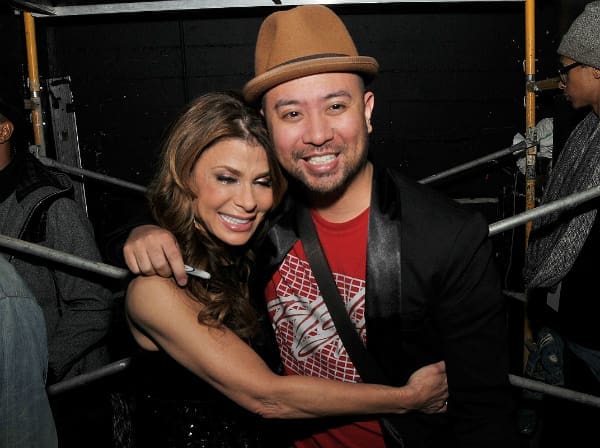
Erik Saradpon: This is so tough to answer. This covers almost 20 years of my life. I still teach dance because of the satisfaction it brings to my life. Although winning is sometimes the objective for some dancers, it has never been enough. I was fortunate enough early on to experience this. With FORMALITY, we won every competition out there, and it wasn’t satisfying. I wanted to experience success on several levels, and that meant being noticed as a great teacher & choreographer. Recently, I was asked to choreograph the Paula Abdul Tribute at Carnival. Although she doesn’t know me personally, I have been a big fan of her work. I grew up dancing her to music videos and award show performances. To prepare for this tribute, I had to do my research and watch old footage of her material. It was nostalgic! I felt like a kid again, and the music brought me to a very special place in my life. It was special for me to share that with my students because I was their age when I first listened to Paula Abdul. Some of my other favorite experiences have been seeing my students succeed. When one of my students booked his first job, I was so proud. Anthony Kin was cast for Jasmine V, the opening act of the Justin Bieber World Tour. It was a joy to watch someone else’s dreams come true because of my influence in their life.
Dance Mogul: How does it feel to help dancers get to the next level, what does it take for a dancer to get picked up by an agency?
Erik Saradpon: I enjoy when my dancers succeed, whether it’s through agency representation, recognition, a trophy, a scholarship, a booking, or anything as intangible as experiencing growth or beating a personal best. It’s very personal because as teachers, our students are a reflection of our commitment and ability to teach. Every agency has its own needs, and that changes based on their clients’ needs. However, being a smart, universal and responsible dancer with a strong work ethic will make you employable. Leaving a strong impression on every employer is key.
MEDIA / WATCH
Historical reference only; current availability has not been established.
Dance Mogul: What advice could you provide young upcoming dancers about attitude and work ethic?
Erik Saradpon: Never let your eagerness and enthusiasm take precedence over your sensibility and rationing. I see too many young dancers with poor class etiquette and a weak work ethic. Your first job may be booked because of your talent, but a strong work ethic will ensure you a second, third, and even more bookings.
Dance Mogul: Who are some of your inspirations past and present?
Erik Saradpon: Kenny Ortega, director of Newsies, High School Musical, Dirty Dancing – He sees the big picture. He’s not only a choreographer but a director. It’s inspiring to see the work that he creates. I’ve also been inspired by many artists: Michael Jackson, Janet, Madonna, Paula Abdul, TLC, M.C. Hammer, Usher, Beyonce, NSYNC. I love dance music, and I have grown up watching the brilliant work of these artists. And choreographers that I admire today are Rhapsody, Nappytabs, Kevin Maher,
MEDIA / WATCH
Historical reference only; current availability has not been established.
Dance Mogul: What are you currently doing to give back to the community?
Erik Saradpon: I am donating proceeds from my events to enrich the local dance programs in Temecula. There are many talented dancers who cannot afford tuition, so I help regularly by donating what I can to these dancers. If these dancers never had this kind of help, they would never get to pursue their passions.
Dance Mogul: Is there anyone you would like to thank for helping you on your journey?
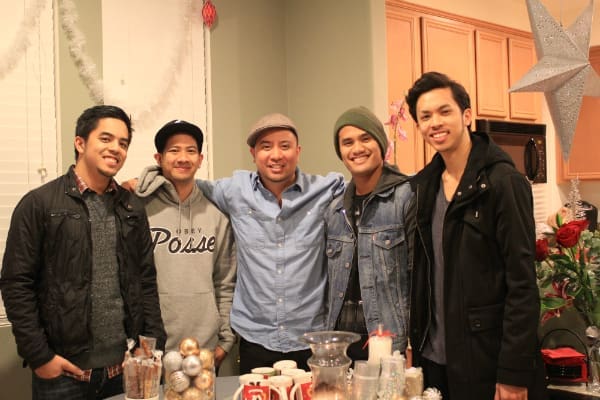
Erik Saradpon: I immediately want to thank my closest friends on FORMALITY: Joey Cruz, Anthony Kin, Arnel Vasquez, and Alex Vasquez. Joey has been my main source of support for TEN YEARS!! He is my confidant and the person who keeps me balanced and motivated on all my projects. Behind every great leader is a great collaborator. Joey is that to me. Anthony, Arnel, and Alex are also that and more. Collectively, these guys have made it possible for me to succeed by believing in me, pushing me, and trusting me. I’ve had many accomplishments in my many years of doing this, but nothing brings me more satisfaction than having the privilege of experiencing this with great people such as my them. The key to success is not only doing what you love but enduring it with your loved ones. I thank them for the many years of chasing the dream.
For More OnErik Saradpon Check Out:
www.eriksaradpon.com
Erik Saradpon Career Timeline
1996 — FORMALity’s founding year as stated in the 2013 archive.
2013 — DMM interview published March 21.
2018–2020 — Theatre and conference materials document professional teaching and choreography.
October 2020 — Arrest reported; studio later said it terminated employment at that time.
April 2022 — Guilty plea to three felony counts involving minors.
May 26, 2022 — Sentence of three years and four months imposed.
November 2026 — DMM archive revisited; present status not independently established.
Dance safety: responsibilities that cannot be delegated
Safeguarding requires more than a statement of values on a studio website. It requires rules that people can understand, staff trained to enforce them, a route to raise concerns outside the immediate instructor’s control, and a documented process for responding. Parents should be able to ask about all of these without feeling that their child’s casting or scholarship depends on their silence.
The U.S. Center for SafeSport’s Minor Athlete Abuse Prevention Policies provide a useful model for limiting isolated adult-minor contact and establishing boundaries in training environments. Their mandatory application is specific to the organizations covered by the framework; an independent dance studio should consult applicable law and adopt appropriate protections rather than assume it automatically falls under that jurisdiction. The NSPCC’s dance-sector safeguarding guidance and Massachusetts Children’s Trust’s Safe Kids Thrive materials offer further practical starting points.
A studio can begin by designing its operations so that individual instruction is observable and interruptible, electronic communications involving minors are transparent to appropriate adults, and travel and changing-room arrangements have clear supervision rules. These should apply to guest teachers, volunteers, visiting choreographers and owners as well as regular faculty. Background screening is one component of prevention, not a substitute for supervision, accountability or a credible reporting system.
A young dancer should never have to exchange privacy, personal access or a willingness to ignore boundaries for an opportunity to perform. An instructor’s ability to recommend students to agents or employers gives that instructor professional influence. It does not give them a claim on a young person’s body, friendships or private life. Parents should discuss boundaries in age-appropriate language and make clear that a child can speak up even when the adult involved is admired.
How families and studios can respond to a concern
If a young person tells an adult about abuse, the first response should be to listen calmly, take the disclosure seriously and prioritize immediate safety. Avoid blaming the child, demanding repeated retellings or promising absolute secrecy. Appropriate authorities and qualified professionals should handle investigations. In the United States, suspected child abuse can be reported to local child protective services or law enforcement; reporting obligations vary by jurisdiction. Call emergency services when someone is in immediate danger. RAINN provides confidential support and information for survivors and families.
For studio leadership, an internal complaint channel should never be the only option. A concern involving a powerful instructor needs a route that does not require the person reporting it to seek permission from that instructor or their close associates. The organization should protect against retaliation, preserve relevant records, and comply with legal reporting obligations. Public communication should protect the identities of minors and avoid speculation about the people affected.
For competitions and conventions, safeguarding needs to extend beyond the stage. Event organizers should set expectations for backstage access, staff communication, supervision, and the handling of complaints. Written agreements are useful only if everyone understands that the rules apply even to celebrated guest artists. A studio’s responsibility also includes considering the risks of programs and off-site activities to which it refers students.
For publishers, the response begins with accurate wording, dates and sources. We should not conflate allegations with convictions, imply guilt by association, or present a release date that has not been verified. We should avoid turning the harm of children into sensational marketing. A useful article can make prevention resources prominent, while still allowing readers to examine the historical record.
Why it matters to Dance Mogul Magazine
DMM exists to inspire self-empowerment and preserve dance culture. That mission includes the people whose ability to pursue their art was undermined by abuse of power. Celebrating the culture does not mean protecting the reputation of every individual who has worked within it. It means valuing the people who make it possible, including those who have been harmed.
The questions DMM asked in 2013 about education, leadership and giving back remain relevant, but they must now be accompanied by questions about conduct, oversight and the responsibilities of mentors. A studio’s measure of achievement cannot be limited to trophies, agency placements or television appearances. The environment in which young people learn is part of its legacy.
The other profiles in this archive offer distinct stories about mentorship, artistry, entrepreneurship and professional development. They are not connected to this case. The shared editorial lesson is that documenting achievement and checking the later historical record are complementary responsibilities, not competing ones.
Frequently Asked Questions
Why did DMM update its Erik Saradpon article?
The original interview predates the public criminal case; the later guilty plea and sentence materially change its context.
What was the 2022 court outcome?
Contemporaneous reports document a guilty plea to three felony counts involving minors and a sentence of three years and four months.
Is the original interview an endorsement?
No. It is a historical record of the 2013 publication, retained with a corrective editorial notice.
Is Saradpon currently teaching?
DMM has not verified his present professional or custodial status.
Where can families learn about dance safety?
The SafeSport, NSPCC, Safe Kids Thrive and RAINN links below provide prevention or support resources.
Explore Related DMM Stories
The following unrelated profiles are included for readers exploring DMM’s broader archive. They have no connection to the criminal case discussed above.
Melissa Sue Anderson: From Commercial Dance to Inspiring the Next Generation
Ashleigh Thornton: From Noire Naturals to Education and Advocacy
Marcus Borders: Beyond Disney, From Tampa Dance to Theater Choreography
Jae Fusz: From Buffalo to Britney Spears, Pop Performance and DJ Culture
The Story Continues
The archive must remain honest even when the historical record is uncomfortable. The most important outcome of this update is not a higher search score or a longer article. It is that a reader searching for the original profile encounters the documented later outcome and a clear distinction between historical praise and present-day editorial judgment.
Dancers deserve spaces where ambition does not come at the expense of safety. Institutions, families, publishers and professionals all have roles to play in sustaining that standard.
Sources and Further Reading
The original interview is preserved from the Dance Mogul Magazine archive. The following dated records support the editorial update; current roles are not inferred from undated biographies.
2018 McCallum Theatre master-class program
2020 DanceLife Teacher Conference biography
Valley News — October 2020 arrest report
Patch — 2022 reporting, including studio statement
MyNewsLA / City News Service — May 26, 2022 sentencing
Audacy / local news — May 27, 2022 sentencing
U.S. Center for SafeSport — 2025 MAAPP
Safe Kids Thrive — studio policy and handbook
Topics: Erik Saradpon, FORMALity, dance safety, safeguarding
© 2026 Dance Mogul Magazine · Inspiring Self-Empowerment Through Dance Culture









I am text block. Click edit button to change this text. Lorem ipsum dolor sit amet, consectetur adipiscing elit. Ut elit tellus, luctus nec ullamcorper mattis, pulvinar dapibus leo.